Shop on Lazada
24 Hour Fitness products
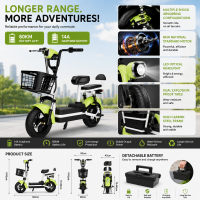
24 Hour Fitness Electric scooterE-ABS double disc brake.14 inch electric bike 48V foldable adult electric bike
₱11,999.00₱20,999.00
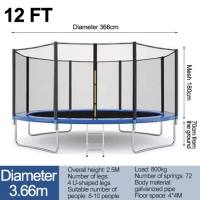
New Adjustable Round Trampoline 306CM with Safety Net Durable & Lightweight for Indoor/Outdoor Exercise and Fun - Sports Mall
₱8,990.00₱15,999.00

electric bicycle 14inch electric bike 48V foldable electric bike for adults.Water proof ebike motor multi-level shock absorption electric scooter.E-ABS front and rear double disc brakes ebike scooter
₱12,599.00₱25,999.00
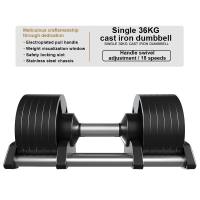
Adjustable Dumbbells 10/12/16 Gear Levels from 2-32KG Twist Handle Design Dedicated trays Durable Sturdy Dedicated trays do not hurt the floor
₱8,499.00₱16,999.00
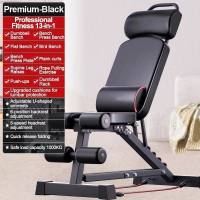
New Adjustable Folding Dumbbell Bench with Upgraded Ergonomic Design and Durable Metal Construction 400KG Load Capacity Space-Saving Home Gym Workout Equipment
₱2,999.00₱7,999.00
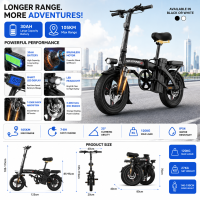
Foldable electric bike Waterproof ebike scooter E bike Electric bicycle for adults
₱14,599.00₱20,999.00

Electric bicyclee bikes for adults on salebicycle bike for adult 14inch 48V foldable electric bike for adults.Water proof ebike motor multiple shock absorption electric scooter.E-ABS front and rear double disc brakes ebike scooter
₱12,599.00₱25,999.00
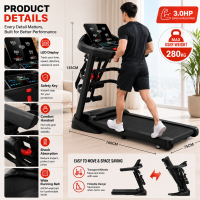
【Best seller】Foldable treadmill 3.5HP 1-14KM/H speed adjustable Shock Absorbption treadmill luxury blue screen treadmill Intelligent Bluetooth music treadmill with stereo speakers manual slope adjustment special fitness equipment for dormitorygym
₱12,999.00₱29,999.00
About 24 Hour Fitness
Overview
24 Hour Fitness is an American fitness centre company and one of the most recognised gym brands in the United States. Founded in 1983 by Mark Mastrov, the company played a pivotal role in popularising large-scale, convenient fitness clubs with extended operating hours. It began as a single gym in San Leandro, California, under the name 24 Hour Nautilus, before expanding into a nationwide chain.1
As of 2026, 24 Hour Fitness operates more than 235 clubs across nine U.S. states. Its facilities offer traditional gym equipment alongside group fitness, personal training, digital workouts, recovery services, Pilates, pools, sports courts and other wellness-oriented amenities.2
| Category | Information |
|---|---|
| Company | 24 Hour Fitness Worldwide, Inc. |
| Industry | Health, fitness and wellness |
| Founded | 1983 |
| Founder | Mark Mastrov |
| Original name | 24 Hour Nautilus |
| Founded in | San Leandro, California, U.S. |
| Headquarters | Carlsbad, California, U.S. |
| Current owner | LongRange Capital and Mark Mastrov |
| Current executive chair / interim CEO | Mark Mastrov |
| President & CEO | Karl Sanft was identified as CEO in the January 2026 acquisition announcement |
| Current footprint | 235+ clubs |
| Primary market | United States |
| Main services | Gym memberships, strength/cardio training, group fitness, personal training, digital fitness and wellness/recovery |
| Mobile platform | 24GO® |
| Website | 24hourfitness.com |
The company’s current website lists clubs in California, Texas, Colorado, Hawaii, Nevada, Oregon, Washington, New York and New Jersey.2
History
Founding: 1983
24 Hour Fitness traces its origins to 1983, when Mark Mastrov established a fitness club in San Leandro, California. The original business was called 24 Hour Nautilus, reflecting its connection to Nautilus fitness equipment and the emerging health-club industry.1
Mastrov’s concept was relatively innovative for its time: rather than treating a gym as a conventional daytime business, the company emphasised round-the-clock accessibility. This concept eventually became central to the company’s identity and its name.
The company subsequently expanded through acquisitions and organic growth. In 1996, 24 Hour Nautilus merged with Family Fitness, a California fitness company founded by Ray Wilson, and the combined business adopted the 24 Hour Fitness name.1
Expansion during the 1990s and 2000s
During the 1990s and early 2000s, 24 Hour Fitness expanded aggressively throughout the United States, growing from a relatively small California operation into a major national fitness-chain operator.
Its growth strategy included both opening new clubs and acquiring other fitness businesses. At its peak, the company developed a substantial international presence as well, including operations associated with California Fitness in Asia. Those international operations were subsequently divested, leaving 24 Hour Fitness focused primarily on the U.S. market.1
The company also became increasingly involved in sports and professional fitness. Among its notable partnerships were sponsorship of the U.S. Olympic teams from 2004 through 2008 and involvement with professional cycling and other athletic programmes.1
Ownership changes
24 Hour Fitness went through several ownership phases as it became a major private-equity-backed fitness company.
In 2005, founder Mark Mastrov sold the company. Later, Forstmann Little & Co. became its owner. In 2014, Forstmann Little sold 24 Hour Fitness to an investment group led by AEA Investors and the Ontario Teachers’ Pension Plan for a reported $1.85 billion.1
These ownership changes were part of a broader trend in the U.S. fitness industry, where large gym chains increasingly attracted private-equity investment.
Bankruptcy and restructuring
One of the most significant events in the company’s history occurred during the COVID-19 pandemic.
In 2020, government restrictions and widespread gym closures severely affected the fitness industry. 24 Hour Fitness was particularly exposed because its business depended heavily on physical clubs and recurring membership revenue.
The company filed for Chapter 11 bankruptcy protection in June 2020. At the time, it announced plans to close more than 100 clubs as part of its restructuring.1
The restructuring was ultimately successful. 24 Hour Fitness emerged from Chapter 11 in December 2020, with its debt substantially reduced and ownership transferred to a group of lenders. The restructuring eliminated approximately $1.2 billion in debt.1
The post-bankruptcy period became a rebuilding phase for the company, with a focus on improving existing clubs, strengthening its balance sheet and modernising the member experience.
Return of founder Mark Mastrov
A major development occurred in January 2026, when founder Mark Mastrov returned to 24 Hour Fitness.
Mastrov partnered with LongRange Capital to acquire the company. He returned as Owner and Executive Chair, with the stated objective of accelerating investment and growth. The company’s announcement identified Karl Sanft as President and CEO at the time of the transaction.2
Subsequently, the company listed Mastrov as Founder, Executive Chair & Interim CEO, indicating that his operational role had expanded again by the time of its current leadership information.2
Mastrov’s return is significant because he is closely associated with the development of the modern 24 Hour Fitness concept. According to the company’s announcement, he originally grew the business from one location to 420 clubs and 4.5 million members before selling it in 2005.2
Business model
24 Hour Fitness primarily operates as a membership-based fitness club chain.
Members generally pay recurring membership fees in exchange for access to a participating club and the amenities associated with their particular membership level. The company also generates revenue from additional services such as:
- Personal training
- Group and specialty training
- Premium fitness programs
- Digital fitness services
- Specialized classes
- Wellness and recovery services
Membership benefits and prices vary between clubs and membership levels. The company’s current website emphasizes that facilities, classes and amenities can differ by location.2
This model places 24 Hour Fitness somewhere between a traditional low-cost gym and a premium health club: its larger facilities can offer extensive equipment and amenities while still maintaining a relatively broad membership base.
Gyms and facilities
A typical 24 Hour Fitness location can include a large combination of strength-training, cardiovascular and functional-training equipment.
Depending on the club, facilities may include:
- Free weights
- Weight machines
- Cardio equipment
- Functional-training areas
- Turf zones
- Olympic training equipment
- TRX suspension-training equipment
- Indoor basketball courts
- Swimming/lap pools
- Whirlpools
- Saunas
- Steam rooms
- Cycling studios
- Group exercise studios
- Personal-training areas
- Recovery facilities
Not every club contains every amenity.1
Some locations are genuinely open 24 hours a day, while other clubs have different operating hours. Thus, despite the company’s name, “24 Hour” does not necessarily mean every individual club operates around the clock. The company specifically advises customers to check the hours of their individual club.2
Fitness programs
24 Hour Fitness offers a broad range of workout formats.
Strength and conditioning
Strength training remains one of the company’s core offerings. Clubs generally provide free weights, resistance machines, racks and functional-training areas.
More advanced locations can include Olympic training rigs and dedicated performance-training spaces.2
Cardio
Traditional cardiovascular equipment includes treadmills, stationary bikes, ellipticals and other machines.
Group fitness
The company offers instructor-led group classes through its GX24® programming. Depending on the location, classes can include formats such as:
- Yoga
- Pilates
- Zumba
- HIIT
- Cycling
- Other studio-based fitness classes1
Personal training
Personal training is another important part of the company’s business. Members can work with fitness professionals to develop individualized workout programs and pursue specific goals.2
24GO® digital platform
24 Hour Fitness has also expanded beyond the physical gym through its 24GO® mobile platform.
The current platform provides features including:
- More than 2,000 workouts
- Workout and goal tracking
- Fitness streaks
- Class reservations
- Digital fitness content
- Club check-in functionality
The app is intended to connect a member’s in-club and at-home fitness experience.2
This represents a broader shift in the fitness industry: traditional gym companies increasingly combine physical facilities with digital coaching, workout libraries and fitness-tracking tools.
Recovery24 and Premium Fit24
In 2025, 24 Hour Fitness introduced two newer concepts aimed at moving beyond conventional gym equipment: Recovery24 and Premium Fit24.
Recovery24 is designed around recovery and wellness. Select locations provide technologies and equipment such as compression therapy and massage chairs in dedicated recovery areas.2
Premium Fit24 is a more technology-oriented strength-training environment. It uses connected equipment and guided programming intended to help members track progress and follow structured workouts.2
These initiatives illustrate the company’s attempt to reposition itself from simply being a place to “work out” toward a broader fitness and wellness ecosystem.
Reformer24
In late 2025, 24 Hour Fitness also introduced Reformer24, a pilot reformer-Pilates concept in Southern California.
The concept combines dedicated reformer equipment with instructor-led and on-demand programming. The initiative represents the company’s attempt to incorporate boutique-style fitness concepts into its larger health-club model.1
Current strategy
The company’s current strategy emphasizes modernization, personalization and wellness.
According to 24 Hour Fitness, more than 40 clubs had undergone extensive remodeling as 2026 began, with expanded layouts and upgraded equipment. The company has also been expanding Recovery24 and developing Reformer24 locations.2
The company describes its current philosophy through the phrase “Results Your Way.” The idea is to make fitness more personalized and to provide members with greater guidance rather than relying solely on access to equipment.2
Geographic footprint
Today, 24 Hour Fitness is a U.S.-focused fitness company.
Its website currently lists clubs in:
- California
- Colorado
- Hawaii
- Nevada
- New Jersey
- New York
- Oregon
- Texas
- Washington
The company reports 235+ locations on its current website.2
This is considerably smaller than the company’s historical peak, when its network exceeded 400 clubs. The difference reflects the restructuring and club consolidation that occurred around and after the 2020 bankruptcy.
Brand positioning
24 Hour Fitness traditionally positioned itself around three major ideas:
Accessibility — providing large fitness facilities to a broad consumer audience.
Convenience — historically emphasizing extended or 24-hour access.
Variety — combining conventional gym equipment with classes, personal training and recreational amenities.
The modern brand has added a fourth major theme: wellness. Recovery services, Pilates, digital fitness, connected equipment and personalized coaching increasingly sit alongside traditional gym services.1
Competitors
24 Hour Fitness competes in several segments of the American fitness market. Depending on location and membership level, its competitors can include:
- Planet Fitness
- LA Fitness
- Crunch Fitness
- Life Time
- Anytime Fitness
- Gold’s Gym
- Equinox
- YMCA facilities
- Independent gyms and boutique fitness studios
The competitive landscape varies considerably because these companies target different price points and customer demographics.
For example, Planet Fitness has historically emphasized low-cost, high-volume memberships, while Life Time and Equinox operate at a substantially more premium end of the market. 24 Hour Fitness occupies a broad middle-to-upper-middle position, with individual clubs varying significantly in amenities.
Corporate evolution
The history of 24 Hour Fitness can broadly be divided into several periods:
1983–1990s:
A California-based fitness concept grows from the original 24 Hour Nautilus model.
1990s–2000s:
Rapid expansion transforms the company into a major U.S. fitness chain.
2000s–2010s:
The company expands its brand, acquires businesses, develops international operations and becomes increasingly involved with major sports and fitness partnerships.
2010s:
Ownership changes and private-equity involvement reshape the company.
2020:
COVID-19-related closures contribute to a Chapter 11 bankruptcy and major club reductions.
2021–2025:
The company rebuilds, invests in clubs and introduces new digital, recovery and technology-oriented services.
2026:
Founder Mark Mastrov returns through an acquisition with LongRange Capital, signaling a new phase of investment and expansion.1
Significance in the fitness industry
24 Hour Fitness is significant because it helped establish the large-scale, convenient health-club model that became widespread in the United States.
Its original idea—making fitness available at virtually any hour—was particularly influential in an industry that traditionally operated around fixed daytime and evening schedules.
The company also illustrates the evolution of the commercial fitness industry itself. What began primarily as a place containing exercise machines has evolved into a combination of:
gym + group fitness + personal training + digital fitness + recovery + wellness + community.
That evolution is visible in 24 Hour Fitness’s current combination of traditional equipment, GX24 classes, 24GO digital workouts, Recovery24, Premium Fit24 and Reformer24.1