Shop on Lazada
Aéropostale products

Ladies Semi Crop Sweater
₱699.30₱999.00

Mens Original Brand Tee
₱699.30₱999.00

Mens Essential Tee
₱699.30₱999.00
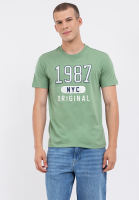
Mens 1987 NYC Applique Design Tee
₱839.30₱1,199.00

Ladies Comfort Fit Graphic Tee
₱839.30₱1,199.00

Ladies Comfort Fit Ringer Tee
₱699.30₱999.00
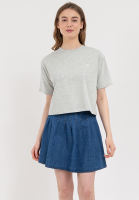
Ladies Logo Boxy Fit Tee
₱699.30₱999.00
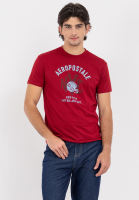
Mens Nyc Hi-Den Tee
₱699.30₱999.00
About Aéropostale
Aéropostale (commonly referred to as Aero) is an American casual-fashion brand specializing in apparel and accessories, including denim, T-shirts, hoodies, sweaters, activewear, and everyday fashion essentials. Historically associated with youth-oriented American style, the brand operates through shopping malls, standalone retail locations, e-commerce platforms, and international licensing partnerships. In the Philippines, Aéropostale maintains a presence through these international licensing arrangements.1
As of 2026, Aéropostale operates under Catalyst Brands, formed by a 2025 merger involving SPARC Group and JCPenney-related operations. The brand currently manages more than 500 locations across the United States and Puerto Rico, while over 350 additional stores operate internationally via licensing agreements.1
Overview
| Category | Information |
|---|---|
| Brand name | Aéropostale |
| Common name | Aero |
| Industry | Fashion / apparel retail |
| Founded | 1987 |
| Original creator | R.H. Macy & Co. (Macy’s) |
| Origin | United States |
| Headquarters / corporate presence | New York metropolitan area |
| Products | Clothing, denim, accessories, footwear and fashion essentials |
| Target market | Historically teenagers and young adults; today also broader men’s, women’s and kids’ categories |
| Parent organization | Catalyst Brands |
| U.S. presence | 500+ locations in the U.S. and Puerto Rico |
| International presence | 350+ licensed stores |
| Website | aeropostale.com |
Current figures are based primarily on Aéropostale’s corporate information and are subject to change as store counts and licensing arrangements evolve.1
Name and origins
The name Aéropostale is derived from the French Compagnie Générale Aéropostale, a pioneering airmail and aviation company that operated international routes in the early 20th century. This aviation heritage has long influenced the brand’s imagery and storytelling.1
However, the modern clothing brand is distinct from the historic French airline. Aéropostale’s retail history began in the United States during the 1980s when it was developed by R.H. Macy & Co. as a private-label clothing concept initially targeting men in their twenties. The first mall-based Aéropostale specialty stores opened in 1987, marking its transition into specialty retail.2
History
Early development: 1980s
Aéropostale originated as a Macy’s private-label initiative in the early 1980s, designed around casual clothing for younger consumers. In 1987, Macy’s expanded the brand beyond department stores by opening dedicated Aéropostale specialty locations. This established the retail model that would define the brand for decades: affordable casual fashion presented in a youthful, mall-centric environment.2
Expansion during the 1990s
Throughout the 1990s, Macy’s and subsequently Federated Department Stores grew the brand to more than 100 stores. In 1998, Federated sold the specialty-store division to Aéropostale management and Bear Stearns Merchant Banking, transitioning the business from a private-label concept into an independent specialty-retail company.2
Public company era
Aéropostale became a publicly traded company in May 2002, listing on the New York Stock Exchange under the ticker symbol ARO.2 During the 2000s and early 2010s, it emerged as a recognizable American mall brand competing for teenage and young-adult customers alongside retailers such as Abercrombie & Fitch, American Eagle, and Hollister. Stores were designed to project a youthful atmosphere through colorful visual merchandising, music, and prominent branding.2
Rise as a youth-fashion brand
Aéropostale achieved significant cultural visibility during the 2000s and early 2010s. The brand became synonymous with graphic T-shirts, logo sweatshirts, hoodies, denim, polo shirts, casual tops, shorts, skirts, underwear, loungewear, and accessories. Its aesthetic combined American casualwear, collegiate influences, and mall fashion.
Rather than positioning itself as a luxury or designer label, Aéropostale focused on accessible pricing. Its appeal relied on recognizable branding, frequent promotions, and versatile wardrobe staples suitable for everyday wear.
Expansion into children’s clothing
To extend its youth-fashion positioning, Aéropostale developed a children’s concept called P.S. from Aéropostale. These stores offered clothing primarily for children, creating a secondary retail concept within the broader brand family. Historical filings describe this expansion as an effort to leverage Aéropostale’s influence among younger demographics.2
International expansion
Aéropostale expanded outside the United States primarily through licensing partnerships rather than direct operation. This model allows local partners to manage stores using the Aéropostale brand, merchandise, and identity.
Currently, more than 350 international stores operate under licensing agreements. Markets include countries in the Middle East, Asia, Europe, and Latin America, specifically the Philippines, India, Turkey, Greece, Egypt, Saudi Arabia, the United Arab Emirates, Qatar, Mexico, Panama, Guatemala, and Chile.1
For Philippine consumers, this means the local Aéropostale presence is part of the brand’s international licensed network rather than its direct U.S. retail operations.1
Financial difficulties and bankruptcy
The traditional American mall-retail model eventually posed significant challenges for Aéropostale due to competition from other specialty retailers, shifting consumer preferences, the rise of fast fashion, and the move toward online shopping. These pressures led to serious financial difficulties, resulting in a Chapter 11 bankruptcy filing in 2016.
This period marked a major turning point. Rather than ceasing operations, the brand was acquired and reorganized by a group of investors and brand owners.
Acquisition and post-bankruptcy era
In 2016, Aéropostale’s intellectual property and brand assets became associated with Authentic Brands Group (ABG) and its partners. This new ownership structure enabled the brand to continue operating while fundamentally altering its business model.
Post-bankruptcy, Aéropostale shifted away from a strictly vertically integrated public-company structure, placing greater emphasis on brand licensing, partnerships, wholesale, and e-commerce alongside physical retail. Consequently, the current brand operation differs structurally from the large mall retailer seen in the 2000s.
Catalyst Brands
In 2025, SPARC Group and JCPenney-related businesses merged to form Catalyst Brands. Aéropostale joined this new organization alongside brands such as Brooks Brothers, Eddie Bauer, Lucky Brand, and Nautica.3
Catalyst Brands is now responsible for designing, sourcing, manufacturing, distributing, and marketing apparel and accessories across the portfolio, including Aéropostale.1
Products
Aéropostale’s merchandise has historically centered on casual American fashion.
Men’s clothing
Typical men’s categories include:
- T-shirts and graphic tees
- Polo shirts
- Hoodies and sweatshirts
- Jeans and pants
- Shorts
- Jackets
- Underwear
- Accessories
Women’s clothing
Women’s collections have included:
- Tops and T-shirts
- Jeans
- Dresses and skirts
- Shorts
- Hoodies and sweatshirts
- Activewear and loungewear
- Intimates
- Accessories
Denim
Denim remains one of Aéropostale’s most critical product categories. The brand highlights high-quality denim alongside fashion essentials in its current descriptions.1 Historically, the extensive range of fits, washes, and styles has made denim central to the brand’s identity.
Accessories
Accessories typically include bags, hats, jewelry, belts, socks, and small fashion items. Assortments vary by season and market.
Brand identity
Aéropostale’s identity has traditionally interpreted American youth culture. Branding elements have frequently included aviation-inspired imagery, the “Aero” moniker, vintage and collegiate references, bold logos, casual graphics, and American lifestyle visuals.
Current corporate messaging has evolved to emphasize positivity, inclusivity, acceptance, and confidence, moving beyond the narrowly teenage-focused identity of its peak mall-retail era.1
Target audience
Historically, Aéropostale was strongly associated with teenagers and young adults shopping in American malls. Marketing and store environments were tailored to be approachable for younger shoppers seeking recognizable, affordable casual clothing.
Today, the brand describes itself as serving young men and women, while its parent organization, Catalyst Brands, covers women’s, men’s, and kids’ apparel.1 This reflects an evolution from a teen-focused mall brand to a broader casual-lifestyle label.
Retail model
Aéropostale’s traditional model relied heavily on shopping malls, with stores designed to provide an energetic experience through visual merchandising, music, signage, and sales associates.2
The current model combines:
- Physical retail stores
- E-commerce
- International licensing
- Brand partnerships
The official site lists more than 500 locations in the United States and Puerto Rico, in addition to its online store.1
E-commerce
As consumer habits shifted toward digital commerce, Aéropostale developed its online presence. The official website sells men’s and women’s apparel and offers services such as online ordering, returns, shipping, and buy-online-pick-up-in-store options.1 This strategy integrates the brand’s historical physical-store identity with modern e-commerce capabilities.
International licensing
A defining characteristic of modern Aéropostale is its international licensing system. By partnering with local operators rather than directly owning overseas stores, the brand maintains a global footprint without requiring the U.S. entity to manage every international location directly.1
This structure is particularly relevant in the Philippines, where the brand is encountered through these licensed retail operations.1
Marketing
Marketing strategies have evolved significantly over time. During its peak as a mall brand, campaigns emphasized youth culture, denim, casual American fashion, promotions, store experiences, celebrity associations, and branded clothing.
More recently, the brand has pivoted to highlight themes of confidence, positivity, inclusivity, and self-expression.1
Competition
Throughout its history, Aéropostale has competed with numerous American casual-fashion and youth retailers. Key historical competitors include:
- Abercrombie & Fitch
- Hollister
- American Eagle
- PacSun
- Old Navy
- Gap
- Forever 21
The competitive landscape has shifted as many of these companies altered their positioning and as mall-based youth retail declined in prominence.
Cultural significance
Aéropostale is a notable example of the 2000s American mall-fashion phenomenon. For a generation of teenagers, the brand represented more than just clothing; it was integral to the social environment of the shopping mall. Highly visible logos, denim, graphic shirts, and promotional pricing made it instantly recognizable.
Its subsequent financial struggles also reflect the broader transformation of American retail, particularly the decline of the traditional mall-centered specialty-store model.
Logo and visual identity
Aéropostale has utilized various iterations of its visual identity. The name is typically rendered as Aéropostale, retaining the accent on the first “e,” though the shorter Aero identity is frequently used in marketing and product branding.
Visual language often incorporates aviation and vintage-inspired elements, nodding to the name’s historical association with French airmail aviation.
Corporate structure today
As of 2026, Aéropostale’s corporate environment differs substantially from its public-company era. As part of Catalyst Brands, it benefits from an organization that designs, sources, manufactures, distributes, and markets products across a portfolio of established American fashion and lifestyle brands.1
Aéropostale continues to operate its U.S. retail and e-commerce business directly, while international operations are largely supported by licensing partners.
Aéropostale today
Currently, Aéropostale positions itself as a casual fashion and lifestyle brand rather than solely a teenage mall retailer. Its assortment focuses on accessible fashion essentials, particularly denim and casual apparel, supported by corporate messaging centered on inclusivity and confidence.1
With a substantial U.S. retail footprint and a vast international licensed network, the brand has successfully navigated the structural changes of the 2010s to remain active globally.
Timeline
- Early 1980s — R.H. Macy & Co. develops Aéropostale as a private-label clothing concept.2
- 1987 — First Aéropostale specialty stores open.
- 1990s — Brand expands beyond Macy’s roots and surpasses 100 stores.2
- 1998 — Federated sells the specialty-store division to Aéropostale management and Bear Stearns Merchant Banking.2
- 2002 — Aéropostale becomes a publicly traded company on the NYSE under ARO.2
- 2000s–early 2010s — Brand reaches peak popularity as a youth-oriented American mall retailer.
- 2016 — Aéropostale enters bankruptcy and undergoes restructuring.
- 2016 onward — Ownership and operations transition toward a licensing and brand-management model associated with Authentic Brands Group and partners.
- 2025 — Aéropostale becomes part of Catalyst Brands following the SPARC/JCPenney merger.3
- 2026 — Aéropostale continues operating in the U.S., Puerto Rico, and international licensed markets, with 500+ U.S./Puerto Rico locations and 350+ international licensed stores.1