Shop on Lazada
Aesop products
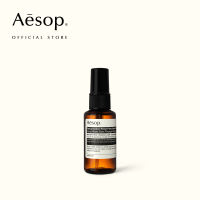
Aesop Resurrection Rinse-Free Hand Mist 50mL
₱700.00
Buy on Lazada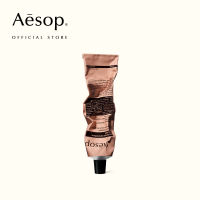
Aesop Resurrection Aromatique Hand Balm 75mL
₱1,750.00
Buy on Lazada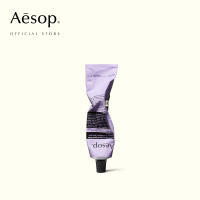
Aesop Eleos Aromatique Hand Balm 75mL
₱1,750.00
Buy on Lazada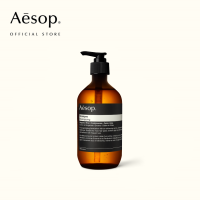
Aesop Shampoo 500mL
₱2,790.00
Buy on Lazada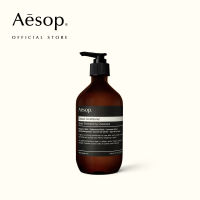
Aesop Conditioner 500mL
₱2,790.00
Buy on Lazada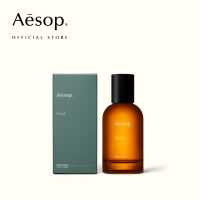
Aesop Hwyl Eau de Parfum 50mL
₱8,400.00
Buy on Lazada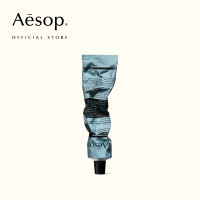
Aesop Reverence Aromatique Hand Balm 75mL
₱1,750.00
Buy on Lazada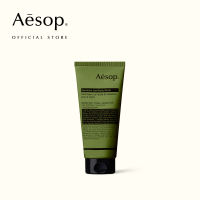
Aesop Geranium Leaf Body Scrub 180mL
₱2,100.00
Buy on LazadaAbout Aesop
Aesop (stylised as Aēsop) is an Australian luxury beauty and personal care brand recognised for its skincare, haircare, body care, fragrance, and home aroma products. Established in Melbourne in 1987, the brand has cultivated a distinct identity centred on botanical and laboratory-derived ingredients, understated packaging, architectural retail spaces, sensory experiences, literature, and a restrained approach to conventional beauty marketing.1
Aesop is currently part of L’Oréal Groupe, operating within its L’Oréal Luxe division. L’Oréal completed its acquisition of Aesop from Natura &Co on 30 August 2023, in a transaction announced at an enterprise value of US$2.525 billion.2
Basic information
| Brand | Aesop / Aēsop |
| Founded | 1987 |
| Country of origin | Australia |
| City of origin | Melbourne |
| Founder | Dennis Paphitis |
| Headquarters | Melbourne, Australia |
| Industry | Luxury beauty, cosmetics & personal care |
| Main categories | Skincare, haircare, body care, fragrance, home aromas |
| Current owner | L’Oréal Groupe |
| Division | L’Oréal Luxe |
| Previous parent | Natura &Co |
| Brand positioning | Luxury / premium / design-led beauty |
| Key characteristics | Botanical ingredients, scientific formulation, sensory experience, design, architecture, literature |
Aesop describes its purpose as creating skin, hair, and body formulations with meticulous attention to detail, balancing efficacy with sensory pleasure.3
Origins: Melbourne, 1987
The history of Aesop begins with Dennis Paphitis, a hairdresser based in Melbourne. During the 1980s, while operating a small salon, Paphitis grew dissatisfied with the quality and scent of conventional hair products. He began experimenting with essential oils and developing his own formulations. This experimentation evolved into the business that became the Aesop brand in 1987.4
Consequently, the company did not originate as a traditional luxury cosmetics corporation but rather as an independent salon and formulation laboratory. This origin is central to understanding the brand’s philosophy; historically, Aesop has presented beauty products not as glamorous accessories, but as carefully engineered objects intended for everyday rituals. Official records confirm 1987 as the founding year and Melbourne as the brand’s home.5
Why the name “Aesop”?
The brand name references Aesop, the ancient Greek storyteller traditionally associated with Aesop’s Fables. This choice aligns with recurring corporate themes of intelligence, literature, storytelling, and cultural curiosity.6 It also served to distinguish the company from the exaggerated claims and advertising language typical of the cosmetics industry at the time. As a result, the brand developed a characteristic literary and intellectual tone rather than relying on conventional beauty advertising, setting it apart from brands built around celebrity or aspirational imagery.
From hair products to a beauty brand
Although Aesop initially focused on haircare, it gradually expanded into a comprehensive personal care universe. Its product categories now include:
Skincare
- Facial cleansers
- Toners
- Serums
- Moisturisers
- Facial oils
- Masks
- Exfoliants
- Eye products
- Shaving products
Body care
- Hand washes
- Hand balms
- Body cleansers
- Body balms
- Body scrubs
- Deodorants
Haircare
- Shampoos
- Conditioners
- Scalp products
- Styling products
Fragrance
- Personal fragrances
- Eau de parfums
- Perfumed body products
Home
- Candles
- Room fragrances
- Incense and aromatic products
The unifying element across these categories is the Aesop approach to formulation, which prioritises research, functionality, sensory pleasure, and carefully selected ingredients. The brand investigates both plant-based and laboratory-made ingredients, utilising those with established safety and efficacy records.7
Product philosophy
A central tenet of the Aesop philosophy is that “natural” is not inherently synonymous with “good.” While botanical ingredients are used extensively, the company explicitly researches both plant-based and laboratory-made ingredients, selecting them based on demonstrated safety and efficacy.8 This results in a formulation approach that combines botanical elements with scientific rigour and sensory considerations. Essential oils and extracts are central to many products, yet laboratory science and formulation research are treated with equal importance. Corporate descriptions emphasise this combination of prized essential oils and scientific ingredients to achieve both performance and pleasure.9
Sensory experience
Aesop does not view skincare products solely through the lens of utility. Considerations such as scent, texture, tactile feel of the packaging, visual appearance in a bathroom, and the ritual of application are integral to product development. Consequently, fragrance holds unusual importance for the brand. Historically, aromas emerged largely as a by-product of using botanical oils, before Aesop eventually developed fragrances where olfactory pleasure was the primary objective.10 This positions the brand at the intersection of cosmetics, perfumery, design, and lifestyle.
Packaging identity
One of the most recognisable visual identifiers of Aesop is its amber or brown packaging. Resembling laboratory or apothecary containers rather than conventional luxury cosmetics vessels, this design serves multiple functions. It ensures immediate recognition and communicates a sense of formulation, research, and functionality through scientific associations. Furthermore, the restrained, utilitarian aesthetic avoids the gold, glossy black, or metallic finishes typical of luxury goods, allowing a wide range of products to coexist visually without clutter. L’Oréal has specifically identified this signature amber packaging as a key characteristic underpinning the brand’s distinctive global identity.11
Design philosophy
For Aesop, design is a fundamental philosophical pillar rather than mere decoration. The brand operates on the belief that well-considered design improves lives, applying this principle from containers to retail environments.12 The design language typically favours natural materials such as wood, stone, concrete, and metal, alongside muted colours, typography, simple geometric forms, and functional objects. Crucially, Aesop does not impose a uniform store design globally. Instead, each location is designed to respond to its specific surroundings, employing a locally relevant design vocabulary rather than a generic corporate interior.13
Retail environment
The retail model of Aesop differs significantly from standard beauty retail. Rather than following a linear path from product to store to marketing, the brand experience integrates product, architecture, service, literature, and scent. In 2003, the company opened a notable customer space in St Kilda, Melbourne, located in an underground site previously associated with a car park. This space established a benchmark for future architectural ambitions.14
Visiting an Aesop store is intentionally distinct from visiting a conventional cosmetics counter. The experience typically involves entering a highly designed environment, consulting with staff about specific needs, testing products, washing hands or sampling formulations at a basin, receiving recommendations, and often being offered tea or water. The store thus functions as both a retail laboratory and a hospitality environment.
The basin ritual
The basin has become synonymous with the Aesop retail experience. Rather than merely viewing products on shelves, customers are invited to physically experience them. Consultants demonstrate hand washes, balms, cleansers, and other formulations at the sink, transforming the purchasing process into a sensory consultation. Current brand descriptions continue to emphasise this hands-on introduction and the role of trained consultants.15
Architecture and locality
Aesop exerts significant influence in retail design because individual stores are frequently treated as unique architectural projects. By working with the character of each location rather than reproducing a global template, the brand creates a tension between global identity and local architecture. A store in Tokyo may feel distinctly Japanese, while one in Melbourne feels Australian, yet the consistent use of amber bottles, typography, scent, and service style maintains immediate brand recognition. This approach makes Aesop a frequent subject of study in branding, architecture, retail design, and luxury marketing.
Literature and culture
The brand maintains an unusual relationship with culture, historically incorporating literature, poetry, art, architecture, independent publishing, and books into its identity. L’Oréal notes Aesop’s longstanding interest in design, literature, and the arts, citing examples such as offering The Paris Review in stores and establishing Aesop Libraries, which have distributed tens of thousands of books by LGBTQIA+ and women authors.16 Culturally, the brand communicates a message of considered living rather than simply promoting beauty, a distinction central to its positioning.
Marketing strategy
Aesop gained prominence partly by avoiding traditional beauty marketing tactics. Instead of relying on celebrity ambassadors, influencers, billboards, or aggressive promotions, the brand invested in product design, store architecture, word of mouth, editorial-style writing, and cultural associations. This restraint, sometimes described as “anti-marketing marketing,” became a form of advertising in itself.
The Aesop aesthetic
The term “Aesop aesthetic” generally refers to a combination of minimalism, intellectualism, natural materials, utilitarianism, luxury, and restraint. Visually, this manifests through amber bottles, cream labels, black typography, stone sinks, wooden shelves, concrete, warm lighting, and subtle fragrance. This deliberately unshowy aesthetic communicates luxury without conventional opulence, representing a significant contribution to contemporary beauty branding.
Luxury positioning
Aesop’s luxury status is not communicated through traditional symbols of wealth but is instead constructed through material quality, knowledge, time, scarcity of attention, design, culture, and premium pricing. Consultants explain products rather than simply selling them; the shopping experience is deliberately slower; and the brand avoids overwhelming customers with promotions. Stores and packaging form part of the value proposition, while literature and architecture provide intellectual associations. Essentially, Aesop transformed quietness into a luxury signal.
Ownership history
Natura &Co era
In 2012, Brazilian beauty group Natura acquired a majority stake in Aesop, eventually becoming the full owner. Under Natura’s ownership, Aesop expanded from a successful Australian independent company into a global luxury brand. By 2022, the brand had approximately 400 points of sale across the Americas, Europe, Australia, New Zealand, and Asia, including its first store in mainland China. Sales in 2022 were reported at US$537 million.17
Acquisition by L’Oréal
In April 2023, L’Oréal announced an agreement to acquire Aesop from Natura &Co at an enterprise value of US$2.525 billion. The acquisition was completed on 30 August 2023, with Aesop joining the L’Oréal Luxe division.18 L’Oréal viewed Aesop as a luxury brand with strong global recognition, high-end retail presence, distinctive design, customer loyalty, growth potential, and a particularly strong position in Asia. The group has described Aesop as combining urbanity, hedonism, and luxury.19
Post-acquisition, the strategic focus has been on expanding the brand without diminishing its distinctive character. L’Oréal has emphasised preserving Aesop’s DNA while leveraging global infrastructure. As of 2026, Aesop remains positioned within L’Oréal Luxe rather than being treated as a mass-market brand.20
Sustainability
Sustainability is a core component of the brand’s identity. Aesop states that its products are vegan and that it does not test formulations or ingredients on animals. The brand is Leaping Bunny approved and a Certified B Corporation.21 B Corp certification was first achieved in 2020.22 The sustainability philosophy extends beyond products to include packaging, store design, environmental impact, community involvement, and charitable giving. The Aesop Foundation supports international causes, and employees are encouraged to spend two working days annually volunteering with an organisation of their choice.23
Distinction from “clean beauty”
Describing Aesop simply as a “clean beauty” brand can be misleading. Its philosophy is more nuanced, prioritising safety, efficacy, formulation, and sensory experience over a simplistic natural-versus-synthetic dichotomy. While botanical ingredients are important, laboratory-created ingredients also have a place if they meet safety and efficacy standards.
Fragrance philosophy
Fragrance has become a vital category for Aesop, positioned differently from mainstream designer perfumes. Rather than emphasising glamour or seduction, Aesop fragrances focus on atmosphere, memory, landscape, literature, botanical materials, architecture, emotion, and individual interpretation. This aligns with the brand’s refusal to dictate who customers should become; scents are intended to be experienced rather than worn as social status symbols.
Communication style
Aesop’s copywriting is a distinctive asset, characterised by precise vocabulary, literary references, philosophical quotations, long-form editorial content, scientific terminology, and calm language. Descriptions often resemble essays on skin, fragrance, ritual, or ingredient history rather than promotional sales copy, lending the brand a unique intellectual voice.
Lifestyle positioning
While technically a cosmetics company, Aesop occupies a broader cultural position by constructing a lifestyle around care, design, literature, architecture, fragrance, and everyday ritual. Products like hand wash function as more than utilitarian items; consumers purchase the formulation, scent, vessel, visual environment, ritual, and narrative. This exemplifies experiential luxury.
Consumer psychology
The brand appeals to consumers who value craftsmanship and discernment over overt status signalling. Implicitly, customers are expressing appreciation for well-made things rather than displaying wealth. This places Aesop within the movement toward “quiet luxury,” although its origins predate the recent popularity of the term.
Brand recognition
Aesop achieves high recognition with minimal visual elements. The combination of brown bottle, cream label, black type, and distinctive scent allows the brand to be identified without logos, campaign images, or celebrities. This indicates a highly coherent brand identity system.
Strengths and weaknesses
Major strengths
- Distinctive identity: Visually and tonally different from most beauty brands.
- Product experience: Engages smell, touch, and sight.
- Retail innovation: Stores function as architectural experiences.
- Consistency: Packaging, copy, stores, and service communicate a unified worldview.
- Cultural capital: Associations with literature and design confer intellectual prestige.
- Premium positioning: Commands high prices without overt status symbols.
- Global adaptability: Localised architecture allows global operation without visual genericism.
Potential weaknesses
- High price: Significantly more expensive than ordinary personal care.
- Niche image: Intellectual minimalism may feel intimidating to some.
- Replicability: The aesthetic has been widely copied by newer brands.
- Expansion risk: Rapid growth could weaken intimacy and independence.
- Parent-company tension: Ownership by L’Oréal creates tension with the independent image.
Competitive positioning
Aesop occupies a middle ground between premium skincare and traditional luxury houses. It is best understood as a design-led luxury personal care brand.
| Brand type | Example | Main luxury signal |
|---|---|---|
| Mass beauty | Dove, Nivea | Accessibility |
| Premium skincare | Kiehl’s | Expertise |
| Clinical skincare | SkinCeuticals | Science |
| Traditional luxury beauty | Chanel, Dior | Fashion & status |
| Natural luxury | Tata Harper | Botanical / natural |
| Aesop | Aesop | Design + culture + sensory experience |
| Niche fragrance | Le Labo | Fragrance + exclusivity |
Brand DNA
The brand can be distilled into eight core ideas:
- Formulation: Products are paramount.
- Efficacy: Products must perform.
- Sensory pleasure: Smell and texture matter.
- Restraint: Luxury need not be loud.
- Design: Objects and environments require thoughtful design.
- Culture: Beauty coexists with literature, architecture, and art.
- Ritual: Ordinary acts can be meaningful.
- Locality: Global brands should respond to physical surroundings.
Significance in contemporary branding
Aesop demonstrated that a consumer brand could build commercial value through taste rather than traditional advertising. Its influence is visible in the proliferation of amber packaging, minimalist skincare, apothecary aesthetics, serif typography, botanical branding, architectural retail, and editorial-style brand language. It serves as a case study in modern premium branding.
Timeline
- 1987: Dennis Paphitis establishes Aesop in Melbourne.24
- Early years: Business develops from experimentation with hair and personal care formulations.
- 2003: Aesop opens distinctive underground retail space in St Kilda, establishing architectural precedent.25
- 2012: Natura acquires majority stake and supports international expansion.26
- 2016: Natura becomes full owner.27
- 2020: Aesop becomes a Certified B Corporation.28
- 2022: First store opens in mainland China.29
- 2023: L’Oréal agrees to acquire Aesop for US$2.525 billion.30
- 30 August 2023: Acquisition completed; Aesop joins L’Oréal Luxe.31
- 2026: Operates as global luxury brand within L’Oréal Luxe while retaining Melbourne heritage and design-led identity.32
Assessment
Aesop sells personal care, but its true product is considered living. Everyday items are reframed as intellectual, aesthetic, and sensory experiences: hand wash becomes ritual, store becomes architecture, and product description becomes editorial writing. This reframing allows the brand to command luxury prices for ordinary categories. The challenge following the L’Oréal acquisition lies in scaling an intimate, culturally distinctive brand without eroding the qualities that created its value.33
References
- Our Story – Aesop Brand History and Design Philosophy
- Aesop
- L’Oréal completes acquisition of AESOP
- L’Oréal signs an agreement with Natura & Co to acquire Aesop
- Aesop builds its reputation by letting others tell its story – Los Angeles Times
- Aesop (brand)
- Our Story | Aesop Australia
- A history of fragrance – Products and guides – The Aesop Library
- Philosophy on design – A respectful response to function and setting
- Our story | Aesop SG
- L’Oréal acquires Aesop
- L’Oréal finalise l’acquisition d’AESOP
- L’Oréal sigla un accordo con Natura &Co per acquisire Aēsop
- L’Oréal signe un accord avec Natura & Co pour l’acquisition d’Aēsop
- A Quiet Empire | Broadsheet
- Our story | Aesop UK
- Our Story – Aesop KSA
- Our story | Aesop
- Our story | Aesop
- Our story | Aesop TH – Aesop Thailand
- Our Story | Aesop Malaysia
- 我們的故事
- Our story | Aesop
- イソップについて | Aesop 日本
- Formulations for Skin, Hair & Body Care of the Finest Quality – Aesop
- Our story | Aesop New Zealand
- Aesop: the book | Aesop UK
- Our story | Aesop Norway
- Aesop: the book | Our First thirty-three years | Aesop Hong Kong SAR
- Aesop: the book | Aesop
- เรื่องราวของเรา | Aesop TH – Aesop Thailand
- Aesop: the book | Aesop
- Aesop Book│品牌誕生 33 年以來的故事 | Aesop 台灣地區