Shop on Lazada
AGV products
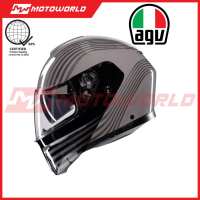
AGV STREETMODULAR MOTORCYCLE HELMET
₱17,990.00
Buy on Lazada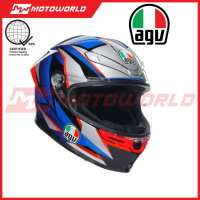
AGV K6S FULL FACE MOTORCYCLE HELMET
₱27,990.00
Buy on Lazada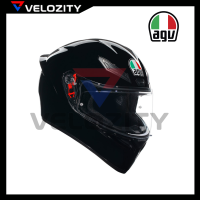
Agv K1 S E2206 Helmet Black
₱12,990.00
Buy on Lazada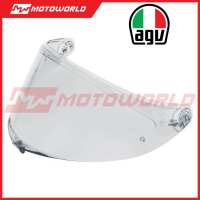
AGV HELMET VISOR ACCESSORIES
₱7,990.00
Buy on Lazada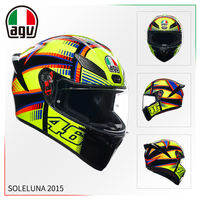
AGV | Anti-fog Motorcycle Helmet
₱21,748.06₱45,233.55
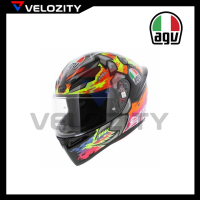
Agv K1 S E2206 Marco Bezzecchi Helmet
₱16,990.00
Buy on Lazada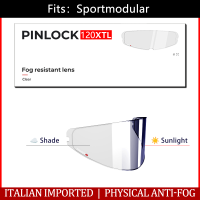
For AGV Helmet Accessories Pinlock 70 Changing Conditions Anti Fog Lens for K1K5CompactStrada PistaCorsaGT-VeloceVeloce-S K6K6S K1-SK5-SK3-SVStreetmodular K5-Jet K3(GT6) Sportmodular S-L XL-XXXL
₱1,233.00₱3,548.00
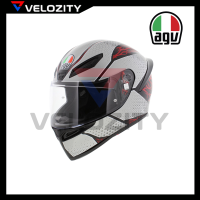
Agv K1 S E2206 Speedarmor Helmet Grey Red Matt
₱14,990.00
Buy on LazadaAbout AGV
AGV is a historic Italian manufacturer of motorcycle helmets, widely recognised for high-performance racing gear, advanced safety technology, and its enduring association with elite motorsport. Founded by Gino Amisano in 1947 in Valenza, Italy, the brand derives its name from the founder’s initials and hometown: “Amisano Gino Valenza”. Today, AGV operates as part of the Dainese Group.1
Overview
| Attribute | Details |
|---|---|
| Brand | AGV |
| Industry | Motorcycle / motorsport protective equipment |
| Primary product | Motorcycle helmets |
| Founded | 1947 |
| Founder | Gino Amisano |
| Origin | Valenza, Piedmont, Italy |
| Name meaning | Amisano Gino Valenza |
| Parent group | Dainese Group |
| Known for | Racing, sport, touring, modular and urban helmets |
| Major racing association | MotoGP and other motorcycle racing series |
| Famous riders associated with AGV | Giacomo Agostini, Barry Sheene, Valentino Rossi, Max Biaggi, Joan Mir, among others |
The identity of AGV is intrinsically linked to the transfer of racetrack technology to everyday riders. The company’s history is particularly significant due to its involvement in several pivotal stages of motorcycle helmet development.
History
Origins: 1947
Gino Amisano initially worked with leather goods, including equipment for bicycles. Following World War II, he transitioned into the burgeoning motor vehicle market, producing leather seat covers for Vespa and Lambretta scooters before moving into motorcycle helmets.2
The first AGV helmet was produced in 1947. Rather than a simple soft cap, it utilised leather formed over a mould and dried to create a relatively rigid protective shell, lined with padded material for comfort and impact absorption.3 This was a significant advancement at a time when motorcycle head protection remained primitive compared to modern standards.
1954: Fiberglass
A major early innovation occurred in 1954 with the introduction of a fibreglass helmet. This material allowed AGV to produce helmets that were lighter and potentially more protective than previous leather constructions, marking an important step toward the modern motorcycle helmet.
1956: Open-face helmets
In 1956, AGV introduced an open-face design intended to replace older bowl-shaped helmets. This new configuration provided greater coverage around the ears and rear of the head while retaining the open-face format.
1958: Racing becomes part of AGV’s identity
AGV was an early pioneer in using motorcycle racing as a form of advertising. In 1958, the company placed signage at racetracks, helping to establish a connection between the AGV name and professional competition.4 This strategy became increasingly common in motorsport thereafter. Crucially, racing served not merely as a marketing channel but as a core component of the company’s product development philosophy.
AGV and motorcycle racing
The reputation of AGV was built heavily through partnerships with professional racers. One of the most significant early collaborations was with Italian legend Giacomo Agostini, beginning in 1967 when he was already an emerging world champion.5 Agostini’s success helped cement AGV’s status as a premium racing helmet brand.
Other major racers associated with AGV throughout its history include:
- Giacomo Agostini
- Barry Sheene
- Angel Nieto
- Wayne Rainey
- Max Biaggi
- Valentino Rossi
- Joan Mir
- Thomas Chareyre
- James Hillier
AGV also featured prominently in Formula 1, with drivers such as Emerson Fittipaldi, Niki Lauda, Alan Jones, Keke Rosberg, and Nelson Piquet wearing AGV helmets during championship-winning periods.6
The X3000 and the full-face revolution
One of the most historically significant products in the brand’s lineage is the X3000. Introduced in 1969, it is described by the company as the first full-face helmet on the European market.7 It represented a major departure from open-face and bowl-shaped designs by enclosing substantially more of the rider’s head and face. The full-face concept subsequently became the dominant configuration for serious riding and racing.
AGV’s development philosophy emphasised not only protection but also aerodynamics, visibility, comfort, fit, weight, and racing performance. The company states that these characteristics facilitated the adoption of its full-face helmets among both motorcycle racers and Formula 1 drivers.8
Valentino Rossi and AGV
Few modern riders are as strongly associated with AGV as Valentino Rossi. The partnership began in 1996 at the start of his professional career and continued for decades, becoming one of the most recognisable rider-brand relationships in motorcycle racing.9 Rossi’s distinctive helmet designs also became integral to the visual identity of AGV.
Beyond sponsorship, Rossi actively contributed to the development of new helmet solutions and safety technologies.10 He ultimately won nine world championships, all of which AGV states were achieved while wearing their helmets.11
AGV becomes part of Dainese
A major corporate milestone occurred in 2007 when AGV was acquired by Dainese, another renowned Italian company specialising in motorcycle protective equipment.12 This acquisition created a natural technological synergy: AGV focusing on head protection and Dainese on body protection. Together, the companies could develop integrated equipment covering the rider from head to toe, while AGV remained a distinct helmet brand within the larger safety group.
AGV Extreme Standards
A critical development in modern AGV history is the Extreme Standards design philosophy. Introduced in the late 2000s, this concept fundamentally changed the approach to helmet development.13 Instead of designing a shell first and adapting it to the head, Extreme Standards starts around the rider’s head, considering protection, fit, comfort, and aerodynamics holistically. The philosophy can be summarised as designing the helmet around the rider, rather than simply designing a shell around the helmet.
The first major helmet resulting from this protocol was the Pista GP, introduced in 2012.14
Pista GP
The Pista GP became the flagship racing helmet for AGV. Designed using technologies derived from professional racing, including wind tunnel testing, the original model featured a 100% carbon fibre shell and an exceptionally wide field of vision. AGV states that its visor provided approximately 190° of horizontal vision.15
The Pista GP established a formula that remains central to the brand’s premium racing helmets: maximum protection combined with aerodynamic efficiency, low weight, wide vision, and rider comfort.
Pista GP RR
The Pista GP RR represents the evolution of the Pista racing platform. A significant milestone occurred in 2019 when the model obtained FIM homologation, certifying it for use in top-level international motorcycle racing, including MotoGP.16 Consequently, the Pista GP RR occupies a unique position as a commercially available helmet derived directly from technology intended for the highest levels of competition.
Product categories
While strongly associated with racing, the AGV product range extends considerably beyond MotoGP-style helmets.
Racing
Designed primarily for track and competition use, examples include the Pista GP RR and other Pista-series helmets. Typical priorities for this category are aerodynamic stability, high-impact protection, low weight, ventilation, wide field of vision, and racing-oriented ergonomics.
Sport / road
AGV produces full-face helmets intended for everyday street and sport riding. These models generally seek a balance between the extreme requirements of racing helmets and the practicality needed for road use.
Touring
Touring helmets emphasise long-distance comfort, noise management, ventilation, practical visibility, weather protection, and compatibility with touring equipment. The Tourmodular, for example, was developed specifically for long-distance riding and became one of the company’s key modular products.17
Modular
AGV has developed high-end modular helmets such as the Sportmodular, introduced in 2018. This model was designed to combine touring functionality with sport performance characteristics, utilising carbon fibre construction to achieve exceptional lightness for its category.
Urban / open-face
For riders prioritising convenience, city riding, and classic styling, AGV offers open-face and urban helmets that provide an alternative to the maximum enclosure of racing full-face models.
Off-road / adventure
The range also includes helmets designed for adventure and off-road environments beyond conventional road and track use.
Materials and construction
AGV has historically experimented with various helmet materials, reflecting the broader evolution of helmet engineering:
- Leather: Used in early AGV helmets
- Fiberglass: Introduced prominently in the 1950s
- Carbon fiber: Used extensively in premium modern helmets
- Composite materials
- Thermoplastic materials
This progression demonstrates how increasingly sophisticated materials allow manufacturers to optimise the balance between strength, weight, rigidity, impact management, and manufacturing cost.
Design philosophy
The brand philosophy of AGV is defined by five major priorities:
- Safety: The fundamental purpose is the protection of the rider’s head.
- Performance: Professional racing is historically used as a testing and development environment.
- Aerodynamics: Helmet shape is engineered to affect stability, drag, and rider fatigue, particularly in racing applications.
- Ergonomics: Emphasis is placed on the relationship between the helmet and the rider’s head, rather than treating the helmet merely as an external shell.
- Italian design: Technical engineering is combined with distinctive Italian styling and graphics.
These principles have been present since the earliest products, even as the underlying technology has evolved dramatically.
Racing heritage
The racing history of AGV extends across multiple disciplines.
Motorcycle Grand Prix
AGV helmets have been worn by numerous world champions, including Giacomo Agostini, Barry Sheene, Angel Nieto, Valentino Rossi, and Joan Mir.
Formula 1
Significant success was also achieved in Formula 1, with championship-winning drivers including Emerson Fittipaldi, Niki Lauda, Alan Jones, Keke Rosberg, and Nelson Piquet. Official historical records note multiple F1 championships during the 1970s and 1980s.
Isle of Man TT
Racer James Hillier won at the Isle of Man TT in 2013 while wearing the Pista GP.
Supermoto
AGV has been associated with world champion Thomas Chareyre, who secured his eighth Supermoto world title in 2020.
Important milestones
| Year | Milestone |
|---|---|
| 1947 | First AGV helmet |
| 1954 | First AGV fiberglass helmet |
| 1956 | First AGV open-face helmet |
| 1958 | Racing used as advertising space |
| 1967 | Partnership with Giacomo Agostini |
| 1969 | X3000 full-face helmet |
| 1970s | Major motorcycle and F1 championship success |
| 1980 | F1 championship with Alan Jones |
| 1982 | F1 championship with Keke Rosberg |
| 1987 | F1 championship with Nelson Piquet |
| 1996 | AGV–Valentino Rossi relationship begins |
| 2007 | AGV joins Dainese Group |
| 2012 | Pista GP introduced |
| 2013 | AGV/Pista GP wins Isle of Man TT |
| 2015 | Extreme Standards becomes a core design protocol |
| 2018 | Sportmodular introduced |
| 2019 | Pista GP RR receives FIM homologation |
| 2020 | Joan Mir wins MotoGP championship with AGV |
| 2021 | Tourmodular introduced with ECE 22.06 homologation |
| 2022 | AGV helmets used by Italian bobsleigh team at Beijing Winter Olympics |
Brand reputation
The reputation of AGV is anchored in several key attributes:
- Italian heritage: AGV is one of the historic names in Italian motorcycle equipment.
- Racing pedigree: The company has been closely connected to professional motorcycle and automobile racing for decades.
- Technology transfer: Technology is frequently developed through racing and subsequently adapted for road-going products.
- Premium helmets: The Pista family, in particular, occupies the high-performance end of the market.
- Valentino Rossi connection: Rossi’s long association made the brand exceptionally recognisable among modern enthusiasts.
- Safety engineering: The Extreme Standards philosophy represents a modern approach to integrating protection, fit, aerodynamics, and comfort.
AGV vs. Dainese
A useful distinction exists between the two brands under the same corporate umbrella: AGV specialises in head protection, while Dainese focuses on broader rider protection, including suits, jackets, gloves, and boots. Because both belong to the same group, they function as complementary parts of a comprehensive rider-protection ecosystem, providing coverage from head to toe.
Market position
AGV is generally perceived as a premium, performance-oriented helmet brand, particularly at the upper end of its racing range. Its historical credibility stems largely from actual competition use and decades of development rather than fashion alone. However, the current range is much broader than its flagship racing products, offering choices across racing, sport, touring, modular, adventure, and urban categories.
The brand today
From a small post-war Italian leather workshop, AGV has evolved into an internationally recognised manufacturer. Its history is essentially a narrative of progressive helmet development: from leather to fibreglass, open-face to full-face, and eventually to carbon fibre construction, advanced aerodynamics, Extreme Standards, and FIM-homologated racing helmets. The company remains particularly associated with racing-derived technology, having continuously developed helmet safety, aerodynamics, comfort, and performance since 1947.
References
- AGV: About Us – Historic Italian Brand
- 75 YEARS OF PERFORMANCE
- 75 YEARS OF PERFORMANCE
- 75 YEARS OF PERFORMANCE
- 75 YEARS OF PERFORMANCE
- 75 YEARS OF PERFORMANCE
- AGV: About Us – Historic Italian Brand
- AGV: About Us – Historic Italian Brand
- AGV: About Us – Historic Italian Brand
- History of AGV Sports Group, AGVSPORT Brand & AGV Helmets
- The Amazing History of AGV Helmets and Gino Amisano – AGVSPORT
- AGV Helmets and AGV Sports Group (AGVSPORT): A Historical Journey From 1947 To Present Day
- AGV MILESTONES | AGV Helmets Australia
- Home-old | AGV Helmets Australia
- Home | AGV Helmets Australia
- History – AGV
- AGV Helmets | LinkedIn