Shop on Lazada
Aige products
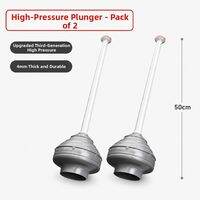
Aige | Drain Toilet Plunger Tool
₱664.88
Buy on Lazada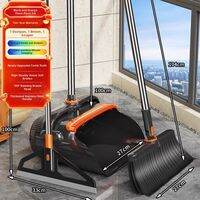
Aige | Soft Folding Broom Sweeping Set
₱1,014.73
Buy on Lazada
Aige | Long Handle Comprehensive Cleaning Toilet Brush Set with Holder
₱567.22₱1,031.66

Aige | Wall-mounted Toilet Brush Bathroom Long Handle
₱757.03₱1,050.37

Aige | Magical Home Floor Scraper Broom
₱564.95
Buy on Lazada
Aige | Bathroom and Toilet Long Handle Hard Bristle Cleaning Brush
₱621.58₱1,349.53
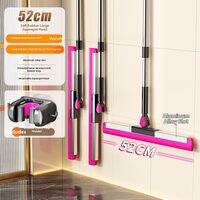
Aige | Water Wiper Floor Squeegee Silica Gel
₱425.14₱980.53
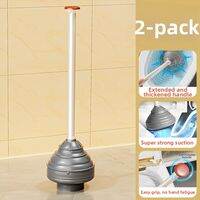
Aige | Powerful Drain Unclogging Tool Plunger
₱604.00₱679.34
About Aige
Overview
Aige is the name commonly associated with the European women’s fashion brand Etam within the Chinese market. Originating in Europe with France as its primary development base, the brand entered China in 1994 and became one of the most recognizable names in young women’s apparel during the late 1990s and early 2010s.1 Its product portfolio has historically included women’s ready-to-wear, lingerie, hosiery, and accessories.
The brand’s trajectory in China is often cited as a case study in retail evolution, characterized by rapid expansion followed by significant contraction due to shifts in consumer behavior and the rise of e-commerce. In 2018, the French Etam Group divested its Chinese ready-to-wear business. Subsequently, the entity operating this business, Shanghai Aige Apparel Co., Ltd., entered bankruptcy liquidation proceedings in 2019. It is important to distinguish that these insolvency proceedings applied specifically to the divested Chinese ready-to-wear operations and did not constitute a bankruptcy of the French Etam Group itself.1
Brand Identity and Nomenclature
Understanding the relationship between “Etam” and “Aige” is essential for accurate identification. Etam serves as the international brand name, while “艾格” (Àigé) is its established Chinese trade name. “Aige” functions as the romanized spelling of this Chinese name and is frequently used in domestic corporate registrations and digital platforms.1
From a legal and corporate perspective, the entities associated with the brand have varied over time. The “Aige” brand, Shanghai Aige Apparel Co., Ltd., Shanghai Yingmote Garment Manufacturing Co., Ltd., and the French Etam Group represent distinct legal bodies with differing ownership structures at various points in history. Current digital assets operating under the Aige or Etam China names may reflect post-restructuring management rather than the original French group’s direct operations.1
History and Market Development
Origins and Entry into China
The brand’s heritage traces back to early 20th-century Europe, where it initially specialized in women’s lingerie and hosiery before expanding into a comprehensive fashion retailer. In 1994, Etam formally entered the Chinese market, establishing Shanghai as its operational hub. This entry coincided with a period of rapid growth in China’s urban apparel sector and the proliferation of department stores. The brand utilized a model combining European positioning with local manufacturing and an extensive network of department store counters, allowing it to transition quickly from a foreign label to a mainstream domestic retail presence.1
Peak Expansion (2000–2012)
Aige experienced its golden era between 2000 and 2012. During this period, it evolved into a mass-market leader for young urban women. Media reports indicate that by approximately 2012, the brand operated around 3,460 retail points across China, with other estimates ranging above 3,000 locations depending on statistical methodology.1 This extensive physical footprint established strong brand recognition among consumers who were just beginning to engage with branded fashion.
Decline and Restructuring (2015–Present)
Post-2015, the brand faced structural challenges common to traditional department store retailers. The shift toward online shopping, social commerce, and international fast-fashion competitors eroded its market share. Concurrently, the core demographic aged, and younger consumers gravitated toward streetwear, minimalism, and domestic labels.
In 2018, the French Etam Group sold its Chinese women’s ready-to-wear business, separating the international group’s strategy from the local entity’s performance. Financial difficulties persisted for the new operators, leading to the acceptance of bankruptcy liquidation for Shanghai Aige Apparel Co., Ltd. by the Shanghai No. 3 Intermediate People’s Court on October 8, 2019 (Case No. (2019) Hu 03 Po 155). During the 2020 Double 11 shopping festival, court-appointed administrators opened a Taobao store to liquidate inventory, generating significant public attention and nostalgic engagement from millennials. Following this, the French Etam Group clarified that the liquidated entity was no longer part of its operations and emphasized a strategic pivot toward lingerie and Asian-fit product development.1
Product Portfolio and Design Philosophy
Aige’s design language in the Chinese market was defined by accessible French-inspired femininity. Unlike luxury couture or utilitarian fast fashion, it occupied a mid-tier position focused on romantic, urban aesthetics. Key design elements included:
- Silhouette: Emphasis on waist definition, slim fits, and A-line cuts.
- Details: Frequent use of lace, prints, checks, and feminine necklines.
- Categories: Dresses, trench coats, knitwear, blouses, trousers, and coordinated accessories.
- Lingerie and Hosiery: Retaining the brand’s historical roots in intimate apparel.
This visual identity was commercially adapted for the mass market, making European-style fashion attainable for young professionals and students.1
Corporate Structure and Brands
Historically, the brand ecosystem extended beyond the core Aige/Etam label. Contemporary references to the brand’s Chinese operations list a portfolio including:
- Aige
- LA COLLECTION
- ES
- WK
- E&JOY
Ownership and operational control of these sub-brands have fluctuated, particularly following the 2018 divestment and subsequent restructuring. Current corporate narratives describe headquarters in Shanghai and plans for channel expansion, but these should be understood within the context of the post-bankruptcy reorganization rather than as a continuation of the pre-2018 French-managed structure.1
Cultural Significance
For Chinese consumers born in the 1980s and 1990s, Aige holds specific cultural resonance as a marker of early fashion consumption. Before the dominance of e-commerce and social media, department store brands like Aige represented the first point of contact with branded apparel for many young women. The widespread coverage of the 2020 liquidation sales triggered collective nostalgia, transforming a corporate insolvency event into a broader cultural conversation about generational change and the passage of time.1
Timeline
| Year | Event |
|---|---|
| Early 20th Century | Brand origins established in Europe |
| 1994 | Formal entry into the Chinese market |
| 1995 | Expansion of retail operations in Shanghai |
| 2000s | Rapid expansion across Chinese department stores |
| 2010–2012 | Peak market presence with approx. 3,460 retail points |
| 2015 | Onset of significant market contraction |
| 2018 | French Etam Group divests Chinese ready-to-wear business |
| 2019 | Bankruptcy liquidation accepted for Shanghai Aige Apparel Co., Ltd. |
| 2020 | Liquidation sales gain viral attention; French group clarifies separation |
| 2021–2022 | Restructured entity emphasizes e-commerce and new retail channels |
Business Model Evolution
During its peak, Aige operated on a vertically integrated model leveraging French brand equity, localized production, and high-density physical distribution through department stores. This approach capitalized on the information asymmetry and limited retail options of the 2000s. By the 2010s, the value chain had shifted toward digital platforms, fast fashion, and niche domestic brands, rendering the heavy-asset department store model less competitive. The brand’s history thus mirrors the broader transition of the Chinese apparel market from traditional brick-and-mortar retail to a diversified, digitally-native ecosystem.1