Shop on Lazada
Airflow products
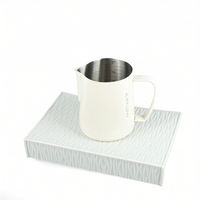
Airflow | Textured Round Mouth Stainless Steel Milk Frothing Pitcher
₱1,721.00₱2,842.00
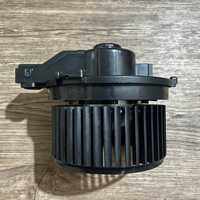
Subaru Forester XT XV WRX Impreza 2018-2025 AC Blower Motor
₱7,495.00
Buy on Lazada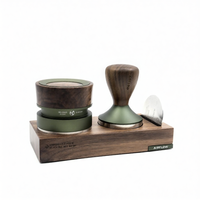
Airflow | Height-Adjustable Coffee Distribution Tool 58mm
₱6,635.00₱14,059.00
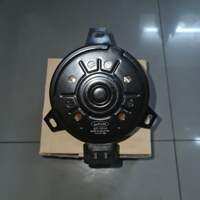
Ford Escape Airconditioning Radiator Fan Motor 3 Pin (Class A Airflow)
₱4,250.00₱16,500.00
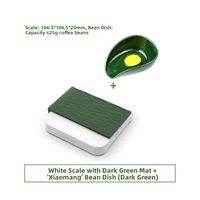
Airflow | Timed Portable Mini Coffee Scale
₱1,891.00₱5,962.00
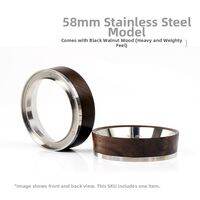
Airflow | Anti-Flying Powder Magnetic Dosing Ring 58mm
₱1,081.00₱1,661.00
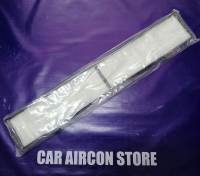
bmw e90 3 series 2005-2011 cabin filter airflow
₱1,650.00
Buy on Lazada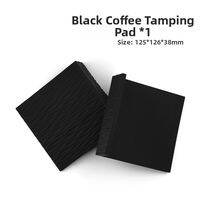
Airflow | Non-slip Silicone Coffee Tamping Mat
₱780.00₱2,471.00
About Airflow
Airflow is an ambiguous brand name used by several unrelated companies globally. The most established and historically documented use of the name refers to Airflow Developments, a British ventilation and air-movement technology company founded in 1955. Separate “Airflow” brands also exist in the indoor-air-quality products, specialist HVAC equipment, and other industries.23 Unless otherwise noted, this profile focuses on Airflow Developments.
Airflow Developments
Airflow Developments is a British manufacturer specializing in ventilation, air movement, indoor-air quality, and HVAC-related equipment. Its product portfolio includes domestic extractor fans, mechanical ventilation with heat recovery (MVHR), industrial fans, ducting and air-management products, air-quality controls, and related accessories.1
The company is headquartered in High Wycombe, Buckinghamshire, United Kingdom, and has expanded internationally through subsidiaries and distributors. Its official history states that the business originated from the work of fan engineer Alexander Conner Wilson, who developed equipment for measuring airflow and fan performance.1
Quick facts
| Category | Information |
|---|---|
| Brand | Airflow |
| Company | Airflow Developments |
| Founded | 1955 |
| Founder | Alexander Conner Wilson |
| Origin | High Wycombe, United Kingdom |
| Industry | Ventilation / HVAC / Indoor Air Quality |
| Main focus | Air movement and ventilation |
| Headquarters | High Wycombe, UK |
| International presence | Europe and worldwide distribution |
| Major products | Extractor fans, MVHR systems, industrial fans, ducting, air-quality products |
| Official website | airflow.com |
History
Foundation — 1955
Airflow’s official history traces its origins to 1955, when Alexander Conner Wilson founded the company in his garage in High Wycombe. Wilson was a fan engineer who developed a measuring instrument to assist with fan testing.
One of the company’s early innovations was an inclined manometer, an instrument used to measure pressure differences. This technology helped establish Airflow’s early expertise in measuring and understanding air movement.
The company subsequently moved from its garage operation into a dedicated factory on the Cressex Industrial Estate in High Wycombe in 1960. At this stage, Airflow was already producing airflow instruments as well as industrial centrifugal fans and blowers.
Expansion into domestic ventilation
Airflow expanded beyond industrial applications and entered the residential ventilation market.
In 1969, it introduced the Loovent domestic extractor fan. The company states that more than two million units were sold, making Loovent an important product in the development of its residential ventilation business.
Over subsequent decades, Airflow developed a broader portfolio covering residential, commercial, and industrial ventilation.
International development
Airflow eventually developed into an international group. Its operations expanded beyond the UK, including subsidiaries in Germany and the Czech Republic, alongside a worldwide distribution network.
The company’s international reach is particularly significant because ventilation requirements vary substantially between residential buildings, commercial properties, industrial facilities, and different climate zones.
Product categories
Airflow’s modern portfolio can broadly be divided into several areas.
Extractor fans
Extractor fans are one of Airflow’s most recognizable product categories. They are designed to remove stale, humid, or contaminated air from spaces such as bathrooms, kitchens, toilets, utility rooms, residential buildings, and commercial facilities.
Airflow produces both intermittent extractor fans and continuous-running ventilation systems. One of its notable designs is the iCON extractor fan, introduced with an iris-style shutter. The company describes this as a patented design intended to provide a distinctive approach to ventilation while maintaining a clean appearance when the fan is not operating.
Mechanical Ventilation with Heat Recovery
A major part of Airflow’s higher-end portfolio is MVHR (Mechanical Ventilation with Heat Recovery). An MVHR system simultaneously extracts stale indoor air, brings fresh outdoor air into the building, transfers heat between the outgoing and incoming air streams, and helps reduce the energy penalty associated with ventilation.
Airflow offers MVHR products for both residential and commercial applications and emphasizes energy efficiency and indoor-air quality.1
Industrial fans
Airflow’s roots in industrial air movement remain important. The company manufactures or supplies industrial ventilation equipment designed for applications requiring significant volumes of air movement, extraction, cooling, or warm-air distribution. Its history identifies industrial centrifugal fans and blowers as products introduced during its early development.
Ducting and air management
Airflow also supplies ducting and air-management systems. These products are important because ventilation performance depends not only on the fan or ventilation unit itself but also on how efficiently air travels through the building. The company’s current product categories include ducting air management and associated ventilation accessories.
Air-quality controls
Modern Airflow products increasingly address indoor air quality (IAQ) rather than simply moving air. This includes ventilation controls and systems intended to regulate ventilation according to conditions within a building.
Technology and innovation
Airflow’s identity is strongly connected with engineering air movement. Rather than positioning itself simply as a manufacturer of fans, the company has historically emphasized the measurement, control, and efficient movement of air.
Its development history can therefore be viewed in several stages: airflow measurement, industrial fans, domestic extraction, whole-building ventilation, heat recovery, connected/smart ventilation, and indoor-air-quality management. This progression explains why the company has a broader engineering profile than a typical consumer fan brand.
Smart ventilation
Airflow has incorporated digital technology into its ventilation products. In 2016, the company introduced the Adroit range, featuring internet-enabled ventilation and smart controls that could be operated through a tablet or smartphone.
In 2020, Airflow launched iCONsmart, a newer generation of extractor fan. According to the company’s history, the product incorporates Bluetooth connectivity and can be controlled using the MyAirflow app. The product also received a Quiet Mark award.
This reflects the broader transition in HVAC from conventional mechanical equipment toward connected building systems.
Airflow and indoor air quality
Indoor air quality has become an increasingly important part of the brand’s positioning. Ventilation helps remove pollutants, moisture, odours, and stale air while introducing fresh outdoor air. Airflow therefore positions its products around the broader concept of creating healthier indoor environments rather than merely producing airflow. The company specifically describes ventilation as essential to maintaining healthy air for building occupants.
Sustainability
Energy efficiency is another important part of Airflow’s modern product strategy. This is particularly evident in its MVHR systems, where heat recovery can reduce the energy required to condition incoming outdoor air.
Airflow also operates under ISO 9001 and ISO 14001 management standards, according to its corporate information. ISO 9001 relates primarily to quality management, while ISO 14001 concerns environmental management systems.
Notable products and technologies
Some of the better-known developments associated with Airflow include:
- Loovent — early domestic extractor fan, launched in 1969.
- iCON — extractor fan featuring an iris-style shutter design.
- Adroit — intelligent/connected ventilation platform.
- iCONsmart — Bluetooth-connected residential extractor fan.
- Adroit MVHR — mechanical ventilation with heat recovery systems.
- DUPLEX systems — larger-scale ventilation/MVHR equipment.
- QuietAir — quieter ventilation products.
- SELECTair — product-selection software associated with Airflow’s ventilation portfolio.1
Awards and recognition
Airflow has received recognition for several of its ventilation products. Its corporate history records awards and commendations for products including the Adroit DV51CH, Sussuro, Adroit MVHR, ceiling-integrated valves, and DUPLEXbase systems.
For example, the company’s history records the DUPLEXbase PS Range as a winner in the Commercial HVAC Product of the Year category at the H&V News Awards in 2024.
Brand identity
The name Airflow is particularly appropriate to the company’s business because its central technical specialization is the controlled movement of air. Its identity is therefore based less on lifestyle branding and more on engineering, ventilation, reliability, energy efficiency, indoor-air quality, air-movement technology, and building services.
This makes Airflow primarily a B2B/technical HVAC and ventilation brand, although some of its products—particularly extractor fans—are intended for residential consumers.
Market positioning
Airflow sits in the specialist ventilation/HVAC segment rather than competing directly with mass-market household fan brands.
| Type of brand | Primary focus |
|---|---|
| Consumer fan brand | Personal cooling |
| Household appliance brand | General home appliances |
| HVAC manufacturer | Heating/cooling systems |
| Airflow | Ventilation, air movement & indoor air quality |
| Industrial ventilation company | Large-scale air extraction and circulation |
Its competitive identity comes from having decades of experience specifically in air movement and ventilation engineering.
Important distinction: other “Airflow” brands
The name Airflow should not automatically be assumed to refer to Airflow Developments.
For example, Airflow IAQ is associated with Airia Brands Inc. and uses the Airflow name for indoor-air-quality products. Its history describes more than 30 years of involvement in residential, commercial, and industrial IAQ applications.2
There is also a separate AIRFLOW company associated with specialized air-conditioning equipment. Its corporate history states that it was founded in Frederick, Maryland, in 1959 and has supplied specialized cooling solutions for military and data-center applications.3
There was also historically an Airflow fan brand associated with the Casablanca Fan Company; that brand was eventually phased out.4
When researching “Airflow”, it is important to identify the specific company behind the logo or product.
Timeline
- 1955 — Airflow Developments founded by Alexander Conner Wilson in High Wycombe.
- 1960 — First dedicated factory opened.
- 1969 — Loovent domestic extractor fan launched.
- 1990s — Continued expansion of ventilation products and facilities.
- 2015 — iCON extractor technology and major MVHR developments highlighted.
- 2016 — Adroit smart/connected ventilation introduced.
- 2017 — Air Academy training and conference facility opened.
- 2020 — iCONsmart introduced.
- 2023 — QuietAir QT100 Black Edition and SELECTair developments.
- 2024–2025 — Further MVHR, commercial ventilation, and air-management products received industry recognition.
Overall assessment
Airflow Developments is best understood as a specialist British ventilation-engineering company rather than simply a fan brand. Its history begins with the technical measurement of airflow and fan performance and evolves into domestic extraction, industrial fans, whole-building ventilation, heat-recovery systems, smart controls, and indoor-air-quality technologies.
Its biggest distinguishing feature is specialization: the company has spent more than seven decades building expertise around how air is measured, moved, extracted, filtered, recovered, and controlled.
Airflow = ventilation engineering + air movement + indoor-air quality.
The company is particularly relevant when the goal is not simply to cool a person or room, but to manage the movement and quality of air throughout a building.1