Shop on Lazada
Al Haramain products
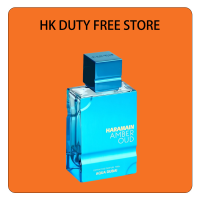
Al Haramain EDP Amber Oud Aqua Dubai
₱3,455.00₱8,466.00
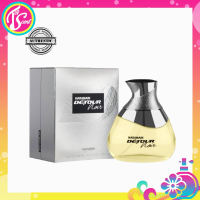
Al Haramain Detour Noir Eau de Parfum for Men 100ml
₱2,300.00
Buy on Lazada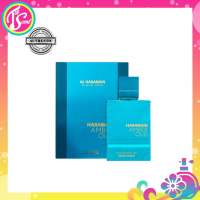
Al Haramain Amber Oud Aqua Dubai for Men Extrait De Parfum 75ml
₱5,650.00
Buy on Lazada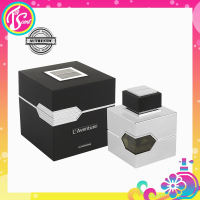
Al Haramain LAventure for Men 100ml
₱3,250.00
Buy on Lazada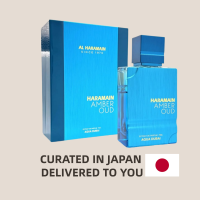
DIRECT FROM JP Al Haramain Amber Oud Aqua Dubai for UNISEX EDP 75ml
₱3,210.00₱8,977.00
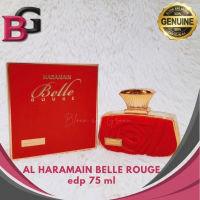
Al Haramain Belle Rouge edp 75 ml
₱2,078.60₱2,188.00
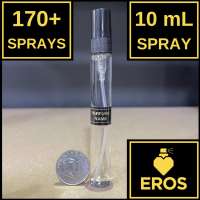
AMBER OUD RUBY 1mL 2mL 5mL DECANT perfume sample vial travel spray
₱710.00
Buy on LazadaAMBER OUD TOBACO 1mL 2mL 5mL DECANT perfume sample vial travel spray
₱800.00
Buy on LazadaAbout Al Haramain
Overview
Al Haramain Perfumes is an international fragrance house originally established in Makkah, Saudi Arabia, in 1970 by Kazi Abdul Haque. What began as a small enterprise trading agarwood (oud), Dehnal Oudh, and other precious perfumery materials has evolved into a multinational manufacturer, retailer, and exporter of fragrances.1 The company is currently headquartered in Ajman, United Arab Emirates, and distributes its products through a global network of retail outlets and partners.1
According to corporate materials, Al Haramain maintains a portfolio of over 1,000 fragrances and has a commercial presence in more than 100 countries.2 The brand is positioned within the fine and niche perfumery sector, combining traditional Arabian perfumery traditions with contemporary fragrance styles.
Corporate Profile
| Field | Information |
|---|---|
| Name | Al Haramain Perfumes |
| Founded | 1970 |
| Founder | Kazi Abdul Haque |
| Origin | Makkah, Saudi Arabia |
| Current Base | Ajman, United Arab Emirates |
| Industry | Fragrance, perfumery, home fragrance |
| Business Model | Manufacturer, retailer, exporter |
| Key Products | Oud, Arabian perfumes, perfume oils, sprays, bakhoor, modern fragrances |
| Portfolio Size | 1,000+ fragrances (company estimate) |
| Global Reach | 100+ countries (company estimate) |
| Chairman & MD | Mohammed Mahtabur Rahman (Nasir) |
| Market Positioning | Fine/niche perfumery blending traditional Arabian and modern styles |
History
Founding in Makkah
Al Haramain was founded in Makkah in 1970 by Kazi Abdul Haque.3 The business initially operated as a store near the Al-Haram Mosque, focusing on the trade of agarwood, Dehnal Oudh, and other valuable perfume ingredients.3 Unlike Western designer fragrance houses, the company’s origins were rooted deeply in the traditional Arabian perfume trade, specifically the use of oud and concentrated fragrance materials. Oud, derived from agarwood, is a culturally significant material in Middle Eastern perfumery, and the brand’s early specialization in this ingredient became a defining characteristic of its identity.
Expansion and Relocation
Over subsequent decades, Al Haramain transitioned from a traditional trader of oud and perfumes into a full-scale fragrance manufacturer. The company eventually established its primary operational base in the United Arab Emirates, setting up its head office in Dubai and manufacturing facilities in Ajman.4 This strategic move leveraged the UAE’s position as a commercial bridge connecting the Middle East with Asian, European, and global markets, facilitating the brand’s international expansion.
Leadership and Succession
Mohammed Mahtabur Rahman (Nasir), the son of founder Kazi Abdul Haque, is a central figure in the company’s development. His interest in perfumery reportedly deepened after visiting distilleries in Ta’if, and he played a significant role in transforming Al Haramain from a traditional trading operation into a large-scale international business.5 He currently serves as Chairman and Managing Director, and is also identified as CEO of the Al Haramain Perfumes Group of Companies.6 Under this second generation of leadership, the family-founded business has evolved into a multinational perfume group.
Name and Symbolism
The name “Al-Haramain” (الحرمين) translates literally to “the two holy mosques,” referring to Masjid al-Haram in Makkah and Al-Masjid an-Nabawi in Madinah.7 The company states that this name reflects its origins in these two holy cities and the cultural heritage of Arabian perfumery.7 Additionally, the corporate logo is described as representing Maqam Ibrahim, a site located beside the Kaaba within Masjid al-Haram.8 This nomenclature and symbolism deliberately incorporate religious and cultural heritage into the brand’s identity, distinguishing it from commercially or fashion-oriented perfume houses.
Brand Philosophy
Al Haramain views fragrance as a medium capable of evoking emotion, memory, desire, relaxation, and peace, rather than merely a cosmetic product. Its stated mission is to “excite, inspire and soothe the human spirit” through scent.9 The company’s vision is to become a world leader in fine perfumery while adapting to evolving consumer preferences.10 This philosophy underpins a catalogue that simultaneously maintains traditional Arabian perfume formats and produces modern eau de parfum compositions.
Product Categories
Al Haramain produces a diverse range of fragrance products beyond traditional oud.
Oud and Agarwood
This category remains historically central to the brand. Offerings include raw agarwood, oud oils, Dehnal Oudh, oud-based perfumes, and traditional compositions infused with oud.11 These products maintain a direct link to the company’s original trading business.
Concentrated Perfume Oils
Oil-based fragrances are a staple of Arabian perfumery. Al Haramain produces a wide array of concentrated oils that are applied directly to the skin, offering a distinct wearing experience compared to alcohol-based sprays and catering to those who prefer traditional Middle Eastern fragrance styles.
Eau de Parfum and Sprays
To compete in the contemporary international market, Al Haramain manufactures conventional spray perfumes. These formulations often blend traditional materials such as oud, amber, musk, and rose with globally recognized notes including citrus, vanilla, fruits, and modern woods.
Bakhoor and Home Fragrance
Bakhoor, which is burned to scent rooms, clothing, and surroundings rather than worn on the body, is a significant part of the brand’s offering.12 The company also markets various other home fragrance products intended for ambient scenting.
Fragrance Style and Aesthetics
The traditional Al Haramain aesthetic is characterized by notes of oud, amber, musk, florals, spices, and sweetness, typically with strong performance. Historical categories include oriental agarwood, oriental spicy, fresh floral, and sweet floral fragrances.13
However, the modern portfolio is considerably broader. The brand increasingly combines Arabian ingredients with Western-style perfume structures, incorporating fresh citrus, fruity accords, vanilla, woods, and synthetic materials. Consequently, the current catalogue ranges from extremely traditional scents to compositions that align closely with contemporary international niche or designer perfumery.
Bridging Perfume Cultures
Al Haramain effectively occupies a space between two distinct perfume cultures:
- Traditional: Oud, Dehnal Oudh, attars, oils, musk, amber, rose, and bakhoor associated with Gulf and Islamic fragrance traditions.
- Modern: Eau de parfum, extrait-style compositions, contemporary woody and fresh scents, and sweet gourmand fragrances.
This duality allows the brand to appeal to both consumers raised with traditional Middle Eastern perfumery and newer international enthusiasts.
Notable Collections
With a portfolio exceeding 1,000 fragrances, the Al Haramain catalogue is extensive and constantly evolving.14 Key modern lines include:
- Amber Oud: Perhaps the most internationally recognizable family, this collection signals the combination of amber and oud. Variations range from woody and resinous to fruity, sweet, fresh, or gourmand-like.
- L’Aventure: A fragrance that helped introduce the brand to a wider audience of contemporary enthusiasts, demonstrating an alignment with modern Western perfume structures rather than overtly traditional Arabian styles.
- Detour: A contemporary line that combines modern perfume styles with the brand’s characteristic emphasis on strong performance.
Alongside these modern collections, the company continues to offer traditional oils, oud, musk, and bakhoor, contributing to the sheer size of its catalogue.
Manufacturing and Sourcing
Al Haramain operates as a manufacturer as well as a retailer and exporter, rather than solely sourcing from third parties.15 Corporate materials describe substantial manufacturing infrastructure and dedicated research and development capabilities in the UAE.16 Ingredient selection is emphasized as a priority, with directors reportedly traveling internationally to source materials, focusing on quality and ethical sourcing.17 The production process integrates modern manufacturing technology with traditional perfumery knowledge.
International Presence
While historically rooted in Saudi Arabia and the UAE, Al Haramain has expanded globally. Official materials list retail and showroom activities in the United Arab Emirates, Saudi Arabia, Oman, Bahrain, Kuwait, Qatar, Singapore, Malaysia, the United Kingdom, the United States, and Bangladesh. The company states its products are available in over 100 countries through distributors and travel retailers. This reach has allowed the brand to introduce a distinctly Arabian fragrance identity to markets where consumers may have limited prior exposure to traditional oud and perfume oils.
Operations in the UAE
Although founded in Makkah, the modern company is strongly associated with the United Arab Emirates. Its headquarters are located in Ajman, and the UAE serves as its main corporate base.18 This structure reflects a common pattern among Gulf businesses, where deep historical roots in Saudi Arabia are complemented by modern manufacturing, logistics, and commercial centers in the UAE.
Market Position
Al Haramain occupies a unique position between traditional attar shops and Western designer perfume houses. It blends elements of Arabian traditional perfumery, Middle Eastern luxury fragrance, and contemporary international niche perfume. This positioning makes it a notable entry point for consumers exploring Middle Eastern fragrances, with a catalogue ranging from accessible perfumes to high-end concentrated oud products.
Factors Contributing to Popularity
Several factors contribute to the brand’s market standing:
- Performance: Many fragrances are designed with significant projection and longevity, consistent with traditional Middle Eastern preferences.
- Selection: A portfolio of over 1,000 fragrances covers nearly every major fragrance direction.19
- Heritage: The brand possesses genuine historical roots in Arabian perfumery rather than adopting oud solely as a marketing trend.
- Accessibility: An extensive retail and distribution network facilitates access for consumers outside the Middle East.
- Versatility: The catalogue offers both traditional oud products and modern perfumes, removing the need for consumers to choose between the two.
Distinction from Traditional Attar Houses
Al Haramain differs from traditional attar merchants through its level of industrialization and diversification. While a traditional shop might specialize exclusively in attar, oud oil, musk, rose oil, and bakhoor, Al Haramain utilizes modern manufacturing and distribution systems to produce eau de parfum, sprays, concentrated oils, and large contemporary collections alongside traditional items. It is therefore best understood as a large-scale Arabian fragrance house rather than a simple oud retailer.
Cultural Significance
The brand’s identity is intrinsically linked to Makkah, Madinah, oud, and Arabian perfumery, distinguishing it from European houses such as Chanel, Dior, or Guerlain. Its narrative connects Islamic and Arabian heritage with traditional Middle Eastern perfumery and the modern global fragrance industry. This synthesis represents a central theme in the company’s development.
Timeline of Development
| Year/Period | Development |
|---|---|
| 1970 | Kazi Abdul Haque establishes the business in Makkah |
| Early Years | Focus on agarwood, Dehnal Oudh, and traditional perfume materials |
| Following Decades | Expansion from perfume trading into manufacturing |
| Late 20th Century | UAE becomes increasingly important to operations |
| 1990s–2000s | Expansion of manufacturing, retail, and international distribution |
| 2000s–2010s | Increasing presence across Gulf, Asian, European, and American markets |
| 2010s | Large expansion of contemporary perfume catalogue |
| 2020s | Operates as international manufacturer/retailer with 1,000+ fragrances |
Note: Specific dates for individual expansion milestones are less consistently documented publicly than the founding date; the timeline above reflects broad developmental phases.20
Assessment
Al Haramain is a significant representative of the transition of Arabian perfumery from a regional tradition to a global business. Its achievement lies in maintaining the vocabulary of Middle Eastern perfumery—oud, amber, musk, rose, spices, oils, and bakhoor—while building a modern operation capable of producing contemporary perfumes for international consumers. From its origins as a 1970 oud-trading business in Makkah, it has developed into a multinational company based in the UAE with a distribution footprint spanning the Gulf, Asia, Europe, North America, and beyond.21 The brand exemplifies the convergence of Makkah heritage, Arabian oud culture, UAE manufacturing, and modern international perfumery.
References
- About Us – Al Haramain Perfumes – Al Haramain Perfumes | Since 1970
- INDEXPage 01About Us ………………………
- About Us
- History of Al Haramain – Al Haramain Perfumes | Since 1970
- Al Haramain Perfumes | Since 1970 – Al Haramain Perfumes | Since 1970
- Al Haramain Holding
- About Us | Al Haramain Perfumes UK | Best Selling Perfumes
- A message from our Chief Executive Officer – Al Haramain Perfumes | Since 1970
- Al Haramain Perfumes | Profile
- Al Haramain Perfumes — Catalog, Notes & Reviews · Mijmara
- Blog – Al Haramain Perfumes | Since 1970
- Newsroom – Al Haramain Perfumes | Since 1970
- Site Map – Al Haramain Perfumes | Since 1970
- Al Haramain Perfumes Opens New Branch in Al Seef | Al Bilad Press – Al Haramain Perfumes | Since 1970
- The Rich History & Powerful Secrets of Fragrance – Al Haramain Perfumes | Since 1970
- Al Haramain Perfumes Opens New Store in Qatar – Al Haramain Perfumes | Since 1970
- History of Arabian Perfume – Al Haramain Perfumes | Since 1970
- معلومات عنا شركة الحرمين للعطور
- Al Haramain Perfumes | Since 1970
- معلومات عنا شركة الحرمين للعطور
- Al Haramain Perfumes | LinkedIn