Shop on Lazada
Alienware products
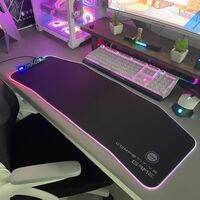
Alienware | Wireless Charging RGB Luminescent Large Mouse Pad Keyboard Desk Pad
₱3,503.00₱3,603.00

New 44T2R Laptop Battery For Alienware 15R3 15R4 17R4 17R5 9NJM1 MG2YH HF250 546FF 0546FF HF25D P31E001 P69F001 15.2V 68Wh
₱2,968.00₱3,659.00
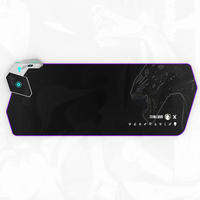
Alienware | Wireless Charging RGB LED Gaming Mouse Pad
₱3,248.00
Buy on Lazada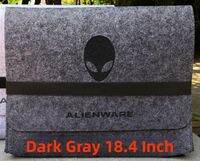
Shockproof Felt Laptop Sleeve 13-18inch
₱279.20₱504.00
About Alienware
Overview
Alienware is an American computer hardware brand specialising in high-performance gaming laptops, desktops, monitors, and peripherals. It operates as a subsidiary and dedicated gaming division of Dell Technologies. The brand is widely recognised for its futuristic, science-fiction-inspired industrial design, distinctive alien-head logo, customisable RGB lighting, and premium market positioning.1
| Field | Information |
|---|---|
| Brand name | Alienware |
| Founded | 1996 |
| Founders | Nelson Gonzalez and Alex Aguila |
| Original company | Saikai of Miami, Inc. |
| Headquarters | Miami, Florida, United States |
| Industry | Computer hardware / gaming |
| Parent company | Dell Technologies |
| Products | Gaming laptops, desktops, monitors, keyboards, mice, headsets and accessories |
| Primary market | PC gaming |
| Known for | High-performance hardware and futuristic design |
| Official website | Alienware Gaming |
Alienware positions itself as a gaming-first brand with a focus on performance, durability, engineering, and design. Its current product portfolio comprises gaming laptops, desktops, monitors, and accessories.2
History
Foundation (1996)
Alienware was established in 1996 in Miami, Florida, during the formative years of the enthusiast PC gaming market. Founders Nelson Gonzalez and Alex Aguila initially focused on assembling customised, high-performance computers specifically for gamers.
According to Dell’s official history, the company began operations in a garage near Miami, where the founders experimented with PC components and bespoke configurations. The company officially dates its inception to October 15, 1996.3
Originally incorporated as Saikai of Miami, Inc., the business later adopted the Alienware name. Its science-fiction identity was heavily influenced by the television series The X-Files, a theme that subsequently permeated its product naming conventions and visual branding.4
Early growth
Alienware distinguished itself from conventional PC manufacturers by targeting enthusiasts rather than the general consumer or office market. Instead of selling standardised systems, it emphasised:
- High-end processors and graphics hardware
- Custom-built gaming PCs
- Aggressive industrial designs
- Performance-oriented cooling solutions
- Gaming-specific configurations
- Customisable lighting
- Science-fiction aesthetics
Product names adopted a distinctive futuristic theme, with models such as Area-51, Aurora, and Hangar 18 becoming synonymous with the Alienware brand.5
Aurora desktop line
The Aurora series became one of Alienware’s most significant desktop families. Introduced in 2004, the Aurora line was notable for its early adoption of liquid-cooling technology. Over subsequent generations, Aurora evolved into one of the brand’s signature desktop platforms.6
Acquisition by Dell (2006)
A pivotal moment in the brand’s history occurred in 2006 when Dell announced its acquisition of Alienware.
The transaction was announced on March 22, 2006, making Alienware a wholly owned subsidiary of Dell. The U.S. Federal Trade Commission granted clearance for the acquisition in April 2006.7
Rather than absorbing Alienware entirely, Dell retained its distinct identity and positioned it as a premium gaming brand. This arrangement provided Alienware with access to Dell’s extensive manufacturing, procurement, distribution, and support infrastructure while preserving its enthusiast-focused brand equity.8
Expansion into gaming laptops
Alienware grew increasingly prominent in the gaming laptop segment. Its laptops were engineered to deliver desktop-class performance in a portable form factor, although historically they tended to be larger and heavier than mainstream notebooks.
The brand’s laptop lineage includes the M-series, M15, M17, X-series, and various other generations. In 2009, Dell introduced the Alienware M17x, which marked a significant milestone in the brand’s post-acquisition expansion.9
2010s
Throughout the 2010s, Alienware solidified its status as one of the most recognisable premium gaming PC brands globally. Its products became associated with:
- NVIDIA GeForce graphics
- Intel Core processors
- High-refresh-rate displays
- Mechanical keyboards
- Advanced cooling systems
- RGB lighting
- Large desktop-replacement laptops
- Aggressive futuristic styling
During this decade, Alienware also expanded beyond complete systems into gaming monitors, keyboards, mice, and headsets.
2020s
Alienware continued to evolve its product design while maintaining its distinctive identity. The company introduced the X-Series of gaming laptops, prioritising thinner chassis designs without compromising high performance. In 2021, Alienware described the X-Series as its thinnest 15-inch and 17-inch laptop family to date.10
Concurrently, Alienware redesigned the Aurora desktop line, modernising both its internal layout and external appearance.
Brand identity
The alien theme
The most recognisable element of Alienware’s identity is its alien-head logo. The brand deliberately employs extraterrestrial and science-fiction imagery across its product names, lighting schemes, chassis shapes, and marketing materials. The overarching concept can be summarised as alien technology designed for human gamers, resulting in a brand identity considerably more dramatic than that of conventional PC manufacturers.
Design philosophy
Alienware traditionally adheres to a design philosophy centred on futurism and performance. Its computers commonly feature:
- Sculpted chassis
- Dark or metallic finishes
- Alien-head branding
- RGB lighting
- Angular or aerodynamic elements
- Large ventilation systems
- Distinctive desktop silhouettes
This approach ensures Alienware hardware remains immediately recognisable. Dell currently describes the brand’s philosophy as combining iconic design, engineering, durability, and community-driven development.11
Product lineup
Gaming laptops
Gaming laptops represent one of Alienware’s most critical product categories. Modern Alienware laptops cater to users seeking high-end PC gaming performance in a portable format, typically emphasising:
- High-performance CPUs
- Dedicated NVIDIA or AMD graphics
- High-refresh-rate displays
- QHD and other high-resolution panels
- Advanced thermal management systems
- RGB lighting
- Premium chassis construction
Alienware’s current portfolio includes the Alienware 15 alongside other gaming laptop offerings.12
Gaming desktops
Alienware desktops are among the brand’s most iconic products.
Area-51
The Area-51 is arguably Alienware’s most famous desktop family. Named after the U.S. military installation to fit the brand’s extraterrestrial theme, modern versions represent Alienware’s highest-end desktop positioning. Dell currently describes Area-51 as an iconic platform, with current configurations utilising high-end AMD Ryzen processors.13
Aurora
The Aurora serves as another major Alienware desktop family. Unlike the ultra-premium Area-51, Aurora has traditionally occupied a more mainstream high-performance gaming desktop position. The Aurora line traces its history back to 2004, when Alienware first highlighted its liquid-cooling technology within this range.14
Monitors and peripherals
Alienware eventually expanded its ecosystem beyond complete computers to include:
- Gaming monitors
- Gaming keyboards
- Gaming mice
- Gaming headsets
- Other accessories
Gaming monitors have become a particularly important category, with Alienware gaining recognition for high-refresh-rate and OLED displays. The current range includes QD-OLED gaming monitors, featuring ultrawide models designed around high refresh rates and fast response times.15
Technology and engineering
Alienware’s appeal extends beyond aesthetics; the brand has historically concentrated on integrating high-end PC hardware into gaming-oriented systems.
Cooling
High-performance gaming computers generate substantial heat, prompting Alienware to invest heavily in thermal engineering. The Aurora line is particularly notable in this regard, as Alienware introduced liquid-cooling technology to the product family as early as 2004.16
Displays
Alienware has increasingly emphasised premium gaming displays, incorporating:
- High refresh rates
- OLED technology
- QHD resolution
- Ultrawide formats
- High colour performance
Mechanical keyboards
Alienware has also experimented with premium mechanical keyboard technology. In 2021, the company highlighted a gaming laptop designed in collaboration with CHERRY MX, a leading manufacturer of mechanical switches.17
Alienware and Dell
Alienware is no longer an independent PC manufacturer as it was during its early years; it is now an integral part of Dell Technologies. However, Dell has maintained Alienware as a distinct gaming identity rather than replacing it with Dell branding. This strategy creates differentiated market positions:
| Brand | General positioning |
|---|---|
| Dell | Mainstream computers, business systems and consumer PCs |
| Dell XPS | Premium mainstream/creator-oriented computers |
| Alienware | Premium/high-performance gaming |
| Dell G Series | More accessible gaming hardware |
Alienware serves as Dell’s flagship gaming brand, with Dell describing it as its premier high-performance PC gaming brand.18
Reputation
Alienware enjoys a strong reputation among PC gaming enthusiasts, though its products have also generated debate.
Strengths
- Performance: Alienware systems commonly utilise high-end CPUs, GPUs, displays, and storage.
- Design: Futuristic styling remains one of the company’s primary differentiators.
- Brand recognition: Alienware is one of the most recognised names in gaming PCs.
- Engineering: The company has historically invested significantly in cooling, display technology, and chassis design.
- Ecosystem: Alienware offers computers, monitors, and peripherals, enabling users to build a cohesive gaming setup.
Criticism
The most frequent criticism concerns pricing. As a premium brand, comparable hardware can sometimes be purchased more cheaply from other manufacturers or through self-built systems. Other criticisms have varied by model and generation, including:
- Size and weight of certain gaming laptops
- Thermal and noise characteristics
- Limited upgradeability on specific systems
- Premium pricing
- Proprietary components or chassis designs in some desktop generations
These issues are not universal across the entire product line, making individual model reviews essential for prospective buyers.
Cultural significance
Alienware occupies a unique position in the computer industry, functioning simultaneously as a hardware manufacturer, a gaming brand, a design icon, a Dell Technologies subsidiary, and a symbol of high-end PC gaming. Its alien-head logo is arguably as recognisable within gaming hardware circles as logos from major component manufacturers.
The brand also helped normalise the concept that a gaming PC could possess an intentionally extravagant appearance rather than resembling a conventional beige or black office computer.
Major milestones
| Year | Event |
|---|---|
| 1996 | Alienware’s origins begin in Miami |
| 1997 | Company adopts the Alienware name |
| 2004 | Aurora becomes a major Alienware desktop platform; liquid cooling is highlighted |
| 2006 | Dell acquires Alienware |
| 2009 | Alienware M17x expands the brand’s Dell-era gaming-laptop presence |
| 2010s | Alienware becomes a major premium gaming-PC and laptop brand |
| 2021 | Alienware celebrates its 25th anniversary and introduces major product/design updates |
| 2020s | Expansion of OLED/QD-OLED monitors, newer laptops and redesigned desktops |
| 2026 | Alienware continues as Dell Technologies’ flagship gaming brand, offering laptops, desktops, monitors and accessories |
The 2021 anniversary marked 25 years since Alienware’s 1996 founding, according to Dell’s official history.19
Current status
As of 2026, Alienware remains focused primarily on premium PC gaming. Its current official portfolio is organised around four major categories: gaming laptops, gaming desktops, gaming monitors, and accessories.20
The current desktop lineup includes the Area-51 and Aurora, while the laptop range emphasises high-performance gaming machines. Alienware is also heavily involved in premium gaming displays, including QD-OLED products.21
The brand continues to uphold the philosophy that defined it in the 1990s: building powerful gaming hardware with visually distinctive designs and an identity rooted in science fiction rather than ordinary consumer electronics.22
References
- A Bright New Aurora on the Horizon: Alienware Unveils New Flagship Desktop to Commemorate its 25th Anniversary | Dell Technologies
- Alienware Gaming | Dell USA
- Alienware
- ITS OFFICIAL DELL HAS AQUIRED ALIENWARE. | DELL Technologies
- 20060874: Dell Inc.; Alienware Corporation | Federal Trade Commission
- The Alienware Difference: Unique advantages supporting your gaming experience | Dell Singapore
- Alienware 17 Reviewers Guide
- Who Owns Alienware? Dell’s Acquisition Explained – LegalClarity
- From Miami to Area 51: the 20-year history of Alienware | TechRadar
- Dell to buy Alienware – Washington Technology
- Dell to buy Alienware – Ars Technica
- Dell Beams Up Alienware
- Alienware Gaming | Dell USA
- Alienware Gaming | Dell USA
- Alienware Gaming | Dell USA
- Alienware Gaming | Dell USA
- Alienware Gaming | Dell USA
- Alienware Gaming | Dell USA
- Alienware Gaming | Dell USA
- Alienware Gaming | Dell USA
- Alienware Gaming | Dell USA
- Alienware Gaming | Dell USA