Shop on Lazada
Amway products
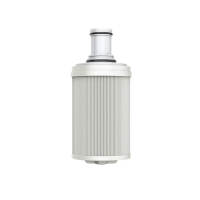
🔥Original and Authentic🔥 Replacement Compatible with amway water filter High Quality HEPA&Active Carbon High-Efficiency Antibacteria Virus
₱4,999.00
Buy on Lazada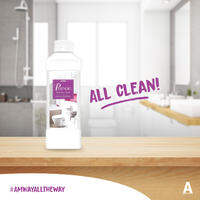
AMWAY PURSUE DISINFECTANT CLEANER ONE STEP DISINFECTANT
₱770.00
Buy on Lazada🔥Original and Authentic🔥 Replacement Compatible with amway water filter High Quality HEPA&Active Carbon High-Efficiency Antibacteria Virus
₱4,999.00
Buy on Lazada
AMWAY DISH DROP DISHWASHING LIQUID
₱835.00
Buy on Lazada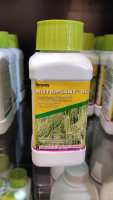
NUTRIPLANT SL
₱1,065.00
Buy on Lazada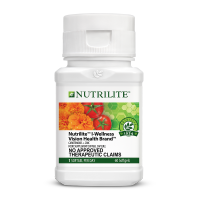
Nutrilite I-Wellness Vision Health Brand | 60 softgels | Authentic Amway Product
₱2,480.00
Buy on Lazada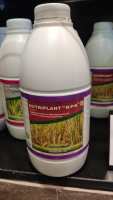
NUTRIPLANT N-P-K+
₱2,145.00
Buy on Lazada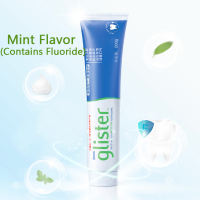
Amway Glister Multi-Action Fluoride Mint White Tea Toothpaste Anti Plaque Cavities Mineral Whitening Toothpaste Fresh Breath Gel Toothpaste Remove Yellow Tooth Stains(200g) (P2A)
₱299.00₱600.00
About Amway
Amway is a privately held American direct-selling company best known for nutritional supplements, beauty and personal-care products, home-care items, and fitness and wellness solutions. Founded in 1959 in Ada, Michigan, by Jay Van Andel and Rich DeVos, the company describes itself as an entrepreneur-led health and wellbeing enterprise operating in more than 100 countries and territories. It employs over 14,000 people worldwide and distributes its products through a global network of Independent Business Owners (IBOs). 1
Basic information
| Category | Information |
|---|---|
| Company name | Amway Corporation |
| Founded | November 9, 1959 |
| Founders | Jay Van Andel and Rich DeVos |
| Origin | Ada, Michigan, United States |
| Industry | Direct selling; health and wellbeing |
| Ownership | Privately held, family-owned |
| Major product areas | Nutrition, beauty, personal care, home, fitness |
| Major brands | Nutrilite, Artistry, XS and others |
| Global presence | 100+ countries and territories |
| Employees | 14,000+ worldwide |
| Business network | Amway Independent Business Owners (IBOs) |
| Current CEO | Michael Nelson |
| Board co-chairs | Steve Van Andel and Doug DeVos |
Amway is not a publicly traded corporation. Ownership remains with the Van Andel and DeVos families, the descendants of its two founders. 2
Business model and identity
The name Amway is derived from “American Way,” reflecting its founding concept that individuals could operate their own small businesses by selling products directly to consumers. Unlike conventional consumer-goods companies that rely primarily on supermarkets or department stores, Amway utilizes a direct-selling model where products are marketed and sold through independent distributors known as Independent Business Owners (IBOs).
The company currently manufactures and distributes more than 350 products across nutrition, beauty, personal care, fitness, and home categories. 3 The fundamental distribution structure flows from Amway to the IBO, and then to the customer. An IBO may purchase and sell products directly and, depending on the applicable market’s compensation plan, build an organization of other IBOs. This organizational component is why Amway is commonly associated with multi-level marketing (MLM) or network marketing.
Founding and early history
Amway was established by Jay Van Andel and Rich DeVos, childhood friends from Michigan who had previously attempted several entrepreneurial ventures. A pivotal step in their development was becoming distributors for Nutrilite, a nutritional supplement company founded by Carl Rehnborg. Their experience with Nutrilite significantly influenced the business model they eventually created for Amway. 4
In 1959, Van Andel and DeVos launched Amway from the basements of their homes in Ada, Michigan. The company’s first product was Frisk Liquid Organic Cleaner Concentrate, later renamed L.O.C. (Liquid Organic Cleaner), which Amway describes as one of the world’s early biodegradable concentrated multipurpose cleaners. 5 The original business concept focused on developing useful consumer products, selling them directly without reliance on traditional retail stores, enabling independent entrepreneurs to sell these products, and rewarding sales and business development through a specific compensation system.
Corporate development
1959–1960s: Foundation and expansion
Following its establishment in Ada, Michigan, Amway expanded both its product portfolio and international operations. In 1968, the company introduced Artistry, its dedicated beauty and cosmetics brand. 6
1970s: Acquisition of Nutrilite
A significant milestone occurred in 1972 when Amway acquired Nutrilite, the nutritional supplement business that had originally inspired the founders’ entrepreneurial careers. Nutrilite subsequently became one of Amway’s most important brands. 7
1980s–1990s: International growth
During the 1980s, Amway expanded substantially outside the United States. The company reports that its IBO network reached more than one million people during this decade, and sales surpassed $1 billion for the first time. 8 Globalization continued into the 1990s with expansion into additional markets, including China, India, and Mexico.
2000s–Present: Diversification and modernization
In the 2000s, the company broadened its portfolio beyond traditional cleaning and nutrition categories to include home technology products such as eSpring water purifiers and Atmosphere air purifiers. Investment in nutrition, beauty, scientific research, and digital tools continued through the 2010s. In 2015, Amway acquired the XS brand outright after previously serving as its distributor. Amway celebrated its 65th anniversary in 2024 and continues to operate internationally as a privately owned direct-selling business.
Major brands
Amway operates as a portfolio of distinct brands rather than a single-product entity.
Nutrilite
Nutrilite is widely considered Amway’s most significant product brand, focusing on vitamins, dietary supplements, minerals, plant-based nutrition, wellness products, and sports nutrition. Founded by Carl Rehnborg in 1934, Nutrilite predates Amway itself. Van Andel and DeVos were Nutrilite distributors before founding Amway, and the acquisition of the brand in 1972 integrated it fully into the company. Consequently, Nutrilite helped inspire the Amway business model before becoming part of the corporation.
Artistry
Artistry serves as Amway’s principal beauty brand, encompassing skincare, cosmetics, cleansing, moisturizing, and anti-aging products. The brand traces its heritage to Edith Rehnborg, who developed cosmetics connected with the Nutrilite business prior to Amway’s founding. Amway officially introduced the Artistry line in 1968.
XS
The XS brand focuses on energy and sports nutrition, including energy drinks and related fitness products. Amway became the exclusive distributor of XS in 2003 and acquired the brand completely in 2015.
Home and personal care
Amway also maintains a wide range of household and personal care offerings, including laundry products, oral care, water and air purification systems, cookware, and general home products. Historically, household cleaners were central to Amway’s identity, beginning with the original L.O.C. product.
Direct selling and MLM classification
Amway is generally classified as a multi-level marketing and direct-selling company. This distinguishes it from conventional retailers like Unilever, Procter & Gamble, or L’Oréal. Individuals become Independent Business Owners (IBOs) to sell products directly to consumers. IBOs are not employees; they maintain an independent business relationship with Amway.
Under this structure, an IBO may sponsor others to become IBOs, creating a network. Depending on the specific market and compensation plan, earnings can be derived from retail product sales, sales volume, bonuses, incentives, and sales generated by members of their organization. Amway states that IBOs earn money by selling products to customers and may qualify for bonuses based on their own sales volume and that of their sponsored team.
Legal distinction regarding pyramid schemes
A critical distinction exists between legitimate direct selling and illegal pyramid schemes. In legitimate direct selling, the primary economic activity is the sale of products or services to end consumers. In contrast, illegal pyramid schemes derive revenue primarily from recruitment rather than genuine retail sales.
In 1979, the U.S. Federal Trade Commission (FTC) issued an administrative decision finding that Amway’s program was not an illegal pyramid scheme. This determination was partly based on rules designed to ensure products were actually sold to consumers and to limit inventory loading. 9 This ruling does not guarantee financial success for participants, nor does it apply to all MLMs universally; it specifically established that the Amway plan examined did not violate relevant laws under the circumstances considered.
Controversies and defenses
As one of the world’s most recognizable MLM companies, Amway has faced longstanding criticism and controversy distinct from legal questions regarding its legitimacy.
Common criticisms
- Recruitment: Critics argue that the emphasis on team building can make recruitment appear more prioritized than retail sales.
- Income expectations: Skeptics question how many participants earn substantial income after accounting for expenses.
- Social relationships: Because IBOs often approach friends and relatives initially, critics suggest the business can blur lines between personal relationships and commercial recruitment.
- Motivational culture: While supporters view Amway-related training as entrepreneurship and personal development, some critics characterize aspects of this culture as excessive.
- Product pricing: Some products are criticized for being priced higher than comparable items in conventional retail channels.
Corporate defense
Amway maintains that its business is fundamentally based on real products and customer sales. The company emphasizes that compensation is tied to product sales, customers can purchase without joining as IBOs, and it has operated for over six decades. Amway states it holds more than 750 patents and patents pending and has invested over $300 million in U.S. manufacturing operations in recent years. 10
Manufacturing and research
Amway functions as a substantial manufacturing and research organization, differentiating it from entities that solely manage distribution. Operations encompass product research, nutrition science, botanical research, manufacturing, agricultural production, quality control, warehousing, and distribution.
The headquarters campus in Ada, Michigan, houses research, manufacturing, warehousing, and office facilities. Internationally, the company maintains manufacturing operations in locations including India and China. 11 For Nutrilite specifically, Amway has historically emphasized vertical integration, controlling botanical ingredients from cultivation through processing.
Global presence
Amway operates in more than 100 countries and territories across six continents, employing over 14,000 people worldwide. Products are distributed exclusively through its global IBO network. Major markets include the United States, Canada, Mexico, China, India, Japan, South Korea, Southeast Asia, Europe, Australia, and New Zealand. Product portfolios, pricing, registration requirements, and compensation rules vary significantly between countries.
Ownership and leadership
Amway remains privately owned and controlled by the founding Van Andel and DeVos families. Current board co-chairs are Steve Van Andel (son of Jay Van Andel) and Doug DeVos (son of Rich DeVos). Michael Nelson serves as President and CEO. This structure allows the company to pursue long-term strategies without the quarterly earnings pressures typical of publicly traded multinational corporations.
Entrepreneurship and corporate philosophy
Entrepreneurship is central to Amway’s brand identity. The company positions itself as a platform for independent business ownership rather than merely a retailer of vitamins or cosmetics. Its philosophy combines products, direct selling, independent entrepreneurs, and performance-based compensation. This model attracts individuals interested in side businesses, self-employment, and flexible work.
Corporate culture frequently emphasizes four core concepts: Freedom, Family, Hope, and Reward. 13 This reflects the founders’ belief that ordinary individuals could own and operate businesses rather than working solely as employees. Prospective IBOs are advised to distinguish the opportunity to participate from any guarantee of financial success, as income depends on sales, expenses, market conditions, and effort.
Philanthropy
Amway and its IBO network engage in various philanthropic activities. A longstanding partnership exists with Easterseals, a nonprofit supporting people with disabilities. Since 1983, Amway and its IBOs have raised more than $35 million to support children and individuals with disabilities. 14 The company also highlights initiatives in environmental sustainability, agricultural research, and community development.
Strengths and risks
Strengths
- Operating history: Founded in 1959, the company has navigated over six decades of market changes.
- Brand portfolio: Brands like Nutrilite and Artistry provide recognition independent of the Amway corporate name.
- Distribution network: The IBO model provides market access without exclusive reliance on traditional retail infrastructure.
- Manufacturing capability: Significant in-house research, manufacturing, and supply chain assets.
- Private ownership: Enables long-term strategic planning.
Risks and weaknesses
- Reputation: Strong association with MLM creates both recognition and reputational challenges.
- IBO dependence: Customer experience quality varies by individual distributor.
- Recruitment tension: Network structures can create friction between retail sales and recruitment efforts.
- Competition: Faces competition from major consumer goods companies, online retailers, and specialized brands.
- Regulatory scrutiny: Direct selling remains subject to close regulatory monitoring regarding income claims, product claims, and consumer protection.
Significance in business history
Amway is historically significant for helping popularize the modern multi-level and direct-selling industry. Its influence extends beyond its specific products to serve as a reference point for subsequent direct-selling companies. The 1979 FTC case remains a frequently cited legal precedent in discussions distinguishing legitimate direct selling from pyramid schemes. 12
The company occupies three distinct roles in commerce: as a consumer-products company selling nutrition and beauty goods; as a direct-selling company distributing through independent entrepreneurs; and as a historical exemplar of the network-marketing model. While its MLM structure has generated debate regarding recruitment and income potential, the 1979 FTC proceeding established that its specific plan was not an illegal pyramid scheme under the rules at issue. 15
References
- Amway History | Learn About Amway’s History & Origin | Amway Heritage | Amway United States
- Common questions about Amway.
- Amway ownership and leadership team
- Amway history: How did Amway start?
- Amway product brands: Nutrilite, Artistry, XS and more
- Amway’s 60+ years of positive impact
- Amway Questions & Answers | Amway | Amway United States
- Artistry About Us | Amway United States
- Amway facts and information
- Amway History | Learn About Amway’s History & Origin | Amway Heritage | Amway United States
- Artistry About Us | Amway United States
- Amway Insider – Direct Selling | Amway United States
- Amway’s impact on direct selling
- Amway Insider – Myths | Amway United States
- Modernization of Amway: Embracing innovation