Shop on Lazada
Anna Sui products
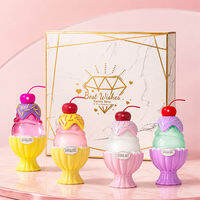
Anna Sui | Floral and Fruity Womens Perfume 50ml
₱11,962.82₱23,759.60
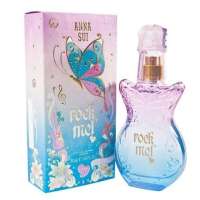
Anna Sui Rock Me Summer of Love Eau de Toilette 50ML
₱3,250.00
Buy on Lazada
Anna Sui | Sample Test Fragrance 2ml
₱504.61
Buy on Lazada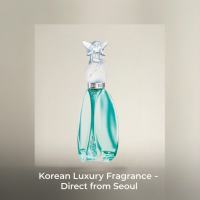
100% ORI Direct From Seoul Anna Sui Anna Sui Secret Wish EDT 75ML For women
₱3,520.00₱8,230.00
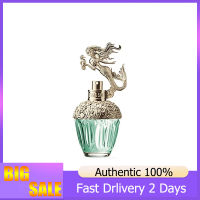
Original 100% Anna Sui Fantasia Unicorn Mermaid Men Women EDT Perfume Spray 75ml
₱2,700.00₱8,600.00
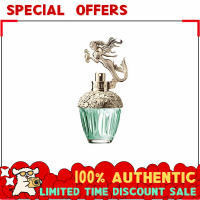
【100% AUTHENTIC PERFUME】ANNA SUI FANTASIA UNICORN MERMAID 75ml DISCOUNT EVENT Eau De Toilette
₱3,598.00₱6,000.00
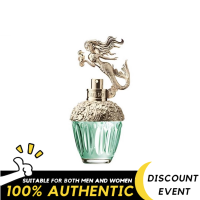
100% AUTHENTIC ANNA SUI FANTASIA UNICORN MERMAID - 75ML/Eau De Toilette DISCOUNT EVENT
₱3,049.00₱6,270.00
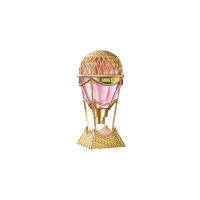
Official Dealer Anna Sui Sky 75ML EDP Special Sales
₱2,625.00₱9,000.00
About Anna Sui
Overview
Anna Sui is an American fashion designer and the founder of the Anna Sui fashion and beauty brand. Established in New York in the early 1980s, the label is distinguished by its eclectic fusion of vintage fashion, rock ’n’ roll, bohemian style, Victorian references, pop culture, and youthful femininity. Unlike many luxury houses that prioritize minimalism or traditional elegance, Anna Sui constructs a comprehensive imaginative universe encompassing clothing, runway sets, cosmetics, fragrances, retail environments, packaging, and accessories.1
Brand Profile
| Category | Information |
|---|---|
| Brand | Anna Sui |
| Founder / Creative force | Anna Sui |
| Born | August 4, 1955 |
| Origin | New York, United States |
| Founder’s birthplace | Detroit, Michigan |
| Education | Parsons School of Design |
| Fashion label established | 1981 |
| First runway show | 1991 |
| First flagship boutique | 1992, Greene Street, SoHo, New York |
| Main categories | Fashion, accessories, cosmetics, fragrance |
| Design identity | Eclectic, vintage-inspired, romantic, bohemian, rock-influenced |
| Ownership | Independent |
| Global presence | 50+ boutiques in 8 countries; products sold through 300 stores in 30+ countries |
While some secondary sources cite 1980 as the founding date, the brand’s official historical timeline identifies 1981 as the year the fashion label was established.2
The Founder
Born in Detroit, Michigan, in 1955, Anna Sui grew up in a Chinese-American family. Her passion for fashion emerged at a remarkably young age; according to her CFDA biography, she decided she wanted to be a designer around the age of four.3
As a teenager, Sui moved toward New York’s fashion industry and was accepted into Parsons School of Design before completing high school. After studying at Parsons for two years, she worked in various fashion roles, including styling and designing for sportswear companies. During this period, she formed a significant creative partnership with photographer Steven Meisel, which proved influential in her early career.4
Sui’s background is notable because she did not emerge from an established European couture house. Instead, she cultivated her aesthetic within New York’s creative underground, where fashion intersected closely with music, photography, art, and youth culture.5
Founding of the Label
In the early 1980s, while employed at a sportswear company, Sui produced a small personal collection. Buyers from Macy’s and Bloomingdale’s took notice of her designs, leading to exposure through a Macy’s advertising campaign and The New York Times. Consequently, her employer dismissed her due to a conflict of interest.
Rather than abandoning her vision, Sui used her final paycheck to fund her first complete collection. Her official timeline dates the establishment of the label to 1981.6
This origin story is central to the Anna Sui mythology: an independent designer in New York building a fashion enterprise around personal obsessions rather than adhering to the conventional luxury-fashion business model.
The 1991 Breakthrough
A pivotal moment occurred in 1991 when Anna Sui presented her first runway show. Supported by close friends and collaborators such as Naomi Campbell, Linda Evangelista, Christy Turlington, and Steven Meisel, the debut transformed her status from an independent designer with a cult following to an internationally recognized fashion figure.7
The timing was culturally significant. As American fashion shifted away from the exaggerated power dressing of the 1980s, Sui, alongside contemporaries like Marc Jacobs, helped define a more youthful, eclectic, and culturally referential vision for the 1990s.8
Retail Concept and Flagship Boutique
In 1992, Sui opened her first flagship boutique on Greene Street in SoHo, New York.9 The space served as a physical manifestation of the Anna Sui universe rather than merely a retail outlet. Its visual language featured purple walls, black Victorian furniture, papier-mâché doll heads, rock-and-roll posters, antique-inspired décor, and theatrical displays.
This blend of Victorian nostalgia, rock culture, fantasy, and youthful irreverence became a signature characteristic of Anna Sui stores globally.10 This approach distinguishes the brand, as the retail environment itself is integral to its storytelling.
Design Philosophy
Anna Sui operates as a form of cultural collage. Rather than relying on a single aesthetic, Sui researches specific historical periods, subcultures, musical movements, artists, textile traditions, or cultural phenomena and synthesizes them with contemporary fashion. The CFDA describes her work as mixing vintage styles with contemporary cultural obsessions, referencing elements ranging from Victorian cowboys and Warhol-era superstars to Finnish textile prints.11
The Anna Sui Formula
A typical collection combines vintage, rock ’n’ roll, bohemian, romance, pop culture, youth culture, and fantasy. The result is intentionally maximalist. Instead of simplifying designs, the approach focuses on integrating diverse cultural references into a coherent whole, allowing collections to feel simultaneously nostalgic and modern.
Major Aesthetic Influences
Victorian and Antique Fashion
Victorian clothing, antique textiles, lace, corsetry, florals, and historical silhouettes are frequent elements. However, these references are rarely reproduced literally; instead, they are reinterpreted as youthful contemporary fashion.
Rock ’n’ Roll
Music remains one of the most critical influences. Rock musicians, album imagery, underground music culture, and the visual language of rock inform both the clothing and runway presentations. Sui’s personal engagement with rock culture is evident in her shows and retail spaces.12
Bohemian Style
Bohemian prints, flowing silhouettes, embroidery, florals, and layered styling are recurring motifs throughout the brand’s history.
Fantasy and Femininity
Imagery such as butterflies, roses, dolls, hearts, and flowers contributes to a deliberately romantic, storybook-like universe.
Gothic Elements
Black, dark florals, ornate details, and Victorian references lend a subtle gothic quality to many pieces. Notably, the brand treats gothic aesthetics as playful and decorative rather than austere.
Influence on 1990s Fashion
The 1990s marked the decade of Anna Sui’s greatest cultural influence. Her work paralleled the rise of grunge, alternative rock, supermodels, youth culture, vintage revival, indie fashion, and feminine counterculture. Her Spring 1993 collection, heavily influenced by the Seattle grunge scene, introduced her first menswear designs.
Sui’s ability to translate subcultures into fashion without stripping them of their rebellious spirit became a signature trait. She combined grunge elements with baby-doll dresses, florals, platforms, lace, makeup, and rock styling, creating a combination that significantly influenced the broader 1990s fashion vocabulary.
The Spring 1994 Collection
The Spring/Summer 1994 collection is among the most recognizable in the brand’s history. It featured the famous baby-doll dresses, which were later included in the Metropolitan Museum of Art’s Camp: Notes on Fashion exhibition in 2019.
The baby-doll silhouette encapsulates the Anna Sui philosophy: youthful, feminine, slightly rebellious, nostalgic, sexy without traditional glamour, and connected to music and subculture. It helped establish the baby-doll dress as a defining image of 1990s alternative femininity.
Expansion into Asia
During the 1990s, Anna Sui expanded significantly into Asian markets. Japan became particularly vital, with a Tokyo boutique opening during the decade and a strong following developing across East Asia.13
Asia subsequently became one of the brand’s strongest markets. This expansion was crucial for the cosmetics business, as Anna Sui’s highly decorative packaging and fantasy-oriented aesthetic resonated deeply with the beauty market. Today, the brand reports having more than 50 boutiques in eight countries, with collections and products distributed through approximately 300 stores in over 30 countries.14
Anna Sui Cosmetics
Cosmetics are a fundamental component of the brand’s identity. The beauty line emerged in the late 1990s; the brand’s timeline places the launch of fragrance and cosmetics in 1999, while Japanese cosmetics history records the debut as 1998.
The beauty line translates Anna Sui’s fashion vocabulary into makeup, operating on the philosophy that makeup should be fun. The official Japanese Anna Sui cosmetics site describes the concept as enjoying makeup according to one’s mood, similar to changing fashion or accessories.
Packaging as Design
Anna Sui cosmetics are renowned for their packaging, which is treated as collectible design rather than mere functional containment. Visual characteristics include black and purple colorways, roses, butterflies, ornamental patterns, antique-inspired shapes, Gothic/Victorian details, and decorative bottles. The official cosmetics concept summarizes the aesthetic as a mixture of “ANTIQUE,” “AVANT-GARDE,” and “ROCK.”
Fragrances
Fragrance serves as another key extension of the Anna Sui universe. Rather than positioning perfume as a minimalist luxury object, the brand emphasizes fantasy, femininity, color, storytelling, and collectible packaging. The current official range includes multiple perfume families and limited editions, underscoring the category’s importance. Bottles are frequently designed to resemble artifacts from the Anna Sui fantasy world.
Product Categories
The Anna Sui universe has expanded considerably beyond clothing over its history.
Fashion
- Women’s ready-to-wear
- Dresses
- Tops
- Skirts
- Outerwear
- Knitwear
- Denim
- Special collections
Accessories
- Handbags
- Jewelry
- Shoes
- Eyewear
- Small accessories
Beauty
- Makeup
- Fragrance
- Beauty accessories
Lifestyle and Collaborations
The Anna Sui name has been utilized through various licenses and collaborations across consumer categories. The CFDA notes expansion into cosmetics, fragrance, shoes, and accessories, while the Museum of Arts and Design identifies footwear, eyewear, and jewelry among licensed categories.
Visual Identity
Anna Sui’s visual identity is defined by purple, black, roses, butterflies, vintage, rock ’n’ roll, Victorian, bohemian, romantic, and whimsical elements. Crucially, the brand is not defined by a single logo or color but by an entire visual world.
Core Visual Codes
| Element | Association |
|---|---|
| Purple | Signature Anna Sui color |
| Black | Gothic/Victorian sophistication |
| Rose | Romance and femininity |
| Butterfly | Transformation, fantasy, youth |
| Vintage objects | Historical references |
| Rock imagery | Rebellion and music |
| Floral prints | Bohemian femininity |
| Ornamental packaging | Collectibility |
| Dolls | Youthfulness and fantasy |
| Antique details | Nostalgia |
The “ANNA SUI WORLD”
Unlike fashion companies that sell products and use advertising to create an image, Anna Sui integrates clothes, cosmetics, fragrance bottles, stores, runway sets, music, packaging, and collaborations into a single fictional universe. The brand officially refers to this as the “ANNA SUI WORLD.”
This holistic approach explains why an Anna Sui perfume bottle is immediately recognizable even without visible clothing; it appears as an object originating from the brand’s distinct world rather than simply a logo-bearing product.
Awards and Recognition
Anna Sui has received significant accolades from the American fashion industry.
- 1992: CFDA Perry Ellis Award for New Fashion Talent.15
- 2009: CFDA Geoffrey Beene Lifetime Achievement Award.
The Lifetime Achievement Award places Sui among a select group of designers recognized for major long-term contributions to American fashion.
Museum Exhibitions
Anna Sui’s work has transcended commercial fashion to enter museum and cultural history.
- In 2017, The World of Anna Sui exhibition debuted at the Fashion and Textile Museum in London before touring several cities.
- In 2019, the Metropolitan Museum of Art included three baby-doll dresses from the Spring 1994 collection in its major exhibition Camp: Notes on Fashion.16
- The Museum of Arts and Design presented a major retrospective, describing her as an independent designer whose collections combine vintage inspiration with contemporary cultural obsessions.17
Relationship with New York
New York is fundamental to the brand. Sui developed her career within the city’s creative community and maintains her business and production there. The brand specifically emphasizes its connection to the New York Garment District, where it has operated since its founding.18
This local commitment makes Anna Sui unusual in an era of globalized fashion production. Her identity remains strongly tied to New York, independent fashion, and downtown culture.
Independent Ownership
The fashion line has remained independently owned since its inception. The Museum of Arts and Design explicitly describes the Anna Sui brand as independently owned since 1981.
This independence allows the brand to maintain a distinctive aesthetic over decades. Rather than reinventing itself according to corporate strategies, Anna Sui consistently returns to its central vocabulary of vintage, rock, fantasy, femininity, and youth culture.
Significance in Fashion History
Anna Sui’s achievement lies in how she combined cultural references. She demonstrated that a designer could synthesize vintage clothing, underground music, grunge, Victorian fashion, punk, bohemian style, pop culture, cosmetics, and fantasy into a coherent commercial fashion universe.
This approach was particularly influential during the 1990s, helping to establish the idea of the fashion designer as a curator of culture rather than merely a creator of garments.
Brand Archetypes
From a branding perspective, Anna Sui represents a hybrid of several archetypes:
- The Creator: Driven by imagination, research, and artistic expression.
- The Magician: Transforms ordinary products into objects belonging to a fantasy world.
- The Lover: Emphasizes romance, beauty, flowers, femininity, and sensuality.
- The Rebel: Incorporates rock, punk, grunge, and alternative culture to prevent conventional prettiness.
This combination allows the brand to feel simultaneously cute, sexy, gothic, luxurious, rebellious, and nostalgic.
Comparison with Conventional Luxury
Anna Sui occupies a unique position relative to traditional luxury houses. While conventional brands often emphasize craftsmanship, heritage, exclusivity, and status, Anna Sui prioritizes imagination, personality, cultural references, fantasy, and self-expression. This appeals to consumers who view fashion as a means of communicating individuality rather than wealth, offering luxury with a deliberately playful personality.
Key Eras
- 1981–1990 (Independent Beginnings): Establishment of the label and development of the signature aesthetic within New York.
- 1991–1994 (Breakthrough): First runway show and influential early-1990s collections establish Sui as a major American designer.
- 1995–1999 (Global Expansion): International growth, particularly in Asia, and entry into cosmetics and fragrance.
- 2000s (Lifestyle Brand): Expansion into numerous categories and international recognition.
- 2010s (Institutional Recognition): Major exhibitions and museum retrospectives reinforce status in fashion history.
- 2020s (Archive and Legacy): Continued independent operation drawing on extensive archives and 1990s heritage, highlighted by exhibitions and archival projects.
Current Status
As of 2026, Anna Sui remains an independent fashion brand led creatively by its founder. The business continues across fashion, accessories, cosmetics, and fragrance, with international boutiques and distribution.
The brand maintains the aesthetic that established its fame. Current fragrance offerings continue to feature colorful, whimsical products consistent with the broader Anna Sui universe. Recent emphasis on 1990s history, including the 2025 publication The Nineties x Anna Sui, demonstrates the enduring importance of that period to the brand’s cultural identity.
References
- ANNA SUI – ABOUT – Anna Sui
- Anna Sui – CFDA
- Anna Sui About Page
- Museum of Arts and Design Presents Major Retrospective of American Fashion Designer Anna Sui | Museum of Arts and Design
- Anna Sui | Designers & Books
- Anna Sui Cosmetics Concept
- アナ スイ 商品ヒストリー | アルビオン創立70周年 特設サイト
- ANNA SUI Official Website
- ANNA SUI (アナ スイ)公式サイト
- FRAGRANCE – Anna Sui
- Anna Sui 品牌故事
- Anna Sui’s Punk-Adjacent Youth and Enduring Fashion Friendships
- Cosmetics Concept
- Anna Sui Cosmetics Concept
- Anna Sui 香水台灣官網
- fragrance – Anna Sui
- ANNA SUI – Official Shopping Site – Anna Sui
- ABOUT – anna sui nyc