Shop on Lazada
Apacer products
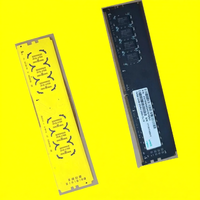
Apacer | Desktop DDR4 Memory
₱7,836.00₱9,203.00
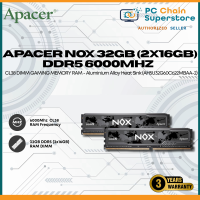
APACER NOX 32GB (2X16GB) DDR5 6000MHZ CL38 DIMM GAMING MEMORY RAM - Aluminium Alloy Heat Sink (AH5U32G60C622MBAA-2)
₱27,995.00
Buy on Lazada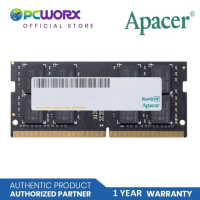
Apacer ES.08G21.GSH 8GB 3200Mhz DDR4 Sodimm Memory Module | DDR4 Sodimm RAM | Apacer Memory Card
₱3,557.00₱4,268.00
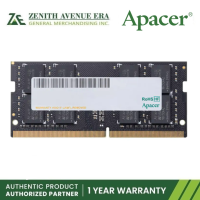
Apacer ES.08G21.GSH 8GB 3200Mhz DDR4 Sodimm Memory Module | DDR4 Sodimm RAM | Apacer Memory Card
₱3,544.00₱4,962.00
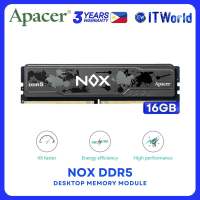
Apacer NOX DDR5 16GB (16GBx1) 6000Mhz Desktop Memory Module Single Kit - AH5U16G60C622MBAA-1 itw
₱17,499.00
Buy on Lazada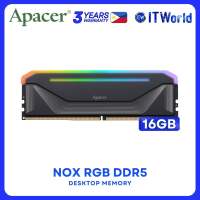
Apacer NOX RGB DDR5 16GB (16GBx1) 6000Mhz Desktop Memory Module Single Kit - AH5U16G60C622NBAA-1 itw
₱18,499.00
Buy on Lazada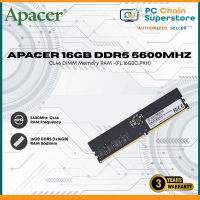
Apacer 16GB DDR5 5600Mhz CL46 DIMM Memory RAM -(FL.16G2C.PKH)
₱11,795.00
Buy on Lazada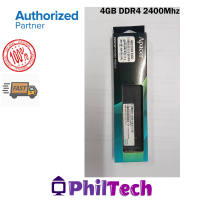
Apacer 4Gb DDR4 2400MHZ For Desktop RAM
₱1,150.00₱1,400.00
About Apacer
Company Overview
Apacer Technology Inc., commonly referred to as Apacer, is a Taiwanese technology firm specialising in memory modules, digital storage, industrial computing, and associated hardware and software solutions. Established in 1997, the company has transitioned from a memory-module manufacturer to a global provider of storage technology, with particular expertise in industrial SSDs, industrial DRAM, embedded storage, consumer storage, and gaming memory. Apacer is headquartered in Tucheng District, New Taipei City, Taiwan, and is publicly listed on the Taiwan Stock Exchange under the ticker symbol 8271.1
| Item | Information |
|---|---|
| Company name | Apacer Technology Inc. |
| Chinese name | 宇瞻科技股份有限公司 |
| Brand | Apacer |
| Founded | April 16, 1997 |
| Headquarters | Tucheng District, New Taipei City, Taiwan |
| Stock exchange | Taiwan Stock Exchange |
| Ticker | 8271 |
| Industry | Semiconductors / Memory / Digital Storage |
| Core businesses | Memory modules, SSDs, flash storage, industrial storage, IoT solutions |
| Main markets | Industrial, embedded, enterprise, consumer, gaming, IoT |
| Global operations | Taiwan, China, United States, Netherlands, Japan, India and other markets |
Apacer positions itself as a global digital-storage brand possessing integrated capabilities in research and development, design, manufacturing, and marketing. Its product portfolio encompasses memory modules, industrial SSDs, consumer digital storage, and integrated IoT applications.2
Business Scope
Apacer operates primarily as a memory and storage technology company across four major domains:
Industrial Storage
- Industrial SSDs
- Industrial flash cards
- Industrial USB storage
- Embedded storage
- Enterprise and edge storage
Memory
- Desktop and notebook DRAM
- Server and workstation memory
- Industrial DRAM
- DDR4 and DDR5 modules
- Gaming and overclocking memory
Consumer Storage
- SSDs
- USB flash drives
- Portable SSDs
- Memory cards
- External storage devices
Specialised and Integrated Solutions
- IoT applications
- Edge computing
- AI-related storage
- Industrial automation
- Transportation systems
- Healthcare equipment
- Surveillance systems
- Smart retail infrastructure
This diverse portfolio places Apacer between a traditional PC memory and storage brand and a specialised supplier of industrial-grade storage solutions.3
History
Foundation and Early Years
Apacer was established in Taiwan in 1997. Historical records indicate it was originally founded as BizAnchor Service Network Inc. with investment from the Acer Group and initial capital of NT$10 million. The entity subsequently changed its name to Apacer Technology Inc.4 The company’s initial operations focused primarily on memory modules, providing a technical foundation for its later expansion into SSDs and industrial storage.
Between 1998 and 2000, Apacer expanded its DRAM business and developed products compatible with emerging PC standards. During this period, the company introduced PC100-compliant DRAM modules, produced RIMM products in cooperation with Rambus, established its Longtan manufacturing plant, and expanded operations into Europe and Japan.5 By 1999, industry research recognised Apacer as one of the world’s major memory-module manufacturers. In 2000, the company began public trading and broadened its partnerships with technology firms including IBM.6
Expansion into Flash Storage
A significant strategic shift occurred between 1999 and 2003 when Apacer expanded beyond DRAM into flash memory and digital storage. The company introduced flash cards, USB flash drives, digital storage devices, portable multimedia products, and specialised digital imaging products. A notable release during this era was the Disc Steno, a portable photo-CD burner launched in 2003 that enabled users to transfer images from memory cards to CDs without a conventional PC.7 This product exemplified Apacer’s strategy of translating underlying memory technology into complete storage applications rather than remaining solely a component manufacturer.
Development of Industrial Storage
Over time, Apacer placed increasing emphasis on the industrial market. Rather than competing exclusively on consumer SSD capacity or retail pricing, the company developed storage solutions designed for applications prioritising reliability, continuous operation, long service life, resistance to temperature and vibration, data integrity, and long-term product availability. This focus became a primary competitive differentiator. The industrial portfolio now includes industrial SSDs, DRAM, industrial USB products, memory cards, eMMC, and specialised storage solutions.8
Industrial SSDs and Reliability
Industrial SSDs are among the product categories most strongly associated with the Apacer brand. Unlike typical consumer SSDs, these drives are engineered for equipment such as factory automation systems, industrial PCs, networking gear, transportation systems, medical devices, surveillance systems, edge-computing nodes, embedded computers, and smart retail equipment.
Apacer has developed proprietary technologies addressing error correction, power-loss protection, data security, endurance management, and thermal regulation. Its current industrial portfolio is explicitly positioned for applications in IoT, 5G and networking, defence, factory automation, healthcare, gaming, and transportation.9
Brand Identity and Technical Differentiation
A key distinction between Apacer and mainstream consumer memory brands lies in its engineering priorities. While consumer manufacturers often emphasise speed, capacity, and price, Apacer’s industrial business prioritises reliability, endurance, stability, lifecycle management, and customisation. Technologies promoted for industrial use include advanced error correction, power-loss protection, end-to-end data protection, hardware encryption, signed firmware, thermal management, and long-term product support.10 These solutions are designed for continuous operation in environments subject to vibration and temperature variation, making them particularly relevant to B2B and embedded-system customers.
Consumer and Gaming Products
Despite its industrial focus, Apacer maintains a significant presence in the consumer market. Product offerings include SATA and PCIe/NVMe SSDs for personal and business computing, USB flash drives, and memory cards for cameras and embedded devices. Recent releases include portable storage solutions such as the AS741 USB4 Portable SSD.11 Consequently, an Apacer product found in a Philippine PC retail store may differ significantly in specification and target audience from those supplied to industrial equipment manufacturers.
In the gaming and enthusiast segment, Apacer markets products under the ZADAK sub-brand, which focuses on high-performance memory and PC components. Current offerings include ZADAK RGB DDR5 modules designed for users prioritising high memory performance, RGB aesthetics, overclocking capability, and enthusiast PC building. Apacer categorises gaming as a distinct pillar of its product portfolio alongside industrial and personal/business solutions.
Technology Portfolio and Manufacturing Model
Apacer’s value proposition extends beyond physical NAND or DRAM chips to encompass product engineering, firmware development, storage management, validation, manufacturing, customisation, application-specific design, and long-term support. This integrated approach is particularly critical for industrial applications where off-the-shelf components may be insufficient.
It is important to distinguish Apacer from vertically integrated semiconductor manufacturers such as Samsung, SK hynix, or Micron. While those companies fabricate the underlying memory chips, Apacer operates as a memory and storage solution provider that integrates memory technology into modules, SSDs, flash products, and application-specific storage platforms. This distinction explains how Apacer can sell SSDs and DRAM without operating large-scale semiconductor fabrication plants.
Relationship with Acer
Apacer’s history is linked to Acer, as its predecessor was established with investment from the Acer Group and its early development was closely tied to the PC-memory ecosystem.12 However, Apacer is a separate publicly listed company on the Taiwan Stock Exchange under ticker 8271 and is not merely a current Acer product line. It is accurately described as a Taiwanese technology company with historical ties to Acer rather than as an Acer subsidiary.
Global Operations and Business Model
Although Taiwanese in origin, Apacer operates internationally with subsidiaries or offices in Taiwan, China, the United States, the Netherlands, Japan, and India.13 This international structure supports its industrial business by providing local technical support, supply-chain continuity, engineering cooperation, long-term product availability, and regional sales support.
The company operates across both B2C and B2B markets. In the B2C segment, products such as SSDs, USB drives, memory cards, DRAM, gaming memory, and portable SSDs reach consumers through distributors and retailers. In the B2B segment, industrial SSDs, industrial DRAM, embedded storage, customised flash solutions, and specialised storage platforms are integrated directly into equipment manufactured by OEMs and system integrators. The B2B relationship is distinct because industrial storage components often remain in service for many years, requiring sustained support and lifecycle management.
Key Application Markets
Apacer targets a broad range of industrial and emerging applications:14
- Industrial Automation: Storage and memory for factory equipment and industrial PCs.
- Edge Computing: Storage for systems processing data near the source of generation.
- AI Infrastructure: High-performance, reliable storage for edge-AI systems.
- Transportation: Storage and memory for transportation and embedded vehicular systems.
- Healthcare: Industrial-grade storage for medical diagnostic and monitoring equipment.
- Surveillance: High-endurance storage for continuous video recording systems.
- Networking: Storage and memory for communications infrastructure.
- Smart Retail: Embedded computing and storage for intelligent retail systems.
- IoT: Storage and memory for connected devices and sensors.
Recent strategy has increasingly emphasised edge AI and intelligent computing. As computing workloads shift from centralised cloud infrastructure to local devices, Apacer positions its industrial SSD and DRAM solutions for edge-AI systems requiring low latency, continuous operation, data protection, and long-term reliability.15
Corporate Philosophy
Apacer’s stated core value is “Becoming Better Partners”, a philosophy encompassing three concepts: delivering on promises, constant improvement, and mutually beneficial relationships. Its mission centres on providing reliable digital-storage products and services for storage applications.16 This aligns with the company’s B2B orientation, positioning Apacer as a technology partner for equipment manufacturers and system integrators rather than merely a component vendor.
Product Categories
Apacer’s current website organises its business into Industrial Solutions, Personal & Business Solutions, Gaming, and Smart IoT.17 A simplified product map includes:
| Category | Examples |
|---|---|
| Industrial SSD | SATA, PCIe, specialised industrial SSD |
| Consumer SSD | SATA/NVMe SSD |
| Industrial DRAM | DDR4/DDR5 industrial memory |
| Server memory | Server/workstation DRAM |
| Gaming memory | ZADAK / enthusiast DRAM |
| Flash cards | Industrial and consumer cards |
| USB storage | USB flash drives / industrial USB |
| Portable SSD | Consumer/business portable storage |
| eMMC / embedded | Embedded storage |
| Enterprise SSD | Data-centre/edge-server applications |
| IoT solutions | Integrated storage + application solutions |
Historical Milestones
Notable milestones in Apacer’s development include:18
- 1997: Founded in Taiwan.
- 1998: Expanded DRAM production and international operations.
- 1999: Entered flash-memory product market.
- 2000: Became publicly traded and expanded international presence.
- 2001: Introduced industrial-grade memory modules.
- 2002: Expanded into multimedia/digital storage and developed firmware capabilities.
- 2003: Introduced the Disc Steno portable photo-CD burner.
- 2009–2011: Expanded consumer digital-storage and SSD portfolios.
- 2012–2017: Established strong position in industrial SSDs.
- 2015: Announced strategic cooperation with Phison Electronics.
- 2016 onward: Expanded toward IoT, cloud, and integrated IT-enabled services.
- 2017: Celebrated 20th anniversary and continued industrial-storage expansion.
Competitive Positioning
Apacer occupies a distinct niche compared to mainstream memory brands. While companies like Samsung, Micron/Crucial, and SK hynix are vertically integrated semiconductor manufacturers, and Kingston and Corsair focus primarily on consumer and business memory, Apacer differentiates itself through industrial storage, memory, and customised/embedded solutions. Although it competes in consumer products, industrial and embedded storage are far more central to its corporate identity than for many consumer-focused memory brands.
Key competitive advantages include decades of memory engineering experience dating to the 1990s, strong specialisation in industrial SSDs as a core business rather than a side venture, sophisticated firmware and storage management expertise, extensive customisation capabilities for industrial clients, long product lifecycle management, and a global sales and operational support network.
Corporate Scale
Apacer remains a publicly traded Taiwanese company. Current investor information indicates:19
- TWSE ticker: 8271
- Paid-in capital: Approximately NT$1.29 billion
- Issued shares: 129,614,266
- Headquarters: Tucheng, New Taipei City
- Market value (December 31, 2025): Approximately NT$14.48 billion
These figures indicate that Apacer is a significant specialised technology company, though not on the scale of semiconductor giants such as Samsung or SK hynix.
Brand Summary
Apacer Technology Inc. is a Taiwanese storage and memory specialist founded in 1997. Originally a memory-module company, it has expanded into flash memory, consumer storage, SSDs, and, most significantly, industrial-grade storage and embedded computing solutions. Today, its business encompasses DRAM, flash memory, SSDs, industrial SSDs, embedded storage, enterprise and edge storage, IoT, and edge AI applications.
The company’s primary differentiator is industrial reliability and application-specific storage, while its consumer-facing products maintain visibility among PC builders, gamers, and general storage buyers. Products carrying the Apacer brand may be designed for vastly different markets and requirements, ranging from consumer SSDs and ZADAK gaming memory kits to ruggedised industrial SSDs for mission-critical infrastructure.20
References
- Business Philosophy – Apacer
- Apacer Facts – Apacer
- Create and Share Warm Memories
- Industrial Overview – Apacer
- Home – Apacer
- 1. Spokesperson
- Milestones – Apacer
- Milestones – Apacer
- Milestones – Apacer
- Apacer Facts – Apacer
- Apacer Technology – Wikidata
- Seizing AI Business Opportunities, Apacer Promotes AI Value-added Technology Working with Phison and DeepMentor to Develop Customized Solutions – Apacer
- Company:Apacer – HandWiki
- Category:Apacer – Wikimedia Commons
- Category:Apacer – Wikimedia Commons
- Category:Apacer – Wikimedia Commons
- File:Apacer Technology logo.jpg – Wikimedia Commons
- Business Philosophy – Apacer
- Home – Apacer
- Personal & Business Overview – Apacer