Shop on Lazada
API products
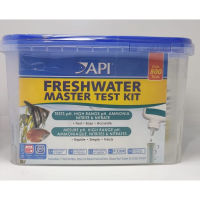
API Freshwater Master Test Kit
₱2,650.00
Buy on Lazada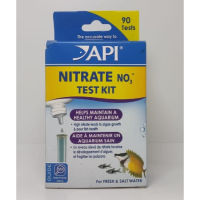
API Nitrate NO3- Test Kit 90 tests
₱820.00
Buy on Lazada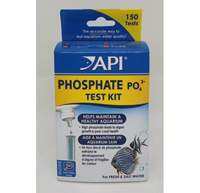
API Phosphate Test Kit 150 Tests
₱750.00
Buy on Lazada
API Saltwater Test Kit
₱2,250.00
Buy on Lazada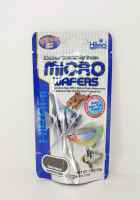
Hikari Tropical Micro Wafers Fish Food 45g (2.58oz)
₱130.00
Buy on Lazada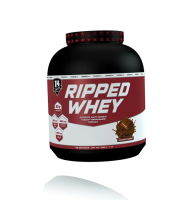
14 Superior Supplements Ripped Whey 4 Lbs
₱3,666.00
Buy on Lazada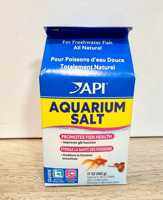
API Aquarium Salt 482g (17oz) / 936g (33oz)
₱430.00
Buy on Lazada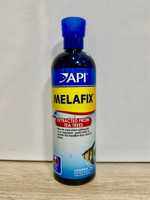
API Melafix 118mL / 237mL / 473mL
₱890.00
Buy on LazadaAbout API
Note: “API” is an ambiguous brand name used by several companies worldwide. The profile below refers to API Co., Ltd. (株式会社API), the Japanese company known for honeybee-derived products, dietary supplements, pharmaceuticals, and contract manufacturing.
Overview
API Co., Ltd. is a Japanese health-science and manufacturing company headquartered in Gifu Prefecture, Japan. The company develops and manufactures products and ingredients associated with honeybees, health foods, dietary supplements, pharmaceuticals, cosmetics, and pet food, while also providing OEM and contract manufacturing services.1
API traces its origins to 1907, when two brothers from a textile-wholesaling family began manufacturing and selling beekeeping equipment. Over more than a century, the company expanded from beekeeping and honey-related activities into royal jelly, propolis, health foods, pharmaceutical products, pharmaceutical ingredients, and contract manufacturing.2
The company’s philosophy is summarized by its long-standing idea of using the power of honeybees to contribute to a healthier and more prosperous society.3
Company overview
| Category | Information |
|---|---|
| Company name | API Co., Ltd. |
| Japanese name | 株式会社API |
| Founded | 1907 |
| Country | Japan |
| Headquarters | Gifu Prefecture, Japan |
| Industry | Health foods, pharmaceuticals, biotechnology, ingredients, contract manufacturing |
| Core heritage | Beekeeping and bee-derived products |
| Major products/areas | Honey, royal jelly, propolis, dietary supplements, pharmaceutical products and ingredients, cosmetics, pet food |
| Business model | B2B manufacturing/OEM plus branded products |
| Employees | 1,718 (as of end of August 2025) |
| FY2025 sales | ¥62.414 billion |
| FY2025 profit | ¥4.971 billion |
| President | Takahiko Nonogaki |
| Chairman | Takashi Nonogaki |
The employee, financial, and management figures above are derived from API’s corporate profile data.4
History
1907: The beginning
API’s history began in February 1907, when Ryozo Nonogaki and his older brother started a business producing and selling apiculture equipment. The company’s original business was not pharmaceuticals or supplements but was directly connected to beekeeping.5
This origin remains significant to the modern API brand, as honeybees continue to be central to the company’s corporate philosophy.
1920s–1950s: Expansion of beekeeping
During its early decades, API expanded its activities around modern apiculture. It began producing equipment and working with bee colonies, including moving colonies according to flowering seasons. In the 1920s, the company exported Western-species bees to China.6
In the late 1950s, API began working on royal jelly production, marking a transition from supporting beekeepers toward developing and processing bee-derived health products.7
1960s–1970s: Honey and royal jelly
API developed expertise in honey refining, bottling, and royal jelly processing. It established specialized companies and facilities, developed honey-refining technologies, and expanded its production infrastructure.8
By the 1970s, royal jelly production had become a significant part of the business, including production activities in China.
1980s: Research and branded products
The company continued to invest in processing technologies and began producing royal jelly and pollen powders. In 1989, API introduced its own branded honey products, representing an evolution from a manufacturing and processing organization toward a recognizable consumer health brand.9
1990s: Health foods and pharmaceuticals
The 1990s were a period of major diversification. API established a research and technology-development infrastructure and expanded into dietary supplements. In 1996, it obtained manufacturing approval for Apipolle capsules and launched its pharmaceutical business.10
The company also developed products based on propolis, royal jelly, and other bee-derived materials.
2000s: Pharmaceutical manufacturing and international expansion
API continued developing pharmaceutical and supplement manufacturing capabilities. Its facilities obtained relevant GMP certifications, and the company expanded its research and manufacturing network. In 2007, API celebrated its 100th anniversary. In 2008, Japan’s Ministry of Economy, Trade and Industry selected API as one of the country’s notable small and medium-sized manufacturing companies.11
Reflecting its international business development, API established API (Shanghai) Trading Co., Ltd. in 2010.12
2010s: Functional foods and pharmaceutical capabilities
API expanded its capabilities beyond traditional bee products into functional food ingredients, pharmaceutical manufacturing, and contract development. The company established additional manufacturing and logistics infrastructure and developed technologies for functional food ingredients. It also expanded pharmaceutical capabilities, including active pharmaceutical ingredient-related manufacturing.13
2020s: Pharmaceutical expansion
API has continued investing in pharmaceutical manufacturing. Its Motosu Pharmaceutical Plant was completed in 2022 and began operations in June 2024. The company also expanded its bio-pharmaceutical and quality-control infrastructure.14
Business activities
Modern API operates across several distinct business areas that extend well beyond honey production.
Bee products
Bee products remain the company’s historical core. API works with products derived from honeybees, including honey, royal jelly, propolis, pollen, and other bee-derived ingredients. The company’s historical development from beekeeping equipment to bee-derived ingredients serves as a key point of differentiation.15
Dietary supplements
API develops and manufactures dietary supplements, including products using bee-derived ingredients and other functional ingredients. The company entered this field in the 1990s and subsequently developed dedicated manufacturing facilities and quality systems.16
Pharmaceutical manufacturing
API operates in the pharmaceutical field through services that include pharmaceutical OEM and contract manufacturing, development and manufacturing of pharmaceutical products, and manufacturing associated with active pharmaceutical ingredients.17
Unlike typical consumer honey or supplement brands, a significant portion of API’s business involves B2B manufacturing and technology.
OEM and contract manufacturing
A major business area for API is assisting other companies in developing and manufacturing products. Services span the entire product lifecycle: concept, development, formulation, manufacturing, quality control, and packaging/logistics. The company provides contract manufacturing services for both dietary supplements and pharmaceuticals.18
Functional ingredients
API develops ingredients for functional foods and beverages. Its technology portfolio includes ingredients derived from honey and other natural materials, alongside research into functional food applications.19
Cosmetics and pet food
The API group has expanded into cosmetics and pet food, covering planning, manufacturing, sales, and import/export activities.20
Brand philosophy
The central concept behind API is closely connected to honeybees and natural biological resources. The company’s stated corporate philosophy is to harness the power of honeybees to contribute to a prosperous and healthy society, a principle that has guided the company since its founding in 1907.21
This philosophy supports a distinctive brand narrative that progresses from beekeeping to honey, royal jelly/propolis, health foods, functional ingredients, and finally pharmaceuticals. Rather than abandoning its original identity during diversification, API has utilized its bee-related expertise as a foundation for entering increasingly sophisticated health and life-science fields.
Research and technology
Research is a fundamental component of the API identity. The company established its own comprehensive research center and later expanded its research activities into functional foods, pharmaceutical products, and manufacturing technologies.22
Its modern manufacturing and research network includes facilities for pharmaceutical manufacturing, pharmaceutical ingredients, dietary supplements, functional food ingredients, quality testing, product development, and packaging/logistics. The company positions itself as a provider of development and manufacturing services rather than solely a seller of finished consumer products.
Manufacturing and quality
API operates a network of specialized facilities in Japan. Its manufacturing infrastructure includes the Motosu Plant, Ikeda Plant, Ibigawa Plant, Ikeda Pharmaceutical Plant, Ikeda Bio Pharmaceutical Plant, Honjo Plant, Motosu Pharmaceutical Plant, and the API Quality & Logistics Center.22
The company has obtained various quality and manufacturing certifications throughout its history. Facilities hold dietary-supplement GMP certification and food-safety certifications, while pharmaceutical facilities support regulated manufacturing activities.
Business model
API functions as both a health-products company and a manufacturing technology company.
B2C
API markets its own products and brands associated with honey, royal jelly, propolis, health foods, supplements, and other wellness items.
B2B
Simultaneously, API provides services to other companies, including OEM manufacturing, contract manufacturing, pharmaceutical manufacturing, ingredient supply, product development, quality testing, and packaging/logistics. This B2B component is significant because API’s manufacturing capabilities often underpin products that consumers may not realize were produced by the company.22
Corporate scale
According to API’s corporate profile, the company had 1,718 employees as of the end of August 2025. For the fiscal period ending August 2025, it reported approximately ¥62.414 billion in sales and ¥4.971 billion in profit.22
Affiliated entities include Gifu Yoho Co., Ltd., API Holdings Co., Ltd., API (Shanghai) Trading Co., Ltd., and UNIGEN Inc.
Distinctive characteristics
Several factors distinguish API from conventional supplement manufacturers:
- Longevity: Dating to 1907, API possesses over a century of operating history.22
- Unique origins: The company began with beekeeping equipment rather than pharmaceuticals; its current health-food and pharmaceutical businesses evolved from this original expertise.
- Bee science foundation: Honey, royal jelly, and propolis are integral to the overall corporate story rather than isolated products.
- Hybrid expertise: API combines traditional bee-derived materials with modern manufacturing, research, quality control, and pharmaceutical technology.
- B2B capability: Unlike purely consumer-facing wellness brands, API manufactures products for other companies, functioning as part of the broader health-product supply chain.22
Timeline
- 1907: Predecessor business begins with beekeeping equipment.
- 1920s: Expansion of apiculture and bee-related activities.
- 1958: Royal jelly production begins.
- 1960s: Honey refining and processing infrastructure expands.
- 1970s: Royal jelly production and processing develop further.
- 1980s: Research, royal jelly/pollen processing, and international activities expand.
- 1989: Own branded honey products launched.
- 1991: Gifu YOHO changes name to API Co., Ltd.
- 1994: Full entry into dietary supplements.
- 1996: Pharmaceutical business launched.
- 2005–2006: Pharmaceutical manufacturing infrastructure expands.
- 2007: 100th anniversary celebrated.
- 2010: API Shanghai established.
- 2019: Quality/logistics and functional-ingredient capabilities expand.
- 2022: Motosu Pharmaceutical Plant completed.
- 2024: Motosu Pharmaceutical Plant begins operations.
- 2025: Company reports ¥62.414 billion in sales and 1,718 employees.22
References
- Dietary Supplement and Drug OEM (Contract Manufacturing) |API Co., Ltd.
- Company Outline History |API Co., Ltd.
- API (disambiguation)
- Automated Processes, Inc.
- Who We Are | Teledyne API
- Gruppo API
- The Birth Of API – API Metrology
- History – IP
- Who We Are | Teledyne API
- About Us – API Metrology
- About Us – Quality Assurance Experts
- Who are we? API, The Household Goods and Toys Quality Experts
- About | API
- API Technologies | Spectrum Control
- 公司概要 沿革|API株式会社
- 公司概要 简介|API株式会社
- Company Outline Management Principles |API Co., Ltd.
- Our Journey | Amman Pharmaceutical Industries (API)
- Amman Pharmaceutical Industries (API)
- About Us | Amman Pharmaceutical Industries (API)
- SURIMI BASED PRODUCTS THAILAND. A.P.FROZEN FOODS CO.,LTD.
- Auto Parts International