Shop on Lazada
Aputure products
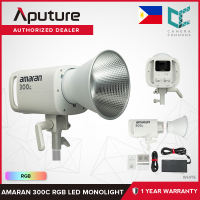
Aputure Amaran 150c 300c RGB LED Monolight 150W Studio Lighting Full RGB Color Control Active Cooling
₱26,450.00
Buy on Lazada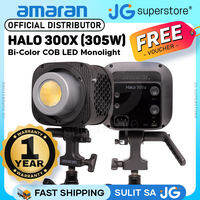
Amaran by Aputure HALO 300x 200x 100x 60x Bi-Color COB LED Monolight Bowens Mount Onboard and App Control DMX 262ft Max Wireless Range 9 Effect Presets for Lighting and Studio Equipment | JG Superstore
₱18,995.00₱23,744.00
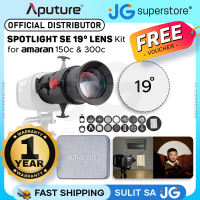
Aputure Amaran Spotlight SE 36° / 19° Projection Lens Kit for Amaran 300c and 150c Monolights with 15pcs M-Sized Gobos and Carrying Case for Photography Video Vlogging Live Streaming Broadcast and Film Production Studio Lighting Equipment | JG Superstore
₱19,990.00₱24,988.00
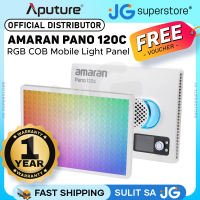
Aputure Amaran Pano 120C P60C RGB COB 120W Mobile Light Panel 2300K-10000K CCT Sidus Link & Bluetooth Control 12 Light Effect Presets for Content Creators Vloggers Photography Lighting and Studio Equipment | Black White | JG Superstore
₱16,990.00₱21,238.00
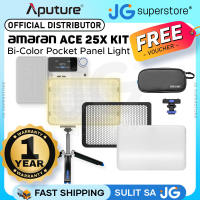
Aputure Amaran Ace 25c / 25x RGB / Bi-Color LED Pocket Panel Light Creator Kit with 32W 4500mAh Max 80m Wireless Range Fan Cooled 12 / 9 Built-in Light Effects with Onboard and App Control Support | JG Superstore
₱5,570.00₱6,963.00
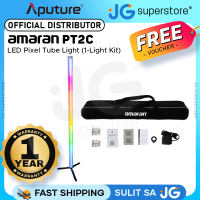
Aputure Amaran PT2c (2-Pack) 60cm RGB Handheld LED Pixel Tube Light Wand with Built-in Rechargeable Battery Tripod Stands DMX & Bluetooth Controls for Photography Video Vlogging Live Streaming Film Production Studio Lighting Equipment | JG Superstore
₱8,560.00₱10,700.00
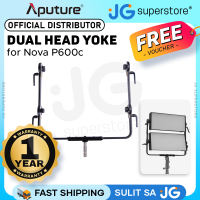
Aputure Aluminum Dual Head Yoke Accessory for Nova P600c LED Light Panel for Photography Video Vlogging Live Streaming Broadcast and Film Production Studio Lighting Equipment | JG Superstore
₱18,430.00₱23,038.00
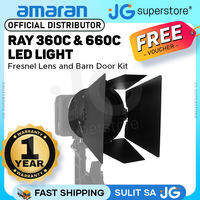
Amaran by Aputure Fresnel Lens + 4-Leaf Barndoor Kit Bowens Mount 9.6″ Lens Size for RAY 360C and 660C COB LED Studio Light with Spot 15 Degree / Flood 45 Degree Beam Angle for Lighting and Studio Equipment - MA00060404 | JG Superstore
₱8,200.00₱10,250.00
About Aputure
Aputure is a professional lighting technology company best known for its cinema and video LED lighting systems. Its products are widely used in filmmaking, television, commercials, photography, live production, broadcast, virtual production, and content creation. The company positions itself around the idea of creating professional lighting that is accessible to a wider range of filmmakers and creators.1
Aputure is particularly associated with high-output LED point-source lights, including its Light Storm and STORM families, as well as RGB/tunable-color fixtures, soft lights, pixel lighting, practical lights, lighting modifiers, and lighting-control software.
Brand overview
| Item | Information |
|---|---|
| Brand | Aputure |
| Industry | Professional lighting / cinema technology |
| Main products | LED cinema lights, lighting modifiers, accessories, control systems |
| Primary users | Cinematographers, filmmakers, gaffers, photographers, broadcasters, studios, content creators |
| Major product technology | LED, COB LED, RGB/tunable-color LED, pixel lighting |
| Software ecosystem | Sidus Link and related lighting-control technologies |
| Global presence | North America, Europe, Asia, South America and other markets |
| Manufacturing | Shenzhen, China |
| Core positioning | Professional cinema lighting with relatively accessible pricing |
| Related brand | amaran |
While some secondary sources cite later dates for the establishment of the corporate structure, Aputure’s own website states the company was founded in 2005. Consequently, Aputure traces its origins to 2005.2
Name origin
The name Aputure is a combination of the cinematography term “aperture” and the concept of the future. This choice reflects the company’s original connection to cameras, filmmaking, and visual technology, while communicating an emphasis on developing new-generation production equipment.
History
Early beginnings
Aputure’s origins date back to 2005, when its founders were involved in camera-related electronics and accessories. According to the company’s history, Aputure emerged from a group of filmmakers and videographers who sought professional production equipment without the extremely high prices traditionally associated with cinema gear.3
This philosophy became central to the brand’s identity: professional filmmaking technology should not be restricted to large Hollywood productions. The company initially focused on camera accessories and electronics before shifting increasingly toward LED lighting.
Transition to LED lighting
Early Aputure lighting products were designed to make professional-quality illumination more accessible and portable. One of its early successful lighting families was amaran, which consisted of relatively compact LED fixtures designed for independent filmmakers, photographers, and smaller production teams.
This shift was significant because traditional cinema lighting was often large, heavy, power-hungry, and expensive. LED technology offered several advantages:
- Lower power consumption
- Smaller fixtures
- Less heat generation
- Battery operation capability
- Easier transportation
- Adjustable color temperature
- Electronic control
- Remote control and networking
Over time, Aputure moved from relatively compact creator-oriented lights toward increasingly powerful professional cinema fixtures.
The Light Storm era
A major milestone in the company’s development was the Light Storm (LS) family. This series became Aputure’s flagship professional lighting platform and helped establish the company as a serious competitor in the cinema-lighting market.
Notable products in this lineage include:
- LS 120d
- LS 300d
- LS 300d II
- LS 300x
- LS 600d Pro
- LS 600x Pro
- LS 600c Pro
- LS 1200d Pro
The core concept combined the flexibility and efficiency of LED technology with the output and accessory compatibility expected from professional cinema fixtures. The 300d, in particular, became a pivotal product in Aputure’s rise among independent filmmakers.
COB LED technology
A defining technology for Aputure is the use of COB (Chip-on-Board) LED light sources. Instead of using a large conventional LED panel, a COB fixture concentrates many LED emitters into a relatively small light-emitting area. This allows the fixture to function similarly to a traditional cinema point source.
High-output Aputure fixtures can be paired with various modifiers, including:
- Reflectors
- Fresnel lenses
- Softboxes
- Lanterns
- Parabolic modifiers
- Projection systems
- Barn doors
This versatility makes a single light adaptable to numerous scenarios. The current product ecosystem includes both traditional point-source fixtures and newer architectures such as pixel bars, soft mats, and high-output tunable-color fixtures.4
Major product families
Aputure’s product range has expanded considerably beyond simple LED panels to cover diverse production needs.
Light Storm
The Light Storm / LS family is the product line most strongly associated with Aputure. It includes professional point-source LED fixtures ranging from compact units to high-output cinema lights. The lineup progresses from the LS 60 series through the LS 300, LS 600, and LS 1200 series.
The LS 1200d Pro, for example, is a 1,200 W daylight-balanced point-source fixture and is among Aputure’s highest-output conventional cinema lights. Support documentation identifies the LS 1200d Pro as the company’s most powerful light.5
STORM
STORM represents Aputure’s newer generation of high-fidelity lighting technology. Current models include:
- STORM 400x
- STORM 700x
- STORM 1000c
- STORM 1200x
The STORM 1200x is a 1,200 W tunable-white high-fidelity point-source lamp utilizing Aputure’s ProLock Bowens Mount.6 This family demonstrates the brand’s movement toward more sophisticated color control and higher-quality LED light engines.
Nova
The Nova family focuses on larger, softer LED panel lights. Examples include the Nova P300c, Nova P600c, Nova II 2×1, and Nova 9° 2×1. Unlike point-source fixtures such as the LS 600d Pro, Nova fixtures are designed to produce a broad, soft light source suitable for interviews, commercials, studio work, television, film sets, key lighting, and soft fill.
INFINIBAR
The INFINIBAR family is Aputure’s pixel-bar lighting system, comprising models such as the INFINIBAR PB3, PB6, and PB12. These narrow, linear RGB/tunable-color fixtures are designed for creative lighting, practical integration, and visual effects. Multiple units can be connected to create larger continuous shapes, making them useful for music videos, commercials, product photography, background lighting, architectural lighting, virtual production, and in-camera effects. Multi-light kits are also available.7
INFINIMAT
INFINIMAT is a flexible large-format soft-light system. Unlike rigid LED panels, INFINIMAT uses a mat-style lighting structure available in sizes ranging from 1×2 ft to 20×20 ft. Some versions incorporate inflatable softbox or airbag systems to create a large, soft source that remains comparatively practical for film production.8
MC Series
The MC family consists of compact, portable LED lights designed to fit into a filmmaker’s or photographer’s kit. These are particularly useful for tabletop photography, product shoots, interviews, accent lighting, mobile filmmaking, travel, and practical lighting where large cinema fixtures would be impractical. The MC Pro offers a more professionalized version of this compact concept.9
Accent B7c
The Accent B7c is a wireless tunable-color practical bulb with a built-in battery. It allows filmmakers to place an intelligent RGB/tunable-white bulb directly into a lamp or practical fixture while retaining remote lighting control. This product illustrates Aputure’s philosophy of treating every visible light source on a set as potentially controllable, rather than focusing solely on large lights on stands.
Sidus Link ecosystem
A significant innovation within the Aputure portfolio is Sidus Link, a wireless control ecosystem rather than a physical light. Sidus Link allows compatible Aputure and related lighting products to be controlled wirelessly via mobile devices.
Depending on the fixture, users can adjust:
- Intensity
- Color temperature
- RGB color
- Lighting effects
- Fixture groups
- Presets
- Lighting scenes
This system is particularly valuable for productions with numerous fixtures, allowing lighting technicians to adjust multiple lights centrally without physically accessing each unit. Through Sidus Link, Aputure has evolved from a light manufacturer into a connected lighting ecosystem provider.
Bowens Mount and modifier compatibility
Compatibility with lighting modifiers is a key aspect of Aputure’s strategy. Many Aputure point-source fixtures use the Bowens mount, enabling filmmakers to attach a vast ecosystem of third-party and proprietary modifiers, including softboxes, reflectors, Fresnels, lanterns, projection attachments, and optical modifiers.
This compatibility ensures that filmmakers do not necessarily need to replace existing modifier collections when adopting Aputure fixtures. The company has also developed specialized modifiers designed specifically for its lights, with a compatibility system covering a wide range of Aputure and amaran fixtures and accessories.10
Aputure vs. amaran
Understanding the brand structure requires distinguishing between Aputure and amaran.
Aputure
Generally positioned toward:
- Professional cinema
- Commercial production
- Television and broadcast
- Large-scale productions
- High-end filmmaking
- Professional lighting departments
amaran
Generally aimed at:
- Independent filmmakers
- YouTubers and content creators
- Photographers
- Small studios
- Enthusiasts
- Budget-conscious professionals
In essence, Aputure represents the professional cinema ecosystem, while amaran serves as a more accessible creator ecosystem. While they share considerable technology and design philosophy, they target distinct market segments.
Applications
Aputure equipment is utilized across a broad range of production environments.
Film and television
Large Aputure fixtures serve as key lights, backlights, fill lights, daylight sources, window simulation, and high-output exterior lighting.
Commercial production
Lights are frequently used for automotive commercials, product advertising, fashion, food photography, and corporate videos.
Online content
Smaller products like the MC and LS 60 series are common in YouTube studios, podcast setups, streaming environments, home studios, and interview settings.
Photography
Continuous lighting is preferred by photographers who wish to visualize lighting effects in real time rather than relying on flash.
Virtual production
RGB, pixel, and high-output fixtures are increasingly integrated into sophisticated virtual production environments.
Market influence and philosophy
Aputure’s success stems from making professional cinema lighting technology more accessible. Historically, professional film lighting involved expensive fixtures from established legacy companies. Aputure entered the market combining high output, LED efficiency, professional features, modern connectivity, and relatively aggressive pricing. This combination garnered significant popularity among independent filmmakers and eventually professional productions, aligning with the company’s stated mission of providing professional-grade equipment at accessible prices.11
Design characteristics
Several traits define the Aputure ecosystem:
- High output: Focus on powerful LED sources, such as the 1,200 W-class LS 1200d Pro.12
- Modularity: Single fixtures can transform from hard light to soft light, focused beam, or broad source via accessories.
- Connectivity: Wireless control is fundamental to the ecosystem.
- Portability: Modern production requirements are met, including battery operation for select models.
- Color quality: Emphasis on accurate reproduction and sophisticated control.
- Ecosystem thinking: Sales focus on integrated systems of lights, modifiers, software, accessories, mounting, and networking rather than isolated units.
Technological evolution
- 2005: Origins in camera/electronics development.
- Early 2010s: Increasing focus on LED lighting.
- Mid-2010s: Development of professional Light Storm fixtures.
- Late 2010s: Growing recognition among independent and professional filmmakers.
- 2020s: Expansion into high-output fixtures, RGB lighting, connected lighting, pixel systems, and large-format soft lights.
- Current generation: STORM, LS, Nova, INFINIBAR, INFINIMAT, MC, and connected ecosystems.
Corporate milestones can be complex due to distinctions between brand development and legal entities, but 2005 remains the primary reference for the brand’s origins.13
Differentiation from traditional manufacturers
Aputure distinguishes itself by combining cinema lighting with consumer-style technology development. While traditional film lighting emphasizes the path from fixture to power to modifier to operator, Aputure approaches it as a complete ecosystem: fixture, LED engine, optics, wireless network, software, accessories, and integration. The goal is to make the lighting department more programmable and connected.
Strengths and limitations
Strengths
- Professional output: High-power fixtures capable of lighting large sets.
- Broad product range: Coverage from pocket lights to multi-kilowatt fixtures.
- Accessory ecosystem: Bowens compatibility provides access to extensive modifiers.
- Wireless control: Centralized management via Sidus Link.
- Filmmaker recognition: Strong presence among cinematographers and gaffers.
- Accessible pricing: Aggressive competition against traditional high-end systems.
Limitations
- Cost: Professional fixtures still cost thousands of dollars despite being relatively affordable.
- Size and weight: High-output models like the LS 1200d Pro are substantial pieces of equipment.
- Complexity: Choosing between numerous product families can be difficult.
- Software dependence: Advanced functionality relies on software and wireless communication.
- Specialization: Different models serve distinct roles; no single light suits every task.
Competitive landscape
Aputure competes or overlaps with companies such as ARRI, Nanlux, Nanlite, Litepanels, Kino Flo, ETC, Astera, Godox, Zhiyun, and Dedolight. Competitive dynamics vary by category:
- Vs. ARRI: Aputure competes on price and connected LED tech; ARRI dominates high-end cinema cameras and premium lighting.
- Vs. Nanlux: Direct competition in high-output LED point-source cinema lighting.
- Vs. Astera: Overlap in wireless/RGB tubes and creative applications.
- Vs. Nanlite/Godox: Greater overlap in independent filmmaker and creator markets.
Overall assessment
Aputure is considered one of the most important modern brands in LED cinema lighting. Its significance lies in changing the accessibility and expectations of professional LED lighting, normalizing the idea that independent filmmakers could own powerful cinema lights rather than renting them. Today, its portfolio spans the entire lighting workflow, from pocket lights and practical bulbs to high-output cinema lights, soft panels, flexible mats, pixel bars, and control software.14
The brand is best described as a global professional cinema-lighting technology company whose growth is driven by high-output LED fixtures, accessible professional equipment, wireless lighting control, and an integrated ecosystem.
References
- About Us | Aputure
- [[Service] General FAQ](https://help.aputure.com/en/general-help/general-faq)
- Accessory Compatibility Wizard | Aputure | Aputure
- LED Lights for Film and Video | Shop All Lights | Aputure | Aputure
- Shop Aputure Products | Aputure
- Aputure Imaging Industries Co.,Ltd
- Aputure Imaging Industries – Global Lighting Forum
- About Us | Aputure – Aputure – Connected Light, Engineered Forward
- Aputure | Aputure – Aputure – Connected Light, Engineered Forward
- Compare Aputure LS 600X Pro vs Aputure STORM 1200x vs Aputure LS-600d Pro vs Aputure 1200D Pro
- Compare Aputure STORM 1200x vs Aputure LS-600d Pro vs Aputure 1200D Pro
- Compare Aputure STORM 1200x vs Aputure LS-600d Pro | B&H
- Compare Aputure LS 600X Pro vs Aputure 1200D Pro vs Aputure STORM 1200x vs Aputure XT26
- Accessory Compatibility Wizard | Aputure | Aputure