Shop on Lazada
Ateneo de Manila University Press products
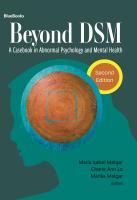
Beyond DSM: A Casebook in Abnormal Psychology and Mental Health
₱775.00
Buy on Lazada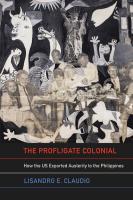
The Profligate Colonial: How the US Exported Austerity to the Philippines
₱700.00
Buy on Lazada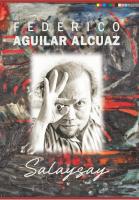
Federico Aguilar Alcuaz: Salaysay (Special Edition)
₱5,250.00
Buy on Lazada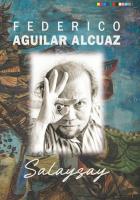
Federico Aguilar Alcuaz: Salaysay (Regular Edition)
₱4,950.00
Buy on Lazada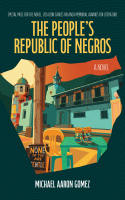
The People’s Republic of Negros: A Novel
₱825.00
Buy on Lazada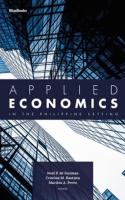
Applied Economics in the Philippine setting
₱625.00
Buy on Lazada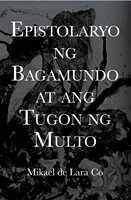
Epistolaryo ng Bagamundo at Ang Tugon ng Multyo by Mikael de Lara Co
₱750.00
Buy on Lazada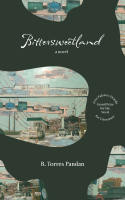
Bittersweetland
₱800.00
Buy on LazadaAbout Ateneo de Manila University Press
Ateneo de Manila University Press (also known as Ateneo Press or ADMU Press) is the official university press and publishing arm of Ateneo de Manila University, a Jesuit Catholic institution in the Philippines. Established in 1972, it produces scholarly, literary, academic, and educational works with a primary focus on Philippine society, culture, and the country’s place within Asia and the wider world.1
Overview
| Category | Information |
|---|---|
| Full name | Ateneo de Manila University Press |
| Common names | Ateneo Press, Ateneo University Press, ADMU Press |
| Parent institution | Ateneo de Manila University |
| Founded | 1972 |
| Type | University / scholarly press |
| Country | Philippines |
| Headquarters | Loyola Heights, Quezon City, Philippines |
| Primary publications | Scholarly books, literary works, textbooks, non-fiction |
| Major areas | Philippine studies, humanities, social sciences, history, culture, politics, literature, theology, heritage |
| Major imprints | Ateneo University Press, BlueBooks, Bughaw |
| Notable distinction | Eight-time Publisher of the Year at the National Book Awards |
The Press describes itself as the university’s “supreme expression of engagement with the world,” linking Ateneo’s educational mission to scholarship, publishing, and public intellectual life.1
History
Ateneo de Manila University Press was established in 1972. During its formative years, it built a reputation for publishing works on the Philippines, particularly in the humanities, social sciences, and Philippine literature.
Over subsequent decades, the publishing program expanded significantly to encompass a wide range of disciplines:
- Philippine history
- Political science and governance
- Sociology and anthropology
- Philippine literature
- Cultural studies
- Archaeology
- Cultural heritage
- Diaspora studies
- Law and society
- Leadership
- Mindanao studies
- Science and society
- Theology and religious studies
- Creative writing
This growth reflects the Press’s objective of producing scholarship that examines the Philippines in relation to Asia and the global community rather than in isolation.
The Press has also documented the university’s own institutional history. Notable among these is Down from the Hill: Ateneo de Manila in the First Ten Years Under Martial Law, 1972–1982, which chronicles the university community during the first decade of martial law through essays, personal accounts, and historical documents.1
Mission and intellectual role
Ateneo Press functions primarily to develop and disseminate scholarship relevant to Philippine society, distinguishing it from conventional commercial publishers. Its vision emphasizes the publication of academic, scholarly, literary, and textbook works that generate new knowledge about life in the Philippines. The mission stresses bringing authors’ work to a broader public and fostering intellectual engagement both within and beyond the university.
Within Philippine academic publishing, the Press serves as a vital intermediary between researchers and the broader intellectual community, particularly in Philippine studies, the humanities, and the social sciences.
Publishing program
The catalog of Ateneo Press is notably broad for a Philippine university press, comprising both academic monographs and titles intended for general readership.
Philippine history and historical studies
History remains one of the Press’s strongest areas. Its catalog covers the Spanish colonial period, American colonialism, Philippine nationalism, the Philippine Revolution, Mindanao and the Sulu region, political movements, economic history, migration, colonial knowledge systems, and local histories. Key titles include James Francis Warren’s The Sulu Zone, 1768–1898, Reynaldo Ileto’s Pasyon and Revolution, and Patricia Irene Dacudao’s Abaca Frontier.1 The Press also publishes research on less-documented subjects and regions, contributing to the preservation and reinterpretation of Philippine historical memory.
Humanities and social sciences
Scholarship in the humanities and social sciences constitutes a major component of the catalog. Books address Philippine politics, society, identity, economics, education, psychology, anthropology, and culture, including topics such as state formation, political change, migration, social psychology, governance, and intellectual history.
Literature and creative work
Ateneo Press plays a significant role in Philippine literary publishing. Its program includes fiction, poetry, literary criticism, essays, and other creative works in various Philippine languages. This literary output distinguishes it from university presses focused exclusively on academic monographs, as it explicitly positions itself as a venue for “new directions in creative work.”
Religion and theology
As Ateneo de Manila is a Jesuit and Catholic institution, theology, spirituality, philosophy, and religious studies are integral to the catalog. However, the publishing program extends well beyond Catholic-specific subjects to include secular scholarship across numerous disciplines.
Textbooks
Through its BlueBooks imprint, the Press publishes textbooks covering educational levels within Ateneo, including grade school, high school, and the Loyola Schools. Some of these materials are also available for use outside the university.
Imprints
Ateneo Press currently operates several distinct publishing lines:
Ateneo University Press
This is the original and principal imprint, publishing scholarly and literary books that undergo a double-blind peer-review process to ensure academic quality and editorial rigor.
BlueBooks
BlueBooks is the textbook-oriented imprint, producing educational materials associated with Ateneo’s academic units, including grade school, high school, and the Loyola Schools.
Bughaw
Bughaw is utilized for collaborations between Ateneo Press and external organizations. This imprint is also associated with digital publishing and works originating from Ateneo’s Office of Research and Publication.
Editorial standards
A defining characteristic of Ateneo Press is its emphasis on scholarly review and editorial quality. Manuscripts for the main scholarly and literary line undergo a double-blind review process. The Press accepts manuscript submissions annually from January through May to allow sufficient time for evaluation. This model aligns with the tradition of academic publishing where selection is based on contribution to research, scholarship, education, and intellectual debate rather than solely on commercial potential.
Notable subjects and books
The Press has published a substantial body of influential Philippine scholarship by authors such as:
- Reynaldo C. Ileto
- Resil B. Mojares
- Alfred W. McCoy
- Patricio N. Abinales
- James Francis Warren
- Vicente L. Rafael
- Caroline S. Hau
- Patricia May B. Jurilla
- Marites Danguilan Vitug
- Ambeth Ocampo
The catalog ranges from specialized academic research to books for students and general readers.1 Significant titles include Brains of the Nation by Resil B. Mojares, a study of Filipino intellectuals and modern knowledge production, alongside numerous works on the Philippine Revolution, Mindanao, colonialism, migration, literature, and national identity.
Awards and recognition
Ateneo Press has received extensive recognition within the Philippine publishing industry. It was named Publisher of the Year at the National Book Awards and has been cited for publication quality, design, and production. Official publishing information currently identifies it as an eight-time recipient of this distinction.1
Publications have also received honors from the Gintong Aklat Awards and other Philippine literary institutions. Furthermore, dozens of books published between 2008 and 2013 were accepted into Thomson Reuters’ Book Citation Index, enhancing their visibility in international scholarship.
Role in Philippine scholarship
Ateneo Press has helped establish a sustained publishing infrastructure for Philippine-centered scholarship. While significant research on the Philippines is produced locally and internationally, academic publishing can be challenging for subjects with limited commercial markets. As a university press, Ateneo provides an alternative model where books are published based on scholarly contribution regardless of expected commercial readership. Consequently, it has become associated with specialized studies of Philippine history, regional societies, politics, literature, religion, culture, and social change that might otherwise struggle to find a publisher.
International orientation
Although centered on the Philippines, the Press operates beyond a strictly national framework. Its publishing objective includes considering the Philippines in the context of Asia and the world. The catalog features comparative and transnational research on Southeast Asian history, colonialism, migration and diaspora, international politics, global Catholicism, Asian identities, transnational communities, and colonial knowledge systems. Co-publishing arrangements with other organizations further extend the reach of these works to audiences outside the Philippines.
Institutional identity
The identity of Ateneo Press is intrinsically linked to the Jesuit educational tradition of Ateneo de Manila University. Reflecting the university’s commitment to education, research, service, and nation-building, the Press integrates these values into its publishing activities. This results in a distinctive combination of academic scholarship, Philippine studies, literary culture, education, and nation-building.
Relationship with Ateneo de Manila University
Functioning as the publishing arm of Ateneo de Manila University rather than an independent commercial entity, the Press has access to the university’s academic community while also publishing authors and research from outside the institution.1 Its physical operations are based at the Loyola Heights campus in Quezon City, where titles are sold through the Ateneo Press Bookshop and affiliated university bookstores.
Scholarly significance
In the landscape of Philippine publishing, Ateneo de Manila University Press stands alongside other major academic publishers such as the University of the Philippines Press. Its particular strength lies in the sustained publication of research on Philippine history, culture, society, politics, literature, and intellectual life. Many of its publications serve as reference works, university texts, research monographs, and foundational contributions to Philippine studies, making its importance measurable beyond sales figures alone.
Public intellectual life
Despite being primarily an academic publisher, books from Ateneo Press frequently enter public discourse on Philippine history, politics, identity, culture, and national memory. This reach beyond academia is especially evident in works addressing controversial or underexamined periods such as the Martial Law era, colonialism, the Philippine Revolution, political movements, and conflicts in Mindanao.1
Current publishing profile
As of 2026, Ateneo Press maintains an active catalog featuring print editions and e-books across numerous fields. Recent publications demonstrate a continued commitment to both established scholars and emerging research, sustaining its longstanding focus on Philippine history, society, culture, humanities, and literature.
Summary
Ateneo de Manila University Press is one of the premier academic and scholarly publishers in the Philippines. Founded in 1972 as the publishing arm of Ateneo de Manila University, it has evolved from a producer of university textbooks and Philippine humanities into a comprehensive scholarly and literary press. Its enduring identity encompasses four key areas:
- Philippine scholarship: Publishing critical research on Philippine history, politics, society, culture, and identity.
- Humanities and social sciences: Supporting research across history, anthropology, sociology, political science, literature, theology, and related disciplines.
- Literary publishing: Providing a venue for Filipino fiction, poetry, essays, criticism, and creative experimentation.
- Nation-building through knowledge: Utilizing academic and literary publishing as part of Ateneo’s broader educational and social mission.1
Ateneo Press is not merely a university bookstore or textbook publisher; it is a major institution in Philippine intellectual and publishing culture, influential in documenting, interpreting, and debating the history and contemporary life of the Philippines.