Shop on Lazada
Audi products
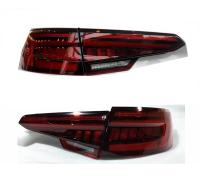
Audi A4 Tail Light/2016-Present/5th Generation/LED/Bumper Light/Back Light/Brake Light/Signal Light/Tail Lamp/2017 2018 2019 2020 2021 2022 2023 EzAuto
₱5,999.00
Buy on LazadaAudi A4 Tail Light/2016-Present/5th Generation/LED/Bumper Light/Back Light/ke Light/Signal Light/Tail Lamp/2017 2018 2019 2020 2021 2022 2023 A4 EzAuto
₱5,999.00
Buy on Lazada
100% Offical Authentic Audi Polarized Sunglasses For Men Driving Fishing Shades Men Beach Sunny Protection Anti UV400
₱629.10₱2,500.00
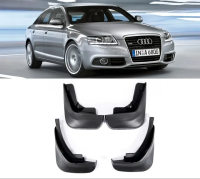
Audi A6 Mud Guard/2004-2011 Model/3rd Generation/Splash Guard/Mud Flaps/Mudguard/2005 2006 2007 2008 2009 2010 EZAuto
₱1,097.00₱1,978.00
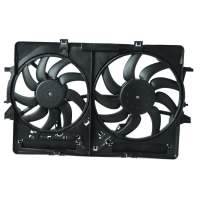
Audi A4 Radiator Fan/2012-2016 Model/4th Gen/Facelift/B8/Cooling Fan/Car Fan Radiator/Electronic Condenser Fan 2013 2014 2015 EZAuto
₱5,797.00₱12,631.00
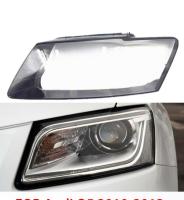
Audi Q5 Headlight Cover/2013-Present/1st Generation/TDI/Headlamp Cover/Head light Cover/Cover Lens/Transparent Shell/2014 2015 2016 2017 2018 2019 2020 2021 2022 2023 EzAuto
₱5,496.00₱16,494.00
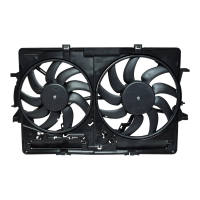
Audi R8 Radiator Fan/2007-2015 Model/1st Gen/42/Cooling Fan/Car Fan Radiator/Electronic Condenser Fan 2008 2009 2010 2011 2012 2013 2014 EZAuto
₱5,161.00₱10,308.00
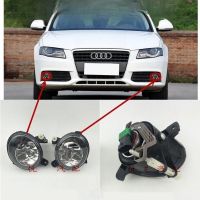
Audi A4 Fog Light/2019-2012/4th Generation/B8/Lower Bumper Light/Front Bumper Light/Fog Lamp/2010 2011 EzAuto
₱4,396.00₱13,194.00
About Audi
Overview
Audi is a German premium automobile manufacturer headquartered in Ingolstadt, Bavaria, Germany. The marque is widely recognised for combining understated German design with advanced engineering, performance, technology, and luxury. Its best-known product families include the A3, A4/A5, A6, A7, A8, Q3, Q5, Q7, Q8, TT, R8, and e-tron ranges, although model naming and line-ups have evolved substantially over time.
Audi operates as part of the Volkswagen Group alongside brands such as Volkswagen, Porsche, Škoda, SEAT/CUPRA, Bentley, and Lamborghini. In the global premium automotive segment, its principal competitors are generally considered to be BMW and Mercedes-Benz.
Basic Information
| Category | Information |
|---|---|
| Company | AUDI AG |
| Common name | Audi |
| Industry | Automotive |
| Founded | 1909 (modern historical lineage) |
| Headquarters | Ingolstadt, Bavaria, Germany |
| Parent group | Volkswagen Group |
| Founder associated with Audi | August Horch |
| Major markets | Europe, China, United States, and other international markets |
| Products | Passenger cars, SUVs, electric vehicles, and performance cars |
| Brand symbol | Four interlocking rings |
| Famous slogan | Vorsprung durch Technik |
| Core positioning | Premium/luxury automotive |
It is important to note that today’s AUDI AG is the product of a long corporate evolution rather than a single entity existing continuously under the same legal identity since 1909. Its history encompasses Audiwerke, Auto Union, NSU, and eventually AUDI AG.1
Origin of the Name
The brand’s origins lie with August Horch, a German engineer and automobile pioneer who founded his first company, Horch & Cie., in 1899. Following a disagreement with management, he left in 1909 to establish a new automobile company in Zwickau. However, he could no longer use his surname as it was already associated with his former firm.
The solution was linguistic: in German, “Horch!” translates to “Listen!”, the Latin equivalent of which is “Audi!”. Horch therefore adopted Audi as the name for his new enterprise. Unusually for a major automobile brand, the name essentially derives from a translation of its founder’s surname.
Early History and the Four Rings
Audi’s history traces back to 1909 when August Horch established the company that became Audiwerke. Based in Zwickau, Saxony, the early Audi firm developed a reputation for technically sophisticated cars and participated in demanding motorsport events to demonstrate its engineering prowess.
Formation of Auto Union
The most significant development in the marque’s early history occurred on 29 June 1932, when four automobile companies merged to form Auto Union AG:1
- Audi
- DKW
- Horch
- Wanderer
The famous four-ring logo represents this union of four manufacturers, not four models or technological concepts. Each marque retained a distinct market position:
- DKW: Motorcycles and smaller cars
- Wanderer: Medium-sized cars
- Audi: Upper-medium cars
- Horch: Luxury cars
Consequently, the four rings are fundamentally a corporate-history symbol that has survived as Audi’s most recognisable visual identity.1
Grand Prix Racing Era
During the 1930s, Auto Union achieved international fame through its extraordinary Grand Prix racing cars. Developed in collaboration with engineer Ferdinand Porsche, the Type A–D machines featured advanced engineering for their era, including mid-mounted engines and supercharged V16 powerplants. These cars became part of the legendary German “Silver Arrows” racing era alongside Mercedes-Benz.
Drivers such as Hans Stuck, Achille Varzi, and Bernd Rosemeyer secured major victories for Auto Union. Historical records note that a streamlined Auto Union racing car driven by Rosemeyer exceeded 400 km/h on a public highway in 1937. This early racing heritage established performance and technological innovation as central tenets of the Audi identity.
Post-War Reconstruction
World War II dramatically disrupted Auto Union. After the war, the company’s factories in Saxony fell under Soviet control; production facilities were dismantled and the original corporate structure effectively ceased to exist. Former employees and executives subsequently relocated to western Germany.
In 1949, a new Auto Union GmbH was established in Ingolstadt, Bavaria. This entity is considered the direct predecessor of today’s Audi organisation.1 Initially, the company focused heavily on DKW products, including inexpensive cars and motorcycles equipped with two-stroke engines.
Modern Transformation
Audi’s modern transformation began in the 1960s. Although Auto Union came under Daimler-Benz ownership, Volkswagen acquired a controlling interest in 1965, integrating the company into the Volkswagen Group.
Return of the Audi Name
A pivotal moment arrived with the introduction of the Audi F103 in 1965. This model revived the Audi name and utilised a four-stroke engine, marking a decisive departure from the traditional DKW two-stroke technology.
The Audi 100
In 1968, Audi introduced the Audi 100. The car was a commercial success and helped establish Audi as an independent premium-oriented brand within the Volkswagen Group. While Volkswagen had initially intended to use Auto Union’s production capacity for its own products, the success of the Audi 100 demonstrated that Audi could develop and sell its own sophisticated vehicles. This model helped define the formula characterising modern Audi: advanced engineering, understated design, technology, and premium positioning.
Merger with NSU
In 1969, Auto Union merged with NSU Motorenwerke, a German manufacturer renowned for innovative engineering and motorcycles. The resulting company, Audi NSU Auto Union AG, combined Audi’s automobile development expertise with NSU’s experimental technologies, including pioneering work on the Wankel rotary engine.
Vorsprung durch Technik
In 1971, Audi introduced the slogan Vorsprung durch Technik, commonly translated as “Progress through Technology”. This phrase became strongly associated with the brand’s identity, encapsulating its ambition to distinguish itself through engineering and technological innovation rather than luxury or status alone.
Technological Milestones
The quattro Revolution
Perhaps the most significant technological development in modern Audi history was the introduction of quattro all-wheel drive. Launched in 1980, the original Audi quattro demonstrated that all-wheel drive—previously associated primarily with off-road vehicles—could be successfully incorporated into a high-performance passenger car.
The technology gained prominence through rallying. Audi won the World Rally Championship manufacturers’ title in 1982, while Audi drivers secured the drivers’ championship in 1983 and 1984. This success fundamentally transformed Audi’s image from a conservative manufacturer to one synonymous with all-wheel drive, performance, rally technology, advanced engineering, and high-speed stability. The quattro name subsequently became one of the marque’s most recognisable technological trademarks.
Aerodynamics and Lightweight Engineering
Audi also became known for its focus on aerodynamics and weight reduction. The third-generation Audi 100, introduced in the early 1980s, achieved a drag coefficient of approximately 0.30, which was considered exceptional for a production sedan at the time. The engineering philosophy increasingly emphasised low aerodynamic drag, efficient packaging, lightweight construction, and advanced powertrains, reinforcing Audi’s reputation as a technically sophisticated manufacturer.
Establishment of AUDI AG
On 1 January 1985, Audi NSU Auto Union AG changed its name to AUDI AG, and headquarters were moved from Neckarsulm to Ingolstadt. This change marked the beginning of the modern corporate identity.1
Design Philosophy
Audi’s design language is generally characterised by clean surfaces, precise lines, restrained styling, wide horizontal proportions, distinctive lighting, large grille designs, strong geometric forms, and relatively minimalist interiors. Compared with some competitors, Audi has historically favoured a more technical and understated appearance.
While Mercedes-Benz often emphasises elegance and luxury, and BMW traditionally focuses on sportiness and driver orientation, Audi has typically positioned itself around technology, precision, and modernism. Although these distinctions are not absolute, they remain useful for understanding traditional brand positioning.
Model Naming System
Audi’s naming convention has historically utilised letters and numbers to denote vehicle segments and performance levels.
A-Series
The A range represents conventional passenger cars:
* A1: Small premium hatchback
* A3: Compact premium car
* A4: Traditional executive-class model
* A5: Sportier mid-size model
* A6: Executive/luxury sedan and wagon
* A7: Four-door luxury fastback
* A8: Flagship luxury sedan
Q-Series
The Q family comprises SUVs and crossovers, including the Q2, Q3, Q4, Q5, Q7, and Q8.
S and RS Models
S models represent higher-performance versions of standard Audi vehicles (e.g., S3, S4, S6). RS models, developed by Audi Sport, denote the highest-performance road-car variants (e.g., RS3, RS6, RS Q8), featuring substantially upgraded engines, chassis, brakes, cooling systems, and styling.
Performance and Motorsport
Audi Sport
Audi’s performance division, historically known as quattro GmbH and later Audi Sport GmbH, is responsible for developing high-performance RS models. The RS badge has become one of Audi’s strongest performance identifiers. Vehicles such as the RS 6 Avant are particularly notable for combining supercar-level performance with station wagon practicality.
The Audi R8
Introduced in the mid-2000s, the Audi R8 became the marque’s most famous modern sports car. Featuring a mid-engine layout, quattro all-wheel drive, naturally aspirated V8 and V10 engines, aluminium-intensive construction, and distinctive design, the R8 positioned Audi as a legitimate competitor in the exotic/supercar market.
Diesel Technology
Audi played a major role in developing and marketing high-performance diesel technology. Its TDI engines became widely recognised for combining turbocharging, direct injection, strong torque, and fuel efficiency. This technology was especially prominent in European markets and achieved significant motorsport success, including victories at the 24 Hours of Le Mans with diesel-powered prototypes like the R10 TDI.
Electrification Strategy
Audi has increasingly shifted towards electrification. Its electric vehicle family has historically used the e-tron designation, encompassing models such as the Q4 e-tron, Q8 e-tron, and e-tron GT. The company has developed dedicated electric architectures and integrated electrification into its mainstream product strategy. The e-tron GT, for example, represents an attempt to combine electric propulsion with traditional Audi attributes of performance, luxury, and quattro all-wheel drive. This transition constitutes one of the most significant strategic shifts in Audi’s modern history.
Corporate Structure
Audi belongs to the Volkswagen Group, which provides access to shared vehicle platforms, engines, electric powertrains, software, research and development, manufacturing resources, and supply chains. Within the group hierarchy, Audi occupies a premium/luxury position alongside Volkswagen, Škoda, SEAT/CUPRA, Porsche, Bentley, and Lamborghini. Volkswagen Group describes Audi’s history as developing from the Auto Union and NSU heritage into the modern Audi brand.2
Competitive Landscape
Audi is positioned in the German premium automotive segment. Its closest traditional competitors include:
BMW
- A3 ↔ 1 Series
- A4/A5 ↔ 3 Series/4 Series
- A6 ↔ 5 Series
- A8 ↔ 7 Series
- Q5 ↔ X3
- Q7 ↔ X5
- Q8 ↔ X6
Mercedes-Benz
- A-Class
- C-Class
- E-Class
- S-Class
- GLC
- GLE
- GLS
Other Competitors
Depending on the segment, Audi also competes with Lexus, Volvo, Genesis, Porsche, Tesla, Jaguar, Land Rover, Cadillac, and various emerging Chinese premium EV manufacturers.
Brand Identity
Audi’s brand identity is broadly defined by several key themes:
* Technology: Reinforced by the Vorsprung durch Technik slogan.
* Design: Characterised by a clean, modern, and technical aesthetic.
* Performance: Embodied by quattro, S/RS models, motorsport, and the R8.
* Luxury: Firmly positioned in the premium market against BMW and Mercedes-Benz.
* German Engineering: Strongly associated with precision and manufacturing quality.
If summarised in one sentence, Audi’s traditional philosophy attempts to make technology and engineering feel luxurious. This differentiates it from BMW’s emphasis on driving experience and Mercedes-Benz’s focus on prestige, although modern vehicles increasingly overlap across these dimensions.
Major Milestones
| Year | Event |
|---|---|
| 1899 | August Horch establishes Horch & Cie. |
| 1909 | August Horch establishes the company that becomes Audi |
| 1910 | Audi name begins appearing on production cars |
| 1932 | Audi, DKW, Horch, and Wanderer form Auto Union1 |
| 1930s | Auto Union becomes famous for Grand Prix racing |
| 1949 | New Auto Union GmbH established in Ingolstadt1 |
| 1965 | Audi name returns with a four-stroke automobile |
| 1968 | Audi 100 introduced |
| 1969 | Auto Union merges with NSU |
| 1971 | Vorsprung durch Technik slogan introduced |
| 1980 | Audi quattro introduced |
| 1982 | Audi wins WRC manufacturers’ championship |
| 1985 | Company becomes AUDI AG1 |
| 1994 | Audi introduces the aluminium-bodied A8 |
| 2006 | First-generation Audi R8 reaches production |
| 2000s–2010s | Global expansion and development of SUV/performance ranges |
| 2018 | Audi e-tron electric SUV enters production |
| 2020 | Audi e-tron GT introduced |
| 2020s | Accelerated transition toward electric vehicles |
Early historical milestones are documented by Audi’s official historical materials.1
Current Status
Today, Audi is a global premium automobile brand undergoing a major technological transition. While its traditional business centred on petrol, diesel, luxury, quattro, and performance, its future increasingly revolves around electric vehicles, software, digital interiors, advanced driver assistance, and connected technology. Simultaneously, the marque continues to maintain the traditional pillars of its identity: design, performance, luxury, and engineering. Product strategies and naming conventions continue to evolve annually.
Logo Significance
The four interlocking rings are among the world’s most recognisable automotive logos. Their original meaning is specific: Audi + DKW + Horch + Wanderer = Auto Union. Introduced upon the formation of Auto Union in 1932, the rings have remained associated with Audi through subsequent corporate transformations.1 Thus, the logo represents a tangible link to 1930s German automotive history.