Shop on Lazada
Béaba products
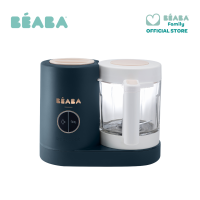
Beaba Babycook Neo - Baby Food Maker 6-in-1 food processor: steams mixes defrosts and reheats
₱18,000.00
Buy on Lazada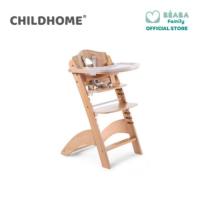
Childhome BABY GROW CHAIR LAMBDA + Tray Cover
₱5,500.00₱11,000.00
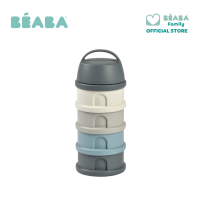
Beaba Stacking Milk Containers - Baby Formula Milk Container 4 Compartments
₱850.00
Buy on Lazada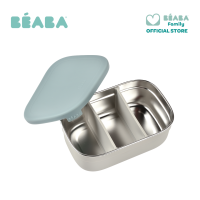
Beaba Lunch Box Stainless Steel + Silicone Lid
₱2,150.00
Buy on Lazada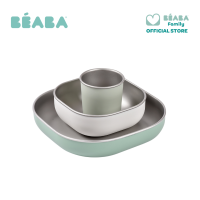
Beaba Stainless Steel Meal Set
₱2,250.00
Buy on Lazada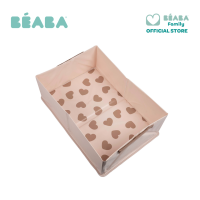
Beaba CameleO Foldable Pop Up Bath
₱4,800.00
Buy on Lazada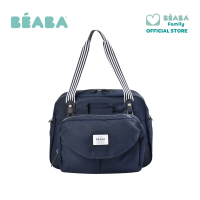
Beaba Geneva Bag II Changing Bag
₱5,750.00
Buy on Lazada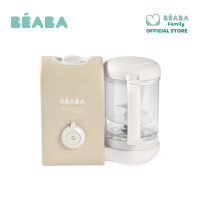
Beaba Babycook Express - 4 in 1 baby food processor: steam cook heat defrost and blend
₱12,750.00
Buy on LazadaAbout Béaba
Béaba (stylized as BÉABA®) is a French baby-care and childcare brand best known for its Babycook® baby food processor. Founded in 1989 in Oyonnax, Ain, France, the brand was established on the premise of using design and innovation to simplify daily life for new parents. Over more than three decades, Béaba has expanded from baby-food preparation into a comprehensive range of feeding, childcare, hygiene, sleep, and travel products.1
Today, Béaba states that its products are sold in more than 70 countries, comprising a catalogue of over 250 items. It also operates as part of the wider Béaba Family, a group that includes brands such as Red Castle, Childhome, and Suavinex.2
Basic information
| Field | Information |
|---|---|
| Brand | Béaba / BÉABA® |
| Country of origin | France |
| Founded | 1989 |
| Birthplace | Oyonnax, Ain, France |
| Industry | Baby care / childcare / nursery products |
| Best known for | Babycook® |
| Core customers | Babies, young children and their parents |
| Main positioning | Design-led, innovative, practical French childcare |
| Geographic presence | 70+ countries |
| Product range | 250+ products |
| Notable product families | Babycook®, Bib’Expresso®, Up&Down®, baby monitors and feeding products |
| Wider group | Béaba Family |
The data presented above is derived primarily from current corporate disclosures.3
History
1989: Founding and the Babycook
Béaba was founded in Oyonnax in the Ain region of France in 1989. Its inaugural major product was the Babycook®, conceived as a dedicated appliance for preparing infant food.
The concept integrated cooking and food preparation into a single unit, facilitating the preparation of homemade baby food while preserving nutritional quality. Béaba describes Babycook as the first baby-food maker/processor of its kind and the product that established the brand’s reputation.3 Consequently, Babycook became the defining product associated with the Béaba name.
2000s: Expansion beyond Babycook
After establishing a foothold in baby feeding, Béaba progressively diversified into other childcare sectors. The company developed products covering:
- Baby food preparation
- Bottle preparation
- Changing and travel
- Bouncers
- Feeding accessories
- Baby hygiene
- Nursery products
In 2005, Béaba opened a subsidiary in Spain, marking a significant step in its international expansion. In 2008, it expanded operations into the United States.
2010: Bib’Expresso
A notable innovation in the following decade was Bib’Expresso®, designed to expedite bottle preparation. The device heats water to a specific temperature and dispenses it directly into the bottle; Béaba markets the product around the capability of having a bottle ready in approximately 30 seconds. This reflects a recurring Béaba strategy: identifying repetitive childcare tasks and converting them into faster, more convenient processes.
2011: Red Castle acquisition
In 2011, Béaba acquired Red Castle, a French baby-care brand known for products including strollers and the Cocoonababy®. This acquisition broadened the business scope beyond feeding to include baby mobility and development.
2012: Babycook Solo and Duo
Béaba continued to evolve its signature product line with the introduction of the Babycook Solo and Babycook Duo. The Duo model featured two bowls, enabling parents to prepare larger quantities or different foods simultaneously.4
During this period, the company also began developing a broader group structure around its baby-care brands. Béaba’s Hong Kong operation describes the creation of the Peek-A-Boo holding company as part of this organizational development.5
2014: Asian expansion
Béaba opened an office in Hong Kong in 2014, strengthening its international presence and operational capacity in Asian markets.6 Today, the company lists international operations in France, Spain, Belgium, Germany, the Netherlands, the United States, China, and Hong Kong.
2018: Babycook Neo and Up&Down
2018 marked another significant year for innovation. Béaba introduced the Babycook Neo, emphasizing eco-design and the use of materials such as glass and stainless steel. This product was manufactured in France.7
The brand also developed the Up&Down® concept, which allows for height adjustment in certain baby products. For example, the Béaba Up&Down bouncer utilizes a patented mechanism that enables seat height changes without tools.8
2021–2022: Béaba Family expansion
The wider brand portfolio continued to grow in the early 2020s. In 2021, Childhome, a Belgian baby-furniture and lifestyle brand known for the Mommy Bag, Evolu high chair, and nursery furniture, joined the group.9
In 2022, Suavinex, a major Spanish baby-feeding and care brand, became part of the Béaba Family.10 As a result, Béaba now operates within a broader group rather than functioning solely as a single-product French baby brand.
Product categories
Béaba has evolved into a full-range baby-care brand, although feeding remains its primary area of recognition. Current product categories include:11
Baby food
This is Béaba’s signature category. Products include:
- Babycook® steam-cooking food processors
- Food preparation accessories
- Food storage containers
- Feeding dishes
- Meal trays
- Portion containers
The Babycook remains the symbolic centrepiece of the brand.
Bottle feeding
Béaba produces products intended to simplify bottle preparation, including:
- Bottle warmers
- Bottle preparation equipment
- Accessories
- Bib’Expresso®
Baby seating and bouncers
The Up&Down® family represents Béaba’s approach to ergonomic baby equipment, featuring adjustable-height products designed to keep babies closer to the parent’s working height.
Baby hygiene
The range includes products for everyday baby hygiene and bathing.
Nursery
Béaba sells products associated with the baby’s room and everyday care.
Baby outings
The brand offers changing bags and accessories designed for parents travelling with infants.
Baby monitors
Béaba has developed baby-monitoring products, including connected devices compatible with a dedicated application.
Babycook
If one product defines Béaba, it is Babycook®. The original concept replaced the need for separate kitchen equipment for cooking, blending, and portioning by combining key food-preparation functions into a purpose-built appliance.
Its significance extends beyond technology; it represents Béaba’s broader philosophy of taking difficult or repetitive parenting tasks and making them simpler. Over the years, the Babycook family has expanded into numerous versions, including:
- Babycook Original
- Babycook Solo
- Babycook Duo
- Babycook Neo
- Babycook Express
- Connected/smart variants
- Glass and stainless-steel versions
Béaba currently describes Babycook as being available in multiple formats and materials, including glass and stainless steel.12 The Canadian Béaba site reports that more than 7 million Babycook units have been sold and that the product is used in 70+ countries.
Brand philosophy
Béaba’s identity is built around three core concepts:
Simplicity
The brand seeks to reduce the complexity of everyday childcare. Rather than positioning itself merely as a manufacturer of baby products, Béaba presents its offerings as tools that provide parents with more time and convenience.
Innovation
Innovation has been central to Béaba since the creation of Babycook. The company consistently applies technology and product design to routine parenting activities, including cooking, bottle preparation, feeding, monitoring, and seating.
Design
Unlike many traditional childcare brands that focus purely on function, Béaba has historically placed considerable importance on French-inspired product design and aesthetics. The company’s Hong Kong operation explicitly describes its products as being developed in France with an emphasis on design, technology, safety, functionality, and ergonomics.8
This combination can be summarized as: French design + practical innovation + parenting convenience.
French identity
Although Béaba has become an international brand, its French origin remains integral to its identity. The company was founded in the Ain region and continues to manufacture select products in France.
Béaba states that nearly 25% of its business is represented by products manufactured in France. These include the Babycook Neo, selected bathtubs, high chairs, food-storage products, glass meal trays, changing tables, and other childcare items.13 This provides Béaba with a distinct positioning compared to mass-market baby-product companies, combining international distribution with continued French product development and domestic manufacturing.
Safety and materials
Safety is a primary consideration for the brand. Béaba states that its products undergo testing and approval by independent laboratories and that it prioritizes materials such as:
- Stainless steel
- Glass
- Ceramic
- Silicone
The company also confirms that its products comply with European and French standards.14 For newer products, material choice has increasingly become part of the brand’s environmental and health positioning, particularly in the Babycook Neo and other items utilizing glass and stainless steel.
Sustainability and repairability
Béaba has increasingly incorporated sustainability into its brand strategy. Stated environmental initiatives include:
Eco-design
The company develops products with consideration for material selection, product lifespan, and environmental impact.15
French manufacturing
Béaba highlights domestic manufacturing as a component of its sustainability approach.
Spare parts
Rather than treating a product as disposable when a component fails, Béaba offers spare parts for certain products. The company also states that the Babycook Neo can be repaired through a partner workshop.16
Second-life products
Béaba works with organizations such as Envie to repair products and return them to circulation as second-life items.17
Its broader CSR programme is called Béab’Act, organized around support for families, environmental footprint, and product safety.
Béaba Family
A distinction exists between Béaba the brand and the Béaba Family, the broader group of childcare brands. The current Béaba Family includes four principal brands:
| Brand | Main area |
|---|---|
| Béaba | Baby care, feeding, childcare |
| Red Castle | Baby development, sleep, strollers |
| Childhome | Baby furniture, nursery and lifestyle |
| Suavinex | Bottles, teats, pacifiers, feeding and baby care |
The group reports approximately 1,150 referenced products, 480 employees, operations in 70 countries, and annual sales of around €120 million.
International presence
Béaba began as a French company but has evolved into an international childcare brand. According to the company, its products are now present in more than 70 countries, with subsidiaries or offices in markets including:
- France
- Spain
- Belgium
- Germany
- The Netherlands
- United States
- China
- Hong Kong
This international footprint is significant because Babycook has become recognizable outside France as a specialized baby-food appliance.
Target customer
Béaba primarily targets modern parents of babies and young children, particularly those who value a combination of:
- Convenience
- Product functionality
- Safety
- Design
- Time savings
- Premium-feeling materials
- Organized and aesthetically pleasing baby equipment
Its positioning sits between traditional childcare equipment and lifestyle/design products. Consequently, Béaba products often emphasize not only utility but also aesthetics and integration into contemporary homes.
Competitive positioning
Béaba occupies a distinct intersection in the market. While traditional baby-care companies often have extremely broad portfolios covering everything from bottles to strollers, and kitchen-appliance companies focus on food preparation without specific infant-feeding specialization, Béaba combines these domains.
Similarly, while premium lifestyle brands emphasize aesthetics and materials, they may lack Béaba’s historical specialization in baby feeding. Béaba’s positioning can be defined as:
Baby-care expertise × appliance innovation × French design × parental convenience
Babycook serves as the clearest expression of this positioning.
Distinctive characteristics
Several factors differentiate Béaba from generic baby-products manufacturers:
Heritage built on an iconic invention
The brand achieved fame not through hundreds of different baby products, but specifically through Babycook.
Parenting problems as design challenges
The fundamental question behind many Béaba products is: “What part of caring for a baby could be made easier?” Babycook addresses food preparation; Bib’Expresso addresses bottle preparation; Up&Down addresses positioning and ergonomics; and baby monitors address remote observation.
Strong French design identity
Béaba consistently presents itself as a French brand with design and innovation at its core.8
Ecosystem expansion
The company has gradually transitioned from one hero product → feeding → childcare → a broader family of baby brands.
Timeline
- 1989 — Béaba founded in Oyonnax, France; Babycook introduced.
- 2005 — Spanish subsidiary established.
- 2008 — Expansion into the United States.
- 2010 — Bib’Expresso introduced.
- 2011 — Red Castle acquired.
- 2012 — Babycook Solo and Duo introduced.
- 2014 — Hong Kong office opened.
- 2018 — Babycook Neo and Up&Down innovations launched.
- 2020 — Chinese operations expanded.
- 2021 — Childhome joins the wider Béaba Family.
- 2022 — Suavinex joins the wider group.
- Today — Béaba reports 250+ products, presence in 70+ countries, and a continuing focus on innovation, design, safety, and sustainability.17
Assessment
Béaba can be described as a French premium-oriented baby-care and childcare brand whose identity was built around simplifying parenting through innovative product design.
Its most significant contribution to the baby-care market is arguably Babycook, which transformed the brand from a small French innovation into an internationally recognized name in infant feeding. Over time, Béaba has evolved into much more than a baby-food-machine company. Its portfolio now covers feeding, cooking, bottle preparation, baby seating, hygiene, outings, nursery products, and monitoring, while its broader corporate family encompasses several complementary childcare brands.
The brand’s core identity comprises:
- 🇫🇷 French heritage
- 💡 Innovation
- 🎨 Design
- 👶 Baby safety and development
- ⏱️ Convenience for parents
- ♻️ Increasing focus on repairability and sustainability
In summary, Béaba is best understood as a design-led French childcare brand that aims to simplify the practical realities of early parenthood, rather than simply selling conventional baby products.
References
- Béaba®, Être parent est un jeu d’enfants
- Page marque – Béaba
- Page marque – Béaba
- Béaba®, Être parent est un jeu d’enfants
- Béaba – Babycook et accessoires pour bébés – Marques de France
- Béaba : tout savoir sur cette marque
- Architecture commerciale: Saguez & Partners pour Béaba – Stratégies
- Qui sommes nous ?
- Béaba®, Être parent est un jeu d’enfants
- ¿Quiénes somos?
- La marca Béaba
- Page marque – Béaba
- Béaba : Innovations en Puériculture | Marque Française
- Our Story
- Béaba engagée dans une démarche d’éco-conception pour ses produits de puériculture – ADEME Infos
- BÉABA – CCI France Allemagne CCFA e.V
- Béaba rayonne aussi à l’international ! 🌍 BÉABA Chine a eu le privilège de se joindre à plus de 20 marques françaises lors d’un événement qui s’est tenu à la résidence du Consul général à Shanghai… | BÉABA