Shop on Lazada
Bburago products
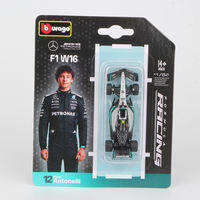
Bburago 1:64 2025 F1 Alloy Car Model SF25 RB21 W16 MCL39 Red Bull Mercedes Ferrari McLaren Formula Racing Diecast Toy
₱642.82₱1,134.39
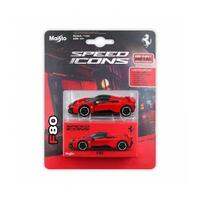
Bburago Simulation Alloy Car Model
₱708.00
Buy on Lazada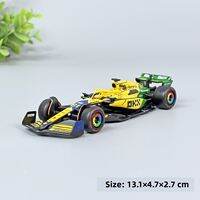
Bburago | F1 Formula 1 Car Showpiece 1:43
₱757.09₱829.28
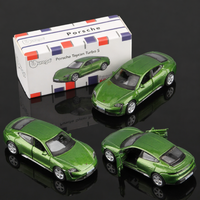
Bburago | Rubber Tires Alloy Car Model 1:64
₱379.00₱706.00
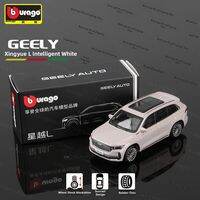
Bburago | Alloy Simulation 1:64 Scale Car Model
₱604.00₱669.00
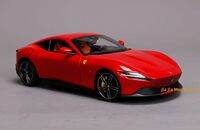
Bburago | Diecast Simulation Car Model 1:18
₱8,084.88₱11,324.85
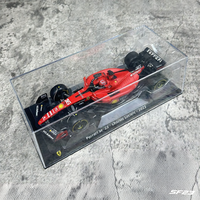
Bburago | Red Bull F1 Car Model 1:24
₱2,662.39₱7,051.62
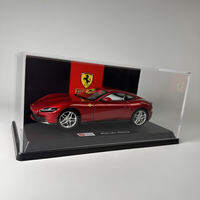
Bburago | Gift Ferrari Alloy Car Model 1:24
₱2,429.54₱4,346.72
About Bburago
Bburago is an Italian-origin brand best known for its die-cast model cars, collectible vehicles, and toy vehicles. Founded in the 1970s in Burago di Molgora, Lombardy, Italy, the company became particularly famous for producing affordable but detailed scale replicas of European automobiles, especially in 1:18 and 1:24 scale. Today, Bburago is owned and operated under the May Cheong Group (MCG), the Hong Kong-based group that also owns brands such as Maisto and Polistil.
The brand holds a significant place in the history of mass-market die-cast collecting because it helped make relatively large-scale model cars—especially 1:18-scale models—accessible to ordinary collectors rather than only to high-end hobbyists.1
Basic information
| Category | Information |
|---|---|
| Brand | Bburago |
| Industry | Toys, die-cast models, scale-model vehicles |
| Origin | Italy 🇮🇹 |
| Founded | 1974 as Martoys |
| Renamed | Bburago in 1976 |
| Founders | Mario Besana, Ugo Besana, Martino Besana |
| Original location | Burago di Molgora, Lombardy, Italy |
| Current owner | May Cheong Group |
| Current corporate base | Hong Kong / international operations |
| Major products | Die-cast cars, model vehicles, toy vehicles |
| Major scales | 1:18, 1:24, 1:43, 1:64 and others |
| Notable licenses | Ferrari and numerous other automotive brands |
| Current status | Active |
Bburago’s own corporate history describes the brand as originating in Burago di Molgora during the 1970s and emphasizes its reputation for die-cast replicas.2
The origins: the Besana brothers
The history of Bburago actually begins before the Bburago name existed.
The Besana family was already involved in miniature automobiles through Mebetoys, a company associated with brothers Mario, Ugo, and Martino Besana. Mebetoys became an important Italian model-car manufacturer and was eventually sold to Mattel.
After leaving that business, the Besana brothers established a new company in 1974 called Martoys. The company initially concentrated heavily on larger-scale models, particularly 1:24-scale vehicles.3
Martoys was relatively short-lived as a name. In 1976, the company adopted the name Bburago.
The unusual spelling is intentional: the two “B”s are commonly associated with the Besana family and Burago di Molgora, the Italian town where the company was based.4
Why the name is spelled “Bburago”
One of the most recognizable characteristics of the brand is its unusual spelling:
BBURAGO
rather than simply “Burago.”
The name combines the identity of the Besana family with the town of Burago di Molgora. The spelling consequently became an important part of the company’s visual identity.
The company was deeply connected with its Italian location. Unlike many modern die-cast manufacturers, Bburago’s original production was centred in Italy, which became an important part of the brand’s identity among collectors.
Early Bburago models
During its early years, Bburago concentrated on European automobiles, particularly contemporary Italian, French, German, and British vehicles.
The company became known for producing models that offered a considerable amount of detail for their price.
Typical features included:
- Opening doors
- Opening bonnets
- Opening boots on some models
- Detailed interiors
- Steering wheels
- Engine compartments
- Rubber-like tyres
- Metal die-cast bodies
- Plastic chassis and interior components
- Racing and road-car variants
Early Bburago models were particularly notable because they provided features that were normally associated with more expensive collector models.
The company also sold some models as assembly kits, allowing hobbyists to build the miniature themselves.5
Scale models
One of Bburago’s biggest contributions to the model-car industry was its emphasis on relatively large scales.
1:24
The 1:24 scale became one of Bburago’s signature formats.
A 1:24 model is approximately one twenty-fourth the length of the real automobile. For a 4.8-metre car, for example, the miniature would be approximately 20 cm long.
This scale offered a good compromise between size, detail, and affordability. It became particularly popular among children, casual collectors, and serious hobbyists.
1:18
The 1:18 scale eventually became one of Bburago’s most famous categories.
A 1:18 model is approximately 25–28 cm long for a typical passenger car.
Bburago was particularly influential in making 1:18-scale die-cast cars a mainstream product category. Rather than restricting this scale to expensive specialist manufacturers, Bburago produced large models at comparatively accessible prices.
This helped establish 1:18 as one of the most important scales in modern die-cast collecting.
1:43
Bburago also produced smaller 1:43-scale models.
This scale is much more compact and became popular for collection displays, racing cars, European car collections, large vehicle lineups, and collectors with limited display space.
1:64 and smaller models
Under May Cheong’s ownership, the brand expanded further into smaller toy-oriented scales. The company’s current description says Bburago covers products from 1:18 through 1:64 scale.6
What made Bburago special
Bburago’s reputation can be summarised by three things:
Italian identity
The original company was strongly associated with Italian manufacturing and design culture.
Large scale
Bburago became particularly famous for making large 1:18 and 1:24 models accessible to a mass market.
Value
Bburago models generally occupied a space between inexpensive toy cars and expensive high-end collector models.
That combination made the brand extremely popular. A collector could obtain a relatively large model with opening parts and recognisable detailing without spending the kind of money required for a premium resin or metal model.
Bburago and Ferrari
One of the most important chapters in Bburago’s history involves Ferrari.
Ferrari models became an extremely important part of Bburago’s business and identity. However, around the turn of the millennium, Ferrari’s licensing arrangements changed, and Bburago lost access to producing Ferrari models for a period. This was a serious blow because Ferrari models had become an important part of its product range.7
This episode is significant because it illustrates how important automotive licensing is to the die-cast industry.
Eventually, following the change in ownership, Bburago returned to producing Ferrari models.
Today Ferrari is once again a major part of the Bburago portfolio. May Cheong currently publishes a dedicated 2026 Ferrari catalogue for Bburago.8
The late 1990s and increasing competition
By the late 1990s, Bburago faced increasingly strong competition.
The die-cast market had become crowded with companies producing models in similar scales.
Competitors included:
- Maisto
- Mattel / Hot Wheels
- Ertl
- Yat Ming
- Revell
- Mira
- Anson
- Jouef
- Chrono
- Exoto
One particularly important competitor was Maisto. Interestingly, Maisto would later become part of the same corporate family as Bburago.
The economic situation was also changing. Manufacturing in places such as China and Thailand offered lower production costs, while Bburago continued manufacturing in Italy. This put considerable pressure on the company’s finances.9
Bankruptcy and acquisition
Bburago eventually entered bankruptcy proceedings in 2005.
The brand itself, however, survived.
The May Cheong Group, a Hong Kong-based toy and model-vehicle manufacturer, acquired the Bburago brand and related assets in the mid-2000s. May Cheong’s own corporate history identifies 2005/2006 as the acquisition period, while its current Bburago history describes the expansion as occurring in 2005.10
This distinction is worth noting because different sources describe the acquisition year slightly differently: some sources use 2005, while others refer to the completed acquisition or transition in 2006.
Following the acquisition, Bburago’s manufacturing moved away from its traditional Italian production base and into May Cheong’s broader manufacturing network, including China.11
This effectively marked the end of Bburago as a major Italian mass-production die-cast manufacturer, while preserving the Bburago name and heritage.
May Cheong Group
The current Bburago is part of the May Cheong Group, or MCG.
May Cheong itself was founded in 1967 in Hong Kong. It grew from a small toy manufacturer into a major international manufacturer and distributor of toys and replica vehicles. The company says it now operates in more than 115 countries and has manufacturing facilities in China as well as offices in several countries.12
Its brand portfolio includes:
- Bburago
- Maisto
- Polistil
- Muscle Machines
- BB Junior
- Maisto Tech13
This gives Bburago access to a much larger manufacturing and distribution network than the original Italian company had.
Bburago vs. Maisto
Because both brands belong to May Cheong, collectors often compare them.
A simplified way of looking at their positioning is:
| Bburago | Maisto | |
|---|---|---|
| Heritage | Italian | Hong Kong / international |
| Original identity | European model cars | Broad global vehicle range |
| Major scales | 1:18, 1:24, 1:43, 1:64 | 1:18, 1:24, 1:43, etc. |
| Famous for | European cars, Ferrari | Broad range of global vehicles |
| Ownership | May Cheong Group | May Cheong Group |
| Target | Toys + collectors | Toys + collectors |
| Price positioning | Generally accessible | Generally accessible |
May Cheong appears to deliberately maintain different identities for the two brands. Bburago has retained a strong European orientation, while Maisto has a broader global vehicle selection.14
Modern Bburago
Modern Bburago is no longer simply the Italian manufacturer of the 1970s–2000s.
It is now a global die-cast and toy brand operating under May Cheong.
Its current catalogue includes models covering multiple scales and categories, with licensed automobiles from major manufacturers. The official May Cheong site currently lists a 2026 Bburago catalogue as well as a separate Ferrari catalogue.15
The brand continues to combine:
- Toy vehicles
- Collectible models
- Licensed replicas
- Motorsport models
- Supercars
- Classic cars
- Modern production cars
- Ferrari models
- Different scales and price levels
Bburago’s Ferrari Signature Series
One of the more collector-oriented modern ranges was the Signature Series.
The series was designed to provide more detailed replicas than Bburago’s standard ranges.
For example, Bburago’s 1:18 Ferrari LaFerrari Signature Series featured additional detailing to areas such as:
- Brake discs and calipers
- Engine compartment
- Exhaust
- Dashboard
- Steering wheel
- Interior
- Wheels
- Exterior trim
The company announced the Signature Series in 2014 and positioned it as a more hobby-oriented Ferrari replica range.
Product categories
Modern Bburago products can broadly be divided into several categories.
Standard die-cast models
These are the core Bburago products, generally combining a metal body with plastic components and moving or opening parts depending on the model.
Collector-oriented models
These emphasise greater detailing and are generally aimed more toward adult collectors.
Racing models
Bburago has historically produced racing versions of road cars and dedicated motorsport vehicles.
Ferrari models
Ferrari remains one of the most important licensed ranges.
Smaller toy vehicles
The company also participates in smaller-scale and more toy-oriented vehicle categories.
Construction of a typical Bburago model
Like many die-cast cars, a typical Bburago model uses several different materials.
The main body is generally made from die-cast metal, while components such as the interior, chassis, windows, lights, grilles, mirrors, and engine components are made from various plastics or other materials.
Depending on the particular model, it may include opening doors, bonnets, and boots, and sometimes steering or suspension-related features.
The exact construction and level of detail vary substantially between Bburago product lines.
Bburago as a collector brand
Bburago has two overlapping audiences.
Children and casual buyers
Its relatively accessible pricing and moving parts make many Bburago products suitable as toys.
Adult collectors
At the same time, larger-scale Bburago models—particularly 1:18—have become collectible objects.
This dual identity is one of the brand’s defining characteristics.
Bburago therefore occupies an interesting position spanning toys, affordable collectibles, and serious models, rather than being exclusively one of those categories.
Bburago’s importance in die-cast history
From a historical perspective, Bburago is important for several reasons.
1. It preserved Italian die-cast manufacturing heritage
The original company was part of a major Italian tradition of miniature automobile manufacturing.
2. It popularised large-scale models
Its extensive use of 1:18 and 1:24 models helped make larger die-cast cars common among ordinary consumers.
3. It bridged toys and collectibles
Bburago models were affordable enough to be toys but detailed enough to attract collectors.
4. It helped establish 1:18 as a major collector scale
Bburago was particularly influential in the growth of the 1:18 market.16
5. The brand survived its original company’s collapse
Although the original Italian business disappeared, the Bburago name itself survived through acquisition by May Cheong.
Italian Bburago vs. modern Bburago
This distinction is extremely important for collectors.
There are essentially two eras:
🇮🇹 Vintage / Italian Bburago
1970s–2005
- Manufactured in Italy
- Strongly associated with Burago di Molgora
- Famous classic castings
- Particularly collectible today
- Strong Italian manufacturing heritage
🌏 Modern / May Cheong Bburago
mid-2000s–present
- Owned by May Cheong
- Global manufacturing
- Primarily Asian production
- Expanded international distribution
- Continues the Bburago brand name
- Modern licensed vehicles and Ferrari products
Consequently, two models carrying the Bburago name can have considerably different historical significance depending on their production period.
What collectors look for
For collectors, factors that can affect the desirability of a Bburago model include:
- Age — older Italian models can be more historically interesting.
- Scale — 1:18 models are especially popular.
- Rarity — discontinued versions can be harder to find.
- Condition — original paint, wheels, glass, and interior matter.
- Packaging — original boxes can increase collector interest.
- Variant — racing, promotional, and special versions can differ significantly.
- License — Ferrari and other famous automotive marques can be particularly desirable.
- Production origin — “Made in Italy” Bburago models belong to a very different historical era from later Chinese-produced examples.
Bburago’s relationship with Italian automotive culture
Even though the modern brand is internationally owned and manufactured, Bburago retains a strong association with Italian automotive culture.
This is particularly evident through its historical connection with:
- Ferrari
- Lamborghini
- Alfa Romeo
- Fiat
- Lancia
- Maserati
- Other European manufacturers
Its origin in Lombardy also placed the company relatively close to one of Europe’s most important automotive regions.
The official brand history explicitly describes Bburago as originating in Burago di Molgora, Lombardy, and emphasises the Italian model-making tradition that formed the basis of its reputation.17
Ownership today
Today, Bburago is part of the May Cheong Group, rather than being an independent Italian manufacturer.
May Cheong operates a vertically integrated manufacturing and distribution network and says its products reach more than 115 countries. Its factories include facilities in Dongguan and Shaoguan, China.18
There is also a contemporary Bburago Italia S.r.l. associated with the group’s Italian operations, showing that the brand retains an Italian corporate presence even though its manufacturing structure is now global.
Brand identity
Bburago’s identity can be summarised as Italian heritage combined with affordable die-cast collecting, large-scale model cars, and licensed automotive replicas.
Its historical importance is not necessarily that it produced the most technically sophisticated models in the industry. Rather, Bburago helped make large, attractive, functioning die-cast replicas accessible to a huge audience.
That is why the brand remains recognisable decades after its original Italian company ceased operations.
Timeline
- 1960s — Mario Besana and his brothers become involved in Italian miniature vehicle manufacturing through Mebetoys.
- 1974 — The Besana brothers establish Martoys.
- 1976 — Martoys becomes Bburago.
- Late 1970s–1980s — Bburago develops its reputation for affordable large-scale die-cast models.
- 1980s–1990s — 1:18 becomes increasingly important to the brand.
- 1990s — Bburago becomes one of the recognisable names in large-scale die-cast collecting.
- Around 2000 — Ferrari licensing changes create major difficulties for Bburago.
- 2005 — The original Bburago company enters bankruptcy.
- 2005/2006 — May Cheong acquires the Bburago brand and associated assets.19
- 2007 onward — Bburago is relaunched under May Cheong’s ownership, with production integrated into its international manufacturing network.
- 2014 — Bburago announces its higher-detail Ferrari Signature Series, beginning with the 1:18 LaFerrari.
- 2020s — Bburago continues as an international die-cast brand, with current catalogues covering multiple scales and extensive licensed vehicle ranges.
- 2026 — The brand remains active, with May Cheong publishing current Bburago and Ferrari catalogues.
Summary
Bburago is an Italian-born die-cast model-car brand founded by the Besana brothers in 1974, renamed in 1976, famous for making affordable large-scale replicas—particularly 1:18 and 1:24 models—and now operated globally by Hong Kong’s May Cheong Group.20
References
- About us – Burago
- Bburago
- Bburago
- BBURAGO – Brand – May Cheong Group
- BBURAGO – Brand – May Cheong Group
- Bburago.com | PRESS RELEASES
- May Cheong Group – Burago
- Bburago – Wikidata
- The History Of Burago Die-cast Vehicles — A Collector’s Guide 🚗✨
- History of Bburago – From Italian Model Cars to a Global Brand
- Bburago | Model Cars (Brand) | hobbyDB
- Category:Bburago – Wikimedia Commons
- Bburago model cars / Classic and vintage / Sales & value
- Bburago.com | PRESS RELEASES
- 关于我们 – 美昌集团
- Chi siamo – Burago
- Qui nous sommes – Burago
- May Cheong Group – Burago
- Bburago Explained
- Bburago | Science Museum Group Collection