Shop on Lazada
BELL products
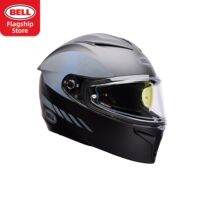
Bell | Double Lens Fit Sport Street Helmet
₱26,171.41
Buy on Lazada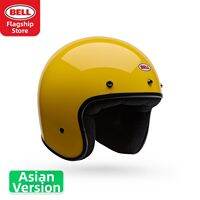
Bell | Retro 3/4 Motorcycle Helmet
₱13,045.94
Buy on Lazada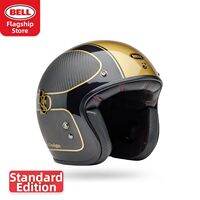
Bell | Retro Three-Quarter Helmet Ventilation Year-round
₱59,412.82
Buy on Lazada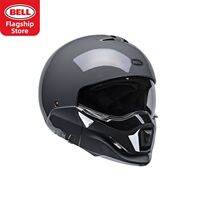
Bell | Retro Fog-Proof Motorcycle Helmet All Seasons
₱27,162.48
Buy on Lazada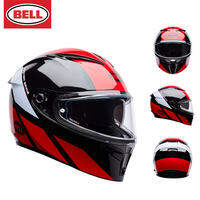
Bell | All-Season Full Face Helmet with Dual Lenses for Motorcycles and Street Bikes
₱21,740.68
Buy on Lazada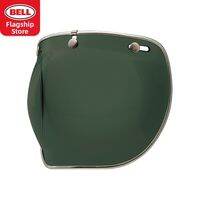
Bell | Anti-Fog Anti-Dust Electric Plated Sun-Protective Visor
₱4,581.40
Buy on Lazada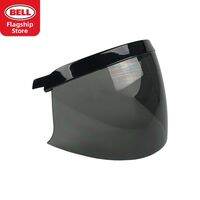
Bell | Sun Protection & Mirror Finished Motorcycle Helmet
₱2,951.20
Buy on Lazada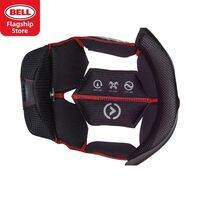
Bell | Bullitt Brookzer Helmet Liner Accessories
₱3,896.55
Buy on LazadaAbout BELL
Overview
BELL, commonly referred to as Bell Helmets, is an American manufacturer of protective headgear for motorcycling, bicycling, and auto racing. Established in 1954 by Roy Richter in California, it stands as one of the oldest and most historically significant names in the modern helmet industry.1 The brand gained prominence through its close ties to professional racing and its pioneering development of high-performance and full-face helmets.
The current product portfolio encompasses motorcycle helmets, bicycle helmets, and professional racing helmets. BELL maintains a brand identity strongly associated with speed, competition, engineering, safety, and retro-inspired design. The company describes its philosophy as creating purpose-built performance equipment rather than products designed primarily for decoration.2
Quick facts
| BELL | |
|---|---|
| Brand name | BELL / Bell Helmets |
| Founded | 1954 |
| Founder | Roy Richter |
| Origin | California, United States |
| Original business | Bell Auto Parts |
| Industry | Protective equipment / helmets |
| Main products | Motorcycle, bicycle, and racing helmets |
| Key markets | Motorcycle, cycling, motorsport |
| Known for | Full-face helmets, racing heritage, safety innovation |
| Current motorcycle/bicycle brand | Bell Helmets |
| Motorsport racing brand | Bell Racing |
| Current headquarters | Irvine, California, USA |
BELL states that it was established in 1954 and grew out of California’s 1950s hot-rod and racing culture.3
History
Origins: Bell Auto Parts
The history of BELL predates the helmet company itself. The business originated as Bell Auto Parts, an automotive parts operation in the Los Angeles-area community of Bell, California. Roy Richter eventually took control of the business and transformed it from an auto-parts operation into a major centre of California’s emerging hot-rod and racing culture.4
Richter was not simply a businessman; he was actively involved in racing, car building, and engineering. His experience with racers exposed him to an increasingly serious problem: high-speed competition was producing severe head injuries, while available helmets were not sufficiently suited to the demands of racing.5 This realisation led Richter to begin developing purpose-built racing helmets.
1954: The first BELL helmet
In 1954, BELL produced its first racing helmet, the Bell 500, in a small garage behind Bell Auto Parts. This event is generally regarded as the beginning of BELL as a helmet manufacturer.6
The Bell 500 was designed specifically for motorsport rather than adapted from an existing general-purpose helmet. Early development philosophy emphasised working directly with racers and creating equipment capable of surviving demanding racing environments.7
In 1955, driver Cal Niday became the first driver to wear a BELL helmet at the Indianapolis 500.8 The success of the helmet business led to the establishment of the Bell Helmet Company as a dedicated operation in the mid-1950s.
Early innovations
The historical importance of BELL stems largely from its willingness to develop helmets specifically around the requirements of racing.
Bell 500-TX
In 1957, BELL introduced the 500-TX, which utilised an expanded-polystyrene (EPS) liner. This technology represented an important step toward the modern energy-absorbing helmet architecture now used throughout the industry.9
The 500-TX also achieved recognition outside racing. In 1962, it was selected by New York’s Museum of Modern Art (MoMA) for its design, with four BELL helmet models subsequently being displayed as part of the museum’s collection.10
Snell certification
BELL became an early participant in the development of formal helmet safety standards. In 1959, the company became the first to certify a helmet to the Snell Memorial Foundation standard, according to historical accounts from Bell Racing.11 This achievement helped establish a core aspect of the brand’s identity: competition-derived safety technology.
The Bell Star and the rise of the full-face helmet
One of the most significant products in the history of BELL is the Bell Star. In 1966, the company introduced the Star, described by Bell Racing as the world’s first full-face helmet.12
The design was revolutionary because it extended protective coverage around the face and chin rather than leaving the front of the head exposed. This concept subsequently became fundamental to modern motorcycle and racing helmets. In 1968, racing driver Dan Gurney became the first racer to wear a full-face helmet in competition according to the brand’s historical timeline.13 That same year, Mario Andretti won the Indianapolis 500, making the period particularly important in the racing history of BELL.14
BELL and motorsport
Motorsport has remained central to the identity of BELL. Helmets from the brand have been used across disciplines including:
- Formula racing
- IndyCar
- NASCAR
- Rally
- Sports-car racing
- Karting
- Off-road racing
- Motorcycle racing
The company developed a philosophy of making purpose-built equipment for specific forms of competition rather than relying on a single universal helmet design.15 The racing history of BELL includes champions such as Jim Clark, who won the 1963 Formula 1 World Championship wearing a BELL helmet.
More recently, Bell Racing returned to the top of the World Rally Championship in 2024, when Thierry Neuville won the title wearing a Bell HP10 Rally helmet.
Motorcycle helmets
Although BELL began primarily through automobile racing, motorcycle helmets eventually became one of the company’s most recognisable product categories. The current motorcycle range includes helmets for:
- Street riding
- Sport riding
- Adventure riding
- Motocross
- Off-road riding
- Cruiser and custom motorcycles
- Retro/vintage-inspired riding
BELL has particularly strong recognition for retro-styled motorcycle helmets. Models inspired by classic designs combine vintage aesthetics with contemporary protective technology.
Modern motorcycle technology
Modern BELL helmets incorporate technologies such as Spherical Technology powered by MIPS, which uses a dual-liner concept intended to help manage rotational forces during certain impacts. Selected helmets also utilise Flex Energy Management technology.
Other products incorporate features such as anti-fog coatings, photochromic shields, and specialised comfort liners.
Bicycle helmets
BELL also became an important brand in the bicycle helmet market. Its cycling portfolio spans:
- Road cycling
- Mountain biking
- Enduro
- Trail riding
- BMX
- Urban/casual cycling
The company describes itself as having been involved in bicycle helmet innovation since its founding era and emphasises lightweight construction, aerodynamics, and modern impact-management technologies. The cycling division has adopted technologies such as MIPS and Spherical Technology, depending on the model.
Design philosophy
A distinctive characteristic of BELL is its combination of performance engineering and visual heritage. The company’s philosophy emphasises that the appearance of a product should follow its function. Designs are described as purpose-built, drawing inspiration from equipment such as race cars and aircraft rather than treating aesthetics as the primary objective.
This approach has produced two complementary brand identities:
High-performance BELL
This represents the technical side of the brand:
- Lightweight construction
- Aerodynamics
- Impact management
- Ventilation
- Advanced composite materials
- Racing homologation
- Professional competition development
Heritage BELL
This represents the lifestyle and design side:
- Classic motorcycle shapes
- Vintage racing graphics
- Retro colourways
- Historic logos
- Reissues of iconic designs
- Strong connection to American motorsport culture
This combination is a key reason BELL has remained recognisable beyond the professional racing market.
Bell Racing
It is useful to distinguish Bell Helmets from Bell Racing. Bell Racing focuses specifically on motorsport head protection, producing professional racing helmets for disciplines including Formula racing, NASCAR, and rally. Bell Racing is currently a brand of Racing Force Group, alongside brands such as OMP and Zeronoise.
Bell Racing states that its current racing helmets are manufactured in a 60,000-square-metre facility in Sakhir, Bahrain, adjacent to the Bahrain International Circuit. This professional racing division represents the most competition-focused part of the BELL heritage.
Corporate history
The corporate structure of BELL has changed considerably over its history. The original operation eventually became associated with Riddell, the American football-helmet manufacturer, forming Bell-Riddell in 1980. The motorcycle business was subsequently separated and became Bell Helmets, while the broader Bell Sports business followed its own corporate path.
Various BELL businesses subsequently passed through several ownership structures, including Easton-Bell Sports, BRG Sports, and Vista Outdoor. Vista Outdoor acquired the BELL brand along with several other sporting brands in 2016.
The motorsport side of the business is now separately associated with Racing Force Group, while the consumer BELL helmet brand continues under Bell Sports/Bell Helmets. This distinction is important because “BELL” is not necessarily a single corporate entity covering every BELL-branded helmet today.
Major milestones
| Year | Event |
|---|---|
| 1954 | BELL produces its first racing helmet, the Bell 500 |
| 1955 | Cal Niday wears a BELL helmet at the Indianapolis 500 |
| 1957 | BELL introduces the 500-TX with an EPS liner |
| 1958 | Jim Bryan wins the Indianapolis 500 wearing BELL |
| 1959 | BELL becomes the first company to certify a helmet to the Snell standard |
| 1962 | Bell 500-TX is selected by MoMA for design excellence |
| 1963 | Jim Clark wins the Formula 1 World Championship wearing BELL |
| 1966 | BELL introduces the Star full-face helmet |
| 1968 | Dan Gurney uses a full-face helmet in competition |
| 1970s onward | BELL expands substantially into motorcycle and cycling protection |
| 1980 | BELL merges with Riddell |
| 1990s–2000s | Motorcycle, cycling, and racing operations undergo several corporate reorganisations |
| 2016 | Vista Outdoor acquires BELL and several related brands |
| 2021 | BELL returns to the World Rally Championship |
| 2024 | Thierry Neuville wins the WRC title wearing a Bell HP10 Rally helmet |
Historical milestones are primarily based on official chronologies from Bell Racing, with corporate-history details cross-checked against published historical information.
Brand identity
The brand identity of BELL can be summarised by four core concepts: Speed, Protection, Innovation, and Heritage. Unlike many modern safety brands that entered motorsport later, the identity of BELL was built around the relationship between performance and protection from its inception.
Its official philosophy is centred on enabling people to “live, ride, drive and thrive”, while its historical identity revolves around racers pushing the limits of performance. Consequently, BELL occupies a distinct position in the market as simultaneously a technical safety-equipment manufacturer and a heritage motorsport and lifestyle brand.
Notability
The historical importance of BELL stems from several factors:
Pioneering full-face protection
The Bell Star helped establish the full-face helmet as an essential concept in motorsport and motorcycle protection.
Strong racing heritage
Product development has consistently been connected with professional racers and demanding competition environments.
Early adoption of safety technology
EPS energy-absorbing liners, Snell certification, and later impact-management systems are part of a long history of safety development.
Cross-category presence
Unlike many helmet brands that specialise in one sport, BELL operates across automotive racing, motorcycles, and bicycles.
Recognisable aesthetics
The combination of modern technology with classic American racing and motorcycle styling has made the brand particularly recognisable.
In popular culture
BELL helmets have become closely associated with the visual language of American racing and motorcycle culture. Classic designs, particularly the Star and 500-series helmets, have influenced the appearance of racing and motorcycle equipment for decades.
Vintage designs are frequently revived in modern collections, allowing BELL to sell products that simultaneously reference its 1950s–1970s heritage while incorporating contemporary safety technology.
BELL today
As of 2026, BELL remains an established global helmet brand with three major areas of activity:
- Motorcycle: Street, sport, adventure, motocross, and lifestyle helmets.
- Cycling: Road, mountain, enduro, trail, and other bicycle helmets.
- Motorsport: Professional racing helmets through Bell Racing, including products for major international racing disciplines.
The consumer operation of BELL is headquartered in Irvine, California, according to the company’s careers information.
References
- About Us | Official Site of Bell Helmets
- About Us | Bell Racing EU
- Motorcycle Helmets | Bell Helmets©
- Careers | Bell Helmets® – Official Website | Moto and Bike Helmets
- About Bell | Bell Collectibles
- Our History | Bell Racing EU
- Sport Bike | Bell Helmets©
- Cycling | Bell Helmets©
- Bell Sports
- Bell Helmets® – Official Website
- Trademark Attribution Statement
- Our History | Bell Racing US
- Historia Sobre Bell Helmets®
- vistaoutdoor.com
- Collectibles About | Bell Collectibles