Shop on Lazada
Beyblade products
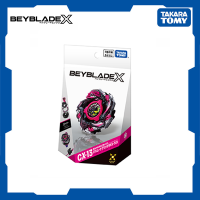
BeybladeX CX-13 STARTER Ba
₱999.00
Buy on Lazada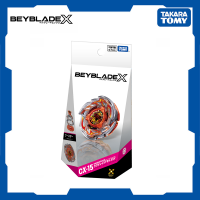
BeybladeX CX-15 BOOSTER Ra
₱649.00
Buy on Lazada![BEYBLADE X Original (see variations) BEYBLADEX [Transformers and Starwars] all with BAN KEE STICKERS](https://filebroker-cdn.lazada.com.ph/kf/S1360c49df79140909d09f8edc2716718X.jpg_200x200q80.jpg)
BEYBLADE X Original (see variations) BEYBLADEX [Transformers and Starwars] all with BAN KEE STICKERS
₱1,099.00₱1,999.00
![TAKARA TOMY BEYBLADE X BX-44 Booster Tricera Press M-85BS ASIA CODE [ BANKEE ]](https://ph-live.slatic.net/p/7bf6a3f8c8fde6221962d954252c85aa.png_200x200q80.jpg)
TAKARA TOMY BEYBLADE X BX-44 Booster Tricera Press M-85BS ASIA CODE [ BANKEE ]
₱599.00
Buy on Lazada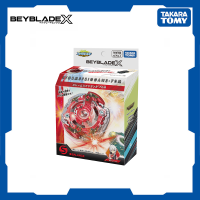
BeybladeX BXG-21 Booster St
₱999.00
Buy on Lazada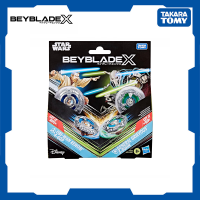
BEYBLADE BXA-05 BX-00 DOUBLESTARTER OBI-WAN KENOBI 4-60 P
₱1,499.00
Buy on Lazada![Beyblade X BX-34 Cobaltdragoon Xtreme Gear Sports Playset with BANKEE STICKERS [see variations for other selection]](https://filebroker-cdn.lazada.com.ph/kf/S4a0161f51a2e457c98c65eda1d84f2c98.jpg_200x200q80.jpg)
Beyblade X BX-34 Cobaltdragoon Xtreme Gear Sports Playset with BANKEE STICKERS [see variations for other selection]
₱899.00₱1,199.00
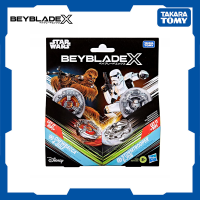
BEYBLADE BXA-05 BX-00 DOUBLE STARTER CHEWBACCA 4-80LF / STORMTROOPER
₱1,499.00
Buy on LazadaAbout Beyblade
Beyblade (Japanese: ベイブレード, _Beiburēdo_) is a Japanese toy franchise centered on customizable high-performance battling spinning tops. Created by Takara Tomy (originally by Takara before its 2006 merger with Tomy), the brand debuted in 1999 and has since become one of the world’s most successful toy and multimedia franchises. It combines physical toys with manga, anime, video games, tournaments, and a competitive community. The name “Beyblade” is inspired by the traditional Japanese spinning top beigoma and the word blade, referring to the aggressive design of the toys. [1]
Overview
Beyblade is a competitive spinning-top battle game in which players, known as Bladers, launch customizable tops into a specially designed stadium. The objective varies by ruleset, but the most common ways to win are:
-
Knocking the opponent out of the stadium.
-
Out-spinning the opponent.
-
Breaking apart (“Bursting”) the opponent’s Beyblade (in the Burst generation).
-
Achieving higher point totals in tournament matches.
The franchise emphasizes strategy through customization, allowing players to combine different parts to improve attack power, defense, stamina, or balance.
History
Origins (1999)
Beyblade was launched by Takara in Japan in July 1999. The concept was created by manga artist Takao Aoki, whose manga series helped popularize the toys before the anime adaptation aired.
The first Beyblades introduced included:
-
Ultimate Dragoon
-
Saizo
-
Frostic Dranzer
The original series quickly became a major hit among children due to its mix of collectibility, customization, and competitive gameplay. [2]
International Expansion
In 2002, Hasbro licensed Beyblade for North America, Europe, and many other Western markets.
Hasbro localized:
-
Toy releases
-
Anime distribution
-
Official tournaments
-
Product names in certain regions
The partnership greatly expanded Beyblade’s global popularity. [3]
Decline and Revival
By 2005, sales had slowed, and the original Beyblade line entered a hiatus.
Takara Tomy revived the brand in 2008 with an entirely new generation:
Metal Fight Beyblade (known internationally as Beyblade: Metal Fusion).
This reboot introduced:
-
Metal components
-
New customization systems
-
A fresh anime and manga storyline
The revival successfully re-established Beyblade worldwide. [4]
Major Generations
1. Original Series (1999–2005)
Also called:
-
Bakuten Shoot Beyblade
-
Plastic Generation
Features
-
Plastic construction
-
Bit Chips
-
Attack Rings
-
Weight Disks
-
Blade Bases
Anime
-
Beyblade
-
Beyblade V-Force
-
Beyblade G-Revolution
Main Characters
-
Tyson Granger (Takao Kinomiya)
-
Kai Hiwatari
-
Max Tate
-
Ray Kon
-
Kenny
2. Metal Saga (2008–2012)
Known in Japan as:
Metal Fight Beyblade
Innovations
-
Metal Fusion Wheel
-
Energy Ring
-
Spin Track
-
Performance Tip
Metal components dramatically increased battle intensity and realism.
Anime
-
Beyblade: Metal Fusion
-
Beyblade: Metal Masters
-
Beyblade: Metal Fury
-
Beyblade: Shogun Steel
Main Character
-
Gingka Hagane
3. Beyblade Burst (2015–2023)
One of the franchise’s biggest innovations introduced the Burst System.
New Mechanic
A Beyblade can explode into separate parts after receiving a powerful hit.
Victory methods now included:
-
Survivor Finish
-
Ring Out Finish
-
Burst Finish
Anime
-
Beyblade Burst
-
Beyblade Burst Evolution
-
Beyblade Burst Turbo
-
Beyblade Burst Rise
-
Beyblade Burst Surge
-
Beyblade Burst QuadDrive
-
Beyblade Burst QuadStrike
Main Characters
-
Valt Aoi
-
Aiger Akabane
-
Dante Koryu
-
Hikaru and Hyuga Hizashi
-
Bell Daizora
Burst became one of the franchise’s most commercially successful eras.
4. Beyblade X (2023–Present)
The newest generation is Beyblade X.
Major Innovation
The Xtreme Dash System.
A special rail inside the stadium allows Beyblades to accelerate dramatically, producing much faster and more explosive battles than previous generations.
Main Character
-
Bird Kazami
-
Ekusu Kurosu (X)
Beyblade X focuses heavily on competitive play while remaining accessible to newcomers. [5]
Gameplay
A Beyblade is typically made of several interchangeable parts.
Depending on the generation, components include:
Original Generation
-
Bit Chip
-
Attack Ring
-
Weight Disk
-
Blade Base
Metal Saga
-
Face Bolt
-
Energy Ring
-
Fusion Wheel
-
Spin Track
-
Performance Tip
Burst
-
Layer
-
Disc
-
Driver
Beyblade X
-
Blade
-
Ratchet
-
Bit
Players can mix and match components to create unique combinations.
Battle Types
Beyblades are generally categorized into four types.
Attack
-
High speed
-
Powerful hits
-
Lower stamina
Examples:
-
Dragoon
-
Valkyrie
-
Xcalibur
Defense
-
Heavy weight
-
Strong resistance
-
Hard to knock out
Examples:
-
Driger
-
Wyvang
-
Knight Shield
Stamina
-
Long spin time
-
Lower attack power
Examples:
-
Phantom Orion
-
Wizard Arrow
Balance
-
Mix of all attributes
Examples:
-
Pegasus
-
Spriggan
-
Phoenix
Competitive Scene
Beyblade has an active international competitive community.
Tournament formats often use:
-
Swiss rounds
-
Double elimination
-
Deck formats
-
Point-based scoring
Competitive players study:
-
Weight distribution
-
Spin direction
-
Launch technique
-
Stadium control
-
Part combinations
Official tournaments are held in Japan by Takara Tomy, while Hasbro has organized events in many international markets. [6]
Media
Manga
Multiple manga series have accompanied each generation.
Creators include:
-
Takao Aoki
-
Takafumi Adachi
-
Homura Kawamoto
-
Hikaru Muno
Anime
Across all generations, the franchise has produced well over 300 television episodes, introducing new casts and Beyblade systems while maintaining the core concept of competitive battles.
Video Games
Beyblade has appeared on numerous platforms, including:
-
PlayStation
-
PlayStation 2
-
Game Boy Advance
-
Nintendo DS
-
Nintendo Switch
-
Mobile devices
Games range from RPG-style adventures to competitive battle simulators.
Cultural Impact
Beyblade became one of the defining toy crazes of the early 2000s and has experienced multiple resurgences through its newer generations. Beyond the toys, it has inspired:
-
International tournaments
-
Fan communities
-
Online strategy guides
-
Collecting culture
-
Esports-style competitions in some regions
The franchise has sold tens of millions of units worldwide and remains one of Takara Tomy’s flagship brands. [7]
Legacy
More than 25 years after its debut, Beyblade continues to evolve through new toy systems, anime series, and competitive formats. Its combination of physical skill, customization, and collectible design has allowed it to remain popular across multiple generations of fans, making it one of the most enduring battling toy franchises in the world. [8]