Shop on Lazada
Black & Decker products
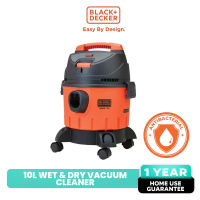
BLACK+DECKER™ Wet & Dry Vacuum Cleaner 10L (BDWD10-B1) 1 Year Warranty
₱2,595.00₱5,190.00
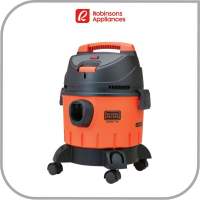
BLACK+DECKER™ 10L Wet and Dry Vacuum (BDWD10-B1)
₱3,490.00₱5,190.00
![BLACK+DECKER™ Wet & Dry Vacuum Cleaner 20L (BDWD20-B1) [1 Year Warranty]](https://ph-live.slatic.net/p/684a6da4cecc200d017690659cdc4177.jpg_200x200q80.jpg)
BLACK+DECKER™ Wet & Dry Vacuum Cleaner 20L (BDWD20-B1) [1 Year Warranty]
₱4,445.00₱6,350.00
![BLACK+DECKER™ High Pressure Washer BEPW1600-B1 [1 Year Warranty]](https://ph-live.slatic.net/p/aa520e76a43c5576db7cfb4eb63a6f05.jpg_200x200q80.jpg)
BLACK+DECKER™ High Pressure Washer BEPW1600-B1 [1 Year Warranty]
₱4,017.00₱6,180.00
![Black & Decker Pressure Washer Hose 6/10/15/ 20 Meters [HOSE A or B]](https://filebroker-cdn.lazada.com.ph/kf/S824e93fae64f4a22b6de3b67d1202f73d.jpg_200x200q80.jpg)
Black & Decker Pressure Washer Hose 6/10/15/ 20 Meters [HOSE A or B]
₱1,449.00₱1,450.00
![BLACK+DECKER™ POWERSERIES+™ Cordless Stick Vacuum Kit with Removable Battery 20V Max Gray (BHFEA18D1-B1) [1 Year Warranty]](https://ph-live.slatic.net/p/7cd75397a77c57b026d6f1d4ad647127.jpg_200x200q80.jpg)
BLACK+DECKER™ POWERSERIES+™ Cordless Stick Vacuum Kit with Removable Battery 20V Max Gray (BHFEA18D1-B1) [1 Year Warranty]
₱7,794.00₱8,660.00
![BLACK+DECKER™ Cyclonic Dustbuster™ Handheld Vacuum Cleaner Gen2 3.6V [1 Year Warranty]](https://ph-live.slatic.net/p/aec9eac06fcc3a71ba4464ecb3f4bd26.jpg_200x200q80.jpg)
BLACK+DECKER™ Cyclonic Dustbuster™ Handheld Vacuum Cleaner Gen2 3.6V [1 Year Warranty]
₱1,606.50₱1,890.00
![BLACK+DECKER™ 5-in-1 Steam Mop 1300W (FSMH13E5-B1) [1 Year Warranty]](https://ph-live.slatic.net/p/0178e59c559fcb0e88f80f636c35d55d.jpg_200x200q80.jpg)
BLACK+DECKER™ 5-in-1 Steam Mop 1300W (FSMH13E5-B1) [1 Year Warranty]
₱4,003.50₱4,710.00
About Black & Decker
BLACK+DECKER (stylized as BLACK+DECKER®) is an American-origin global brand recognised for power tools, cordless equipment, lawn and garden products, and household appliances. The company traces its origins to 1910, when S. Duncan Black and Alonzo G. Decker established a small machine shop in Baltimore, Maryland. Today, BLACK+DECKER operates as part of Stanley Black & Decker, Inc., following the 2010 merger between The Stanley Works and The Black & Decker Corporation.1
The brand holds a significant place in the development of the modern consumer power tool industry. In 1917, BLACK+DECKER introduced an influential portable electric drill featuring a pistol grip and trigger switch, later pioneered cordless technology, and supplied equipment used in NASA’s Apollo lunar missions.1
Basic information
| Item | Information |
|---|---|
| Brand name | BLACK+DECKER |
| Founded | 1910 |
| Founders | S. Duncan Black and Alonzo G. Decker |
| Origin | Baltimore, Maryland, United States |
| Industry | Consumer products, power tools, outdoor equipment, home appliances |
| Parent company | Stanley Black & Decker, Inc. |
| Major market | Consumers / DIY / homeowners |
| Global presence | Products available in over 100 countries |
| Known for | Drills, cordless tools, vacuums, lawn equipment, household products |
| Major corporate event | Merger with The Stanley Works in 2010 |
According to the company, BLACK+DECKER products are available in more than 100 countries, establishing it as a genuinely global brand rather than solely an American manufacturer.2
Founding and early history
BLACK+DECKER was founded in 1910 when S. Duncan Black and Alonzo G. Decker opened a machine shop in Baltimore. Initially, the business did not focus exclusively on household power tools; the shop produced machinery for various applications, including milk-bottle caps and candy dipping.
1917: The portable electric drill
A pivotal contribution to the industry occurred in 1917, when the company filed a patent application for a ½-inch portable electric drill featuring a pistol-grip design and trigger switch. This configuration significantly improved user control and practicality, establishing a fundamental design philosophy that remains standard in modern drills.1 Through this innovation, BLACK+DECKER helped define the form factor of the modern handheld power tool.
Expansion during the 20th century
Following its establishment in the power tool sector, BLACK+DECKER expanded both geographically and across new product categories. An export department was formed in 1925, and the first international sales representatives were hired in 1927, indicating an early strategic commitment to global markets.2 By the 1930s, the company was actively promoting tools for professional applications; in 1929, for instance, it utilised a customised aircraft as a mobile showroom to demonstrate tools used in servicing aircraft engines. BLACK+DECKER stock began trading on the New York Stock Exchange in 1936.
Shift toward consumer products
A critical strategic evolution involved moving beyond professional and industrial tools to serve ordinary homeowners.
Lawn and garden
In 1957, BLACK+DECKER introduced electric outdoor equipment aimed at consumers, helping to establish its presence in the residential lawn and garden market. This category eventually became a core component of the brand’s identity.
Cordless tools
In 1961, BLACK+DECKER introduced what it describes as the world’s first cordless electric drill, powered by nickel-cadmium battery cells.1 The following year, in 1962, the company released a cordless hedge trimmer, extending battery technology from the workshop to outdoor tasks. These developments were historically significant as cordless operation has since become a defining characteristic of modern power tools.
BLACK+DECKER and NASA
A notable chapter in the company’s history involves its contribution to the Apollo Moon missions. During Apollo 15 in 1971, a BLACK+DECKER-built power head was used in the Lunar Surface Drill to extract core samples from the Moon. This technology was subsequently employed during the Apollo 16 and Apollo 17 missions.1 This collaboration demonstrated how technology originally associated with portable consumer and professional tools could be adapted for lunar exploration.
Workmate and the home workshop
In 1975, BLACK+DECKER launched Workmate, a portable folding workbench designed to facilitate household projects by combining a work surface and clamping functionality in a compact format. This product was instrumental in transitioning the brand’s perception from a pure power tool manufacturer to a broader DIY and home improvement label.
The dustbuster revolution
In 1979, the brand introduced the dustbuster, a compact cordless handheld vacuum cleaner that brought rechargeable technology into everyday household cleaning. Prior to this release, the company’s cordless expertise was primarily linked to drills and outdoor equipment. The dustbuster demonstrated that portable battery-powered convenience could be effectively applied to domestic chores, and it subsequently became one of BLACK+DECKER’s most recognisable consumer product families.
Household appliances
During the 1980s, BLACK+DECKER further diversified into the appliance market. In 1984, the company acquired General Electric’s small household appliance division, broadening its portfolio beyond tools and outdoor equipment. Over subsequent decades, the brand developed products across multiple categories, including vacuum cleaners, steam mops, kitchen appliances, coffee makers, toasters, irons, food preparation units, and handheld cleaning devices. The company currently emphasises products designed for “every part of your home”, encompassing both indoor and outdoor use.
Product innovation in the 1990s and 2000s
Leveraging its expertise in compact and cordless technology, BLACK+DECKER continued to develop consumer products throughout the late 20th and early 21st centuries. Notable innovations included:
- SnakeLight (1992): A flexible flashlight designed to illuminate difficult-to-reach areas.
- VersaPak (1993): An interchangeable battery system allowing users to power different products with compatible packs.
- MOUSE Sander (1998): A compact, ergonomic sander inspired by the shape of a computer mouse, which became a recognisable DIY product.
- FLEX Vac (2010): A compact vacuum featuring a flexible hose, extending the brand’s portable cleaning concept.
Merger with Stanley
A major corporate turning point occurred in 2010 when The Stanley Works and The Black & Decker Corporation merged to form Stanley Black & Decker, Inc.3 It is important to note that BLACK+DECKER did not cease to exist; rather, it became a brand within the newly formed entity. The merger combined Stanley’s history in hand tools and industrial products with BLACK+DECKER’s strength in power tools and consumer goods. The current portfolio also includes brands such as STANLEY, DEWALT, CRAFTSMAN, and BLACK+DECKER.2
BLACK+DECKER today
Currently, BLACK+DECKER is positioned primarily as a consumer-oriented brand targeting homeowners, DIY enthusiasts, casual users, gardeners, and those performing household repairs or seeking convenient cleaning solutions. This distinguishes it from other brands in the Stanley Black & Decker family that focus on professional tradespeople. For example, while DEWALT is strongly associated with professional construction and jobsite equipment, BLACK+DECKER traditionally emphasises accessibility, convenience, and everyday household use. The company describes its philosophy as “Easy by Design”, reflecting the principle that products should simplify everyday tasks.2
Main product categories
Power tools
Power tools remain a foundational category for BLACK+DECKER. The modern range includes both corded and cordless equipment such as drills, screwdrivers, impact tools, sanders, jigsaws, circular saws, grinders, rotary tools, glue guns, and work lights.
Lawn & garden
The brand maintains a substantial portfolio of consumer outdoor equipment, including string trimmers, lawn mowers, hedge trimmers, leaf blowers, edgers, and garden accessories. This category dates back to the 1950s when the company began developing electric outdoor equipment specifically for homeowners.
Cleaning
Cleaning products are a central pillar of the modern BLACK+DECKER identity, anchored by the dustbuster family. The range encompasses handheld vacuums, stick vacuums, cordless vacuum cleaners, wet/dry cleaning products, steam cleaners, and pet-hair specific devices. Innovation continues in this segment; for instance, the dustbuster reveal line was launched in 2025 featuring integrated LED lighting.4
Kitchen and home appliances
Depending on the market, BLACK+DECKER offers various household appliances including toasters, toaster ovens, coffee makers, food preparation equipment, hand mixers, kitchen multi-tools, irons, and other small domestic appliances. This represents a significant evolution from its original identity as a machine shop and power tool company.
Brand philosophy
The historical identity of BLACK+DECKER can be summarised through several key themes:
- Accessibility: The company has traditionally sought to make tools usable by ordinary homeowners rather than limiting them to professionals.
- Portability: From the 1961 cordless drill to the dustbuster and modern garden equipment, freedom from electrical cords has been a recurring priority.1
- Practical innovation: Development generally focuses on solving practical problems rather than pursuing technology for its own sake.
- DIY culture: BLACK+DECKER helped popularise the concept that consumers could perform maintenance, repair, gardening, and home improvement tasks themselves.
Comparison with related brands
As these brands now belong to the same parent company, distinctions in positioning are relevant for consumers:2
| Brand | General positioning |
|---|---|
| BLACK+DECKER | Homeowners, DIY and everyday household use |
| STANLEY | Hand tools, storage and broader tool products |
| DEWALT | Professional trades, construction and demanding jobsite use |
| CRAFTSMAN | DIY, automotive, household and professional-oriented tools |
| Cub Cadet | Outdoor power equipment |
| Troy-Bilt | Lawn and garden equipment |
Historical significance
BLACK+DECKER played a crucial role in several major shifts in consumer technology, facilitating the transition from portable electric tools to cordless tools, portable household appliances, and modern DIY culture. The 1917 portable drill established the modern power tool format; the 1961 cordless drill legitimised battery-powered tools; the 1979 dustbuster proved the utility of rechargeable technology for household chores; and its engineering contributed to the Apollo lunar programme.1 Consequently, the brand serves as a prominent example of adapting professional or industrial technology for ordinary consumers.
Corporate structure
BLACK+DECKER is no longer an independent publicly traded company. It operates as a brand under Stanley Black & Decker, Inc., which is publicly traded in the United States under the ticker SWK. The parent company describes itself as a global provider of tools, outdoor products, and industrial solutions.31 The 2010 merger was the definitive event that transformed BLACK+DECKER from an independent corporation into part of a multinational conglomerate.
Key milestones
| Year | Milestone |
|---|---|
| 1910 | S. Duncan Black and Alonzo G. Decker establish their Baltimore machine shop |
| 1917 | Portable electric drill with pistol grip and trigger-switch design |
| 1925 | Export department established |
| 1929 | Aircraft-based tool demonstrations |
| 1936 | BLACK+DECKER stock begins trading on NYSE |
| 1951 | One-millionth home utility drill produced |
| 1957 | Expansion into consumer electric lawn/garden equipment |
| 1961 | First cordless electric drill |
| 1962 | Cordless hedge trimmer |
| 1971 | BLACK+DECKER technology used in Apollo lunar drilling |
| 1975 | Workmate introduced |
| 1979 | dustbuster introduced |
| 1984 | General Electric small-appliance division acquired |
| 1992 | SnakeLight introduced |
| 1993 | VersaPak battery system |
| 1998 | MOUSE Sander introduced |
| 2010 | Stanley and BLACK+DECKER merge |
| 2020s | Continued expansion in cordless tools, cleaning, kitchen and outdoor products |
Brand reputation
BLACK+DECKER is generally recognised as a mass-market consumer and DIY brand rather than a premium professional tool manufacturer. Its strengths include long-established brand recognition, extensive international distribution, a broad consumer product range, and a strong heritage in cordless technology. Products are typically designed around ease of use and maintain a strong association with DIY and home maintenance. While many contemporary consumers may associate the brand with affordable drills, handheld vacuums, or kitchen appliances, its historical legacy identifies it as a pioneer of the modern portable power tool industry.1