Shop on Lazada
BMX products
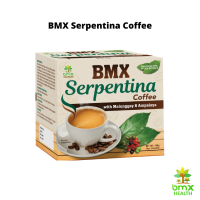
BMX Serpentina Coffee with Malunggay and Ampalaya 1 box 10 sachets
₱190.00
Buy on Lazada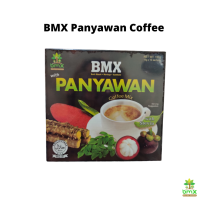
BMX Panyawan Coffee 7 in 1 Coffee with Buah Merah Panyawan Mangosteen Malungay Stevia - 1 box 10 sachets
₱200.00
Buy on Lazada
BMX Panyawan Gold Herbal Oil 60ml
₱150.00
Buy on Lazada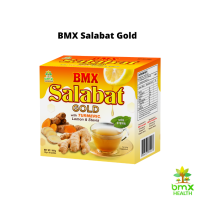
BMX Salabat Gold 1 box 10 sachets
₱170.00
Buy on Lazada
BMX Serpentina Gold with Turmeric and Malungay (Blister Pack)
₱170.00
Buy on Lazada
BMX Panyawan Gold with Mangosteen and Malungay
₱970.00
Buy on Lazada
BMX Panyawan Gold Herbal Oil 30ml
₱75.00
Buy on Lazada
BMX Panyawan Gold with Mangosteen and Malungay (Blister Pack)
₱170.00
Buy on LazadaAbout BMX
BMX, an abbreviation for Bicycle Motocross, is a form of cycling that utilises small, lightweight bicycles designed primarily for racing, freestyle riding, jumping, and performing tricks. The discipline emerged from the motocross-inspired riding culture of Southern California in the 1970s and has since evolved into an internationally recognised cycling sport.1
In contemporary usage, the term BMX refers both to the sport itself and to the specific category of bicycle used for these activities. BMX bicycles are distinguished by their compact frames, robust construction capable of withstanding jumps and impacts, and relatively small wheels, with 20 inches being the standard size for most models.
Overview
| Information | Details |
|---|---|
| Name | BMX |
| Full name | Bicycle Motocross |
| Type | Cycling sport / bicycle category |
| Origin | United States |
| Development | Late 1960s–1970s |
| Main disciplines | Racing and freestyle |
| Common wheel size | 20 inches |
| Other sizes | 16″, 18″, 24″ and larger cruiser configurations |
| Typical materials | Steel, chromoly steel, aluminium, carbon fibre |
| Olympic status | BMX Racing is an Olympic discipline |
| Related sports | Motocross, mountain biking, skateboarding, freestyle cycling |
History
Origins
BMX originated in the United States during the late 1960s and early 1970s when young cyclists began modifying and riding bicycles in a manner inspired by motocross motorcycle racing. These riders utilised dirt tracks, jumps, and improvised courses to emulate the style of motorcycle racers.
Southern California served as a pivotal centre for this emerging movement. As participation increased, the ecosystem expanded to include organised BMX racing, specialised bicycles, dedicated components, magazines, and manufacturing companies.
The emergence of dedicated BMX manufacturers was instrumental in transforming BMX from an informal youth pastime into an organised cycling sport. Companies such as Mongoose, GT, Redline, Haro, SE Racing, Schwinn, and Torker became synonymous with various eras of BMX development.1
Growth during the 1970s and 1980s
Throughout the 1970s, BMX racing experienced rapid expansion across the United States. This period saw the development of specialised BMX frames, wheels, handlebars, cranks, and other components engineered specifically for the demands of the sport.
By the 1980s, BMX had diversified into several distinct riding styles. BMX racing maintained its focus on speed and competition, whilst freestyle BMX emerged as a discipline centred on tricks, jumps, and creative expression.
The rise of freestyle proved particularly influential. Riders began executing tricks on ramps, flat ground, streets, and various obstacles, establishing sub-disciplines that remain integral to BMX today.
BMX as a sport
BMX is broadly categorised into BMX racing and BMX freestyle, although freestyle itself comprises several distinct disciplines.
BMX Racing
BMX racing involves competitors navigating specially constructed dirt tracks featuring:
- Starting gates
- Banked turns
- Jumps
- Rollers
- Rhythm sections
- Finish lines
Races are typically short and explosive, demanding rapid acceleration, precise bike handling, jumping proficiency, and tactical positioning.
BMX racing was introduced as an Olympic sport at the 2008 Beijing Olympic Games, significantly elevating the discipline’s profile on the international stage.
BMX Freestyle
Freestyle BMX prioritises tricks, technical ability, creativity, balance, and style over pure speed or finishing position.
Major forms of freestyle include:
Street
Street BMX is performed in urban environments utilising architectural obstacles such as:
- Stairs
- Rails
- Ledges
- Banks
- Walls
- Curbs
- Handrails
Riders execute tricks including grinds, manuals, spins, and jumps within these settings.
Park
Park BMX takes place in purpose-built skatepark-style facilities equipped with ramps, bowls, transitions, walls, and other structures.
This discipline rewards combinations of aerial tricks, spins, rotations, and technical manoeuvres.
BMX Freestyle Park was added to the Olympic programme at the 2020 Tokyo Olympics.
Vert
Vert involves riding on a large half-pipe ramp and performing aerial tricks above the lip of the ramp. It is considered one of the more specialised forms of freestyle BMX.
Flatland
Flatland BMX is performed primarily on a flat surface without ramps or obstacles. Riders manipulate the bicycle through highly technical combinations involving balance, rotations, and controlled movement.
Flatland is particularly noted for its emphasis on individual creativity and technical precision.
Dirt
Dirt BMX utilises specially constructed dirt jumps. Riders launch from one jump to another whilst performing aerial tricks.
BMX bicycles
BMX bicycles are generally smaller and more compact than conventional bicycles. Their design reflects the specific demands of jumping, racing, tricks, and aggressive riding.
A typical freestyle BMX bicycle may feature:
- 20-inch wheels
- Compact frame
- Wide handlebars
- Strong rims
- Short drivetrain
- Single-speed gearing
- Powerful rear brake or brakeless configuration
- Optional axle pegs
- Reinforced frame and fork
Race BMX bicycles differ considerably from freestyle bikes. Race bikes are optimised for low weight, acceleration, handling, and jumping over dirt tracks, whereas freestyle bikes prioritise strength, durability, and manoeuvrability.1
Construction and materials
BMX bicycles are manufactured from a variety of materials depending on their intended use.
Steel
Steel is common on entry-level BMX bicycles due to its relative affordability and durability.
Chromoly
4130 chromoly steel is widely used for higher-quality freestyle BMX frames, forks, handlebars, and other components. It offers an advantageous combination of strength and relatively low weight.
Aluminium
Aluminium is particularly prevalent in BMX racing because of its low weight and stiffness.
Carbon fibre
Carbon fibre is utilised in some high-end BMX racing equipment where minimising weight is paramount.1
BMX culture
BMX extends beyond competitive sport to encompass a broader cycling culture involving music, fashion, photography, video production, street riding, bike customisation, and rider communities.
The connection between BMX and youth culture was particularly significant during its formative years. BMX magazines, competitions, bicycle shops, sponsored riders, and video productions helped establish a distinct identity around the sport.
The culture also places considerable emphasis on individual style. Two riders may perform the same basic manoeuvre in vastly different ways, with variations in technique, speed, body movement, and creativity contributing to each rider’s unique identity.
Major BMX brands
It is important to distinguish BMX as a category from individual BMX manufacturers.
Some historically significant and contemporary BMX brands include:
- Mongoose — one of the historically important BMX names, originating with BMX Products in 1974.1
- GT Bicycles — founded in California in 1972 and strongly associated with BMX racing and bicycle innovation.1
- Redline — founded in 1970 and particularly influential in BMX racing and component development.1
- SE Racing / SE Bikes — founded by Scot Breithaupt in 1977 and known for models including the PK Ripper.1
- Torker — an early Southern California BMX brand with roots dating to the mid-1970s.2
- Haro — an important name in the development of freestyle BMX.
- Kink BMX, Sunday, Cult, WeThePeople, Fit Bike Co., Subrosa, S&M Bikes, Odyssey and Éclat — examples of brands prominent in modern freestyle BMX.3
Consequently, the phrase “BMX brand” is analogous to “mountain-bike brand”: BMX describes the type of bicycle or sport, whilst companies such as Mongoose, GT, Haro, and Redline are individual brands operating within that category.
BMX in popular culture
BMX gained significant visibility through youth-oriented media, magazines, competitions, films, video games, and television. Its combination of athleticism and visually spectacular tricks made it well suited to action-sports media.
The sport has also frequently overlapped with skateboarding, motocross, surfing, and other action sports, particularly through shared events and commercial sponsorship.
BMX at the Olympics
BMX comprises two Olympic disciplines:
- BMX Racing — introduced at the 2008 Beijing Olympic Games.
- BMX Freestyle Park — introduced at the 2020 Tokyo Olympic Games.
Olympic inclusion has helped establish BMX as a mainstream international competitive discipline, whilst the broader BMX community continues to embrace non-Olympic forms such as street, flatland, dirt, and vert.
Terminology
The acronym BMX is derived from:
Bicycle Motocross
The term originally described bicycle racing modelled after motocross. Over time, however, BMX became an umbrella term encompassing both racing and numerous freestyle disciplines.
Significance
BMX has exerted a major influence on modern action sports and bicycle design. It helped establish a style of cycling centred around small bicycles, jumps, tricks, technical riding, and individual expression.
Its influence is also evident in the development of modern skateparks, action-sports competitions, bicycle components, youth cycling culture, and professional freestyle competition.
Summary
BMX (Bicycle Motocross) is a cycling discipline and bicycle category that originated in the United States and developed from motocross-inspired bicycle racing. From its beginnings in Southern California during the 1970s, BMX evolved into a worldwide sport encompassing racing and multiple freestyle disciplines. BMX bicycles are typically compact, lightweight, and highly manoeuvrable, with designs varying according to whether they are intended for racing, street riding, park, dirt, vert, or flatland.