Shop on Lazada
brabantia products
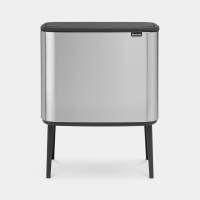
Brabantia Bo Touch Bin 36L
₱29,220.00
Buy on Lazada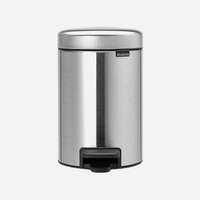
Brabantia Pedal Bin NewIcon 3L Soft Closing Plastic Inner Bucket
₱4,660.00
Buy on Lazada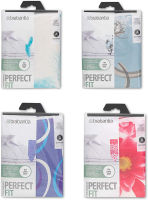
Brabantia x1 Replacement Cover with 2 mm Foam for Ironing Board Size A (110 x 30cm) Assorted Colourful Mixed Styles (Selection is Random)
₱1,514.00₱1,732.00
Brabantia x1 Replacement Cover with 2 mm Foam for Ironing Board Size A (110 x 30cm) Assorted Colourful Mixed Styles (Selection is Random)
₱1,514.00₱1,732.00
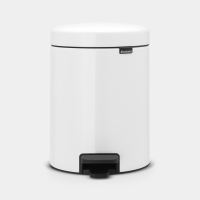
Brabantia Pedal Bin NewIcon 2 x 2 Litre
₱5,120.00
Buy on Lazada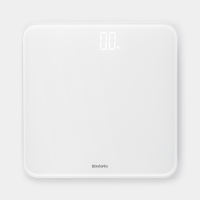
Brabantia Bathroom Scales ReNew
₱3,670.00
Buy on Lazada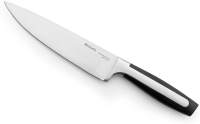
Brabantia Chefs Knife
₱3,390.00
Buy on Lazada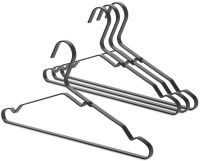
Brabantia Lightweight Black Aluminium Clothes Hangers (Set of 4) Extra Grip & Anti-Stretch Design (Option Select)
₱2,165.00₱2,477.00
About brabantia
Brabantia is a Dutch family-owned household and homeware company recognised for combining practical everyday products with Dutch-inspired design, durability, and sustainability. Founded in 1919, the company has evolved from a small metalware manufacturer in the Netherlands into an international brand offering products for waste management, laundry care, ironing, food storage, kitchen use, and household organisation.1
Headquartered in Valkenswaard, Netherlands, Brabantia is led by Tijn van Elderen and operates internationally through offices, distribution operations, and manufacturing facilities. According to the company’s latest published results, its 2025 revenue was €150.6 million.2
Basic information
| Details | |
|---|---|
| Brand | brabantia |
| Founded | 1919 |
| Country of origin | Netherlands 🇳🇱 |
| Original company | Van Elderen & Co |
| Founder/history | Van Elderen family and 15 founding employees |
| Headquarters | Valkenswaard, Netherlands |
| Current CEO | Tijn van Elderen |
| Ownership | Family-owned |
| Industry | Household goods / homeware / consumer products |
| Main markets | Europe, North America, Asia and other international markets |
| Known for | Pedal bins, waste separation, ironing boards, laundry-drying products, kitchen and household accessories |
| Founded as | Manufacturer of milk cans, jugs, sieves and funnels |
| Current positioning | Designed-for-longevity household products |
| Sustainability certification | B Corp, since March 2023 |
| Long-term sustainability target | 100% circular design by 2035 |
| 2025 revenue | €150.6 million |
The corporate entity behind the main Brabantia website is Brabantia Branding B.V., registered in Valkenswaard. The company identifies Tijn van Elderen as CEO.3
Brand identity and philosophy
Brabantia is essentially a design-oriented household-products company. Unlike brands that concentrate on a single category such as cookware, furniture, or appliances, Brabantia operates across many of the small objects used in everyday domestic life. Its philosophy centres on making ordinary household tasks more pleasant through thoughtful design, durability, and sustainability. This approach is particularly visible in products such as pedal bins, laundry dryers, and ironing boards, which are treated as part of the home’s visual environment rather than purely functional commodities.
The company’s current positioning emphasises products that are iconic, cleverly designed, and built to last, accompanied by warranties of up to 10 years and spare-parts availability for up to 20 years.4
History
1919: The beginning
Brabantia’s history began in 1919 in the small Dutch town of Aalst, in the province of North Brabant. The company originally operated as Van Elderen & Co and was established by a group of 15 people. Early products included milk cans, jugs, sieves, and funnels, reflecting a business built around metalworking, manufacturing expertise, and practical household items.5 This industrial heritage is significant; the company did not begin as a modern design brand but gradually transformed from a traditional manufacturing business into an international consumer-design company.
1930s: Diversification
During the 1930s, Brabantia expanded beyond basic household metalware. One notable product from this era was radio housings for Philips, demonstrating manufacturing capabilities that could be adapted to different consumer-product categories.6
1945: Early recycling
After World War II, the company produced cups from old condensed-milk tins. While modern marketing might describe this as circular design or recycled manufacturing, Brabantia cites this episode to illustrate that resource efficiency was present in its manufacturing culture long before sustainability became a major consumer trend.7
1952: The pedal-bin breakthrough
A pivotal moment in the company’s history occurred in 1952 when Brabantia introduced its first substantial range of pedal bins.8 This category eventually became one of the defining elements of the brand. Rather than treating waste bins as purely utilitarian objects, Brabantia incorporated attractive proportions, coordinated colours, durable finishes, smooth mechanisms, and a recognisable visual identity, integrating them into interior design. This approach became central to the brand’s later identity.
From household manufacturer to design brand
During the second half of the 20th century, Brabantia significantly expanded its range to include kitchen ladders, ironing chairs and tables, storage canisters, laundry products, and various kitchen accessories. The company also developed decorative patterns that became part of its visual heritage, most notably the Patrice pattern introduced in 1969. This pattern became an iconic element of Brabantia’s design history, and vintage pieces featuring it remain collectible today.9
The transition into a contemporary design brand accelerated during the 2000s and 2010s. In 2014, the company introduced the vision “Designed for living,” positing that well-designed products could make everyday routines more enjoyable. This helped reposition Brabantia from a conventional household-goods manufacturer toward an international interior and lifestyle design brand.10
Product categories
Waste bins
Waste management is arguably Brabantia’s signature category. Products include pedal bins, touch bins, recycling bins, stackable bins, compact kitchen bins, food-waste bins, and waste-bin liners. The Touch Bin, introduced in 1999, became a major design product, followed by the Bo Touch Bin in 2017 and newer recycling-oriented products such as StepUp.11 The underlying design principle is that waste management should be integrated into the kitchen or home interior rather than hidden away.
Laundry and clothes drying
Brabantia maintains a strong position in laundry-care products, including rotary clotheslines, drying racks, wall-mounted drying systems, and laundry accessories. The WallFix, introduced in 2006, exemplifies the company’s attempt to combine space efficiency with household design.12 The company also promotes natural drying as a means to reduce electricity consumption and extend clothing life.13
Ironing
Ironing remains a major category, comprising ironing boards, covers, and accessories. Under its current sustainability programme, Brabantia states that from 2025, all ironing-board covers use 100% Fairtrade cotton.14
Kitchen products
The brand also offers products for food storage, preparation, kitchen organisation, countertop use, recycling, and waste separation. The objective across these categories is consistent: to make everyday household activities more functional and visually appealing.
Design philosophy
Brabantia’s design identity is characterised by several key attributes:
- Functional: Products are intended to solve specific household problems rather than serve as purely decorative items.
- Minimal and contemporary: Many products utilise simple geometric forms, restrained detailing, and relatively neutral finishes.
- Designed for visibility: Items such as bins, drying racks, and ironing boards are designed to be aesthetically acceptable when left in the open.
- Long-term use: Durability is a central component of the company’s positioning.
- Repairability: Brabantia provides spare parts for up to 20 years, encouraging repair over replacement.15
This focus creates a distinction between Brabantia and inexpensive household-product brands, as the company competes partly on lifetime value rather than lowest purchase price.
Sustainability and certifications
Sustainability is a primary pillar of the Brabantia brand. The company has set a goal of achieving 100% circular design by 2035, defined across areas including material health, renewable energy, clean wastewater, recycled production waste, recycled or bio-based materials, and product recyclability.16 The company acknowledges that these targets are works in progress. For example, 2024 figures reported 99% material safety according to internal criteria, 93% production/warehouse recycling, 43% recycled/biobased materials, and 83% product recyclability.17
B Corp certification
Brabantia became a certified B Corporation in March 2023. This certification evaluates companies against standards relating to environmental impact, workers, governance, community, and customers, aligning with the brand’s broader move toward circular product design and environmental responsibility.18
Cradle to Cradle
Cradle to Cradle® certification is another key element of the sustainability strategy, evaluating material health, reuse, renewable energy, water management, and social responsibility. Based on 2024 reporting, Brabantia holds at least 700 Cradle to Cradle-certified products, including 206 at Silver level.19 This reflects an approach that addresses sustainability at the product-design and materials stage rather than relying solely on post-consumer recycling.
Manufacturing and operations
Brabantia operates an international manufacturing network. Most products are manufactured in its own factories in Europe and Asia, while some are produced by external suppliers expected to meet company standards.20 Production and logistics operations are located in Belgium, China, Latvia, and the United Kingdom, among others. The company also maintains international offices and commercial operations across Europe, the United States, and other markets.21 Although strongly associated with Dutch Design, not all Brabantia products are manufactured in the Netherlands.
Headquarters
The modern headquarters, known as B.Home, is located in Valkenswaard, Netherlands. Opened in June 2022, the building was designed around sustainability principles, featuring a largely wooden structural system, solar panels, vegetation, rainwater collection, reusable materials, and BREEAM-oriented design. The site is historically significant as it was associated with the company’s earlier factory operations.22
Corporate structure and ownership
Brabantia remains a family business after more than a century. It is currently led by Tijn van Elderen, representing the fourth generation of the Van Elderen family. He became CEO in 2012 after holding various marketing, innovation, and sales roles within the company.23 This long-term ownership influences the corporate philosophy, which focuses on generational decision-making rather than short-term quarterly financial performance.24
Global presence
Although Dutch in origin, Brabantia is an international brand with offices and production facilities spanning from Austria to the United States and from China to Finland.25 Its commercial footprint includes the Netherlands, Belgium, United Kingdom, Germany, France, Italy, Spain, Austria, Denmark, Finland, Switzerland, United States, China, and other international markets. Products are positioned globally as household-design items with Dutch roots.
Financial overview
Brabantia operates at the scale of a specialised family-owned consumer-products company. According to its latest published results, Brabantia Holding generated €150.6 million in revenue in 2025. The company attributed a slight decline from 2024 to challenging market conditions and higher raw-material costs, though profit was maintained through cost reductions.26
Strategic developments
Acquisition of Lékué
In 2020, Brabantia acquired the Spanish brand Lékué, known for innovative food-preparation and on-the-go products. This acquisition expanded Brabantia’s presence in the kitchen and food-consumption market beyond its traditional household categories.27
2025–2026 Repositioning
In conjunction with its 2025 results, Brabantia introduced the mission “We don’t make trash.” This phrase carries a double meaning, referring literally to waste-related products while also communicating a broader philosophy against producing disposable, short-lived goods. Instead, the company aims to create household products that are worth keeping, iconic, durable, repairable, and increasingly circular. This positioning is formally linked to 2026 messaging around “Designed to Last.”28
Major historical milestones
| Year | Event |
|---|---|
| 1919 | Van Elderen & Co established in Aalst |
| 1930 | Expanded into radio housings for Philips |
| 1945 | Produced cups from recycled condensed-milk tins |
| 1952 | First major range of pedal bins |
| 1969 | Patrice pattern introduced |
| 1999 | Touch Bin introduced |
| 2006 | WallFix introduced |
| 2014 | “Designed for living” vision launched; first Cradle to Cradle certification |
| 2015 | WeForest partnership |
| 2016 | Sponsorship of The Ocean Cleanup begins |
| 2017 | Bo Touch Bin introduced |
| 2019 | Brabantia celebrates 100th anniversary |
| 2020 | Lékué acquired |
| 2021 | StepUp recycling bin introduced |
| 2022 | B.Home headquarters opens in Valkenswaard |
| 2023 | Brabantia becomes B Corp |
| 2025 | Ironing-board covers move to 100% Fairtrade cotton |
| 2025 | Revenue reaches €150.6 million |
| 2026 | New “We don’t make trash” / Designed to Last positioning |
Competitive identity and market position
Brabantia’s competitive identity is defined by several factors:
- Dutch heritage: Over 100 years of manufacturing history in the Netherlands.
- Design: Treating mundane household products as contributors to interior aesthetics.
- Waste-management expertise: Pedal bins and waste-separation products remain core strengths.
- Durability: Emphasis on long product life, warranties, and spare parts.
- Sustainability: Circular design, recycled materials, Cradle to Cradle certification, and B Corp status are central to strategy.
- Family ownership: Fourth-generation leadership providing long-term stability.
- International reach: Global sales, manufacturing, and office network despite Dutch identity.
The brand occupies a position between commodity household goods and premium interior/lifestyle brands. By combining function, design, materials, durability, and sustainability, Brabantia commands a premium over generic products and operates closer to a design-led household brand than a conventional hardware manufacturer.
Brand strengths and challenges
Strengths
Brabantia benefits from strong heritage and product recognition, particularly in pedal bins and Touch Bins.30 Its ability to differentiate otherwise commoditised items through design is a key advantage. Sustainability credibility is reinforced by B Corp and extensive Cradle to Cradle certifications,31 while the 20-year spare-parts commitment supports its longevity proposition.32 Long-term family ownership further distinguishes its corporate narrative.
Challenges
The company faces structural challenges including premium pricing relative to generic alternatives and manufacturing complexity involving steel, plastics, and textiles that expose it to supply-chain pressures. High sustainability expectations require continuous improvement in materials and recyclability. Additionally, the brand must contend with commodity competition and changing consumer behaviours that demand both attractive design and demonstrable sustainability. The 2025 financial results specifically highlighted challenging market conditions and higher raw-material prices.33
References
- Our story | Brabantia
- History | Brabantia
- BRABANTIA RESULTS 2025 | Brabantia
- Legal notice | Brabantia
- Nieuwe duurzame hoofdkantoor Brabantia officieel geopend. | Brabantia
- Timeline + Museum | Brabantia
- IMPACT REPORT 2021.
- Sustainability | Brabantia
- Where are your products made? – Help & contact
- Oficinas | Brabantia
- CEO Tijn van Elderen over 100 jaar Brabantia | Brabantia
- Brabantia S&L Belgium (0412.833.582) : Omzet & bestuurders
- Brabantia S&L Netherlands B.V. | Company.info
- Brabantia (U.K.) Limited – Company Profile – Endole
- Tijn van Elderen (CEO Brabantia): ‘Spullen van Action kunnen na een half jaar al naar de schroothoop’ – EW
- Resultaten Brabantia 2024 | Brabantia
- Resultaten Brabantia 2023 | Brabantia
- Brabantia goed op weg naar 100% circulair design in 2035
- Mark Voncken naar Brabantia | Brabantia
- Brabantia geeft startsein bouw nieuw designcenter in Valkenswaard. | Brabantia
- BRABANTIA (U.K.) LIMITED persons with significant control – Find and update company information – GOV.UK
- Sustainability | Brabantia
- Brabantia’s history – Help & contact
- Sustainability | Brabantia
- Brabantia’s history – Help & contact
- Brabantia & sustainability – Help & contact
- Where are your products made? – Help & contact
- Tijdlijn + Museum | Brabantia
- About Brabantia – Help & contact
- Geschiedenis van Brabantia – Hulp & contact
- More about Brabantia | Brabantia
- More about Brabantia | Brabantia
- Legal notice | Brabantia