Shop on Lazada
Brandless products
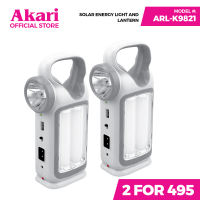
AKARI ARL-K9821 Solar Energy Light and Lantern
₱595.00₱1,059.50
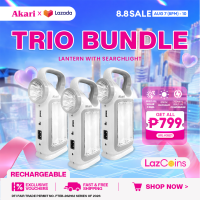
AKARI TRIO BUNDLE ARL-K9821 Solar Energy Light and Lantern
₱799.00₱1,497.00
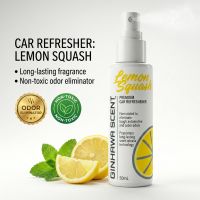
Original Eikosha Air Spencer 60ml Refill Spray - Long Lasting Car Air Freshener Marine Squash Ginhawa Scent
₱105.00₱1,149.00

Original Neem Oil Pet Wound Spray Fast Healing Gamot sa Galis at Sugat ng Aso at Pusa COD
₱85.00₱1,185.00

Main Board for LG UHD Smart LED TV 43UH6100
₱1,699.00
Buy on Lazada
Brass Deflector Rebound Brake Kit
₱500.00₱700.00
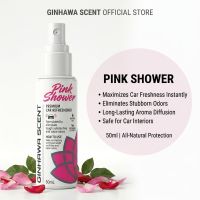
Save & Recharge! Car Air Freshener 60ml Refill Spray Marine Squash Scent Compatible with Eikosha Air Spencer Ikeda
₱108.00₱1,139.00

Main board for Samsung Smart LED TV UA50TU8000G UA50TU8080G
₱2,999.00
Buy on LazadaAbout Brandless
Brandless is an American direct-to-consumer (DTC) consumer goods company that challenged the traditional retail model by arguing that consumers often pay a premium for branding rather than product quality. Founded by Tina Sharkey and Ido Leffler, the company launched in 2017 with a minimalist identity, a curated assortment, and an initial signature price point of $3 per item.1 It became a prominent example of the late-2010s DTC startup boom, attracting significant venture capital including backing from SoftBank. However, the original business model proved unsustainable, leading to a shutdown announcement in February 2020. The company’s assets were subsequently acquired by new owners and relaunched later that year with a revised strategy.2 Note that there is also an unrelated Indian accessories brand called Brandless, founded by Aanchal Mittal in 2014; this profile concerns the U.S. consumer goods company Brandless, Inc.3## Company overview
| Field | Information |
|---|---|
| Company | Brandless, Inc. |
| Industry | Consumer packaged goods / e-commerce / retail |
| Founded | 2016 |
| Commercial launch | July 2017 |
| Founders | Tina Sharkey, Ido Leffler |
| Original headquarters | San Francisco, California |
| Later base | Utah |
| Business model | Direct-to-consumer, private-label consumer goods |
| Original positioning | High-quality everyday products without traditional “brand tax” |
| Signature original price | $3 per product |
| Major investor | SoftBank Vision Fund, among others |
| Original shutdown | February 2020 |
| Acquisition | 2020 |
| Relaunch | 2020 |
| Notable later CEO | Cydni Tetro |
| Website | Brandless |
Core philosophy and concept
Brandless was established on the premise that consumer products could be sold without the costs associated with elaborate brand identities. Traditional consumer goods companies typically invest heavily in advertising, packaging, endorsements, and retail placement. Brandless argued that these expenses function as a “BrandTax,” a premium paid solely for the name attached to a product.4
Instead of emphasizing brand recognition, Brandless focused on specific product attributes such as organic, non-GMO, natural, kosher, gluten-free, cruelty-free, and clean ingredients. The packaging was intentionally minimalist, generally featuring simple white designs with the product name and key descriptive attributes listed clearly.5 This approach aimed to reduce marketing overhead and pass savings to consumers through a simplified shopping experience.
Founding and early funding
The company was founded by Tina Sharkey and Ido Leffler. Sharkey brought extensive experience in internet communities and consumer businesses, having previously founded iVillage and served as CEO of BabyCenter. Leffler was an experienced entrepreneur in the consumer products space, with prior involvement in companies including Yes To and Yoobi.6
The founders envisioned a business combining consumer packaged goods, e-commerce, private-label manufacturing, minimalist design, social purpose, and direct customer relationships. In late 2016, Brandless raised approximately $16 million in funding led by Redpoint Ventures. By the time of its official commercial launch in July 2017, it had reportedly secured around $50 million in venture capital from firms such as New Enterprise Associates and Google Ventures.7
Original business model and pricing
The most distinct feature of the early Brandless era was its universal $3 pricing strategy. At launch, a wide range of products across food, household goods, personal care, and beauty categories were priced at this single tier. Rather than offering hundreds of competing versions of similar items, the company deliberately limited its assortment to provide a curated selection.8
This curation was intended to simplify decision-making for consumers who might otherwise face choice paralysis in traditional supermarket aisles. Brandless positioned itself not merely as a cheaper retailer, but as an alternative shopping experience that answered the question of value on behalf of the customer.
Product categories and quality standards
Brandless operated across a broad range of everyday necessities. Its assortment included:
- Food & Grocery: Pantry staples, snacks, cooking ingredients, oils, coffee, tea, and condiments.
- Household: Cleaning products, paper goods, kitchen supplies, storage solutions, and home essentials.
- Beauty: Skincare, body care, and grooming products.
- Personal Care: Toothpaste, toiletries, and hygiene products.
- Wellness: Nutritional and health-oriented products.
The company expanded rapidly, launching with approximately 110 products and growing beyond 300 SKUs with plans to exceed 400. A key component of its value proposition was the idea that better products should not necessarily be luxury items. Brandless targeted consumers seeking organic and natural attributes at mass-market affordability. In the beauty category, for example, the company emphasized clean formulations that excluded hundreds of potentially concerning ingredients.
Social mission
Social impact was integrated into the Brandless identity. One notable initiative involved a partnership with Feeding America, where purchases triggered meal donations. By 2018, the company reported having donated more than 1 million meals, with other reports citing larger commitments as operations expanded.9 This mission-driven positioning was designed to appeal to millennial consumers who valued brands that combined commerce with social good.
Market position and competition
Brandless emerged during a peak period for DTC startups between 2016 and 2019, alongside companies like Casper, Warby Parker, Glossier, Dollar Shave Club, Allbirds, and Away. These companies shared characteristics of being internet-native, visually distinct, and venture-backed. Brandless distinguished itself by applying this model to mundane consumer staples rather than niche fashion or tech products, with aspirations compared to becoming a “Procter & Gamble for millennials.”10
Despite its unique positioning, Brandless faced competition from massive established ecosystems including Amazon, Walmart, Target, Costco, traditional grocery chains, and existing CPG giants. The company had to convince customers its private-label goods were superior to generic store brands while competing against entities with decades of distribution advantages.
Although primarily online, Brandless experimented with physical retail in 2018 through temporary pop-up stores in Los Angeles and New York. These locations focused on community building, sampling, and experiential marketing rather than traditional sales.11
Financial challenges and shutdown
Brandless attracted significant venture capital, raising approximately $240 million in a Series C round in 2019 with SoftBank as a major investor.12 At its peak, the company was reportedly valued at roughly $500 million. However, the economics of selling low-priced goods directly to consumers proved difficult. The $3 price point left minimal margin to cover manufacturing, fulfillment, shipping, customer acquisition, and overhead. Unlike supermarket brands that benefit from existing foot traffic, Brandless bore the full cost of acquiring every customer digitally.
In response to these pressures, the company abandoned its universal $3 pricing in January 2019, introducing higher-priced items. Leadership tensions also surfaced; co-founder Tina Sharkey stepped down as CEO in 2019 amid reported friction with investors.13
On February 10, 2020, Brandless announced it would cease operations, citing intense competition and an unviable business model. Approximately 70 employees, representing about 90% of the workforce, were laid off. The shutdown was notable given the company had raised nearly $300 million in total funding, illustrating that capital alone could not sustain unfavorable unit economics.
Relaunch and strategic pivot
The Brandless story continued after the 2020 shutdown when its assets were acquired by a group involving Clarke Capital Partners and Ikonifi.14 New CEO Ryan Treft sought to rebuild the company with a focus on profitability rather than aggressive growth. The relaunched entity adopted a leaner operational structure, improved fulfillment economics, and a more disciplined product selection focused on health and wellness.15
The second iteration of Brandless shifted from being a single private-label store to a platform for better-for-you consumer products and mission-driven brands. The relaunch featured over 300 products and moved definitively away from the universal $3 price constraint.
Cydni Tetro era and acquisition strategy
Cydni Tetro later became CEO and led a further strategic transformation, characterizing Brandless as a technology-enabled consumer products business. Under her leadership, the company pursued growth through both organic means and acquisitions, aiming to build a broader platform encompassing nutrition, clean beauty, personal care, home, and wellness categories. This marked a fundamental philosophical shift from the original unified private-label model to an ecosystem of complementary consumer businesses.
Design and cultural significance
Brandless is frequently cited as a case study in modern marketing paradoxes. The name itself is self-contradictory, building a recognizable brand identity around the rejection of conventional branding. The visual language—minimal color, white space, and simple typography—turned the absence of visual noise into a distinctive aesthetic that performed well on social media and aligned with millennial DTC trends.
The company’s central intellectual proposition regarding “brand tax” resonated in categories where consumers perceived little difference between competing products. However, it also highlighted a critical tension: while eliminating brand premiums can lower costs, brand equity is often what drives loyalty and repeat purchases. Brandless demonstrated that consumers might appreciate low prices without developing strong attachment to a generic-looking label.
Awards and recognition
During its initial phase, Brandless received significant industry accolades. It won NewCo’s Best NewCo of the Year in 2018, was named Startup of the Year by Ad Age in 2018, and appeared on Fast Company’s list of the world’s most innovative retail companies in 2019. These honors reflect how perceptions shifted dramatically from viewing the company as a future retail model to a cautionary tale of DTC economics.
Timeline
| Year | Event |
|---|---|
| 2016 | Brandless founded; raises early venture capital |
| 2017 | Brandless officially launches |
| 2017–18 | $3 pricing and minimalist model gain attention |
| 2018 | Expands assortment; launches physical pop-ups |
| 2019 | Raises approx. $240M Series C; Tina Sharkey leaves CEO role |
| 2019 | Moves beyond universal $3 pricing |
| Feb. 2020 | Original Brandless announces shutdown |
| 2020 | Assets acquired by Clarke Capital Partners and Ikonifi |
| 2020 | Brandless relaunches under new ownership |
| 2021 | Company raises $118M in debt/equity; continues expansion |
| 2021 onward | Cydni Tetro becomes key figure in next phase |
| 2022–25 | Develops broader health/wellness and acquisition strategy |
| 2026 | Continues as operating consumer-products company; original 2017-era business remains closed |
The current entity is best understood as Brandless 2.0, distinct from the original 2017–2020 operation. While the original business ceased in 2020, the intellectual property and brand were successfully revived. Recent sources continue to identify Brandless as an active consumer products company with leadership and strategies evolving through 2025–2026. The company serves as both a pioneering DTC brand and a significant business case study regarding the tension between growth, unit economics, and brand equity in digital commerce.16
References
- Brandless
- Remember Brandless, the Amazon alternative that crashed and burned? It’s back! – Fast Company
- ABOUT US – Brandless
- Interview: Brandless Expands Beauty & Personal Care | Global Cosmetic Industry
- How Brandless built a following with its ‘just what matters’ approach | Food Dive
- Brandless Has a New Owner, and a New Mission. Can It Save Itself?
- Brandless is back | Grocery Dive
- Brandless Relaunches After Clarke Capital Partners & Ikonifi Acquire Assets | Global Cosmetic Industry
- How’d you fix Brandless’s revenue issues in 2026?
- Did Going Brand-Less Kill Brandless? | Attest
- End-to-end mapping artifact (brandless) — STD-01
- Brandless Inc, United States
- Chinese Wheels, European Roads – Pt 6: Brandless Brands
- Can I Still Buy Brandless Products? A Comprehensive Guide – TheFlavorExperts
- Why Did Brandless Fail? Uncovering the Demise of a Promising E-commerce Venture – Organize for Living
- Brandless Review Brandless.com — Tiffany The Tiny Home