Shop on Lazada
BYC products

BYC | Byc Premium 3-Stage Compression 200 Denier Tights 6 Pairs Swg1305
₱2,250.45₱3,441.87
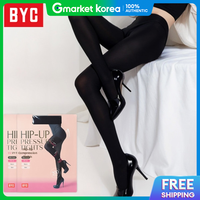
BYC | Byc 2-Piece Set Winter Hip-Up Compression Pantyhose / High-Elasticity Compression Black Student
₱913.66₱1,397.37
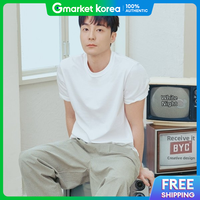
BYC | Daily Loose Fit Tee 3-Pack Oet0002
₱1,441.17₱2,204.16
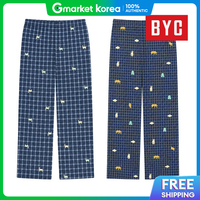
BYC | Byc Mens 40S Pure Cotton Plaid Cropped Pajama Bottoms Homewear (1-Pack) 3014
₱1,071.40₱1,711.70
About BYC
BYC Co., Ltd. (Korean: ㈜비와이씨) is a South Korean clothing and textile company best known for its underwear, innerwear, thermal clothing, socks, sleepwear, and functional apparel. As one of the country’s longest-established domestic innerwear brands, it is particularly associated with the traditional Korean “meryas” (메리야스) undershirt and underwear market.1 The company was formerly known by the brand name Baekyang (백양, 白羊) before adopting BYC as its corporate name in 1996.1
BYC traces its origins to 1946, when entrepreneur Han Young-dae established Hanheung Meryas shortly after Korea’s liberation from Japanese rule.2 The company began by producing knitted underwear using modified sock-knitting machinery and subsequently developed one of Korea’s earliest machines specifically designed for mass-producing knitted garments.2 Today, BYC remains primarily associated with practical, durable, and comfort-oriented innerwear, while its product portfolio has expanded into functional clothing and contemporary fashion categories.
Quick facts
| Category | Information |
|---|---|
| Company | BYC Co., Ltd. |
| Korean name | 주식회사 비와이씨 |
| Founded | 1946 |
| Founder | Han Young-dae |
| Country | South Korea |
| Headquarters | Seoul, South Korea |
| Industry | Textile, apparel, innerwear |
| Best known for | Underwear, undershirts, thermal underwear and functional innerwear |
| Former major brand identity | Baekyang (백양) |
| Current corporate name | BYC |
| Official website | byc.co.kr |
History
Foundation: 1946
The history of BYC begins in the difficult economic conditions immediately following Korea’s liberation. In 1946, Han Young-dae established Hanheung Meryas, the predecessor of today’s BYC.2 The company initially concentrated on knitted underwear at a time when Korea had limited industrial capacity and faced shortages of everyday necessities.2
One of the company’s early technological achievements was the development of a meryas knitting machine. Han Young-dae and his colleagues modified the basic structure of a sock-knitting machine so that it could produce larger knitted garments. According to historical accounts, this development took approximately five months and allowed the company’s predecessor to move toward industrial-scale production of knitted underwear.1
The Baekyang era
The company subsequently operated under names including Hanheung Industry and Hanheung Trading. In 1957, it registered the Baekyang (백양) trademark.1 This name became strongly associated with white knitted underwear and helped establish the firm as a major Korean underwear manufacturer.1 In 1979, the company changed its corporate name to Baekyang Co., Ltd., aligning its corporate identity with its well-known consumer brand.1
For several decades, Baekyang was essentially synonymous with basic white Korean innerwear. The brand became particularly recognizable for the white cotton undershirts and long underwear commonly worn by older generations of Koreans.3
Transition to BYC
The company adopted BYC as its corporate name in 1996, partly as an effort to establish a more internationally oriented corporate identity.1 The BYC name had already been used as a product and export brand before becoming the official corporate designation.1 This transition marked a significant shift from the traditional Baekyang identity toward a modern, globally recognizable brand.
Manufacturing and technology
A distinguishing characteristic of BYC is its emphasis on vertical integration and manufacturing expertise. The company operates an integrated production system covering product planning and research, yarn spinning, knitting, dyeing and processing, cutting, and sewing.4 This manufacturing structure allows BYC to develop and control various stages of textile and garment production rather than functioning solely as a fashion label.4
Historically, BYC has positioned itself around quality, functionality, and suitability for the Korean climate. Its product development philosophy includes research into materials providing thermal insulation, deodorizing properties, and other functional benefits.4
Product development
Although BYC became famous for basic underwear, its product range has expanded considerably. Major categories include men’s underwear, women’s underwear and lingerie, undershirts, thermal underwear, summer innerwear, socks, pajamas and sleepwear, homewear, functional apparel, and children’s innerwear. The company has also developed specialized product lines such as Body Dry and Body Heat, designed around different seasonal and functional requirements.1
Its current online store continues to feature products such as Body Heat, Air Mery, and other traditional and functional innerwear items, demonstrating how BYC combines its heritage underwear business with newer functional product categories.5
Major brands and product lines
Throughout its history, BYC has operated several brands and product lines in addition to its core BYC label. Notable names include:
- BYC: The company’s principal innerwear brand.
- Scorpio (스콜피오): An additional apparel and innerwear brand.
- Le Song (르송): A women’s lingerie line.
- Cellpink (쎌핑크): Another women’s lingerie brand.
- Moshimery (모시메리): Lightweight summer innerwear associated with ramie-based or cool-feeling clothing.
- Air Mery (에어메리): Lightweight innerwear.
- Body Dry (보디드라이): Functional clothing aimed at warm-weather use.
- Body Heat (보디히트): Thermal and winter functional clothing.1
BYC and Korean culture
BYC holds a distinctive place in modern Korean consumer culture because its products became associated with everyday life rather than luxury fashion. For older generations, the image of BYC is strongly connected with white cotton undershirts, long underwear, summer mosi meryas, winter thermal underwear, and practical family clothing. This association has given BYC a strong connection to generational familiarity and domestic manufacturing. Korean media have described BYC as a long-running national or traditional underwear brand whose products became embedded in daily life.2
This reputation has created a contrast in the modern market: while BYC has traditionally been perceived as a conservative, practical underwear company, it has periodically attempted to appeal to younger consumers and contemporary fashion tastes.2
International business
BYC began looking beyond the Korean market relatively early. In the early 1960s, the Japanese trading company Mitsubishi evaluated Korean knitted underwear products and subsequently entered into an export agreement with Hanheung.2 Exports expanded substantially over the following decades. Historical figures cited by Korean media show growth from approximately US$15,000 in the early export period to US$1 million in 1970, US$7 million in 1973, US$10 million in 1976, and approximately US$73 million in 1987.2
BYC has exported products to markets including Japan, the United States, China, and countries in the Middle East. Its presence in several Middle Eastern markets has reportedly continued for decades.2
Brand identity
The core BYC identity has historically been built around four pillars:
- Practicality: BYC has traditionally focused on clothing worn every day rather than seasonal fashion pieces.
- Comfort: The company emphasizes fabrics, knitting techniques, and garment construction intended for comfortable everyday wear.
- Functionality: Thermal insulation, moisture management, deodorizing properties, and seasonal comfort have become increasingly important in product development.4
- Korean manufacturing heritage: The company’s nearly eight-decade history provides a strong connection to the development of Korea’s domestic textile and underwear industry.
From Baekyang to BYC
The evolution of the company can be summarized as: Hanheung Meryas → Hanheung Industry/Trading → Baekyang → BYC. The Baekyang era established the company’s reputation in traditional Korean underwear, while BYC became the modern corporate and international-facing identity.1 The company has retained many product concepts that made the original Baekyang brand successful—particularly basic cotton underwear, thermal garments, and functional innerwear—while introducing newer materials, designs, and technologies.
BYC today
As of 2026, BYC remains an established Korean innerwear and apparel manufacturer. Its official shopping operation continues to sell traditional underwear alongside thermal, lightweight, and functional products, including garments in a wide range of sizes.5 Rather than repositioning itself entirely as a fashion company, BYC’s strategy is broadly understood as modernizing its traditional innerwear expertise: maintaining its established underwear business while incorporating functional materials, contemporary designs, and products aimed at different generations.
Legacy
The significance of BYC extends beyond its role as an underwear manufacturer; its history parallels the development of South Korea’s postwar textile and consumer goods industry. Starting from a small knitting operation in 1946, the company developed into one of Korea’s best-known domestic underwear manufacturers. Its Baekyang products helped popularize mass-produced knitted innerwear, while the later BYC identity allowed the company to develop an international presence and diversify its product portfolio.1 BYC is best understood as a heritage Korean apparel brand whose strongest identity remains innerwear, similar to how certain older companies become culturally associated with a particular everyday product category.
References
- [[메가 히트 상품 탄생스토리]73년 대한민국의 자존심 ‘BYC 이너웨어’](https://api.emetro.co.kr/article/2019042600018)
- [[장수브랜드 탄생비화]76년 역사, 속옷 외길 BYC의 도전 :: 공감언론 뉴시스 ::](https://www.newsis.com/view/NISX20220325_0001807519)
- [[기업해부] BYC ①태동과 성장…”아버지의 메리야스” 백색 내의 대명사](https://www.newsprime.co.kr/news/article/?no=410708)
- BYC
- BYC쇼핑몰