Shop on Lazada
bydoll products
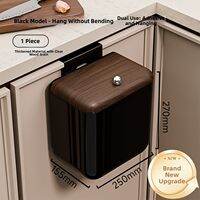
bydoll | Wall-mounted Large Capacity Kitchen Trash Bin
₱947.56₱1,630.78
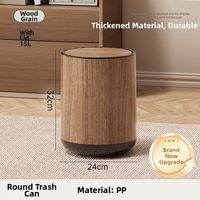
bydoll | Retro Wood Pattern Large Capacity Trash Can
₱877.98₱1,409.17
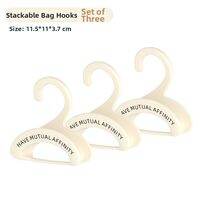
bydoll | Stackable Arch-shaped Bag Hanger Anti-Deformation
₱295.44₱526.12
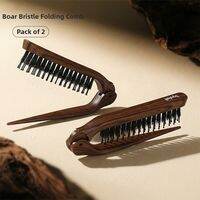
bydoll | Boar Bristle Top-volumizing Comb Compact Portable Hair Care
₱603.68₱1,159.82
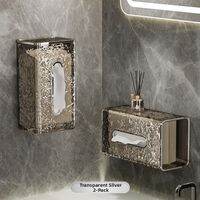
bydoll | Luxury Wall-Mounted Transparent Tissue Box Holder
₱614.43₱1,000.35
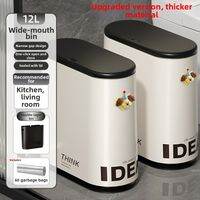
bydoll | Luxury Toilet Paper Storage Bin For Home Use
₱2,134.04₱3,421.21
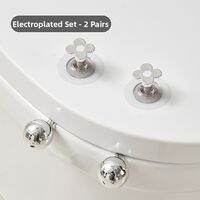
bydoll | Toilet Lid Lifter Aid Handle
₱247.74₱445.76
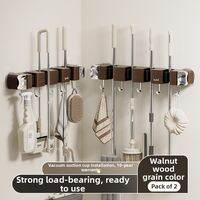
bydoll | Vintage Luxury Bathroom Wall-Mounted Organizer
₱1,250.54₱2,534.16
About bydoll
bydoll (Chinese: 半岛良品; sometimes styled as bydoll 半岛良品) is a Chinese home-lifestyle and household-goods brand operated by Ningbo Peninsula Home Furnishings Co., Ltd. (宁波半岛家居有限公司). Originally focused on home textiles and floor mats, the brand has expanded its catalogue to include storage solutions, cleaning tools, bathroom accessories, kitchen organisers, and everyday lifestyle products.2
Headquartered in Ningbo, Zhejiang, China, bydoll has built a significant presence on Chinese e-commerce platforms and is increasingly visible in international markets through cross-border retail. In the Philippines, bydoll-branded household items are currently available on Lazada Philippines.2
Overview
| Field | Information |
|---|---|
| Brand name | bydoll |
| Chinese name | 半岛良品 |
| Company | Ningbo Peninsula Home Furnishings Co., Ltd. / 宁波半岛家居有限公司 |
| Country of origin | China |
| Headquarters / base | Ningbo, Zhejiang |
| Industry | Home & household goods |
| Main categories | Home textiles, mats, storage, bathroom, kitchen, cleaning, household accessories |
| Business model | Brand development + manufacturing/processing + e-commerce |
| Major market | China |
| International presence | Increasingly visible through cross-border e-commerce |
| Chinese e-commerce presence | Tmall, Taobao, JD, Pinduoduo, Douyin and others |
| English brand name | bydoll |
| Chinese brand name | 半岛良品 |
Sources provide varying dates regarding the company’s origins. Business registries list Ningbo Peninsula Home Furnishings Co., Ltd. as formally established in November 2014, while corporate profiles trace the business’s development to approximately 2010, with predecessor entities dating back to 2008.2
History
Early development
bydoll originated within Ningbo’s home-goods manufacturing sector, initially specialising in floor mats, cushions, summer sleeping mats, and other soft furnishings. Early product lines emphasised natural plant materials and traditional craftsmanship combined with modern design, particularly bamboo and rush-grass items for summer use.1
During this period, the brand was positioned primarily as a home-textile and mat manufacturer rather than the broad household retailer it later became.
Expansion into e-commerce
The company’s growth has been closely linked to the rise of Chinese e-commerce. According to corporate descriptions, bydoll established its first Taobao enterprise store around 2010 and opened its first Tmall flagship store in 2014. It subsequently expanded its Taobao operations around 2017, entered JD.com in 2018, joined Pinduoduo in 2019, and launched on Douyin in 2020. The brand later extended its reach to Kuaishou, WeChat Channels, and other social-commerce platforms.1
This trajectory distinguishes bydoll from traditional department-store brands; its development has been driven by online retail, rapid product iteration, marketplace sales, and social commerce.
Corporate background
The brand is owned and operated by Ningbo Peninsula Home Furnishings Co., Ltd. (宁波半岛家居有限公司), a Ningbo-based enterprise with Zhang Jianwei (张建伟) listed as its legal representative. Corporate databases record the company’s registered capital as RMB 1 million and its establishment date as 3 November 2014.
The company integrates product development, independent design, manufacturing, e-commerce retail, and household-goods operations. One corporate profile claims facilities exceeding 15,000 square metres, more than 30 automated production lines, and annual output in the millions of units; however, these figures are self-reported and have not been independently audited.1
Product range
bydoll offers an extensive catalogue spanning multiple household categories.
Home textiles and mats
Textiles and mats remain among the brand’s most historically recognisable categories. Products include floor mats, bathroom mats, carpets, stair mats, sofa mats, cushions, pillows, pillow covers, summer sleeping mats, bamboo and rush products, and chair cushions. Earlier descriptions specifically identified seat cushions, carpets, stair mats, sofa mats, and cooling mats as core offerings.
Bathroom products
The brand has expanded significantly into bathroom organisation and accessories. Current listings feature toilet-seat products, suction-cup shelves, towel racks, toothbrush holders, toilet-paper holders, storage baskets, soap dishes, shower organisers, hooks, and floor mats. Its JD.com flagship store categorises items such as bathroom storage, suction hooks, corner shelves, mop hooks, slippers racks, and toiletry organisers.3
Kitchen products
bydoll retails practical kitchen accessories and organisational tools, including storage racks, knife and cutting-board organisers, utensil holders, hooks, food accessories, strainers, and cleaning tools. On Lazada Philippines, for example, the brand offers countertop units that combine storage for knives, cutting boards, and chopsticks.4
Storage and organisation
Organisation is a central theme in the brand’s modern lineup. Products include storage boxes, household bins, wall-mounted organisers, hooks, bathroom shelves, desktop organisers, kitchen organisers, and space-saving accessories, reflecting a focus on making household spaces more functional.
Cleaning and household tools
The catalogue includes practical cleaning implements such as dusters, cleaning brushes, dishwashing gloves, paper-towel accessories, and various small household tools. Listings on Lazada Philippines feature ultra-thin dishwashing gloves and related cleaning accessories.4
Small lifestyle accessories
bydoll also sells small decorative and functional objects, including wooden towel racks, hooks, and transparent storage boxes designed to combine utility with aesthetic appeal.4
Brand philosophy and design
bydoll’s stated proposition is to make ordinary household products more functional, comfortable, and visually appealing. The company emphasises human-centred design, comfort, warmth, and aesthetics over pure utilitarianism.1
This philosophy influences product presentation; for instance, towel hooks are marketed based on appearance, space efficiency, ease of installation, and compatibility with modern interiors, while storage products are positioned as tools for achieving a cleaner, more organised home.
The brand occupies the intersection of practical household goods, affordable design, organisation, and small-space living. While earlier marketing highlighted natural materials and traditional craft, the current catalogue employs a broader material vocabulary, including plastic, acrylic, metal, wood, and composites.1 Consequently, bydoll is now best understood as a comprehensive household lifestyle brand rather than a specialist mat manufacturer.
E-commerce strategy
E-commerce is central to bydoll’s identity. The company describes its platform progression as moving from Taobao to Tmall, JD, Pinduoduo, Douyin, social-commerce platforms, and finally cross-border e-commerce. By 2024, corporate profiles indicated that the business had begun developing cross-border channels alongside its domestic platforms.
This strategy results in different brand presentations across markets: consumers in China typically encounter 半岛良品, while international shoppers see bydoll on marketplace listings.
Presence in the Philippines
Filipino consumers can access bydoll products through Lazada Philippines. Current listings include dishwashing gloves, automatic foaming dispensers, toothbrush and cup organisers, storage boxes, towel racks, kitchen organisers, and cooking utensils. Seller ratings on the platform have reached 100% for certain items.4
The brand’s international marketplace presence appears focused on small, affordable, and easily shipped household products rather than large furniture or appliances.
Trademarks and brand architecture
The name BYDOLL is not globally unique and is used by unrelated entities. For example, an older US trademark registered to an individual named Yan Zhang covers floor and bath mats. However, a separate 2025 US application identifies Ningbo Peninsula Home Furnishings Co., Ltd. as the applicant for BYDOLL in household and kitchen goods, confirming the link to the 半岛良品 brand discussed here.1
Newer Chinese trademark applications associated with Ningbo Peninsula Home Furnishings include BYDOLL MOKI and BYDOLLFORM, covering additional household categories.1
The company’s branding structure can be simplified as follows:
- Parent company: Ningbo Peninsula Home Furnishings
- Chinese brand: 半岛良品
- International brand: bydoll
- Categories: Home, bathroom, kitchen, storage, cleaning, and lifestyle products
Other trademarks listed in business databases include BYDOLL CX, BYDOLL-CX, LINEBEAR, H, and FAMILY&GO., though these are distinct from the primary bydoll consumer brand.
Market positioning
bydoll is positioned as a mass-market, affordable household lifestyle brand rather than a premium home-design label. Its competitive advantages include a wide product breadth, low-to-moderate price points, rapid product development, e-commerce distribution, space-saving designs, and practical functionality. The company has also described creating “social home” products designed to be both useful and visually suitable for contemporary, social-media-oriented homes.
The brand’s evolution mirrors a broader shift in Chinese consumer goods, where manufacturers increasingly develop proprietary brands and sell directly through digital marketplaces rather than operating solely as anonymous OEM suppliers.
Reputation and scale
Available sources indicate that bydoll (半岛良品) has achieved significant visibility within China’s online household-goods market. Products in its JD store have accumulated thousands of customer reviews, and corporate profiles report substantial e-commerce sales and a workforce numbering in the hundreds.1
However, unlike multinational corporations such as IKEA, Xiaomi, or Haier, there is limited independent corporate reporting available for bydoll. Claims regarding revenue, production volume, employee count, and historical milestones should therefore be regarded as company-provided information rather than independently verified financial data. While established in China with growing international exposure, it is not yet considered a major global household brand.