Shop on Lazada
Byredo products
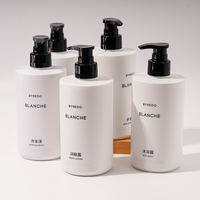
Multifunctional Care Product 450ml
₱4,588.00
Buy on Lazada
Romantic Fragrance Bath & Shower Gel 450ml
₱1,021.00
Buy on Lazada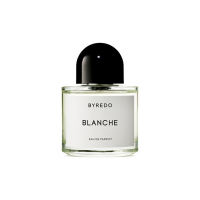
Authentic 100% Byredo Rose Of No ManS Land Blanche Super Cedar Men Women EDP Perfume Spray 100ML
₱2,450.00₱8,900.00
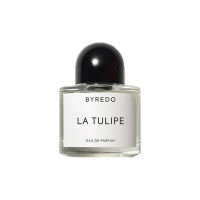
Original 100% Byredo Mojave Ghost Bal DAfrique La Tulipe Men Women EDP Perfume Spray 100ml
₱2,400.00₱8,500.00
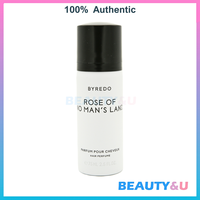
BYREDO Rose of No Mans Land Hair Perfume 75ml
₱3,824.50₱5,990.00
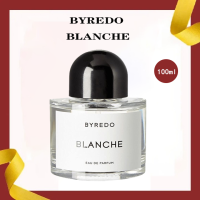
【100% Original】 Byredo Blanche For Women 100ML EDP Floral Scent Long Lasting
₱1,850.00₱12,900.00
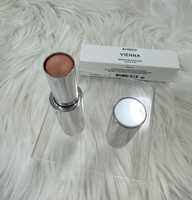
BYREDO Vienna Color Stick
₱2,800.00
Buy on Lazada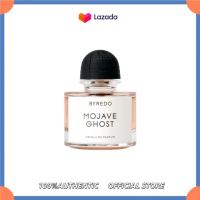
Original Byredo Mojave Ghost Absolu de Parfum Woody EDP 100ml
₱3,012.00₱6,511.00
About Byredo
Byredo is a Swedish luxury fragrance, beauty, and lifestyle house founded in Stockholm in 2006 by Ben Gorham. The brand is distinguished by its approach of translating memories, emotions, cultural references, and personal experiences into fragrances and other sensory objects. Its aesthetic merges Scandinavian minimalism with contemporary art and expressive storytelling, establishing it as one of the most recognizable modern niche-luxury brands globally 1.
Currently, Byredo is majority-owned by the Spanish luxury group Puig, which acquired a controlling stake in the company in 2022 2.
Basic information
| Brand | Byredo |
| Founded | 2006 |
| Founder | Ben Gorham |
| Founded in | Stockholm, Sweden |
| Industry | Luxury goods, fragrance, beauty, lifestyle |
| Parent company | Puig |
| Positioning | Modern / niche luxury |
| Main categories | Fragrance, makeup, body care, home, accessories |
| Geographic presence | 40+ countries |
| Known for | Artistic fragrances, minimalist design, storytelling |
Byredo defines itself as a multidisciplinary brand that encompasses fragrance, makeup, home products, and crafted accessories 3.
The founder: Ben Gorham
Ben Gorham, a Swedish-Canadian entrepreneur, established Byredo with a background distinct from traditional perfumery. Unlike founders of heritage French perfume houses, Gorham did not originate from the conventional perfumery establishment. Instead, his interests in art, design, culture, and personal experience fundamentally shaped the brand’s development.
The central concept behind Byredo was unconventional for the luxury fragrance sector at the time: the idea that a fragrance could function like a memory. Rather than starting with traditional perfume tropes such as specific flowers, historical eras, or aristocratic imagery, Byredo frequently begins with an emotion, memory, place, person, cultural reference, or abstract idea, translating that concept into scent. This philosophy remains core to the company, which states its purpose is to translate memories and emotions into tangible objects and experiences 4.
Origin of the name
The name Byredo is derived from “By Redolence.” As “redolence” relates to fragrance, scent, or a distinctive smell, the name reflects the brand’s original identity as a perfume house. However, Byredo has since expanded significantly beyond perfume, treating fragrance as one element within a broader sensory and cultural universe.
History
Foundation
Byredo was established in Stockholm in 2006 by Ben Gorham. Initially focused solely on fragrance, the company operated with a philosophy that differed markedly from traditional perfume houses, treating scent as a medium for memory, identity, emotion, and storytelling 5.
Expansion
Over time, Byredo broadened its product range beyond perfume to include eau de parfum, eau de toilette, body care, hand care, candles, home fragrance, makeup, leather goods, and accessories. Puig has described the Byredo universe as having evolved from a fragrance focus into a comprehensive range covering beauty, home, leather goods, and accessories 6.
Acquisition by Puig
A significant milestone occurred in May 2022 when Puig acquired a majority stake in Byredo. Puig is a major Spanish family-controlled beauty and fashion group with a portfolio including Carolina Herrera, Rabanne, Jean Paul Gaultier, Charlotte Tilbury, Dries Van Noten, and Penhaligon’s 7. The acquisition was positioned not as an absorption into a mass-market entity, but as a strategic partnership intended to support Byredo’s existing high-end, creative, and direct-to-consumer identity 8.
Brand philosophy
Byredo’s creative process can be understood as a progression from emotion to memory, then to story, and finally to object. Rather than creating perfumes based solely on olfactory notes (e.g., “a rose scent”), the brand asks what a particular memory, person, place, feeling, or cultural experience smells like. Consequently, products are viewed as objects carrying stories rather than merely functional beauty items. The company describes its creations as a “living library” of collective memories and cultural references.
Scandinavian minimalism
A defining visual characteristic of Byredo is its adherence to Scandinavian design principles. Products typically feature clean typography, simple bottles, a black-and-white visual language, restrained packaging, minimal ornamentation, geometric forms, and strong negative space.
This minimalist exterior often contrasts with concepts that are emotional, unusual, or provocative, creating a distinctive tension between understated design and imaginative interior narratives. Byredo describes this aesthetic as a balance between Scandinavian minimalism and bold artistic expression, making the brand immediately recognizable even without visible logos 9.
Fragrance portfolio
Although Byredo has diversified into multiple categories, fragrance remains its defining pillar. Perfumes are often treated as chapters in a literary or artistic collection. Key fragrances include:
- Gypsy Water: One of the brand’s most recognizable scents, exploring an idealized image of Romani culture and nomadic life through a woody, fresh, and slightly smoky composition. It is closely associated with Byredo’s early identity.
- Bal d’Afrique: A signature fragrance drawing on Parisian fascination with Africa during the early 20th century, combining European and African cultural references.
- Blanche: Explores concepts of cleanliness, intimacy, and the scent of freshly washed skin and fabric, representing an understated, soft, and personal side of the brand.
- Mojave Ghost: Inspired by the Mojave Desert, this commercially successful fragrance combines the harshness of the desert landscape with an ethereal floral character.
- Rose of No Man’s Land: Inspired by the nickname given to nurses during World War I, using the rose as a symbol of compassion and selflessness.
These five fragrances—Gypsy Water, Bal d’Afrique, Blanche, Mojave Ghost, and Rose of No Man’s Land—are currently identified by Byredo as its iconic pillars 17.
Narrative-driven perfumery
Traditional luxury perfumery often emphasizes ingredients, perfumer lineage, craftsmanship, and heritage. Byredo adds layers of concept, memory, cultural narrative, and emotion. Inspirations may include childhood memories, specific individuals, geographic locations, historical periods, cultural experiences, feelings, abstract ideas, or visual artworks. As a result, the narrative surrounding a Byredo fragrance is often considered as important as the scent itself. This storytelling-driven approach appeals to consumers who view fragrance as an element of identity and personal expression rather than simply a pleasant accessory.
Product categories beyond fragrance
Makeup
Byredo entered the colour cosmetics market applying the same philosophy used for fragrance: products are treated as objects of design and self-expression. The makeup line is noted for its sculptural and minimalist packaging aesthetic.
Body care
The brand offers a comprehensive body care range including hand wash, hand lotion, body wash, body lotion, hair products, and body fragrances. These products allow customers to create a complete sensory environment rather than relying solely on perfume.
Home fragrance
Byredo produces scented candles, home fragrances, and room-related products, extending its olfactory concepts from the body into living spaces 15.
Leather goods and accessories
Expansion into physical objects and accessories has reinforced Byredo’s evolution into a broader luxury lifestyle house rather than a conventional perfume brand 18.
Art and culture
Byredo operates at the intersection of fashion, art, music, design, beauty, and fragrance, distinguishing it from traditional perfume houses. Its identity aligns more closely with that of a cultural brand. Puig describes Byredo as exploring culture and identity through modern luxury, highlighting its artistic collaborations, commissions, and partnerships 8.
Visual identity
The Byredo visual identity can be summarized as minimalist, artistic, Scandinavian, intellectual, emotional, and contemporary. The brand avoids traditional luxury signifiers such as gold, excessive ornamentation, baroque decoration, or heavy heritage symbolism. Instead, it utilizes black and white palettes, typography, simple forms, sculptural objects, contemporary art, photography, and conceptual storytelling. This aesthetic positions Byredo as relatively young and modern compared to heritage houses like Chanel, Dior, Guerlain, or Hermès.
Industry positioning
Byredo is categorized within the niche or luxury fragrance segment, despite its considerable global scale. While “niche” originally implied limited distribution and specialized artistic creation, Byredo has maintained this aesthetic while achieving global recognition. Puig categorizes Byredo among its niche brands, defining the category as high-quality, artisanal, and limited-distribution beauty products 7. Thus, Byredo occupies a unique position combining niche fragrance DNA with global luxury scale.
Comparison with traditional luxury houses
| Traditional luxury houses | Byredo | |
|---|---|---|
| Historical identity | Heritage | Contemporary culture |
| Main inspiration | Perfumery tradition | Memory & emotion |
| Visual style | Often ornate | Minimalist |
| Brand age | Often decades/centuries | Founded 2006 |
| Storytelling | Heritage & prestige | Personal/cultural experience |
| Design | Traditional luxury codes | Scandinavian/contemporary |
| Product universe | Often fragrance-centered | Multi-category lifestyle |
| Target appeal | Luxury & heritage | Luxury & individuality |
Byredo redefines luxury for contemporary consumers, prioritizing creative identity and cultural relevance over historical lineage.
Cultural significance
Byredo helped popularize a new paradigm of modern luxury where value is derived from artistic ideas, emotional meaning, exceptional design, and distinctive cultural identity rather than longevity alone. This model proved influential in the 2010s and 2020s as consumers increasingly valued individuality, storytelling, design, personal identity, cultural relevance, social media aesthetics, and artistic collaborations.
Target demographic
The typical Byredo customer is often attracted to minimalist design, contemporary fashion, art, culture, niche fragrance, personal expression, unusual scent concepts, premium materials, and status without traditional ostentation. The brand’s luxury is relatively quiet, communicating specific aesthetic and cultural taste rather than overt expense.
Pricing and positioning
Byredo operates firmly in the high-end luxury segment, with pricing significantly above mainstream beauty brands. Prices reflect premium ingredients, fragrance development, product design, packaging, brand positioning, retail experience, artistic direction, distribution, and luxury marketing. While the restrained packaging may surprise first-time customers, the value proposition centres on design, formulation, storytelling, and brand experience rather than packaging extravagance.
Summary of brand identity
Byredo is a Stockholm-founded modern luxury house that transforms memories, emotions, culture, and artistic ideas into fragrances, beauty products, and designed objects 9.
Role in modern luxury
Byredo represents a new generation of luxury brands whose legitimacy stems from creative identity, distinctive design, cultural relevance, emotional storytelling, and global recognition rather than centuries-old heritage. Its trajectory demonstrates how a relatively young, independent-style fragrance brand can join a major international luxury group while retaining a recognizable creative identity. As of 2026, Byredo remains part of Puig’s portfolio and operates internationally across fragrance, makeup, body care, home, and accessories 1011121314.
Brand dimensions
Byredo functions effectively as three interconnected entities:
- Perfume house: Known for iconic fragrances such as Bal d’Afrique, Gypsy Water, Blanche, Mojave Ghost, and Rose of No Man’s Land 17.
- Design and art brand: Characterized by minimalist packaging, contemporary collaborations, unusual concepts, and a strong visual identity.
- Lifestyle house: Offering candles, body care, makeup, accessories, and leather goods that allow consumers to inhabit the brand’s aesthetic 151618.
Ultimately, Byredo sells not just a scent, but a comprehensive world.
References
- BYREDO Official Site | Perfumes, Candles & Body Care
- Puig Acquires Majority Stake in Byredo | Strategic Luxury Expansion
- Puig | Puig acquires a majority stake in Byredo
- Puig acquires a majority stake in Byredo
- BYREDO Official Site | Perfumes, Candles & Body Care
- BYREDO Official Site | Perfumes, Candles & Body Care
- Puig acquiert une participation majoritaire dans Byredo | Expansion luxe
- Puig adquiere una participación mayoritaria en Byredo | Expansión de lujo
- Client Advisor (m/w/d) für BYREDO im Breuninger Düsseldorf Job Details | PUIG, S.L.
- BYREDO Official Site | Perfumes, Candles & Body Care
- BYREDO Official Site | Perfumes, Candles & Body Care
- BYREDO Official Site | Perfumes, Candles & Body Care
- BYREDO Official Site | Perfumes, Candles & Body Care
- BYREDO Official Site | Perfumes, Candles & Body Care
- BYREDO Official Site | Perfumes, Candles & Body Care
- BYREDO Stockholm | Find Your Store
- BYREDO Best Sellers | BYREDO
- BYREDO Official Site | Perfumes, Candles & Body Care