Shop on Lazada
Carter’s products
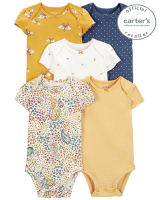
Carters 5-Pack Short-Sleeve Original Bodysuits
₱1,299.00
Buy on Lazada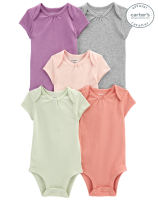
Carters 5-Pack Short-Sleeve Solid Bodysuits
₱1,599.00
Buy on Lazada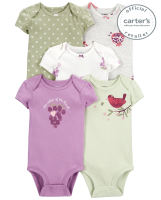
Carters 5-Pack Short-Sleeve Original Bodysuits
₱1,299.00
Buy on Lazada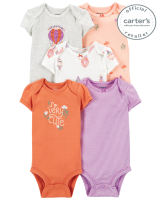
Carters 5-Pack Short-Sleeve Original Bodysuits
₱1,599.00
Buy on Lazada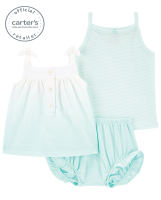
Carters 3-Piece Ombré Little Short Set
₱1,399.00
Buy on Lazada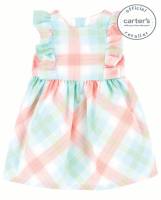
Carters Plaid Flutter Dress
₱1,899.00
Buy on Lazada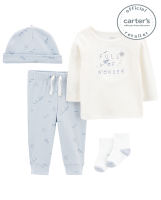
Carters 4-Piece Take-Me-Home Set
₱1,599.00
Buy on Lazada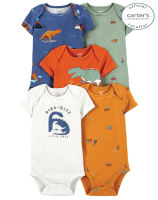
Carters 5-Pack Short-Sleeve Bodysuits
₱1,599.00
Buy on LazadaAbout Carter’s
Carter’s is an American brand specializing in children’s clothing and baby products, serving as the flagship label of Carter’s, Inc. The company is widely recognized for its baby clothing, toddler apparel, sleepwear, bodysuits, multi-piece outfits, accessories, and other everyday essentials. Founded in 1865, Carter’s ranks among the oldest continuously operating names in the American children’s apparel industry.1 Today, it anchors a broader portfolio managed by Carter’s, Inc., which also encompasses OshKosh B’gosh, Skip Hop, Little Planet, Otter Avenue, and several retail-exclusive brands.2
Quick facts
| Category | Information |
|---|---|
| Brand | Carter’s |
| Parent company | Carter’s, Inc. |
| Founded | 1865 |
| Origin | United States |
| Industry | Children’s apparel and baby products |
| Main customers | Babies, toddlers, young children, parents and caregivers |
| Core age range | Newborn through approximately age 10, with products extending to size 14 |
| Major products | Baby clothing, children’s clothing, sleepwear, bodysuits, accessories, layette, shoes and related products |
| Flagship sister brand | OshKosh B’gosh |
| Other major brands | Skip Hop, Little Planet, Otter Avenue |
| Major retail channels | Carter’s stores, e-commerce, Walmart, Target, Amazon and other retailers |
| Parent company status | Publicly traded company |
| Current headquarters | Atlanta, Georgia, United States |
Carter’s, Inc. describes itself as North America’s largest and most enduring apparel company focused exclusively on babies and young children.3
History
Origins: 1865
The origins of Carter’s date back to 1865, when the business that would become the brand was established in the United States. As of 2026, this gives the company more than 160 years of history.4 This longevity is central to its identity; rather than positioning itself as a high-fashion label, Carter’s built its reputation on practicality, quality, value, and dependable everyday clothing. Over successive generations, the name became synonymous with clothing for infants and very young children.
Expansion of the brand
Throughout the 20th century, as the American market for baby and children’s apparel matured, Carter’s broadened its offerings beyond basic infant wear. Its assortment eventually expanded to include:
- Bodysuits
- Onesies
- Layette
- Sleepwear
- Pajamas
- Tops and T-shirts
- Pants
- Dresses
- Jackets and outerwear
- Multi-piece clothing sets
- Accessories
- Shoes and other children’s products
The brand’s focus on coordinated outfits and multi-piece packs proved particularly appealing to parents seeking convenient and relatively affordable options for their children.5
Carter’s, Inc.
It is important to distinguish between Carter’s, the consumer-facing brand, and Carter’s, Inc., the corporate entity. Carter’s, Inc. serves as the parent company for a diverse portfolio of children’s brands. Its two primary labels are:
- Carter’s
- OshKosh B’gosh
In addition to these core brands, the company owns or operates several others, including:
- Skip Hop
- Little Planet
- Otter Avenue
- Child of Mine
- Just One You
- Simple Joys6
This structure positions Carter’s, Inc. less as a single clothing label and more as a comprehensive house of children’s brands.
OshKosh B’gosh
A pivotal moment in the company’s modern history occurred in 2005 with the acquisition of OshKosh B’gosh. Founded in 1895, OshKosh is another historic American children’s apparel brand, renowned specifically for its denim-based clothing and overalls.7 The two brands maintain complementary identities within the portfolio:
Carter’s
- Baby-focused
- Everyday essentials
- Layette
- Sleepwear
- Bodysuits
- Practical basics
- Soft and comfortable styling
OshKosh B’gosh
- Toddler and children’s clothing
- Denim
- Overalls
- Playwear
- More casual/adventurous aesthetic
- Strong heritage styling
By maintaining distinct brand identities, Carter’s, Inc. effectively covers different segments of the children’s apparel market.8
Skip Hop
Carter’s diversified beyond apparel with the acquisition of Skip Hop in 2017. Unlike a traditional clothing line, Skip Hop is a lifestyle brand catering to babies and parents. Its product range includes:
- Diaper bags
- Strollers
- Bath products
- Feeding products
- Baby accessories
- Toys
- Nursery products
The brand emphasizes functional and thoughtfully designed parenting products.9 This acquisition marked a strategic expansion into the broader baby-products and parenting market.
Little Planet
Launched in 2021, Little Planet by Carter’s was created with an environmentally conscious positioning. The collection emphasizes organic fabrics and sustainable materials, focusing primarily on baby and toddler clothing, accessories, and sleepwear.10 Little Planet offers a distinct value proposition compared to the traditional Carter’s assortment; instead of prioritizing affordability and everyday basics, it highlights:
- Organic cotton
- Simpler designs
- Natural aesthetics
- Sustainability
- Long-lasting/”heirloom” positioning
Otter Avenue
In July 2025, Carter’s introduced Otter Avenue, a brand specifically targeted at toddlers. Designed around the growing independence of young children, Otter Avenue combines functionality with fashion-forward styling.11 This launch reflects Carter’s, Inc.’s strategy of cultivating a portfolio of brands with unique identities rather than relying solely on the flagship Carter’s name.
Exclusive retail brands
Carter’s, Inc. also develops specific brands for major retail partners to reach consumers outside its dedicated store network:
Child of Mine
Child of Mine is sold exclusively through Walmart.
Just One You
Just One You is available through Target.
Simple Joys
Simple Joys is offered via Amazon.12
These exclusive lines allow the company to serve various price points and retail environments without diluting the flagship brand.
Products
Carter’s maintains particular strength in the baby essentials category. Its current product lineup includes:
Baby clothing
- Bodysuits
- Sleep-and-play outfits
- Onesies
- Rompers
- Tops
- Pants
- Dresses
- Sets
- Layette
Sleepwear
- Pajamas
- Sleep-and-play garments
- Sleeping gowns
- Seasonal sleepwear
Toddler and children’s clothing
- T-shirts
- Tops
- Pants
- Jeans
- Dresses
- Shorts
- Outerwear
- Sets
Accessories
Depending on the specific market and collection, Carter’s also retails items such as socks, hats, bibs, blankets, shoes, hair accessories, and other baby essentials. The company categorizes its principal offerings as baby, toddler, and kids, with sizes currently ranging from newborn through size 14.13
Brand identity
Historically, Carter’s has anchored its position on four key consumer attributes: Quality, Value, Functionality, and Trust. Rather than competing in the luxury or high-fashion space, the brand emphasizes durable clothing suitable for frequent use. Its identity is closely tied to childhood, family, comfort, practicality, playful design, convenience, affordability, and reliability. The company’s extensive history contributes significantly to its status as a heritage brand; multiple generations of American families have worn Carter’s as children and subsequently purchased it for their own offspring. Carter’s actively emphasizes this intergenerational trust in its messaging.14
Target customers
Carter’s primarily targets parents and caregivers of babies and young children, recognizing them as the primary purchasing decision-makers rather than the children themselves. Key customer segments include new parents, experienced parents, grandparents, relatives buying gifts, baby-shower shoppers, and families purchasing everyday basics or seasonal clothing. Consequently, marketing efforts have historically focused heavily on new parents, gift-givers, and regular purchasers of children’s apparel.15
Business model
Carter’s, Inc. employs a multi-channel business model comprising direct-to-consumer and wholesale operations.
Direct-to-consumer
Sales channels include Carter’s stores, OshKosh stores, e-commerce websites, and mobile commerce platforms.
Wholesale
The company supplies products to major third-party retailers. According to its fiscal 2025 annual report, Carter’s maintained approximately 19,500 wholesale locations in North America, supplementing its company-operated stores and online channels.16
International
Global reach is achieved through retail stores, e-commerce, wholesale partners, and licensing relationships. At the close of fiscal 2025, the company reported 1,068 company-operated retail stores in North America and international distribution via wholesale and licensees in more than 90 countries.17
Market position
Carter’s holds significant scale within the North American baby and children’s apparel sector. For fiscal 2025, the company reported retaining its status as the children’s apparel market leader in North America, holding approximately 10% market share in the United States for children ages 0–10.18 Data cited from Circana for December 2025 indicated that Carter’s brands collectively held roughly 9% of the U.S. baby and young children’s apparel market, while OshKosh accounted for approximately 1%.19 These figures underscore its dominance as a specialized player in the category.
Retail presence
Carter’s operates branded stores across the United States, Canada, and Mexico. Additionally, it distributes through major retailers including Walmart, Target, Amazon, and various department, specialty, and mass-market chains. Exclusive retail brands play a critical role in this strategy, enabling Carter’s to occupy diverse price tiers and retail settings without necessarily deploying the flagship brand in every location.20
Corporate strategy
Recent strategic initiatives at Carter’s, Inc. revolve around three core pillars:
Consumer-led product development
The company invests in consumer research, data analytics, and trend analysis to align product development with evolving family needs.21
A “house of brands”
Rather than treating all products under a single banner, the company assigns distinct identities and target audiences to individual brands:
- Carter’s: Baby essentials
- OshKosh: Denim and playwear
- Little Planet: Organic and sustainable options
- Skip Hop: Baby lifestyle products
- Otter Avenue: Toddler fashion and function
Direct-to-consumer focus
Company-owned stores and digital channels are prioritized to control brand presentation and facilitate direct customer engagement.
Store strategy and recent changes
Carter’s has undertaken restructuring of its physical retail footprint. In fiscal 2025, the company announced a portfolio optimization plan involving the closure of approximately 150 lower-margin stores through fiscal 2028, alongside investments in higher-productivity locations and enhanced in-store experiences. This shift reflects broader trends in children’s retail toward e-commerce, high-performing brick-and-mortar locations, omnichannel integration, improved inventory management, and distinctive brand experiences.
Sustainability and social responsibility
Sustainability has been increasingly integrated into the portfolio, most visibly through Little Planet, which focuses on organic fabrics and sustainably sourced materials. Beyond specific product lines, Carter’s, Inc. maintains a corporate sustainability and ESG program. Its stated purpose has evolved to emphasize supporting families and the generations raising children, extending beyond the mere sale of apparel.
Significance
Carter’s is notable for several distinguishing factors:
Historic longevity
Its 1865 founding date provides an exceptionally long operational history for a modern apparel brand.
Brand recognition
The Carter’s name is deeply associated with baby clothing throughout North America.
Scale
The company operates over a thousand company-owned stores supported by an extensive wholesale distribution network.
Portfolio diversification
The business has transformed from a children’s apparel manufacturer into a comprehensive children’s and baby-products portfolio.
Vertical specialization
Unlike generalist fashion retailers, Carter’s, Inc. focuses exclusively on babies and young children.
Carter’s vs. OshKosh
The distinction between the two primary brands can be summarized as follows:
| Carter’s | OshKosh B’gosh | |
|---|---|---|
| Heritage | Founded 1865 | Founded 1895 |
| Core identity | Baby & children’s essentials | Kids’ playwear |
| Famous for | Bodysuits, pajamas, baby basics | Denim, overalls, casual clothing |
| Aesthetic | Soft, practical, playful | Rugged, colorful, adventurous |
| Main audience | Babies, toddlers, young children | Toddlers and young children |
| Parent company | Carter’s, Inc. | Carter’s, Inc. |
| Acquisition | Original flagship brand | Acquired in 2005 |
Cultural context
Unlike luxury fashion houses, Carter’s derives its cultural significance from everyday childhood. For many North American families, the brand is intrinsically linked to newborn clothing, baby showers, first outfits, hospital homecoming clothes, first pajamas, toddler wear, sibling matching sets, and baby gifts. This association fosters a strong nostalgic and family-oriented identity. The brand’s longevity creates a unique cycle where individuals who wore Carter’s as infants later purchase it for their own children.
Current corporate portfolio
As of 2026, the Carter’s, Inc. portfolio comprises:
Core brands
- Carter’s
- OshKosh B’gosh
Emerging/specialty brands
- Little Planet
- Otter Avenue
- Skip Hop
Retail-exclusive Carter’s brands
- Child of Mine (Walmart)
- Just One You (Target)
- Simple Joys (Amazon)
Overall assessment
Carter’s is best understood as a heritage American children’s brand that has evolved into a large-scale specialized children’s-products company. Its competitive advantage stems not from haute couture, but from a combination of heritage, consumer trust, affordability, product functionality, extensive distribution, and vertical specialization in young children. The original Carter’s brand remains the strategic center, surrounded by an ecosystem covering baby clothing, children’s apparel, toddler fashion, sustainable options, and parenting products. With origins tracing to 1865, Carter’s stands as one of the oldest and most established entities in the American children’s apparel industry.
References
- SEC Filing | Carter’s, Inc.
- about carter’s
- Investor overview | Carter’s, Inc.
- CARTER’S, INC. 2024 ANNUAL REPORT
- CARTER’S, INC. 2025 ANNUAL REPORT
- Our Story
- CARTER’S, INC. 2025 ANNUAL REPORT
- about carter’s
- a letter from leadership
- Investor overview | Carter’s, Inc.
- Carter : 2025 Annual Report (7ff34c) | MarketScreener
- Carter’s, Inc. Reports Fourth Quarter and Fiscal Year 2025 Results | Carter’s, Inc.
- Carter’s outlines 2025 strategy in annual report | CRI Annual Report (10-K)
- Carter’s – 10-K annual report 2025
- Carter’s, Inc. Provides Business Update | Carter’s, Inc.
- SEC Filing | Carter’s, Inc.
- Carter’s Inc. (via Public) / Annual Report for Fiscal Year Ending December 28, 2024 (Form 10-K)
- SEC Filing | Carter’s, Inc.
- SEC Filing | Carter’s, Inc.
- sec.gov
- Annual Reports | Carter’s, Inc.