Shop on Lazada
CEAT TYRES products
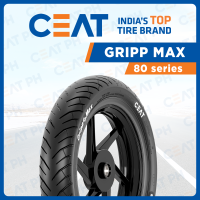
100/80-14 TL Ceat Gripp Max 100/80 - 14 (Tubeless) Motorcycle Tires
₱1,725.00₱2,300.00
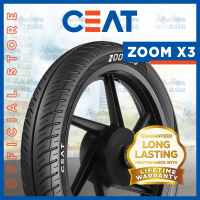
100/90-18 TL Ceat Zoom X3 100/90 - 18 Tubeless Motorcycle Tires
₱2,440.00₱3,050.00
90/80-14 TL Ceat Gripp Max 90/80 - 14 (Tubeless) Motorcycle Tires
₱1,417.50₱1,890.00
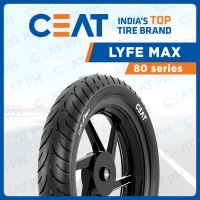
100/80-14 TL Ceat Lyfe Max 100/80 - 14 (Tubeless) Motorcycle Tires
₱1,725.00₱2,300.00
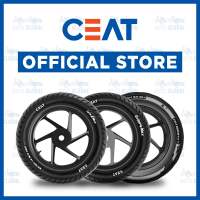
90/100-10 TL Ceat Zoom X3 90/100 - 10 Tubeless Motorcycle Tire
₱1,216.00₱1,520.00
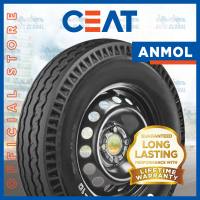
4.50-10 TT CEAT ″ANMOL″ 4.50 - 10 TT 76E (Tube type) Motorcycle Tires
₱2,175.00₱2,900.00
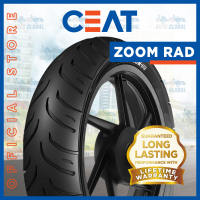
140/60R17 TL CEAT ″ZOOM RAD″ 140/60 - 17 TL (Tubeless) Motorcycle Tires
₱2,520.00₱3,150.00
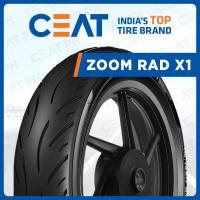
110/70R17 TL CEAT ″ZOOM RAD X1″ 110/70 R 17 TL (Tubeless) Motorcycle Tires
₱2,200.00₱2,750.00
About CEAT TYRES
CEAT Limited, commonly known as CEAT TYRES, is a major Indian tyre manufacturer and a flagship company of the RPG Group. While its modern corporate identity is rooted in India, the brand traces its origins to Turin, Italy, in 1924, where it was established as Cavi Elettrici e Affini Torino—Italian for “Electrical Cables and Allied Products of Turin.” Today, CEAT TYRES is headquartered in Mumbai, India, and manufactures tyres for two-wheelers, three-wheelers, passenger cars, commercial vehicles, and off-road applications. 1
The company describes its purpose as “helping the world move safely and smartly” and has evolved from a primarily Indian manufacturer into an international business serving over 110 countries, including markets in Southeast Asia such as the Philippines. 1
Quick Facts
| Field | Information |
|---|---|
| Brand | CEAT |
| Company | CEAT Limited |
| Industry | Tyres / Automotive |
| Founded | 1924 |
| Original Location | Turin, Italy |
| Indian Operations Established | 1958 |
| Headquarters | Mumbai, Maharashtra, India |
| Parent Group | RPG Group |
| Founder | Virginio Bruni Tedeschi |
| Main Business | Tyre Manufacturing |
| Products | Two-wheeler, three-wheeler, car, SUV, truck/bus, agricultural, and off-road tyres |
| Global Reach | 110+ countries |
| Annual Revenue | Approximately ₹11,315 crore (as per corporate profile) |
| Annual Production | Over 41 million tyres (as per RPG Group) |
| Website | Official CEAT website |
History
Origins in Italy
The story of CEAT begins in 1924 in Turin, Italy, when Virginio Bruni Tedeschi founded Cavi Elettrici e Affini Torino. The original business focused primarily on electrical and telephone cables. 1
The company later entered the rubber industry. During the 1940s, CEAT expanded into tyre manufacturing, which became increasingly central to its operations. Historical records indicate that CEAT began producing tyres in the post-war period, with its first truck tyre appearing in 1946. 1
Expansion into India
CEAT established its Indian operation in 1958, creating CEAT Tyres of India in Mumbai. Initially, the Indian business operated in collaboration with the Tata Group. 1
India eventually became the centre of gravity for the CEAT brand. The company developed significant research and capabilities in the country, including establishing an R&D unit at Bhandup, Maharashtra, in 1972. 1
Acquisition by RPG
A pivotal moment occurred in the early 1980s. The original Italian CEAT business faced financial difficulties, leading to the acquisition of the CEAT name by Pirelli. In 1983, Pirelli transferred the CEAT brand to the Indian RPG Group. Consequently, the Indian entity became the primary corporate vehicle carrying the CEAT name. 1 This history means modern CEAT is best understood as an Indian tyre company with Italian historical roots rather than simply an Italian firm operating abroad.
CEAT and the RPG Group
CEAT is a flagship company of the RPG Group, an Indian conglomerate founded by R. P. Goenka. The group describes CEAT as one of India’s largest and fastest-growing tyre companies, producing more than 41 million tyres annually across various automotive segments and selling products in more than 100 countries. 1
CEAT’s corporate identity combines:
* Italian historical heritage
* Indian ownership and manufacturing
* International distribution networks
* Advanced automotive technology and R&D
* A strong domestic presence in India
Product Portfolio
CEAT maintains a broad product portfolio beyond just passenger-car tyres.
Passenger Vehicles
CEAT manufactures tyres for:
* Hatchbacks
* Sedans
* SUVs
* Premium cars
* Electric vehicles
* Performance-oriented vehicles
Its passenger-car range focuses on balancing comfort, fuel efficiency, handling, braking, durability, and high-speed performance. 1
Two-Wheelers
Two-wheelers represent a critical segment of CEAT’s business, particularly relevant for Asian markets like the Philippines. Products cover:
* Motorcycles
* Scooters
* Commuter motorcycles
* Performance motorcycles
* Sport-oriented applications
Three-Wheelers
CEAT produces tyres for three-wheelers, which are widely used in South Asian transportation and commercial logistics. 1
Commercial Vehicles
The company supplies tyres for:
* Trucks
* Buses
* Light commercial vehicles
* Heavy commercial vehicles
Agricultural and Off-Road Tyres
CEAT’s portfolio extends to non-conventional road vehicles, including:
* Agricultural machinery
* Tractors
* Construction equipment
* Industrial/off-road vehicles
* Specialized applications
The RPG Group notes that CEAT’s coverage spans 2- and 3-wheelers, passenger cars, commercial vehicles, and off-road vehicles. 1
Manufacturing
CEAT operates a substantial manufacturing network in India, with key facilities located in Nashik, Halol, Nagpur, Ambernath, and Chennai. The expansion of these plants has increased capacity in passenger-car, commercial-vehicle, and two-wheeler radial tyres. 1
The Chennai facility, for instance, serves as a major hub for radial-tyre production, specifically supporting passenger-car and two-wheeler radial lines. 2
CEAT’s manufacturing strategy emphasizes:
* Radial tyre technology
* Automation
* Quality control
* Manufacturing efficiency
* Sustainability
* Digitalization
Research and Development
R&D is central to CEAT’s strategy. The company maintains advanced R&D capabilities in both India and Germany. 1
Technology development areas include:
* Tyre compounds
* Tread design
* Handling and braking dynamics
* Rolling resistance reduction
* Noise mitigation
* High-speed performance
* Durability enhancements
* Electric-vehicle specific applications
* Off-road performance optimization
The goal is not merely longevity but a balanced integration of safety, efficiency, comfort, performance, and environmental impact. 1
OEM Partnerships
CEAT supplies tyres to vehicle manufacturers (OEMs – Original Equipment Manufacturers) in addition to the replacement market. The company reports relationships with over 27 key OEM partners. 1
This dual-market approach allows CEAT to operate in:
1. OEM Market: Tyres supplied with new vehicles from the factory.
2. Replacement Market: Tyres purchased by owners after original equipment wears out.
International Presence
CEAT is no longer exclusively an Indian-market brand. Its products and operations extend across more than 110 countries, with geographical clusters covering North America, Europe, the Middle East, Southeast Asia, the Far East, South America, Africa, the Philippines, and Oceania. 1
Regional offices are located in places such as Brazil, Dubai, Germany, India, Indonesia, Nepal, and the Philippines. 1 The company identifies internationalization as a key strategic growth theme. 1
Major Milestones
- 1924: CEAT founded in Turin, Italy.
- 1940s: Significant expansion into tyre manufacturing.
- 1946: First tyre produced.
- 1958: Indian operations established in Mumbai.
- 1972: R&D unit established at Bhandup, Maharashtra.
- 1983: CEAT brand acquired by the RPG Group.
- 1990: Company formally adopts the CEAT name.
- 1990s: Development of international partnerships and radial-tyre capabilities.
- 2000s: Continued expansion in India and global markets.
- 2016–2017: Major manufacturing expansions at Halol, Nagpur, and Ambernath.
- 2019: Chennai manufacturing operations commence.
- 2022: Recognition via the World Economic Forum’s Lighthouse program.
- 2023: Becomes the first tyre company outside Japan to receive the Deming Grand Prize.
- 2024: Marks a century since the original CEAT business was founded in Italy. 1
Quality Reputation: The Deming Prize
One of CEAT’s most significant achievements is winning the Deming Prize, a globally respected award for quality management. CEAT states it was the first tyre company outside Japan to win the Deming Prize and subsequently received the Deming Grand Prize, becoming the first tyre company worldwide to achieve this distinction. 1
This recognition highlights CEAT’s adherence to systematic Total Quality Management (TQM), focusing on:
* Manufacturing consistency
* Process control
* Customer requirements
* Continuous improvement
* Organizational management
World Economic Forum Lighthouse Recognition
CEAT has been recognized by the World Economic Forum’s Global Lighthouse Network. The company describes itself as the world’s first tyre brand to receive Lighthouse certification/designation. 1
This program honors facilities that demonstrate advanced use of Fourth Industrial Revolution technologies, including automation, analytics, connectivity, and digital manufacturing. It reflects CEAT’s transition toward smart, digitally enabled manufacturing. 1
Sustainability
Sustainability is a core component of CEAT’s corporate strategy. The company has set environmental objectives, including a target to halve its carbon footprint by 2030 as highlighted in FY2023–24 reporting. 1
Initiatives include:
* Energy efficiency improvements
* Adoption of renewable energy
* Lower-carbon manufacturing processes
* Waste reduction and water conservation
* Use of sustainable materials
* Enhancing tyre durability and reducing rolling resistance
* Recycling and circular economy practices
Brand Positioning
Traditionally, CEAT built its reputation on value, durability, and reliability, particularly in India. However, the brand has shifted towards positioning centered on Safety + Technology + Performance + Premiumization + Sustainability. 1
Current corporate purpose focuses on making mobility “safer and smarter.” This evolution moves CEAT from being viewed as a mass-market Indian manufacturer to a global technology-driven tyre brand. 1
Brand Architecture
CEAT organizes its portfolio by vehicle category:
* Passenger Cars & SUVs
* Motorcycles
* Scooters
* Three-wheelers
* Trucks & Buses
* Light Commercial Vehicles
* Agriculture
* Off-road / Specialty
Within these categories, tyres are differentiated by characteristics such as touring, comfort, performance, sport, highway, all-terrain, commercial durability, fuel efficiency, wet-weather performance, and high-speed capability. 1
Business Model
CEAT operates a B2B + B2C model.
B2B
Sales to automobile manufacturers, commercial-vehicle makers, dealers, distributors, fleet operators, and agricultural-equipment manufacturers. 1
B2C
Individual purchases through dealers, tyre shops, exclusive CEAT outlets, automotive service businesses, and online channels. CEAT reports a distribution network of 400+ exclusive outlets, 4,500+ dealers, and 51,000+ sub-dealers. 1
Financial Scale
Competitive Landscape
CEAT competes in a highly competitive global tyre industry. In India, major competitors include MRF, Apollo Tyres, JK Tyre, Bridgestone, Michelin, Goodyear, and Yokohama. Competition varies by segment; for example, the two-wheeler market differs significantly from premium passenger cars or heavy commercial vehicles. CEAT competes on price, quality, technology, brand strength, distribution reach, and OEM relationships. 1
What Makes CEAT Distinctive?
- Italian Origins, Indian Identity: Roots in 1920s Turin, but fundamentally Indian in modern corporate structure. 1
- Strong Two-Wheeler Presence: Deep expertise in motorcycle and scooter tyres, advantageous in Asian markets. 1
- Broad Product Portfolio: Covers everything from scooters to trucks and off-road vehicles. 1
- International Expansion: Present in 110+ countries. 1
- Quality Credentials: Holder of the prestigious Deming Prize and Deming Grand Prize. 1
- Manufacturing Technology: Recognized for Industry 4.0 adoption via WEF Lighthouse status. 1
CEAT Today
As of 2026, CEAT is best described as a global Indian tyre manufacturer with more than a century of historical roots. Its evolution can be summarized as:
1924: Italian cable manufacturer
↓
1940s: Expansion into tyres
↓
1958: Indian operations established
↓
1983: RPG acquires the CEAT brand
↓
1990s–2000s: Indian and international expansion
↓
2010s: Major manufacturing and technology expansion
↓
2020s: Globalization, premiumization, digital manufacturing, and sustainability
Today, CEAT combines Indian manufacturing scale, international distribution, automotive R&D, and a globally recognizable brand. Its strategy focuses on electrification, premium products, international markets, and digitalization while maintaining strengths in the traditional automotive market. 1