Shop on Lazada
davines products
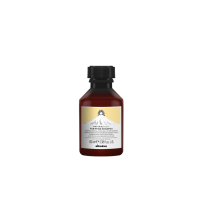
Davines Purifying Shampoo for Oily or Dry Dandruff 100ml
₱900.00
Buy on Lazada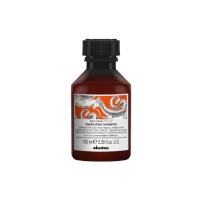
Davines Energizing Shampoo For Hairfall and Thinning Hair 100ml
₱900.00
Buy on Lazada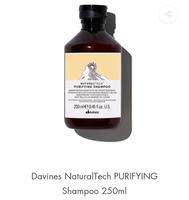
Davines • NaturalTechPurifyingShampoo
₱5,399.00
Buy on Lazada![[AUTHENTIC] DAVINES OI All In One Milk / OI Oil | The Glow PH](https://ph-live.slatic.net/p/814d3539e2a1e0dbb241bc53b03cf872.png_200x200q80.jpg)
[AUTHENTIC] DAVINES OI All In One Milk / OI Oil | The Glow PH
₱3,800.00
Buy on Lazada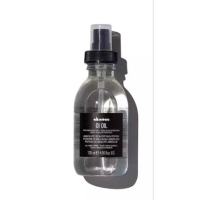
Davines • OI Edition • Hair • Body • Lip • Care Treatment
₱3,099.00
Buy on Lazada![[AUTHENTIC] DAVINES OI Shampoo / OI Conditioner / OI Hair Butter for Superior Shine | The Glow PH](https://ph-live.slatic.net/p/0be82b5ffa69958ccc4be4ceeaf551db.jpg_200x200q80.jpg)
[AUTHENTIC] DAVINES OI Shampoo / OI Conditioner / OI Hair Butter for Superior Shine | The Glow PH
₱3,200.00
Buy on Lazada![[AUTHENTIC] DAVINES Naturaltech Purifying Line for Anti-Dandruff | The Glow PH](https://ph-live.slatic.net/p/76f89523eae400e3f6137eb79b36b782.png_200x200q80.jpg)
[AUTHENTIC] DAVINES Naturaltech Purifying Line for Anti-Dandruff | The Glow PH
₱6,450.00
Buy on LazadaAbout davines
Davines is an Italian professional haircare brand headquartered in Parma, Italy. It serves as the flagship haircare line of Davines Group, a family-owned beauty company that also owns the professional skincare brand [comfort zone]. The brand is recognised for integrating professional cosmetic performance with Italian design, scientific research, and sustainability principles.1
As of 2026, Davines Group operates in more than 90 countries. Despite its global reach, it maintains a strong family-business identity and positions sustainability and regenerative practices as central components of its business model.2
Basic information
| Category | Information |
|---|---|
| Brand | Davines |
| Parent company | Davines Group |
| Founded | 1983 |
| Place founded | Parma, Italy |
| Founders | Gianni and Silvana Bollati |
| Current leadership | Davide Bollati (Chairman); Anthony Molet (CEO) |
| Industry | Professional beauty / cosmetics |
| Main category | Professional haircare |
| Primary customers | Hair salons, hairstylists, beauty professionals, and consumers |
| Positioning | Premium / professional sustainable beauty |
| Manufacturing base | Parma, Italy |
| Global presence | 90+ countries |
| Ownership | Family-owned Davines Group |
| B Corp status | Davines Group certified since 2016 |
| Benefit Company | Italian and U.S. subsidiaries since 2019 |
| Corporate headquarters | Davines Group Village, Parma, Italy |
Davines Group was established as a small research laboratory in 1983 before developing its own proprietary brands. The Davines haircare brand emerged in the 1990s, initially targeting the professional salon market.3
Origins and history
Foundation as a research laboratory
Davines traces its roots to Parma in northern Italy, a city known for food, agriculture, design, and manufacturing. The Bollati family founded the company on 14 March 1983. Gianni and Silvana Bollati originally established the business as a professional personal-care and haircare research laboratory, formulating high-quality products for third-party cosmetics companies.4
Unlike many consumer beauty brands, Davines did not begin as a retail label. Its original expertise lay in formulation and cosmetic research. The company spent approximately ten years building technical capabilities before launching its own branded products. According to the company, the name “Davines” is derived from the names of the founders’ children, Davide and Stefania.5
Launch of the Davines brand
During its first decade, the company operated primarily behind the scenes as a manufacturer for established cosmetic firms. In 1993, the Davines brand was officially created, focusing exclusively on professional haircare and the salon industry.6 This established a business model that continues to define the brand: distributing through professional salons and hairstylists rather than competing directly with mass-market shampoo brands in supermarkets.
Expansion into skincare
In 1996, Davines Group expanded beyond haircare with the creation of [comfort zone], a professional skincare brand aimed at spas and beauty professionals.7 This created the two-brand structure that remains at the centre of the group:
- Davines: Professional haircare
- [comfort zone]: Professional skincare
Corporate structure
A distinction exists between Davines and Davines Group. Davines is the haircare brand responsible for products such as shampoos, conditioners, hair masks, styling products, treatments, oils, and professional salon services. Davines Group is the parent company that owns and operates both the Davines and [comfort zone] brands while managing international business operations.8
This distinction is significant because corporate milestones, including B Corp certification, apply technically to Davines Group rather than solely to the consumer-facing Davines brand.
Brand positioning and philosophy
Davines occupies a specific niche in the beauty market, positioned between traditional mass-market shampoo companies and ultra-luxury fashion beauty houses. Its identity combines professional expertise, premium quality, Italian heritage, scientific rigour, and sustainability. The brand sells primarily through the professional salon channel, relying on hairstylists for product recommendation and brand experience.
The brand’s philosophy centres on “sustainable beauty,” positing that beauty should not be separated from responsibility towards people and the environment.9 This approach connects three core elements:
- Performance: Products must deliver effective results.
- Beauty: Products should offer an attractive aesthetic and sensorial experience.
- Sustainability: Production and consumption should minimise negative impacts and increasingly generate positive ones.
Made in Italy identity
Italian culture is integral to the brand’s DNA. Davines describes its approach as a combination of Italian taste and culture with international reach and cosmetic research.10 Products are designed, formulated, and produced at the company’s premises and laboratories in Parma, Italy, distinguishing it from companies that outsource manufacturing.11 This Italian identity influences packaging, product naming, graphic design, formulation philosophy, architectural design, corporate culture, and relationships with local agricultural ecosystems.
Product portfolio
Davines products are designed primarily for professional haircare. The portfolio addresses several key needs:
- Cleansing: Shampoos and cleansers for various hair types and scalp conditions.
- Conditioning: Treatments to improve manageability, softness, and hair condition.
- Repair and nourishment: Products for damaged, dry, stressed, or chemically treated hair.
- Scalp care: Solutions for scalp health and specific scalp concerns.
- Styling: Products for shaping, texturizing, defining, volumizing, and finishing.
- Professional treatments: Systems intended for use by hairstylists within salon services.
This professional orientation allows Davines to position itself as a comprehensive haircare system rather than merely a collection of retail products.
Key product lines
Davines has developed numerous product families over the years:
- OI: Focuses on softness, shine, smoothness, and sensory luxury, featuring roucou oil. Includes shampoo, conditioner, hair butter, oil, and styling products.
- LOVE: Designed for smoothing and managing unruly or frizzy hair.
- MOMO: Targets dry hair with a focus on hydration.
- NOUNOU: Formulated for damaged or stressed hair, particularly following bleaching, colouring, or chemical processing.
- MINU: Dedicated to maintaining the appearance and health of coloured hair.
- Naturaltech: A treatment-oriented platform addressing specific hair and scalp concerns.
- More Inside: A styling-focused collection covering texture, hold, volume, definition, and finishing.
These lines enable the brand to serve both everyday consumer haircare needs and professional salon treatments.
Sustainability and regeneration
Sustainability is a defining characteristic of contemporary Davines, extending beyond the use of natural ingredients. The company’s strategy encompasses climate and decarbonisation, circularity, biodiversity, water stewardship, regenerative agriculture, employee welfare, community involvement, and responsible governance. Davines Group frames these efforts as part of a broader objective to regenerate the planet, support communities, and maintain responsible governance.12
The brand distinguishes between “natural” and “sustainable,” focusing on the entire system surrounding a cosmetic product—from agriculture and ingredients to packaging, manufacturing, logistics, and social impact.
B Corp certification and Benefit Company status
In 2016, Davines Group became a Certified B Corporation, a designation evaluating social and environmental performance, accountability, and transparency.13 The group has subsequently improved its B Corp score:
- 2016: 99
- 2020: 117.4
- 2023: 123.514
In 2019, the Italian and U.S. subsidiaries of Davines Group became Benefit Companies, legally embedding social and environmental objectives alongside economic goals.15 This integrates sustainability into the company’s governance structure rather than treating it solely as a marketing initiative.
Regenerative agriculture and EROC
Davines has moved from sustainability towards regeneration, aiming to actively restore ecological systems rather than merely reduce harm. This philosophy is embodied by the European Regenerative Organic Centre (EROC) in Parma, a research and training centre dedicated to regenerative organic agriculture located on a 17-hectare site near Davines Group Village.16 The project focuses on soil health, linking cosmetic ingredient quality to agricultural ecosystem vitality.
Sustainability performance metrics
According to Davines Group’s 2024 sustainability reporting:
- 67.2% of packaging was made from recycled material.
- Water usage per ton of bulk product was reduced by 19.3%.
- Emissions-reduction targets were validated by the Science Based Targets initiative (SBTi).
- EROC obtained regenerative-organic certification.
- Seven regenerative-organic-certified ingredients were used in formulations.
- Over 800 people participated in corporate volunteering across 19 countries.
- Women represented 67% of the Group’s workforce and 67% of management roles.
Davines Group Village
Davines Group Village in Parma serves as the company’s headquarters and a physical manifestation of its philosophy. Rather than functioning solely as an office, the Village integrates workplace, research, culture, nature, employee wellbeing, and sustainability. The relationship between the headquarters, gardens, agriculture, and EROC reinforces the connection between beauty, people, and nature.
Global presence
While deeply Italian in origin, Davines operates internationally with a presence in more than 90 countries.17 International offices and subsidiaries are located in major markets including New York, London, Paris, Mexico City, Deventer (Netherlands), Düsseldorf, Hong Kong, and Shanghai. The company combines a centralised Italian product-development identity with an international commercial organisation.18
Target market and distribution
Davines serves two overlapping customer groups. Its primary focus remains on professionals, including hairstylists, salon owners, and beauty experts. Professional recommendation is central to its business model. Secondarily, consumers purchase Davines directly through salons, professional beauty retailers, e-commerce platforms, and authorised distributors.
This creates a distribution chain of Brand → Hairstylist → Consumer, distinguishing it from mass-market brands that rely on supermarket distribution. This professional relationship supports the brand’s premium positioning.
Competitive landscape
Davines competes in the professional haircare segment against premium brands such as Kérastase, Redken, Aveda, Oribe, Kevin.Murphy, Wella Professionals, L’Oréal Professionnel, Schwarzkopf Professional, and Moroccanoil. However, its differentiation lies in the specific combination of professional expertise, Italian identity, design, sustainability, and B Corp philosophy. While competitors may emphasise luxury, science, or natural ingredients individually, Davines occupies a distinct position integrating professional performance, design aesthetics, and ethical business governance.
| Dimension | Davines | Mass-market haircare |
|---|---|---|
| Distribution | Professional / selective | Mass retail |
| Positioning | Premium professional | Mass / accessible |
| Brand identity | Italian, design-led | Broad consumer appeal |
| Core channel | Salons | Supermarkets, drugstores, e-commerce |
| Product development | Professional cosmetics | Consumer mass market |
| Sustainability | Central strategic pillar | Varies by brand |
| Price | Relatively high | Generally lower |
| Packaging | Strong design emphasis | Mass-market oriented |
| Consumer relationship | Education + salon expertise | Advertising + retail |
| Corporate philosophy | B Corp / Benefit Company | Varies |
Strengths and challenges
Strengths
- Differentiation: A recognisable identity distinct from generic premium shampoo brands.
- Professional credibility: Technical credibility derived from historical salon relationships.
- Embedded sustainability: B Corp certification and Benefit Company status provide structural substance to sustainability claims.19
- Visual identity: Distinctive packaging and product design.
- Italian heritage: “Made in Italy” associations with quality and culture in international markets.
- Family ownership: Independence and focus on long-term values.
- Global scale with local roots: Expansion to over 90 markets while retaining Parma as the core hub.
Challenges
- Premium pricing: Higher price points limit accessibility compared to mass-market alternatives.
- Channel dependence: Reliance on professional distribution can make scaling more complex than direct-to-consumer models.
- High expectations: Centrality of sustainability invites scrutiny regarding packaging, ingredients, supply chains, and logistics.
- Identity balance: Global expansion requires preserving Italian character without appearing culturally narrow.
- Competition: Multinational competitors often possess significantly larger marketing budgets.
Corporate timeline
- 1983: Gianni and Silvana Bollati establish the company in Parma as a research laboratory.
- Early 1990s: Development of proprietary expertise and transition toward branded professional cosmetics.
- 1993: Launch of the Davines professional haircare brand.20
- 1996: Launch of [comfort zone] as the Group’s professional skincare brand.21
- 2000s: Identity development around professional beauty, Italian design, and sustainability.
- 2006: Sustainability becomes an explicit strategic focus within the Group.22
- 2016: Davines Group becomes a Certified B Corporation.
- 2018: Expansion of skincare portfolio with Skin Regimen.
- 2019: Italian and U.S. subsidiaries become Benefit Companies.
- 2020: B Corp recertification achieved with a score of 117.4.
- 2023: B Corp recertification score reaches 123.5.
- 2024: Continued progress reported in packaging circularity, water reduction, regenerative agriculture, and social initiatives.
- 2025–2026: Emphasis on regenerative agriculture, sustainability, and the corporate purpose “For a Good Life.”
Ownership and leadership
Davines retains its family-owned character, distinguishing it from many large international beauty conglomerates. The Bollati family established the company and remains central to its ownership and leadership. Current leadership includes Davide Bollati as Chairman and Anthony Molet as CEO. This structure allows the company to prioritise long-term development over quarterly financial performance.
References
- Davines Group | Davines Group
- Our brands | Davines Group
- Sustainability Report of the Davines Group | Davines Group
- Company | Davines Group
- Forty Years of Sustainable Beauty | Davines
- FAQ – Davines International
- FAQ – Davines
- Beauty + Sustainability – Davines
- B Corp | Davines Group
- Davines Group – Certified B Corporation – B Lab
- Our vision of sustainability | Davines Group
- Sustainability Report of the Davines Group | Davines Group
- About us – Davines International
- About us – Davines
- Davines Group | Davines Group
- Our story | Davines Group
- B Corp Community: 1000 B Corps in Europe! | Davines Group
- Our vision of sustainability | Davines Group
- Tomorrow Butterfly | Davines Group
- For You And For The Planet – Davines
- About Davines – DAVINES I SUSTAINABLE BEAUTY
- Help Desk Davines