Shop on Lazada
Deuter products
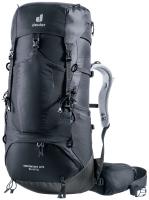
Deuter Aircontact Lite 35 + 10 SL Trekking Backpack
₱11,400.00
Buy on Lazada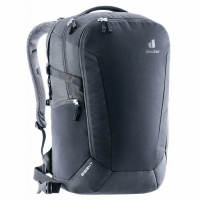
Deuter Gigant 32
₱6,850.00
Buy on Lazada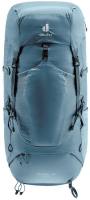
Deuter Aircontact Lite 50 + 10 Trekking Backpack
₱12,100.00
Buy on Lazada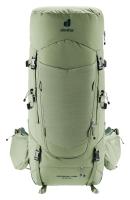
Deuter Aircontact Core 45+10SL Hiking Pack
₱17,400.00
Buy on Lazada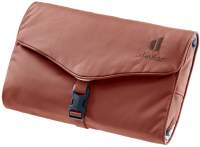
DEUTER Wash Bag l (1L) – Toiletry Travel Kit Pouch Bag Organizer Unisex
₱1,300.00
Buy on Lazada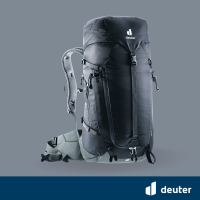
Deuter Trail 30 Hiking Backpack
₱9,300.00
Buy on Lazada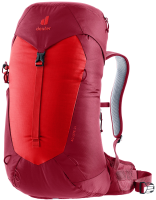
Deuter AC Lite 24
₱6,800.00
Buy on Lazada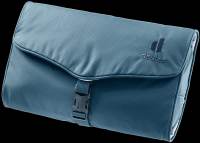
DEUTER Wash Bag ll (2.5L) – Toiletry Travel Kit Pouch Bag Organizer Unisex
₱1,980.00
Buy on LazadaAbout Deuter
Deuter (stylized as deuter) is a German outdoor equipment manufacturer best known for its hiking and trekking backpacks, bike packs, child carriers, travel bags, and sleeping bags. Established in 1898 in Augsburg, Bavaria, by Hans Deuter, the company evolved from a textile and mailbag producer into one of Europe’s most prominent technical backpack specialists. Today, Deuter Sport GmbH is headquartered in Gersthofen, near Augsburg, and operates as part of the German Schwan-Stabilo group.1
The brand is closely associated with mountaineering, hiking, trekking, cycling, and outdoor exploration, placing particular emphasis on carrying comfort, ergonomic fit, durability, and technical innovation. Deuter positions itself as a pioneer in mountain sports and a leading European backpack manufacturer.2
Basic information
| Category | Information |
|---|---|
| Brand | Deuter / deuter |
| Company | Deuter Sport GmbH |
| Founded | 1898 |
| Founder | Hans Deuter |
| Origin | Augsburg, Bavaria, Germany |
| Current headquarters | Gersthofen, Bavaria, Germany |
| Industry | Outdoor equipment / sporting goods |
| Best known for | Backpacks and sleeping bags |
| Major categories | Hiking, trekking, mountaineering, cycling, travel, lifestyle, child carriers |
| Parent group | Schwan-Stabilo |
| Current managing director | Robert Schieferle |
| Official website | deuter.com |
Deuter Sport GmbH is officially registered in Augsburg, with its headquarters located at Daimlerstraße 23, 86368 Gersthofen. The company remains part of the Schwan-Stabilo group.3
Origins: 1898
Deuter’s history began in 1898 when Hans Deuter established the Mechanische Segeltuch- und Leinenweberei—a mechanized sailcloth and linen weaving company—in Augsburg-Oberhausen, Bavaria.
The enterprise initially had little connection to modern high-performance hiking gear. Its early business focused on sailcloth, linen, sacks, and other heavy textile products. A significant early client was the Royal Bavarian Postal Service, for which Deuter supplied mailbags and post sacks. This contract allowed the company to develop extensive experience in manufacturing strong, durable textile containers long before it became an outdoor brand.4
This industrial background is essential to understanding Deuter, as its modern expertise in backpacks stems from a much older tradition of industrial textile manufacturing and load-carrying products.
From textiles to outdoor equipment
During the early 20th century, Deuter expanded beyond basic textile production. The company manufactured a variety of items including:
- Sacks and bags
- Blankets
- Tents
- Tarpaulins
- Military equipment
- Backpacks
- Luggage
- Vehicle-related covers
By the early 1900s, Deuter had also entered the tent-rental business. Production subsequently expanded, eventually establishing the company as a major German manufacturer of bags and outdoor equipment.5 Rather than being founded specifically as a hiking backpack company, Deuter gradually transformed into one over several decades.
Deuter and mountaineering
The link between Deuter and European mountaineering became particularly significant during the 20th century. One of the brand’s most notable historical associations occurred in 1953, when German-Austrian mountaineer Hermann Buhl carried a Deuter Tauern backpack during his celebrated solo first ascent of Nanga Parbat, an 8,125-metre Himalayan peak.
The expedition also utilized other Deuter equipment, including bags and tents.6 This achievement was pivotal for the brand’s reputation, shifting its perception from a general bag manufacturer to a provider of serious expedition equipment for extreme environments. This connection between professional mountaineering and product development remains central to Deuter’s identity.
The Tauern and backpack technology
The Tauern model stands as one of the most important products in Deuter’s history. The company continued to experiment with backpack construction and materials, eventually adopting synthetic fabrics as they became available.
In 1968, Deuter introduced its first nylon backpacks. Nylon offered distinct advantages over traditional natural fabrics regarding weight, durability, and weather resistance, accelerating the transition toward modern technical backpacks.7 Deuter’s historical development can be viewed as a progression from canvas and linen to synthetic fabrics, followed by technical backpack construction, ergonomic carrying systems, and finally specialized outdoor packs.
The Aircomfort revolution
A defining innovation arrived in 1984 with the development of the Aircomfort back system. Instead of having the backpack sit directly against the user’s back, Deuter engineered a suspended mesh system that created an air space between the wearer and the pack.
The concept addressed a classic problem in backpack design: heat and perspiration buildup against the back. By keeping the load supported while allowing increased air circulation, the system significantly improved comfort. Deuter describes the original Aircomfort system as a new form of suspended mesh back construction that helped revolutionize the backpack market.8 It subsequently became one of the technologies most strongly associated with the brand.
Specialized backpack development
During the late 1980s and 1990s, Deuter increasingly involved mountaineers, mountain guides, and athletes in product development. Collaborating with experienced outdoor professionals allowed the company to test products under demanding real-world conditions.9 This philosophy led to specialized products for distinct activities:
Hiking and trekking
Packs designed for everything from day hikes to multi-day trekking expeditions.
Mountaineering
Technical packs engineered for climbing, alpine travel, and high-altitude expeditions.
Cycling
Deuter entered the bike-backpack market in 1990–1991. Its first dedicated bike backpack, the BIKE 1, incorporated the Airstripes back system.10
Ski and snow sports
Technical packs designed around skiing, snowboarding, and winter mountain activities.
Child carriers
Backpacks designed to carry children, combining load-bearing technology with child-support systems.
Travel and everyday use
The brand eventually expanded beyond purely technical outdoor equipment into urban, travel, school, and lifestyle backpacks.
Sleeping bags
While backpacks remain Deuter’s most recognizable category, the company is also a significant sleeping-bag manufacturer. Deuter entered this market in 1995.11
The range expanded from children’s models to highly technical four-season and expedition-oriented down sleeping bags. Consequently, the company identifies backpacks and sleeping bags as its two principal areas of specialization.12
Women’s-specific products
Deuter has been notable for developing backpacks specifically designed around women’s body proportions. The Ladies’ Tauern backpack was introduced as early as 1959.13
Later, the company developed its SL — Slim Line concept. Rather than simply producing smaller versions of men’s backpacks, SL products were engineered around differences in body shape and fit. In 2005, Deuter established an SL development team consisting of experienced female outdoor users, professional athletes, and product designers, emphasizing a development process that directly involved women.14
Major back-system technologies
Deuter has built a strong reputation for backpack carrying systems. While different product families utilize specific technologies, the general philosophy separates backpack functions into load distribution, ventilation, stability, adjustability, ergonomic fit, and freedom of movement.
Historically significant systems include:
Aircomfort
Suspended mesh intended to maximize ventilation between the backpack and the user’s back.
Airstripes
A system using shaped padding channels to combine support with airflow.
Vari-Quick
An adjustable system allowing the torso length of a backpack to be customized to the wearer.
VariFlex
A sophisticated load-transfer approach used on larger trekking and expedition packs.
SL
Women’s-specific fit and dimensions.
These systems illustrate that Deuter treats the backpack as a piece of ergonomic equipment rather than merely a fabric container.
Manufacturing
Although Deuter is a German outdoor brand, modern products are not generally manufactured in Germany. In 1991, the company partnered with the manufacturing firm Duke because increasingly complex technical textile products could no longer be produced competitively in Germany. Backpack manufacturing subsequently developed in Vietnam.15
Deuter is therefore accurately described as a German-designed and German-headquartered outdoor brand with an international manufacturing and supply chain. The company maintains relationships with manufacturing and material suppliers and publishes information regarding its sourcing and production standards.16
Acquisition by Schwan-Stabilo
A major corporate milestone occurred in 2006 when Deuter was acquired by the German Schwan-Stabilo group. Historically known for writing instruments and cosmetics, Schwan-Stabilo’s acquisition of Deuter marked a significant expansion into the outdoor industry.17
Today, Deuter remains part of Schwan-Stabilo’s outdoor portfolio alongside brands such as Ortovox. Importantly, Deuter continues to operate independently as Deuter Sport GmbH rather than being absorbed into the Stabilo brand.18
Current headquarters
Deuter’s headquarters are located in Gersthofen, near Augsburg in Bavaria. The official address is:
Deuter Sport GmbH
Daimlerstraße 23
86368 Gersthofen
Germany
The headquarters facility also includes a Deuter shop.19 This location signifies the company’s continued connection to the Augsburg/Bavarian region where it originated in 1898.
Product categories
Modern Deuter offers a broad product portfolio extending well beyond its original expedition backpacks. Current categories include:
Backpacks
- Hiking backpacks
- Trekking backpacks
- Backpacking packs
- Mountaineering packs
- Alpine packs
- Ski/snowboard packs
- Bike backpacks
- Lifestyle backpacks
- Travel packs
- Children’s backpacks
- School backpacks
Bags and accessories
- Duffel bags
- Bike bags
- Hip bags
- Rain covers
- First-aid kits
- Travel accessories
Child carriers
Technical child carriers designed for hiking and outdoor activities.
Sleeping bags
- Down sleeping bags
- Synthetic sleeping bags
- Children’s sleeping bags
- Lightweight sleeping bags
- Expedition-oriented sleeping bags
The breadth of the current range is reflected in Deuter’s product catalog and sustainability listings.20
Sustainability and environmental policy
Sustainability has become integral to Deuter’s corporate identity. The company’s approach covers the entire product lifecycle: design → materials → manufacturing → transportation → use → repair. Rather than focusing solely on recycled fabrics, Deuter emphasizes durability, repairability, responsible materials, and supply-chain standards.
bluesign®
Deuter has worked with the bluesign® system since 2008. This system examines textile manufacturing processes—including environmental impact, chemicals, worker safety, and resource use—rather than simply testing the finished product.21
Fair Wear Foundation
The company is associated with the Fair Wear Foundation, which focuses on improving labor conditions in garment and textile supply chains.
Recycled materials
Deuter has introduced products using recycled materials, including the UP series, whose fabrics were made from 100% recycled materials.22
PFAS
Deuter states that its products have been PFAS-free since 2020, replacing older water- and dirt-repellent treatments with PFAS-free DWR finishes.23
Repair
Extending product life through repair rather than replacement is a key component of the company’s sustainability strategy.24
Brand characteristics
Deuter is particularly associated with several defining characteristics:
- Backpack ergonomics: Fit and load distribution are central to the brand.
- Ventilation: Aircomfort and related systems are major parts of its technical identity.
- Durability: Emphasis on long product life and materials capable of handling demanding outdoor use.
- Mountain heritage: History deeply connected with Alpine climbing and Himalayan expeditions.
- Technical specialization: Historical strength lies in functional outdoor equipment rather than fashion.
- Wide specialization: Distinct packs for hiking, trekking, cycling, mountaineering, skiing, travel, and everyday use.
- German engineering identity: Retains a strong German/Bavarian engineering and design identity despite international manufacturing.
Market positioning
Deuter occupies a distinct position in the outdoor market. It is generally more technical and outdoor-oriented than mainstream lifestyle backpack brands, yet its products range from specialized mountaineering equipment to everyday commuter packs.
| Segment | Deuter’s position |
|---|---|
| Fashion backpacks | Low–medium focus |
| School backpacks | Medium |
| Urban/lifestyle | Medium |
| Travel | Medium–high |
| Hiking | Very strong |
| Trekking | Very strong |
| Cycling | Very strong |
| Mountaineering | Very strong |
| Expedition | Strong |
| Sleeping bags | Very strong |
Its strongest identity remains technical outdoor carrying equipment.
Comparison with other outdoor brands
Deuter is often considered alongside brands such as:
- Osprey — Particularly strong in hiking, trekking, and travel packs
- Gregory — Known for technical backpack fit and suspension
- The North Face — Broader lifestyle and apparel presence
- Patagonia — Stronger emphasis on clothing and environmental activism
- Arc’teryx — Highly technical premium mountain equipment
- Vaude — Another major German outdoor brand
- Ortovox — Alpine equipment and apparel with strong avalanche/safety heritage
- Fjällräven — Outdoor equipment with a stronger lifestyle/design identity
Deuter’s distinguishing territory is its long history specifically centered around backpacks and carrying systems.
Reputation among hikers
Deuter’s reputation among outdoor users derives less from fashion and more from long-term practical experience. Serious hiking backpacks must solve the problem of carrying heavy loads for hours without excessive discomfort, overheating, or instability.
Technologies such as Aircomfort, Airstripes, Vari-Quick, SL, and adjustable suspension systems are central to addressing this challenge. The brand’s history of testing products with mountain guides, climbers, and professional outdoor athletes further reinforces its technical credibility.
Historical timeline
| Year | Milestone |
|---|---|
| 1898 | Hans Deuter establishes the company in Augsburg |
| Early 1900s | Supplies mailbags to the Royal Bavarian Postal Service |
| 1919 | Company expands significantly into bags, tents, and related products |
| 1953 | Hermann Buhl uses a Deuter Tauern pack during the first ascent of Nanga Parbat |
| 1959 | Ladies’ Tauern women’s-specific backpack introduced |
| 1968 | Deuter introduces nylon backpacks |
| 1971 | Becomes Germany’s leading manufacturer of backpacks, suitcases, and bags |
| 1984 | Aircomfort back system introduced |
| 1990/91 | Dedicated bike backpack developed and launched |
| 1991 | Manufacturing partnership established in Vietnam |
| 1995 | Deuter enters sleeping bags market |
| 1999 | Futura series introduced |
| 2001 | Deuter USA established |
| 2005 | Shield back-protection system introduced; SL development advances |
| 2006 | Acquired by Schwan-Stabilo |
| 2008 | Begins applying bluesign® system |
| 2020 | PFAS-free products introduced; recycled-material UP series launched |
| 2020 | Robert Schieferle becomes managing director |
| 2021 | Gersthofen headquarters receives ClimatePartner certification |
| 2023 | Brand celebrates 125 years |
| 2026 | Continues operating as Deuter Sport GmbH under Schwan-Stabilo |
This timeline combines Deuter’s official historical record with current corporate information.25
Corporate philosophy
Deuter has historically been built around the concept of freedom through better carrying equipment. Its brand philosophy emphasizes individuals who wish to push physical limits, explore new places, and experience mountains, while maintaining responsibility toward nature.26
The core concept can be summarized as technical equipment that allows people to carry what they need while moving freely through the outdoors. This philosophy explains why backpacks—rather than clothing, footwear, or tents—remain at the center of the brand.
Overall assessment
Deuter is one of the historic names in European outdoor equipment. Its significance stems from a combination of age, specialization, and technical development. Founded in 1898, the company eventually became a specialist in one of the most fundamental pieces of outdoor gear: the backpack.
Its historical progression—from mailbags and canvas products to expedition equipment, technical hiking backpacks, cycling packs, and modern sustainable outdoor equipment—is notably coherent. Today, Deuter is best understood as a German outdoor-equipment company whose identity is built around backpack ergonomics, mountain sports, and long-term product development. Its current corporate structure is Deuter Sport GmbH, headquartered in Gersthofen and owned within the Schwan-Stabilo group, with products sold internationally.27
References
- Our history
- Legal Notice | deuter – Company Information
- Our brand
- Unsere Historie – 125 Jahre deuter Bergsport-Geschichte
- Unsere Historie
- HISTORY(Deuter About)- Deuterドイター公式サイト|イワタニ・プリムス株式会社
- Deuter
- About Deuter – Deuter Brasil
- Our history
- Innovation: deuter SL
- Our manufacturing partners | deuter
- Our deuter shop in Gersthofen
- bluesign® products|deuter
- Corporate philosophy
- Materials
- Responsibility – Get The Facts
- Corporate philosophy – Deuter
- Materials – Deuter
- deuter Datenschutzerklärung
- Deuter Sold to Schwan-STABILO | SGB Media Online
- Unsere Historie
- Unsere Historie
- Our standards
- Advice – Get The Facts
- Über deuter – Marke, Werte & Bergsport-Tradition
- Sustainable development goal 15
- deuter Promise