Shop on Lazada
Diptyque products

PERFUME DECANT Dptq Orpheon Eau de Parfum
₱1,950.00
Buy on Lazada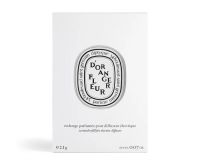
Car Aromatherapy Diptyque Solid Perfume Premium Black Ribbon Car Vent Car Hanging Fragrance
₱935.05₱1,924.00
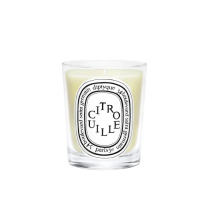
Official Authentic Diptyque Aromatherapy Candle 190g
₱1,440.00₱2,500.00
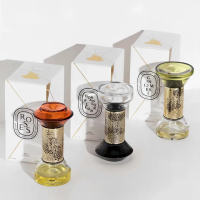
Official Authentic Diptyque sablier hourglass diffuser refill Home Diffuser 75ml BAIES#FIGUIER#Orange Blossom#Rose#34#Ginger#Tuberose#Mimosa
₱3,168.00₱5,000.00
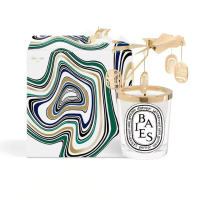
Latest Arrival Diptyque Aromatherapy Candle 190g
₱2,497.92₱4,100.00
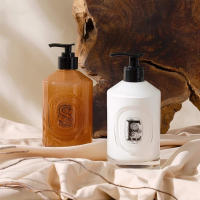
DIPTYQUE Softening hand wash/Lotion 350ml
₱4,025.32₱6,500.00
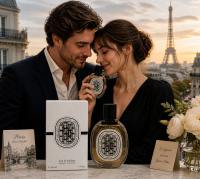
Diptyque Orpheon Eau de Toilette Unisex 100ml
₱7,000.00₱11,500.00
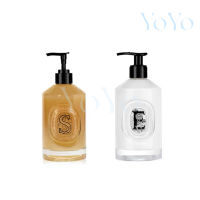
DIPTYQUE SOFTENING Exfoliating Hand Wash/lotion 350ml
₱5,145.52₱7,156.00
About Diptyque
Diptyque is a French luxury fragrance and lifestyle house established in Paris in 1961 by Christiane Montadre-Gautrot, Desmond Knox-Leet, and Yves Coueslant.1 The Maison is renowned for its scented candles, perfumes, home fragrances, and decorative objects, having cultivated a distinctive identity at the intersection of French luxury, perfumery, art, travel, and interior design.2 Unlike traditional perfume houses that originated as fashion or beauty brands, Diptyque began as an artists’ boutique and curiosity cabinet, with fragrance gradually emerging as the central expression of its creative universe.3
Quick facts
| Diptyque | |
|---|---|
| Full name | Diptyque |
| Founded | 1961 |
| Place founded | Paris, France |
| Founders | Christiane Montadre-Gautrot, Desmond Knox-Leet, Yves Coueslant |
| Original address | 34 boulevard Saint-Germain, Paris |
| Industry | Luxury goods / fragrance / beauty / home |
| Best known for | Scented candles, perfumes, home fragrances |
| Other categories | Bath & body, skincare, home-care products, decoration |
| Positioning | Luxury / niche or artistic fragrance |
| Signature aesthetic | Parisian, artistic, botanical, literary, travel-inspired |
| Current scale | About 1,300 points of sale in 56 countries, including 150 Diptyque boutiques (2025 impact report)2 |
| Parent/shareholder context | Manzanita Capital has been a shareholder since 20052 |
According to its 2025 impact report, Diptyque operates across four principal product categories: Perfumes; Candles & Home; Bath & Body; and Decoration.2 The brand maintains approximately 1,300 points of sale across 56 countries. Manzanita Capital has served as a shareholder of Diptyque since 2005.2
Origins: Three artists in Paris
The history of Diptyque predates its status as a fragrance house. In the late 1940s, Desmond Knox-Leet, a painter trained at the École des Beaux-Arts, and Christiane Montadre-Gautrot, an interior architect, formed a creative partnership in Paris.3 They designed textile patterns for companies such as Liberty and Sanderson before being joined by Yves Coueslant, a decorator and administrator who had grown up in Indochina.3
The trio shared a profound interest in art, architecture, decorative objects, nature, travel, textiles, craftsmanship, and antiques. This combination of passions became fundamental to the DNA of Diptyque. Rather than adopting a conventional retail mindset, they approached objects as sources of imagination and memory.3
1961: The first boutique
In 1961, the three founders opened a shop at 34 boulevard Saint-Germain in the Saint-Germain-des-Prés area of Paris.3 The original concept was unconventional for its era, functioning simultaneously as an artist’s studio, an interior-design shop, and a cabinet of curiosities. The founders sold their own creations alongside objects discovered during their travels, establishing a reputation for unusual fabrics, decorative items, antiques, and cultural artefacts.1
Diptyque was thus born as a lifestyle and artistic concept before becoming a fragrance brand. The original Saint-Germain boutique remains operational today, and the Maison states that its historical archives are housed on the upper floors, continuing to inspire its creative teams.3
Etymology and visual identity
The name “Diptyque” derives from the French word diptyque, which in turn comes from the Greek diptychos, meaning something composed of two panels. Historically, a diptych referred to an artwork or object consisting of two hinged panels. The name reflects the brand’s interplay between complementary dualities: art and commerce, image and fragrance, past and modernity, nature and culture, and object and experience.
Visually, Diptyque is distinguished by black-and-white labels, oval frames, engraved imagery, distinctive typography, and dense decorative compositions featuring botanical and architectural references. The oval label has become one of the most recognizable identifiers in luxury home fragrance. The founders’ background in graphic arts helped establish this visual language, which balances image and text, black and white, and colour and pattern.3
Scented candles and the birth of a category
A pivotal moment in the history of Diptyque occurred in 1963 when the founders began creating scented candles.3 At the time, candles were primarily utilitarian objects associated with illumination or religious observance. Diptyque reconceptualised the candle as an aesthetic, decorative, and sensory object. Early fragrances included Aubépine (hawthorn), Cannelle (cinnamon), and Thé (tea).3
This approach was revolutionary: a candle could transform the atmosphere of a room and evoke a specific place, landscape, or memory. This innovation laid the foundation for the modern luxury scented-candle category. Diptyque describes the candle as one of the Maison’s defining signatures and an icon of a new art de vivre.3 By treating fragrance as an element of interior design, the candle became a synthesis of scent, object, decoration, and mood—a formula that remains central to the brand.
Expansion into personal fragrance
Diptyque expanded from home fragrance into personal fragrance in 1968 with the introduction of its first eau de toilette, L’Eau.3 Inspired by a 16th-century recipe, it featured ingredients including cinnamon, rose, clove, geranium, and sandalwood. This launch marked the beginning of Diptyque as a serious fragrance house.3
Unlike mainstream perfume brands that often build narratives around celebrity, glamour, fashion, or seduction, Diptyque emphasises landscapes, memories, materials, plants, travel, literature, and art. This philosophical distinction is a primary reason the brand is associated with niche or artistic perfumery.
Creative philosophy
The identity of Diptyque rests on three major sources of inspiration:
Nature
Plants, flowers, trees, fruits, woods, spices, and landscapes appear consistently throughout the fragrance portfolio. The founders maintained a strong relationship with the natural world, and the company cites nature as a fundamental source of its creative identity.3
Travel
Travel is equally significant to the Maison. The founders collected memories and objects from various locations, and these experiences serve as raw material for both fragrances and illustrations. The brand’s storytelling often invites consumers to travel through scent rather than simply wear a perfume.
Art
Art is perhaps the most distinctive element of the Diptyque universe. The Maison treats fragrance almost as a form of visual art, with perfumers collaborating closely with illustrators, designers, and artists. Fragrance and image are developed as interconnected forms of expression.3
Comparison with traditional luxury perfume houses
Diptyque differs from traditional luxury perfume models in several key respects:
| Traditional luxury perfume model | Diptyque |
|---|---|
| Fashion-led | Art/design-led |
| Celebrity campaigns | Artistic storytelling |
| Strong emphasis on seduction | Strong emphasis on imagination |
| Perfume as personal identity | Perfume as memory/journey |
| Fragrance first | Fragrance + object + environment |
| Fashion-house heritage | Artist/designer heritage |
| Glamour | Intellectual/bohemian sophistication |
While Diptyque is unequivocally a luxury brand today, its origin story is fundamentally artistic rather than fashion-driven.3
Iconic fragrances
Diptyque maintains a large fragrance portfolio, with several names achieving iconic status:
Philosykos
One of the best-known fragrances, Philosykos revolves around the fig tree and evokes the landscape of Greece. Its name translates roughly to “friend of the fig tree” in Greek. The scent exemplifies the Diptyque approach: transforming a plant into a landscape, a memory, and ultimately a perfume.
Do Son
Inspired by Yves Coueslant’s childhood memories of Vietnam, Do Son is particularly associated with tuberose. The fragrance connects personal memory with travel and place, constructing a geographical narrative around floral notes rather than merely describing them.
Baies
Baies is one of the brand’s most recognizable home fragrances. Its blackcurrant-and-rose character has become synonymous with Diptyque candles and is considered a defining scent of the brand’s home fragrance experience.
Figuier
Another fig-based fragrance, Figuier explores the smell of the fig tree and its surrounding environment. It demonstrates the brand’s interest in reconstructing entire olfactory landscapes rather than reproducing single ingredients.
Tam Dao
Focusing on woods, particularly sandalwood and cedar, Tam Dao draws inspiration from Vietnam and Yves Coueslant’s travels. It represents the more meditative, woody facet of the Diptyque portfolio.
Eau Rose
A modern interpretation of the rose, Eau Rose approaches familiar materials from unexpected angles. Rather than treating rose as a traditional floral note, Diptyque explores different facets of the flower and its botanical environment.
Fragrance style and perfumers
There is no single “Diptyque smell.” Fragrances may be green, woody, floral, powdery, spicy, aromatic, fresh, earthy, smoky, resinous, or fruity. However, they share a particular artistic sensibility. Rather than presenting a fragrance as a luxurious floral perfume, Diptyque is more likely to frame it as the memory of a garden, a Mediterranean landscape, a library, or a journey. The brand sells narratives through scent.
Diptyque has collaborated with numerous respected perfumers, including Olivia Giacobetti, Olivier Pescheux, and Fabrice Pellegrin. The brand’s philosophy places considerable emphasis on collaboration between perfumer and artist or illustrator, reinforcing its perception as a creative house rather than solely a commercial manufacturer.3
Product categories
Diptyque has expanded substantially beyond candles. Its 2025 corporate impact report officially groups the business into four categories:2
Fragrances
- Eau de parfum
- Eau de toilette
- Hair mist
- Solid perfume
- Body fragrance products
- Refills
Candles & Home
- Scented candles
- Large candles
- Diffusers
- Room sprays
- Hourglass diffusers
- Car diffusers
- Electric diffusers
Bath & Body
- Hand wash
- Hand lotion
- Shower products
- Body care
- Hair products
- Skincare
- Solid perfumes
Decoration
- Decorative objects
- Vases
- Candle accessories
- Household products
- Objects connected to Diptyque’s artistic universe
La Droguerie
La Droguerie is a newer extension that transforms ordinary household chores into sensory experiences. The collection includes multi-surface cleaner, dishwashing liquid, and odour-removing products. Diptyque states that La Droguerie glass packaging is refillable and contains 60% recycled material, while certified products contain 99% ingredients of natural origin.4 Conceptually, this line extends the art de vivre philosophy to domestic maintenance.
Sustainability and refillability
Sustainability has become an increasingly important component of Diptyque’s contemporary strategy. The company is working towards recyclable, refillable, or reusable packaging; reducing cellophane; expanding fragrance and candle refills; using recyclable materials; offering product repair; ensuring responsible sourcing; and increasing supply-chain transparency.
According to its sustainability information, 94% of the Diptyque product range is recyclable, refillable, or reusable, while 26% is refillable.4 The fragrance-refill service has expanded significantly, with more than 253 outlets offering refills.4 The brand’s stated 2028 ambition includes making 100% of containers recyclable, refillable, or reusable and eliminating cellophane from product packaging.4
Global expansion
Although deeply associated with Paris, Diptyque is now an international luxury brand. Its 2025 impact report indicates a global footprint of approximately 1,300 points of sale across 56 countries, including 150 dedicated boutiques.2 These boutiques are distributed as follows:
- 36 in the Americas
- 70 in Asia-Pacific
- 39 in Europe
- 5 in the Middle East
The company also reported 1,240 employees and eight subsidiaries.2 Asia has become particularly important to the brand; for example, Diptyque opened its first Japanese flagship in Omotesando, Tokyo, in October 2025.5
Ownership and business development
Diptyque has retained the identity of a creative Maison while growing into a significant international luxury business. Manzanita Capital, a specialist investment firm, has been a shareholder since 2005.2 This period was instrumental in transforming Diptyque from a relatively niche Parisian fragrance house into a globally recognized luxury brand. The ongoing challenge remains scaling internationally while preserving the feeling of a small artistic Parisian Maison.
Market positioning and cultural significance
Diptyque traditionally appeals to consumers who value design, fragrance, craftsmanship, understated luxury, interiors, art, travel, individuality, and niche perfumery. Its appeal is less about overt status signalling and more about cultural and aesthetic sophistication. Consequently, Diptyque occupies a unique position between perfume brand, home brand, design brand, and luxury lifestyle brand.
Comparative positioning
| Brand | Core identity |
|---|---|
| Chanel | Fashion + classic French luxury |
| Dior | Fashion + beauty + luxury |
| Hermès | Leather + fashion + craftsmanship |
| Jo Malone London | Fragrance + understated British luxury |
| Le Labo | Contemporary niche perfumery + urban minimalism |
| Byredo | Modern art/design + fragrance |
| Aesop | Skincare + design + lifestyle |
| Maison Francis Kurkdjian | High perfumery |
| Diptyque | Art + travel + nature + fragrance + home |
Diptyque’s closest conceptual competitors include Byredo, Le Labo, and Jo Malone, although their histories and aesthetics differ significantly.
The candle as status symbol
Diptyque transformed the scented candle from an ordinary household product into a luxury lifestyle object. The recognizable black-and-white candle became associated with sophisticated interiors, Parisian taste, fashion editors, design-conscious consumers, luxury hotels, and “quiet luxury.” Its restrained appearance communicates knowledge and taste rather than overt expense, representing a powerful form of luxury branding.
Turning fragrance into culture
Diptyque’s overarching strategy can be summarised as turning fragrance into culture. The brand builds value through storytelling, art, packaging, heritage, craftsmanship, and sensory experience. A Diptyque product possesses multiple layers of value: functional (it smells good), aesthetic (it looks beautiful), emotional (it evokes a memory), cultural (it represents a particular taste), and luxury (it communicates exclusivity).
The term “Maison” is used deliberately to suggest heritage, creative authorship, craftsmanship, continuity, and artistic identity.3 Ultimately, Diptyque sells an atmosphere and a worldview as much as it sells perfume, using fragrance and beautiful objects to transform memories, places, and imagination into an art of living.
Timeline
- 1949: Desmond Knox-Leet and Christiane Montadre-Gautrot begin their creative relationship in Paris.3
- 1961: Christiane Montadre-Gautrot, Desmond Knox-Leet, and Yves Coueslant open Diptyque at 34 boulevard Saint-Germain.3
- 1963: Diptyque introduces its first scented candles, including Aubépine, Cannelle, and Thé.3
- 1968: The Maison launches its first eau de toilette, L’Eau.3
- Later decades: Diptyque develops a broader perfume portfolio and becomes increasingly associated with artistic and niche perfumery.
- 2005: Manzanita Capital becomes a shareholder.2
- 21st century: Diptyque expands internationally while broadening its categories into body care, home fragrance, and decoration.
- 2020s: The brand accelerates global expansion and develops refill, recycling, repair, and eco-design initiatives.4
- 2025: Diptyque reports approximately 1,300 points of sale in 56 countries and 150 boutiques.2