Shop on Lazada
Doña Maria products
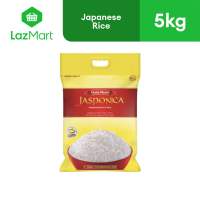
Dona Maria Jasponica White Aromatic with Japanese Rice Texture 5kg | dona maria best seller high quality affordable authentic
₱627.20₱640.00
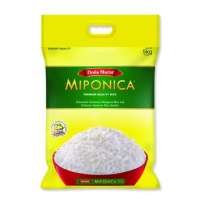
Dona Maria Miponica White Rice 5kg
₱645.00
Buy on Lazada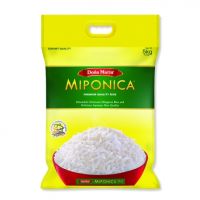
Doña Maria Miponica White 5kg
₱595.20₱640.00
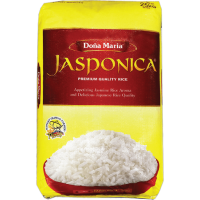
Doña Maria Jasponica Premium Rice White 25kg
₱3,899.00₱4,299.00
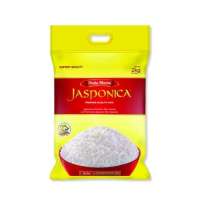
Dona Maria Jasponica White Rice 2kg
₱285.00
Buy on Lazada
Doña Maria Jasponica Premium Rice White 10kg
₱1,899.00
Buy on Lazada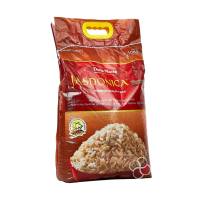
Doña Maria Jasponica Brown Rice 10kg
₱1,999.00₱3,999.00
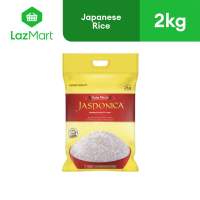
Dona Maria Jasponica White Aromatic with Japanese Rice Texture 2KG
₱262.26₱282.00
About Doña Maria
Doña Maria is a premium rice brand produced by SL Agritech Corporation (SLAC), a Philippine agricultural company specializing in hybrid rice research, seed development, production, and premium-quality rice. The brand is particularly associated with proprietary hybrid rice varieties designed to combine desirable characteristics of established Asian rice types, such as the aroma of Jasmine rice and the eating qualities of Japanese rice.
Overview
| Field | Information |
|---|---|
| Brand | Doña Maria |
| Industry | Food & agriculture |
| Category | Rice / premium packaged rice |
| Country of origin | Philippines |
| Owner / producer | SL Agritech Corporation |
| Parent group | Sterling Paper Group of Companies |
| Known for | Premium and hybrid rice varieties |
| Notable varieties | Jasponica, Miponica, including brown-rice variants |
| Main market | Philippines |
| International markets | Middle East, North America, Asia-Pacific and other markets |
SLAC states it was established in September 2000 under the Sterling Paper Group of Companies, growing around the research and development of hybrid rice suitable for Philippine and tropical conditions. The company describes itself as the first and largest hybrid rice seed company in the Philippines and tropical Asia.
History
The history of Doña Maria is closely linked to the development of hybrid rice technology in the Philippines. The founders of SL Agritech sought to develop rice technology appropriate for tropical conditions, drawing inspiration from China’s experience with hybrid rice. The company collaborated with Professor Yuan Longping, the renowned Chinese agricultural scientist often referred to as the “Father of Hybrid Rice,” whose involvement helped shape SLAC’s early direction in hybrid-rice research.
The company eventually expanded beyond producing hybrid seeds to include the production and marketing of premium-quality rice for consumers, leading to the creation of the Doña Maria brand. According to contemporary reporting, Henry Lim Bon Liong, chairman and CEO of SL Agritech, named the brand in honor of his mother, Maria.1
By the late 2000s, Doña Maria was positioned as an emerging Filipino premium-rice brand, with products available through major supermarkets and rice retailers in Metro Manila.1
Brand name significance
The name gives the brand a distinctly Filipino and traditional character. “Doña” is a Spanish honorific historically used in the Philippines, while “Maria” refers to Henry Lim’s mother. Rather than simply describing a type of rice, Doña Maria functions as a personal and heritage-oriented brand name. This choice helped differentiate the product from generic rice varieties and provided the premium product line with a recognizable identity.
Products and varieties
A defining characteristic of Doña Maria is its use of hybrid rice varieties.
Jasponica
Doña Maria Jasponica combines characteristics of Jasmine rice and Japanese rice. The white-rice version is described as naturally fragrant with a soft texture. Historically, the product has been promoted for its combination of Jasmine-like fragrance, a soft and slightly sticky texture, Japanese-style eating quality, and suitability for everyday Filipino meals. The name “Jasponica” reflects this combination of Jasmine and Japonica characteristics.
Jasponica Brown
Doña Maria also developed Jasponica Brown Rice, combining the characteristics of its Jasponica hybrid with brown rice. Earlier descriptions emphasized its higher fiber content and naturally nutty character compared with white rice.2
Miponica
Doña Maria Miponica is another hybrid variety that combines characteristics of Milagrosa rice, a traditional Philippine variety, with Japanese rice. It was developed to provide long, slender, and relatively translucent grains while retaining a soft, fluffy, and aromatic eating quality.1 The name similarly reflects its heritage: Milagrosa + Japonica.
Miponica Brown
The brand has also marketed Miponica Brown Rice, extending the Miponica concept into the brown-rice category. Material from the Philippine Rice Research Institute identifies Jasponica Brown and Miponica Brown as Doña Maria’s primary brown-rice variants.2
Differentiation and technology
Doña Maria’s positioning relies less on being an ordinary commodity rice and more on specific rice varieties, breeding technology, eating quality, and consistency. SL Agritech operates research and development programs focused on developing proprietary hybrid seeds and superior-quality rice. The company’s model connects breeding and seed development with rice production and processing, allowing it to market rice according to specific branded varieties rather than conventional classifications like “white rice” or “brown rice.”
This distinction is significant in the Philippine market, where rice is a staple food and consumers traditionally purchase based on grain appearance, aroma, texture, cooking characteristics, and price.
Hybrid rice vs. GMO
Hybrid rice is produced by crossing genetically distinct parent lines to produce offspring with desirable characteristics. It is not synonymous with genetically modified (GMO) rice. Philippine government-related reporting has described Doña Maria’s products as hybrid varieties rather than GMO products.
SLAC’s approach involves research, breeding, seed production, cultivation, harvesting, processing, and distribution. This vertically integrated approach is considered one of the company’s distinguishing characteristics.1
Farming and sourcing
Doña Maria rice has historically been associated with rice-growing areas in Luzon, including Laguna and Nueva Ecija. In its earlier development, SL Agritech used its rice technology farm in Laguna for cultivation and research while working with farmers in Nueva Ecija and other parts of Luzon.1
More recently, SLAC has reported working with farmers in Nueva Ecija, Laguna, and Mindoro for its brown-rice production. A Philippine News Agency report cited the company as working with more than 1,000 farmers across approximately 5,000 hectares.
Market positioning
Doña Maria occupies the premium segment of the Philippine rice market. Its value proposition summarizes as local Filipino rice combined with hybrid-rice technology and premium eating quality. This differentiates it from inexpensive commodity rice while providing consumers with a locally produced alternative to imported premium varieties. When the brand was introduced, SL Agritech specifically emphasized making premium rice more accessible to ordinary Filipino consumers rather than restricting it to the luxury segment.1
Distribution
Doña Maria has expanded substantially beyond its initial Metro Manila market. The brand’s current website states that it is available in more than 1,000 groceries and supermarkets across the Philippines. International markets listed include Saudi Arabia, Kuwait, Oman, the UAE, Lebanon, Bahrain, Qatar, Jordan, Canada, the United States, Australia, India, and Singapore.
SL Agritech has also described itself as a Philippine exporter of high-quality rice to markets including the Middle East, United States, and Australia.
Brand identity
Doña Maria’s identity is built around several themes:
- Filipino heritage: The brand is named after the mother of its founder/CEO.
- Premium quality: It competes in the higher-quality rice segment.
- Rice innovation: Hybridization and rice research are central to the brand’s history.
- Asian culinary characteristics: Varieties draw from Jasmine, Japanese/Japonica, and Philippine rice traditions.
- Health-conscious choices: Brown-rice products give the brand a presence in the health-oriented segment.2
- Accessibility: Despite its premium positioning, the brand has historically sought to make premium rice accessible to Filipino consumers.
Corporate background
Doña Maria is not an independent rice company but a consumer brand of SL Agritech Corporation. SLAC is part of the Sterling Paper Group of Companies, and its activities extend beyond packaged rice into hybrid rice seeds, agricultural research, and rice technology. This corporate background is relevant because the Doña Maria brand story is fundamentally tied to SLAC’s broader objective of developing Philippine hybrid-rice technology.
Current status
Today, Doña Maria presents itself as more than a packaged-rice label. Current brand messaging describes the product as an “experience” centered on real taste, meals, and moments, while continuing to emphasize premium rice quality.
The current product lineup includes Jasponica and other premium rice offerings sold in multiple package sizes. For example, the Jasponica White range is offered in sizes from 1 kg through 25 kg.
Significance in the Philippine rice industry
Doña Maria represents a shift from treating rice purely as an agricultural commodity toward treating particular rice varieties as branded consumer products. Instead of simply selling “rice,” SL Agritech created recognizable varieties with names, characteristics, and marketing identities. Jasponica and Miponica function somewhat like branded cultivars, allowing consumers to specifically seek out the eating characteristics associated with each variety.
The brand also illustrates the growing role of private-sector rice research and hybridization in the Philippines, particularly in efforts to improve both agricultural productivity and consumer-facing rice quality.
References
- Doña Maria premium rice: An emerging Filipino brand | Philstar.com
- Knowing the importance of brown rice to one’s health, SLAC has made it a part of its campaign to educate consumers on its benefits. Part of its efforts is focused on on-ground sampling activities at supermarket, and joining different exhibits. Since SLAC started selling brown rice under the brand name, Doña Maria Premium Quality Rice, with two (2) variants: Jasponica Brown and Miponica Brown, there has been an increased sales contribution every year.