Shop on Lazada
Esprit products
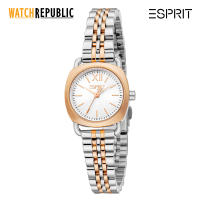
Esprit Gianna Two Tone Stainless Steel Analog Watch For Women EES1L473M0105
₱5,175.00₱7,395.00
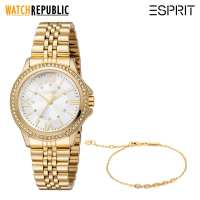
Esprit Paisley Set Gold Stainless Steel Analog Watch For Women EES1L466M0055
₱5,455.00₱7,795.00
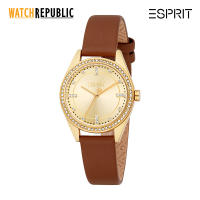
Esprit Mina Brown Leather Analog Quartz Watch For Women ES1L496L0025
₱4,755.00₱6,795.00
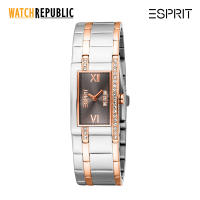
Esprit Houston Glitter Two Tone Stainless Steel Analog Quartz Watch For Women ES1L514M0055
₱5,945.00₱8,495.00
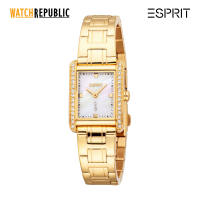
Esprit Elora Gold Stainless Steel Analog Quartz Watch For Women ES1L512M0045
₱6,295.00₱8,995.00
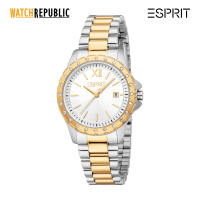
Esprit Julieta Two Tone Stainless Steel Analog Quartz Watch For Women ES1L522M0075
₱5,525.00₱7,895.00
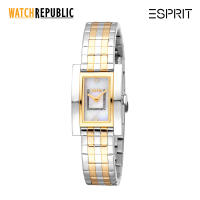
Esprit Mette Two Tone Stainless Steel Analog Quartz Watch For Women ES1L513M0045
₱5,945.00₱8,495.00
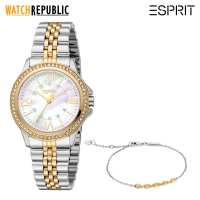
Esprit Paisley Set Two Tone Stainless Steel Analog Watch For Women EES1L466M0085
₱5,455.00₱7,795.00
About Esprit
Esprit is an international fashion and lifestyle brand established in 1968 in San Francisco, California, by Susie Tompkins Buell (then Susie Tompkins) and Douglas “Doug” Tompkins. The label became widely recognised for its relaxed California aesthetic, colourful casualwear, distinctive graphic identity, and a strong emphasis on lifestyle, community, design, and social values.1
Today, Esprit is best understood not simply as a clothing retailer but as a heritage fashion brand whose owner is transitioning from traditional retail and wholesale operations toward an asset-light, licensing-centred model. Following insolvency proceedings affecting major European, U.S., and Canadian operating subsidiaries from 2024 onward, Esprit Holdings has focused on preserving and monetising the Esprit intellectual property and brand through licensing partnerships.2
Quick facts
| Field | Information |
|---|---|
| Brand | Esprit |
| Industry | Fashion, apparel, lifestyle |
| Founded | 1968 |
| Place founded | San Francisco, California, United States |
| Founders | Susie Tompkins Buell and Doug Tompkins |
| Original identity | California casual / lifestyle fashion |
| Parent company | Esprit Holdings Limited |
| Corporate listing | Hong Kong Stock Exchange, stock code 00330 |
| Current headquarters of the Group | Hong Kong |
| Current business direction | Primarily licensing and brand/IP management |
| Historic major markets | Europe, North America, Asia |
| Best-known era | 1970s–1990s |
| Signature visual identity | Bold stencil-style “ESPRIT” logo |
| Positioning | Accessible, youthful, casual lifestyle fashion |
Esprit Holdings has been publicly listed in Hong Kong since 1993.11
Origins
The origins of Esprit are closely associated with Susie and Doug Tompkins. Before founding the company, the couple shared interests in outdoor life, design, environmentalism, and California’s emerging counterculture. Doug Tompkins later gained prominence as co-founder of The North Face, while Susie developed a reputation as a fashion entrepreneur and environmental advocate.
In 1968, the couple began selling clothing from their car in the San Francisco area. One early collection was called Plain Jane, created around simple dresses aimed at young California consumers. The business gradually expanded beyond its informal beginnings and developed into Esprit.3
The company’s early philosophy differed significantly from that of a conventional fashion house. Instead of presenting fashion as something distant or aristocratic, Esprit emphasised ordinary people, creativity, friendship, individuality, and everyday life. This philosophy became one of the foundations of the brand.
The name “Esprit”
The name is associated with the French expression “esprit de corps,” meaning roughly team spirit, group spirit, or a shared sense of community. The idea was particularly appropriate to Esprit’s early identity, as the company wanted fashion to be connected to people and social interaction rather than merely selling individual garments.
The company initially operated under names including Esprit de Corp, before the shorter and more memorable Esprit became the dominant consumer-facing identity. The name therefore carries an important part of the brand’s philosophy: fashion as a way of expressing personality while belonging to a community.
Expansion during the 1970s
The 1970s were crucial to Esprit’s transformation from a small California clothing venture into an international fashion company. The Tompkinses developed a relationship with Michael Ying, which helped establish an important Asian business operation. Hong Kong subsequently became one of the key centres of Esprit’s international development.4
At the same time, Esprit expanded into Germany and other European markets. Germany eventually became particularly important to the company, both commercially and creatively. By the late 1970s, Esprit had become a significant fashion business. Its reported turnover exceeded US$100 million in 1978, illustrating how quickly the company had grown from its informal beginnings.
The famous Esprit logo
One of the most recognisable aspects of Esprit is its typography. In 1979, graphic designer John Casado developed the brand’s distinctive stencil-like logo. The unusual lettering, particularly the segmented treatment of the E, became one of Esprit’s most identifiable visual assets.5
The logo was significant because Esprit did not merely treat it as a corporate identifier; it became an actual fashion graphic. The word ESPRIT could appear prominently across T-shirts, sweatshirts, knitwear, bags, accessories, advertising, packaging, and stores. This helped establish the logo as part of the product itself.
Design philosophy
Esprit’s historical design language can broadly be described as California + casualwear + European design sensibility + youthful experimentation. It was neither purely American sportswear nor traditionally European fashion. Instead, Esprit combined relaxed silhouettes, strong colours, graphic prints, denim, knitwear, sportswear influences, playful proportions, accessible pricing, experimental graphics, and comfortable everyday clothing.
This combination helped make Esprit particularly influential during the 1980s and early 1990s. The company itself has described its historical identity as representing a form of “California cool” characterised by counterculture, entrepreneurship, energy, and activism.6
Esprit as a lifestyle brand
Historically, Esprit operated as more than a clothing label; it presented itself as a lifestyle. Its stores, catalogues, advertising, packaging, architecture, and products were designed to communicate a consistent worldview. The brand emphasised friendship, optimism, individuality, creativity, youthfulness, social responsibility, environmental awareness, community, and relaxed living.
This approach is one reason Esprit is sometimes described as an early example of an authentic lifestyle brand rather than simply an apparel company.7
Architecture and design
Esprit’s design ambitions extended beyond clothing. The company worked with prominent architects and designers to create its retail environments and corporate spaces. Among the designers associated with Esprit were Ettore Sottsass, Antonio Citterio, and Norman Foster.
Italian designer Ettore Sottsass, founder of the Memphis design movement, was particularly significant. He contributed to the design of Esprit’s European headquarters and helped establish a distinctive visual approach to its retail environments.8 This was unusual for a mass-market fashion company. Esprit essentially treated architecture, graphic design, fashion, and advertising as parts of one visual culture.
The “Real People” campaign
One of Esprit’s most famous marketing initiatives was its “Real People” campaign, introduced in the 1980s. Rather than relying exclusively on conventional fashion models, Esprit used employees, designers, architects, and other recognisable personalities. Photographer Oliviero Toscani was involved in the campaign, and figures such as Ettore Sottsass appeared in Esprit’s visual communications.9
This approach reinforced an important Esprit idea: fashion should look like real life rather than an unreachable fantasy. The strategy also contributed to Esprit’s reputation as a brand that was creative, progressive, and culturally aware.
The 1980s: Peak cultural influence
The 1980s are generally regarded as one of the defining periods of Esprit’s cultural influence. The brand benefited from several major trends:
- The growing popularity of casual fashion.
- Increasing interest in American lifestyle brands.
- The rise of logo-driven clothing.
- A younger generation interested in design and individuality.
- Esprit’s strong European expansion.
- Its distinctive stores and advertising.
Esprit became particularly prominent in Europe, where its combination of American casualwear and European design sensibility gave it a distinctive position. The company also developed a reputation for being adventurous and unconventional rather than simply following mainstream fashion trends. Its own historical accounts emphasise that the company was willing to take risks and challenge conventions during this period.
Product categories
Historically, Esprit has operated across a broad range of consumer categories.
Apparel
The core business included women’s clothing, men’s clothing, children’s clothing, denim, knitwear, shirts, jackets, dresses, trousers, sportswear, activewear, swimwear, and underwear.
Accessories
Esprit has also produced handbags, backpacks, shoes, watches, jewellery, eyewear, belts, scarves, and other fashion accessories.
Home
The brand also developed Esprit Home, extending the lifestyle concept into furniture, lighting, carpets, wallpaper, decorative objects, bathroom products, and home textiles. This expansion reflected the company’s original belief that Esprit could represent an entire lifestyle rather than simply a wardrobe.
Sustainability and social responsibility
Environmental responsibility holds a notable place in Esprit’s history. The founders, especially Doug Tompkins, had strong environmental interests. As a result, environmental and social concerns were incorporated into Esprit’s identity much earlier than they became mainstream fashion-industry marketing themes.
The company historically attempted to connect business, design, social responsibility, and environmental awareness. Esprit’s corporate history describes its early workplace philosophy as integrating social and environmental values with commercially sustainable business practices.10 This makes Esprit historically interesting from a fashion-history perspective: some of the ideas now associated with purpose-driven brands were already present in Esprit’s identity decades ago.
From American startup to international corporation
Although Esprit was founded in California, its corporate identity became increasingly international. Three geographical centres became particularly important:
- United States: The birthplace of the brand and source of its California identity.
- Europe: Especially Germany, which became a major commercial and organisational centre.
- Hong Kong / Asia: A crucial centre for the group’s corporate and business operations.
This international structure became one of Esprit’s defining characteristics. The company therefore developed an unusual identity: American heritage + European fashion culture + Asian corporate infrastructure. That combination helped Esprit become a global fashion brand.
Esprit Holdings
The corporate entity behind the brand is Esprit Holdings Limited. Esprit Holdings became publicly listed on the Hong Kong Stock Exchange in 1993.11
The distinction between Esprit and Esprit Holdings is important:
- Esprit = the consumer-facing fashion/lifestyle brand.
- Esprit Holdings Limited = the corporate group that owns and manages the brand and its intellectual property.
Over time, the group became involved in retail, wholesale, e-commerce, and licensing across numerous markets.
The 1990s and 2000s
Esprit remained a significant international fashion name into the 1990s and 2000s, but the fashion environment changed dramatically. The industry became increasingly competitive, with consumers having access to fast fashion, global sportswear brands, luxury brands, contemporary fashion labels, online retailers, and rapidly changing social-media-driven trends.
Esprit’s historical identity had been built around a relatively distinctive combination of casual fashion, design, and lifestyle. As the mass-fashion market became more crowded, maintaining that distinctiveness became increasingly difficult. The company itself later acknowledged that some of the entrepreneurial and trendsetting qualities associated with its earlier decades had weakened over time.12
Brand decline and attempted revitalisation
During the 2010s and early 2020s, Esprit faced substantial challenges. The company attempted various strategies to modernise the brand, improve digital operations, and reconnect with younger consumers.
A major objective was to recover what management regarded as the original Esprit spirit: creativity, experimentation, optimism, diversity, design, individuality, and social responsibility. In other words, the challenge was not simply to sell more clothes; it was to make Esprit culturally relevant again.
Major restructuring of 2024
A major turning point came in 2024. Esprit’s European, U.S., and Canadian operating businesses became involved in insolvency proceedings, while the group began moving away from its traditional asset-heavy retail and wholesale structure.13
This marked a fundamental change in what Esprit was as a business. Historically, Esprit encompassed design, manufacturing/sourcing, wholesale, retail, and e-commerce. The new direction became increasingly focused on brand ownership, intellectual property, and licensing partnerships. This distinction is essential when discussing Esprit today.
Current business model
As of 2026, Esprit Holdings states it is transitioning toward an asset-light, licensing-centric business model. Rather than directly operating a huge global retail and production infrastructure, the company aims to work with licensees that have expertise in particular geographic markets or product categories.
Under this approach, licence partners can independently handle product design, development, sourcing, manufacturing, distribution, and local marketing, while Esprit focuses more heavily on its brand identity, intellectual property, and licensing relationships.14
The company’s 2025 report specifically states that its previous retail, wholesale, and e-commerce operations ceased following insolvency proceedings and that the group is moving toward this licensing model.15 The official Esprit website currently presents a “Esprit will be back soon” message in several markets, reflecting the brand’s broader transition rather than the old global retail structure continuing unchanged.16
Importance of the brand name today
Esprit’s greatest asset is arguably brand recognition. The company’s current strategy explicitly treats its intellectual property as its most valuable asset. This includes the Esprit name, trademarks, logos, visual identity, historical brand equity, product heritage, consumer recognition, and nostalgia associated with the 1980s–2000s.
This is especially important because Esprit possesses something a new fashion startup cannot easily manufacture: decades of cultural memory. The company is consequently targeting markets where nostalgia and established brand recognition can support a new generation of licensed Esprit products. Its 2025 ESG report identifies Greater China, North America, and Latin America as important expansion targets.17
Brand identity
If Esprit’s identity were reduced to a few concepts, they would include:
- California optimism: The brand originates in the relaxed, sunny, and informal culture of California.
- Design: Graphic design, architecture, typography, and visual culture have always been unusually important to Esprit.
- Casual fashion: Esprit historically specialised in clothing that was stylish without being excessively formal.
- Community: The name itself evokes esprit de corps—a collective spirit.
- Responsibility: Environmental and social concerns were part of the founders’ worldview.
- Individuality: Esprit has historically promoted personal expression rather than rigid fashion rules.
- Nostalgia: Today, the brand’s 1980s and 1990s heritage is an increasingly important part of its commercial value.
Visual language
The classic Esprit aesthetic can be recognised through several recurring elements:
- Typography: Bold, unconventional, stencil-inspired lettering.
- Colour: Strong use of bright, playful, and contrasting colours, especially during its classic period.
- Photography: Naturalistic imagery and people presented in everyday environments rather than excessively polished fashion settings.
- Graphics: Large logos, geometric shapes, playful typography, and experimental layouts.
- Architecture: Modernist and postmodernist influences, particularly in flagship stores and corporate environments.
- Mood: Youthful, optimistic, energetic, and slightly rebellious.
This combination made Esprit’s branding recognisable even when its products themselves were relatively simple.
Comparison with traditional fashion houses
Esprit is somewhat unusual because it does not fit neatly into the traditional fashion-house model. A traditional luxury fashion house might emphasise a progression from designer to seasonal collection to runway to exclusivity and luxury positioning. Esprit historically emphasised lifestyle, people, design, everyday clothing, accessibility, and community.
Consequently, Esprit’s historical importance is less about haute couture or luxury craftsmanship and more about the development of modern lifestyle branding.
Significance in fashion history
Esprit is significant for several reasons:
- Defining California casualwear: The brand successfully transformed the informal California lifestyle into an internationally marketable fashion identity.
- Blurring fashion and graphic design: Its logo and graphics became integral parts of its products.
- Connecting fashion with architecture: The company’s investment in architects and designers was unusually ambitious for a mass-market clothing company.
- Pioneering lifestyle branding: Esprit sold an attitude and worldview, not just garments.
- Embracing “real people”: Its advertising challenged the conventional fashion-image system by emphasising ordinary people and creative personalities.
- Establishing an influential visual identity: The classic Esprit logo and 1980s/1990s aesthetic remain highly recognisable.
- Becoming a nostalgia brand: For consumers who grew up with Esprit during its peak, the brand has strong associations with a particular period of fashion and youth culture.
Legacy and timeline
Esprit’s story can essentially be divided into several eras:
| Period | Character |
|---|---|
| 1968–1970s | Small California fashion experiment |
| Late 1970s | International expansion |
| 1980s | Global lifestyle-brand breakthrough |
| 1990s | Mature international fashion company |
| 2000s | Large-scale global retail business |
| 2010s | Increasing competition and brand challenges |
| 2020–2023 | Attempts at revitalisation |
| 2024 | Major insolvencies and restructuring |
| 2025–2026 | Transition toward licensing and brand/IP management |
Summary
Esprit is a California-born fashion and lifestyle brand founded by Susie and Doug Tompkins in San Francisco in 1968. Beginning with clothing sold from a car, it evolved into an internationally recognised brand famous for colourful casualwear, distinctive graphic design, innovative advertising, architecture, and a philosophy centred on community, individuality, and optimistic California living. During the 1980s and 1990s, Esprit became one of the most recognisable lifestyle-fashion brands in Europe and beyond. Its later years were marked by increasing commercial difficulties and competition, culminating in major restructuring and insolvency proceedings affecting operating subsidiaries from 2024. As of 2026, Esprit Holdings is attempting to preserve and revive the brand through an asset-light, licensing-focused model, making the Esprit name and its decades of cultural heritage the company’s central asset.18
References
- Esprit-brand – Esprit
- CONTENTS 14ABOUT ESPRIT3OUR EMPLOYEES
- Esprit | LinkedIn
- ESPRIT – The Story
- Esprit Brand History :: Brand History of Esprit
- Esprit Perfumes And Colognes
- Esprit Holdings
- Esprit Holdings Limited
- ESPRIT – Coming Soon
- Esprit Holdings, Inc. | Encyclopedia.com
- What is Brief History of Esprit Holdings Company? – MatrixBCG.com
- ESPRIT – Coming Soon
- ESPRIT – Coming Soon
- The History of Esprit – VCG
- Esprit CEO William Pak on his strategy to rebuild the brand and conquer the United States – FashionNetwork USA
- ESPRIT Announces Annual Results for FY 2022 | Nasdaq
- The rise and fall of Esprit, SF’s coolest clothing brand
- Esprit: Quintessential California Cool | Opto-Réseau