Shop on Lazada
Filofax products
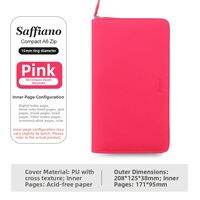
Filofax | Zip Wallet A6 NoteBook
₱6,389.90
Buy on Lazada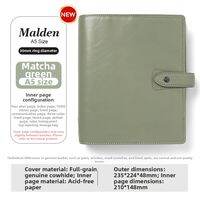
Filofax | Gift Diary Planner Leather Bound Notebook
₱19,361.70
Buy on Lazada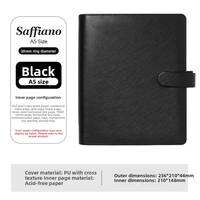
Filofax | Notebook for Multi-Use Gifts
₱8,138.67
Buy on Lazada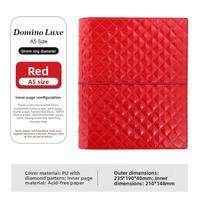
Filofax | A5 A6 A7 Notebooks
₱3,844.29
Buy on Lazada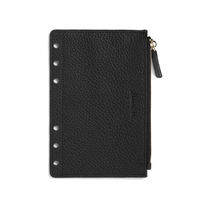
Filofax | Acid-free Refill Pages A6
₱2,756.50
Buy on Lazada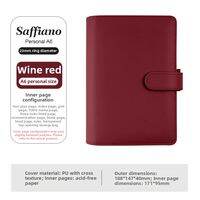
Filofax | Leather-Feel Refillable Planner
₱5,861.95
Buy on Lazada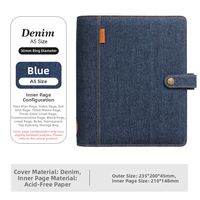
Filofax | Denim Fabric Diary Book
₱7,881.32
Buy on Lazada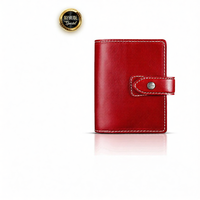
Filofax | Cute Portable Loose-Leaf Notebook
₱13,394.03
Buy on LazadaAbout Filofax
Filofax is a British stationery and personal-organisation brand best known for its refillable six-ring personal organisers. For over a century, the brand has been associated with leather organisers, diaries, loose-leaf planning systems, notebooks and office accessories. Its central concept is modular: rather than purchasing a new planner annually, users retain the binder and replace or rearrange individual pages as needed.1
Today, Filofax has expanded beyond traditional diary organisers to include refillable notebooks, Clipbooks, folios, planners, accessories and a wide range of paper refills, while maintaining the customisable philosophy that defined its original products.2
Quick facts
| Category | Information |
|---|---|
| Brand | Filofax |
| Origin | United Kingdom |
| Founded | 6 June 1921 |
| Original company | Norman & Hill Ltd. |
| Founder(s) | Colonel Disney, William Rounce and Posseen Hill |
| Original location | London, England |
| Original business | Personal information/filing organisers |
| Signature product | Six-ring refillable personal organiser |
| Name origin | “File of Facts” |
| Main category | Stationery & personal organisation |
| Known for | Organisers, diaries, refills, notebooks and leather goods |
| Current corporate record | Filofax Group Limited remains an active UK company |
| Official website | filofax.com |
The official UK corporate record traces Filofax Group Limited back to 6 June 1921; the company was originally registered as Norman & Hill Limited and later adopted the Filofax name.3
Concept and design
Filofax functions as a personal organisation system presented as stationery. The classic organiser consists of a durable cover or binder, a six-ring mechanism, replaceable paper inserts, calendar and diary pages, address and contact pages, notes pages, dividers, pockets, pen holders and various planning accessories.
Unlike disposable annual diaries, the organiser allows users to remove pages, add new ones, rearrange sections and replace only specific components requiring updates. This modular philosophy remains central to the brand’s identity, with products described as versatile and customisable, becoming more personal as owners configure them to their needs.1
History
Establishment and early years
Filofax originated in London on 6 June 1921, when Norman and Hill Ltd. was established by British Army Colonel Disney, William Rounce and Posseen Hill.1 The company’s early concept focused on keeping information in a compact, organised format. Before the advent of smartphones, cloud calendars or productivity apps, a physical system allowing individuals to carry appointments, contacts, notes and reference information in one place served a vital function.
A significant early development was the creation of a personal organiser based on a leather binder, ring mechanism and loose-leaf inserts. Marketed as a “File of Facts”, this phrase eventually became the source of the name Filofax (FILE OF FACTS → FILOFAX), describing the product’s original purpose as a portable file containing useful information.1
The six-ring system
The six-ring mechanism is the brand’s most recognisable design feature. Rather than permanently binding pages, the rings hold individual sheets that can be removed and replaced. This system offers several advantages: pages can be rearranged; old diary pages removed and new ones inserted; different types of information can coexist; users can create custom sections; the same organiser can theoretically be used for many years; and additional accessories can be integrated. Consequently, a Filofax is better understood as a platform than a simple diary, where the binder is the long-term object and the paper inside is replaceable.
World War II
During World War II, company secretary Grace Scurr used her organiser to protect important business information. According to historical accounts, she took company records home each night to ensure their survival should the London offices be destroyed. When the offices were indeed destroyed during the Blitz in 1940, Scurr’s preservation efforts helped save the business, and she later became president of the company.4 This episode illustrates the product’s role as a portable backup system for critical information.
Post-war evolution and the 1980s boom
Over subsequent decades, the concept evolved from a specialised information-management tool into a comprehensive personal planning system capable of holding appointments, telephone numbers, addresses, to-do lists, financial data, notes, maps, meeting details and travel information.
The brand achieved particular prominence during the 1980s, becoming associated with the professional, ambitious image of the era and British “yuppie” culture. Owning a Filofax signified organisation, professionalism and career orientation, transforming it from a mere productivity tool into a status and fashion accessory. This period established the cultural reputation of the brand as the sophisticated leather organiser containing a professional’s entire life.
Digital transition and modern era
The 1990s and 2000s presented challenges as electronic organisers, mobile phones and smartphones assumed functions traditionally performed by paper systems. However, Filofax adapted by positioning its products around the advantages of physical organisation and personalisation. The appeal shifted from necessity due to lack of digital alternatives to a deliberate preference for analogue organisation, a distinction crucial to the brand’s modern identity.
Corporate history
The business has undergone several corporate changes throughout its history. Originally known as Norman & Hill Limited from 1921 until 1986, it subsequently became directly associated with the Filofax name. UK Companies House currently lists Filofax Group Limited as an active private company.3 While the brand has passed through various ownership structures reflecting consolidation in the global stationery industry, Filofax as a brand has survived considerably longer than any single corporate ownership arrangement.
Products
The modern catalogue extends well beyond classic leather organisers to include hundreds of products across multiple categories.12
Organisers
Organisers remain the core of the brand. Current models include The Original, Malden, Finsbury, Norfolk, Saffiano, Classic, Classic Croc, Lockwood, Holborn, Metropol, Camden and Domino. These range from synthetic or fabric models to premium leather organisers.24
Refillable notebooks and Clipbooks
Filofax produces refillable notebooks designed around principles of longevity and customisation, allowing page replacement rather than disposal of the entire notebook. Current ranges include A5 and pocket formats.2 The Clipbook offers a more flexible, casual interpretation of the organiser concept, providing a customisable ring-based system for constructing personalised notebook and planner combinations.2
Refills
Refills constitute a major component of the ecosystem, distinguishing the Filofax model from ordinary notebooks. The catalogue includes diary pages, ruled, plain and dotted paper, to-do lists, contacts, finance pages, meal planners, project trackers, meeting and travel planners, wellness trackers, dividers, envelopes, sticky notes and accessories.1
Folios and professional stationery
The brand also sells folios, portfolios and writing products, including premium leather models aimed at professional and business use.2
Sizes and formats
Filofax is distinguished by its variety of organiser sizes. Current ranges include Mini, Pocket, Personal, Personal Compact, A5, A4, Deskfax and various notebook-specific formats, though selection varies by market.1 These sizes serve different roles: Mini and Pocket formats for portable everyday carry; Personal for traditional organising; A5 for larger planning and journaling; and A4 for desk and document organisation.
Materials and aesthetics
Historically associated with leather, which remains important in premium ranges, the modern catalogue also incorporates faux leather, synthetic materials, fabric, patterned covers and coated finishes. Design philosophies range from understated professional styles to colourful, fashion-oriented collections, demonstrating expansion beyond the brand’s traditionally conservative image.24
Usage and cultural significance
Although technically a stationery company, Filofax exhibits characteristics of a lifestyle brand. The organiser functions simultaneously as a planner, notebook, personal archive, wallet-like accessory, fashion item, productivity tool, journaling system and creative workspace. Modern emphasis on customisation means no two users’ organisers are identical; applications range from appointment tracking to bullet journaling, project management, financial tracking, creative writing and memory keeping.1
Continued relevance
Despite the prevalence of smartphones, Filofax retains appeal through tangibility (physical representation of information without app navigation), customisation, longevity of the binder, privacy of offline notes, encouragement of handwriting and creativity, the ritual of deliberate writing, and the aesthetic value of premium leather as a personal accessory.
Unlike conventional yearly planners that follow a buy-use-discard cycle, Filofax operates on a buy-retain-refill-reorganise model. The binder is semi-permanent while content is disposable and reconfigurable, supported by an extensive ecosystem of compatible refills. Commercially, this resembles other refillable systems but benefits from a long-established brand identity.
Brand identity
Key characteristics include British heritage dating to 1921;1 a fundamental focus on organisation; strong emphasis on personalisation; craftsmanship in premium leather ranges;4 professionalism rooted in 1980s business culture; nostalgia for pre-smartphone physical systems; and adaptation to contemporary planning and journaling practices.
Culturally, Filofax represents a specific moment in personal information management history. Before smartphones, it served as a portable analogue personal database containing calendars, contacts, notes and schedules. Its 1980s popularity made this database fashionable, while its current survival represents a deliberate choice for physical information management in a digital world.
Timeline
- 1921 – Norman & Hill Ltd. founded in London.
- 1920s–30s – Early “File of Facts” personal organiser concept develops.
- 1940 – Company offices destroyed during the Blitz; Grace Scurr’s preservation of records becomes part of brand history.
- Post-war decades – Organiser develops into broader personal planning and information-management system.
- 1980s – Major popularity surge; association with professional/yuppie culture.
- Late 20th century – Company adopts Filofax name; undergoes corporate changes.
- 1990s–2000s – Digital organisers and mobile technology challenge traditional paper planning.
- 2000s–2010s – Expansion of stationery and organiser ecosystem.
- 2020s – Continuation with organisers, refillable notebooks, Clipbooks, refills, accessories and premium leather products.
- 2026 – Remains an active, internationally marketed stationery brand with roots extending back more than a century.3