Shop on Lazada
Fizik products
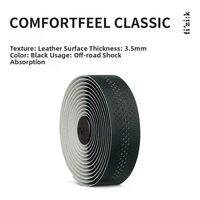
Fizik | Leather Anti-slip Shock-absorbing Road Bike Handlebar Tape
₱2,458.35
Buy on Lazada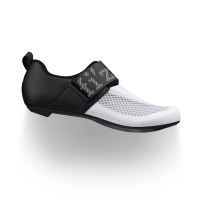
Fizik Transiro Hydra Triathlon Shoes
₱8,800.00
Buy on Lazada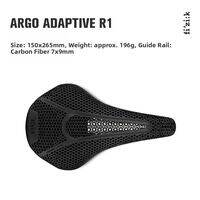
Fizik | 3D Printed Vento Argo Adaptive Saddle
₱34,058.20₱38,724.51
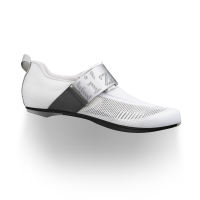
Fizik Transiro Hydra Aeroweave Carbon Triathlon Shoes
₱16,500.00
Buy on Lazada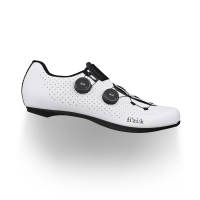
Fizik Vento Infinito Carbon 2 WIDE Road Cycling Shoes
₱19,500.00
Buy on Lazada
Fizik | Cycling Water Bottle
₱1,415.17
Buy on Lazada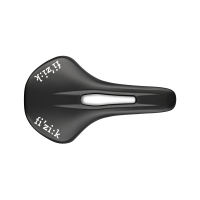
Fizik Saddle Road Vento Antares R5 Black alloy rails
₱5,900.00
Buy on Lazada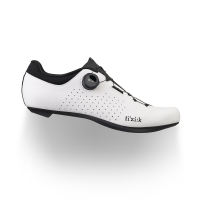
Fizik Vento Omna WIDE Road Cycling Shoes
₱8,800.00
Buy on LazadaAbout Fizik
Overview
Fizik, stylized as fi’zi:k, is an Italian premium cycling-equipment brand best known for its high-performance bicycle saddles. The company has since expanded its product line to include cycling shoes, bar tape, components, and helmets. Fizik positions itself at the intersection of performance, ergonomics, technology, lightweight construction, and Italian-inspired design.1
| Category | Details |
|---|---|
| Brand | Fizik / fi’zi:k |
| Industry | Cycling / sporting goods |
| Founded | 1996–1997 |
| Origin | Italy |
| Headquarters | Pozzoleone, Vicenza, Italy |
| Parent group | Selle Royal Group |
| Best known for | Premium bicycle saddles |
| Other products | Cycling shoes, bar tape, components, helmets and accessories |
| Main disciplines | Road, gravel, MTB/off-road, triathlon |
| Market position | Premium / performance-oriented |
| Brand philosophy | Design + performance + comfort + technological innovation |
| Target users | Professional racers, enthusiasts and performance-oriented recreational cyclists |
Published sources show a minor discrepancy regarding the founding date: Fizik’s own “About Us” page states the brand was founded in 1996, while Selle Royal Group materials describe the birth of Fizik as occurring in 1997. Consequently, the brand is generally considered to have been established between 1996 and 1997.1
Name and meaning
The name fi’zi:k is a phonetic styling of the English word “physique,” referring to the human body’s form or physical condition. This naming convention reflects the company’s emphasis on the relationship between the cyclist’s body and the bicycle. The distinctive spelling and punctuation are intentional elements that have become central to the brand’s visual identity.
History
Origins
Fizik emerged from the Italian cycling-industry ecosystem surrounding Selle Royal, a saddle manufacturer founded by Riccardo Bigolin in 1956 near Vicenza, Italy. Over subsequent decades, Selle Royal developed expertise in saddle materials, manufacturing, and ergonomics before expanding internationally.1
During the 1990s, Selle Royal began diversifying its brand portfolio. Fizik was created to address a specific market segment: cyclists seeking high-performance equipment with sophisticated aesthetics and advanced materials, particularly professional and enthusiast riders.
Development of the brand
Fizik initially established its reputation through racing saddles. Rather than relying solely on traditional construction methods, products were designed around anatomical research, rider feedback, engineering, and visual design. The company states that its development process draws on physiological research, anatomical studies, and technological innovation.1
The Arione saddle, introduced in the early 2000s, helped define the brand’s reputation. Its long, relatively flat profile became recognizable in road cycling and contributed to Fizik’s image as a performance-focused alternative to conventional saddle designs.2
Over time, Fizik expanded beyond saddles into cycling shoes, handlebar tape, components, gravel and MTB equipment, triathlon products, 3D-printed saddles, and helmets. The current catalogue is organized around Road, Gravel, MTB, Triathlon, and Off-bike categories.1
Relationship with Selle Royal Group
Fizik is part of the Selle Royal Group, an Italian cycling-industry group whose history dates back to 1956. This corporate relationship connects Fizik fundamentally to saddle manufacturing expertise; unlike brands that began as bicycle manufacturers and later added components, Fizik originated from a company with decades of specialized experience in bicycle saddles.1
Selle Royal Group has also developed or acquired other cycling brands, including Brooks England and Crankbrothers, creating a portfolio that covers diverse cycling categories and consumer segments.
Products
Saddles
Saddles remain the core of the Fizik brand. The range includes models for road, gravel, MTB, and triathlon disciplines, with shapes intended for specific riding positions. Current product families include Arione, Antares, Argo, Vento, and Adaptive.1
Fizik promotes the concept that saddle design should be based on the rider’s anatomy, riding position, and movement, rather than offering a single universal shape.
Adaptive 3D-printed saddles
A significant technological development for the brand is the Adaptive saddle technology. Instead of conventional foam padding, Adaptive saddles utilize a digitally manufactured, 3D-printed lattice structure capable of creating varying zones of support and compliance across the saddle surface. This represents a departure from traditional construction and demonstrates the use of advanced manufacturing to address comfort and pressure distribution.1
The One-to-One programme extends this concept by combining pressure mapping, professional bike fitting, and digitally manufactured Adaptive technology to create a customized saddle for individual riders.1
Cycling shoes
Fizik’s footwear range covers road racing, gravel, MTB, triathlon, and other applications. Current families include Vento, Ferox, Vega, Tempo, and Overcurve.1
The footwear philosophy mirrors that of the saddles, combining low weight, efficient power transfer, fit, comfort, and aesthetics. Racing shoes typically feature carbon-fibre outsoles, lightweight construction, Boa or similar precision closure systems, anatomical fit, ventilation, and high stiffness for power transfer. Off-road shoes prioritize durability, traction, and protection.
Handlebar tape and components
Fizik is well known for handlebar tape, particularly among road cyclists. These products follow a minimalist design philosophy with attention to tactile feel, grip, cushioning, and weight. This category helped establish Fizik as a provider of visually consistent premium cockpit setups rather than exclusively a saddle manufacturer.
Helmets
Helmets represent a relatively recent expansion for Fizik. Development involved wind-tunnel testing, numerous prototypes, and real-world rider feedback. The current range covers road, triathlon, gravel, and MTB applications, with models including Kudo Aero, Kudo, Kassis, Arche-Type, and Kyros.1
This expansion moves Fizik toward being a broader premium cycling-equipment brand rather than primarily a saddle specialist.
Design philosophy
A defining characteristic of Fizik is its emphasis on industrial design. The company aims to create equipment that is technically sophisticated as well as aesthetically inspiring. Products are recognizable for clean shapes, restrained graphics, and a minimalist Italian aesthetic.1
The brand’s identity can be summarized as a combination of performance, ergonomics, lightweight construction, technology, and aesthetics.
Science and ergonomics
Fizik emphasizes the interaction between human anatomy and bicycle equipment. The company utilizes physiological research, anatomical studies, and technological development in its product creation. Selle Royal Group has described Fizik’s approach as scientific, involving experts in sports science, physiotherapy, and bike fitting.1
Because comfort is highly individual, Fizik offers multiple saddle shapes rather than a single universal model.
Major product families
Saddles
- Arione: Long-running performance road saddle family.
- Antares: Major road-racing saddle family.
- Argo: Shorter-nose saddle design aimed at modern riding positions.
- Vento: Performance and racing-oriented range.
- Adaptive: Saddles incorporating 3D-printed cushioning technology.
- One-to-One: Personalized saddle programme based on rider pressure mapping.1
Shoes
- Vento: Performance and racing-oriented footwear.
- Tempo: Endurance and all-road-oriented products.
- Ferox: Off-road racing footwear.
- Vega: Performance road footwear.
- Gravel/MTB ranges: Footwear designed for off-road use.1
Helmets
- Kudo Aero
- Kudo
- Kassis
- Arche-Type
- Kyros1
Professional cycling
Professional cycling plays a major role in Fizik’s brand identity. The company states its products have been associated with numerous victories in the professional peloton and selected by elite athletes and teams across road, off-road, and triathlon disciplines.1
Fizik does not present itself merely as a lifestyle cycling company; its image is strongly connected to elite competition and race-derived technology. The professional racing environment provides a testing ground for fit, weight, durability, aerodynamics, and power transfer under demanding conditions.
Brand positioning
Fizik occupies the premium end of the cycling-component and apparel market. It competes on technical performance, design, and brand prestige. In the saddle category, it sits alongside premium manufacturers such as Selle Italia, Prologo, and Specialized. Its footwear and helmet businesses place it in competition with brands like Shimano, Giro, Specialized, and Sidi.
Key distinguishing characteristics include:
- Italian design identity
- Racing heritage
- Ergonomic research
- Premium materials
- Lightweight construction
- Advanced manufacturing
- Strong visual branding
Significance in cycling
Fizik has contributed to the evolution of cycling equipment toward rider-specific ergonomics and digitally engineered products. Its Adaptive 3D-printed saddles exemplify how additive manufacturing can create different performance characteristics within a single product, moving beyond conventional foam densities.1
The One-to-One programme advances this philosophy by attempting to create a saddle based on an individual rider’s measured pressure profile.1
Brand identity
Fizik’s identity is defined by Italian design for performance cycling. The visual language is sleek and understated rather than aggressive, intended to integrate aesthetically with high-end race bikes where components must be both functional and visually cohesive. Among enthusiasts, Fizik has developed a reputation as a design-led premium cycling brand rather than simply a parts manufacturer.
Current direction
As of 2026, Fizik operates as a comprehensive cycling-equipment brand spanning saddles, shoes, helmets, and accessories for road, gravel, MTB, and triathlon disciplines.1
Recent strategic themes include:
- Digital manufacturing: Particularly Adaptive 3D-printed saddle technology.
- Personalization: Exemplified by the One-to-One pressure-mapped saddle fitting.
- Category expansion: Notably the move into helmets alongside continued development of saddles and shoes.