Shop on Lazada
Florsheim products
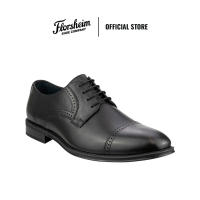
Florsheim Mens Chatham Cap Toe Derby
₱4,349.50₱8,699.00
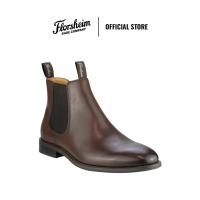
Florsheim Mens Chadwick Chelsea Boots
₱14,099.00
Buy on Lazada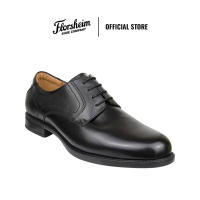
Florsheim Mens Brookfield Calf
₱12,699.00
Buy on Lazada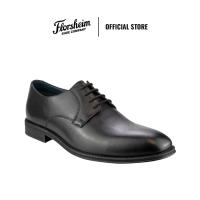
Florsheim Mens Chatham Plain Toe Derby
₱4,349.50₱8,699.00
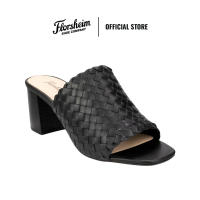
Florsheim Womens Gretta Open Toe Slide Calf
₱4,499.50₱8,999.00
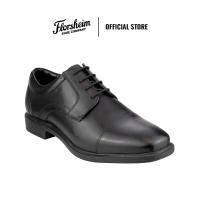
Florsheim Mens Stark Cap Toe Derby
₱3,999.50₱7,999.00
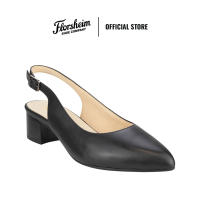
Florsheim Womens Amanda Point Toe Block Heels
₱12,099.00
Buy on Lazada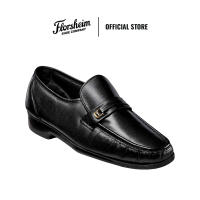
Florsheim Mens Riva Moc Toe Bit Loafer
₱12,999.00
Buy on LazadaAbout Florsheim
Florsheim is an American footwear brand best known for its men’s dress shoes, particularly Oxfords, loafers, wingtips, and other classic leather footwear. Founded in Chicago in 1892, Florsheim has developed from a small family shoe business into a long-established international footwear brand while retaining a strong association with traditional American men’s footwear.1 Today, Florsheim is part of Weyco Group, a U.S. footwear company whose portfolio also includes brands such as Nunn Bush and Stacy Adams.1
Quick facts
| Category | Information |
|---|---|
| Brand | Florsheim |
| Industry | Footwear |
| Founded | 1892 |
| Place founded | Chicago, Illinois, United States |
| Founders | Sigmund Florsheim and Milton S. Florsheim |
| Original business | Shoe manufacturing and retail |
| Best known for | Men’s dress shoes and classic leather footwear |
| Current parent | Weyco Group |
| Brand positioning | Classic, dress, business-casual and contemporary footwear |
| Heritage | More than 130 years |
| Major historical association | American men’s dress footwear |
History
Origins: 1850s–1892
The story of Florsheim begins with Sigmund Florsheim, a German immigrant who came to the United States in the 1850s. He brought shoemaking experience with him and established himself in Chicago’s footwear industry. By 1886, he was a partner in Greensfelder, Florsheim & Co., a Chicago men’s footwear company.1
In 1892, Sigmund and his 24-year-old son Milton S. Florsheim launched the Florsheim Shoe Company in Chicago. The original operation was relatively small, producing roughly 200 pairs of shoes per day, with shoes selling for around $5. A retail store was established shortly afterward.
Sigmund died in 1894, leaving Milton in charge at only 26. Milton subsequently became the central figure in developing the company into a major footwear manufacturer.
Early branding and expansion
One particularly interesting aspect of Florsheim’s early history was its approach to branding.
In 1896, the company began stitching the Florsheim name into its shoes so customers could identify genuine Florsheim products. This was an early example of treating the manufacturer’s name itself as a consumer-facing brand rather than simply an invisible factory mark.
Around 1900, Florsheim also experimented with the “Flor-Scope,” using fluoroscopic technology to help retailers examine customers’ feet for fitting. The company also began expanding through franchised retail stores.
Rise to prominence
1910s–1920s
Florsheim grew rapidly during the early twentieth century.
By 1910, the company employed around 600 people at its Chicago factory. By the mid-1920s, its scale had increased dramatically: Florsheim had approximately 2,500 employees, five factories, 71 retail outlets and around 9,000 dealers.1
During World War I, Florsheim became an important supplier of boots for American military personnel.
The company was also heavily involved in fashion. During the 1920s, it promoted new silhouettes and styles, including a notable square-toed shoe. Its advertising and illustrated style materials helped establish Florsheim as not merely a manufacturer but a recognizable fashion brand.
By the end of the 1920s, Florsheim had five Chicago-area factories and approximately 2,500 employees, while annual sales were around $3 million.3
Florsheim during World War II
Florsheim again contributed substantially to the American war effort during World War II.
Beginning in 1942, the company produced footwear for American troops, with approximately half of its production eventually devoted to military shoes. Harold Florsheim, Milton’s son, also served in the U.S. military during the war.
After the war, Florsheim emerged as one of America’s significant footwear manufacturers. The Chicago History Museum’s Encyclopedia of Chicago records that the company became one of the industry’s top ten firms and had nearly $18 million in annual sales after World War II.3
Postwar expansion
1949: A major Chicago factory
In 1949, Florsheim opened a modern factory in downtown Chicago. Its retail stores were also notable for changing the way customers interacted with footwear.
Rather than keeping most shoes hidden in stockrooms, Florsheim stores allowed customers to browse shoes more freely. This retail concept subsequently became common throughout the American shoe industry.
1950s: Acquisition by International Shoe
A major turning point came in 1953, when International Shoe Company acquired Florsheim for approximately $21 million.3
Florsheim continued operating as a distinct division. It became one of International Shoe’s most successful businesses and was particularly strong in higher-quality men’s footwear.4
The Florsheim family and Weyco connection
One of the most unusual aspects of Florsheim’s corporate history is its later connection to Weyco Group.
In 1964, Thomas W. Florsheim Sr., a descendant of the founding family, left the Florsheim organization and invested in Weyenberg Shoe Manufacturing Company. He eventually became a major figure in that company, which later became Weyco Group.41
Decades later, in May 2002, the Florsheim trademark returned to a company connected to the Florsheim family when Weyco Group acquired the brand. Weyco’s own history states that its senior officers included fifth-generation members of the Florsheim family.
This means that although Florsheim passed through different corporate owners during the twentieth century, the brand ultimately returned to a company with a direct historical connection to the founding family.
Florsheim today
Under Weyco Group, Florsheim has expanded beyond its traditional identity as a men’s dress-shoe manufacturer.
The modern product range includes:
- Oxfords
- Derby shoes
- Wingtips
- Loafers
- Cap-toe shoes
- Plain-toe shoes
- Boots
- Sneakers
- Casual shoes
- Slip-ons
- Accessories
The company describes its current philosophy as combining its heritage of classic styling and workmanship with contemporary trends.1
The current catalog demonstrates this particularly well: alongside traditional leather dress shoes such as the Norwalk Plain Toe Oxford are more casual and sneaker-oriented products.1
Design philosophy
Florsheim’s identity can broadly be described as traditional American men’s footwear updated for contemporary use.
Its classic aesthetic revolves around recognizable dress-shoe forms:
Oxford
The Oxford is probably the clearest representation of Florsheim’s traditional identity. The brand offers plain-toe, cap-toe and wingtip versions.
Wingtip
Wingtip shoes are strongly associated with traditional men’s American and British-inspired dress footwear. Florsheim has produced numerous versions over its history.
Loafer
Florsheim also produces slip-on styles that occupy the space between formal and business-casual dressing.
Boots
Boots extend the traditional leather-footwear aesthetic into more casual territory.
Sneakers
The modern Florsheim range also includes sneakers, allowing the brand to compete for consumers who want the appearance of traditional footwear combined with sneaker-like comfort and versatility.
Comfort technology
While Florsheim has a heritage rooted in traditional dress shoes, comfort has become an increasingly important part of its contemporary product strategy.
One example is Comfortech, a technology-focused range that incorporates multiple comfort features. Depending on the model, these can include cushioned footbeds, OrthoLite foam, soft leather linings and flexible soles.
This represents an important evolution in the brand: instead of treating dress shoes purely as formal footwear, Florsheim increasingly markets them as shoes intended to be comfortable enough for modern everyday use.
Notable innovations
Florsheim’s history contains several examples of the company being unusually progressive in footwear retail and marketing.
Branding
The decision to put “Florsheim” directly onto shoes in 1896 helped establish recognizable manufacturer branding at a relatively early stage.
Flor-Scope
The early twentieth-century Flor-Scope used fluoroscopic technology to help with shoe fitting.
Franchising
Florsheim expanded through franchised retail stores and provided assistance to prospective franchise owners.
Open retail displays
Its postwar stores helped popularize the idea of customers being able to browse shoes rather than relying entirely on sales staff retrieving products from the back room.
Florsheim Express Shop
In 1984, Florsheim introduced the Florsheim Express Shop, a computer kiosk that allowed customers to order shoes from the broader Florsheim range rather than being restricted to the inventory physically available in a particular store.
Collaborations and fashion
Although historically conservative in its core product category, Florsheim has periodically collaborated with contemporary designers.
Notable examples include:
- Duckie Brown — Florsheim by Duckie Brown, launched around 2010, reinterpreted classic Florsheim footwear through a contemporary menswear perspective.
- George Esquivel — In 2015, Florsheim collaborated with designer and craftsman George Esquivel on a collection of men’s and women’s shoes handcrafted in California.
These collaborations illustrate the brand’s attempt to bridge its heritage with modern fashion.
Heritage collections
Florsheim has repeatedly used its archives as a source of inspiration.
For its 125th anniversary in 2017, the company released a limited-edition collection based on early Florsheim silhouettes. Five historic designs were reinterpreted for modern consumers.
In 2019, its Fuel Reflect Collection drew inspiration from the colorful neon signage historically associated with Florsheim stores during the 1930s.
These projects demonstrate an important part of Florsheim’s modern branding strategy: heritage is not simply preserved; it is periodically redesigned and commercialized for contemporary customers.
Brand positioning
Florsheim occupies an interesting position in the footwear market.
It is not primarily a luxury shoe house in the sense of brands such as John Lobb or Edward Green. Nor is it positioned like mass-market athletic footwear brands.
Instead, Florsheim has historically occupied the mid-range to upper-mid-range men’s footwear space, particularly in dress and business footwear. Weyco has described its footwear portfolio as consisting primarily of mid-priced leather dress shoes and casual footwear.
That gives Florsheim a distinctive proposition:
Traditional appearance and heritage without positioning itself as ultra-luxury footwear.
Its appeal is therefore particularly strong for consumers who want a recognizable, traditionally styled dress shoe but don’t necessarily want to enter the high-luxury handmade-shoe market.
Brand identity
If Florsheim were summarized in a few characteristics, its identity would look something like this:
| Characteristic | Florsheim |
|---|---|
| Heritage | Very strong |
| American identity | Very strong |
| Dress footwear | Core category |
| Classic styling | Core characteristic |
| Modern styling | Increasingly important |
| Comfort | Increasingly emphasized |
| Luxury positioning | Moderate rather than ultra-luxury |
| Casual footwear | Important part of modern range |
| Family history | Significant |
| Retail history | Particularly notable |
Important historical dates
- 1850s — Sigmund Florsheim enters the American shoe business.
- 1886 — Sigmund becomes associated with Greensfelder, Florsheim & Co. in Chicago.
- 1892 — Sigmund and Milton Florsheim establish the Florsheim Shoe Company.
- 1894 — Sigmund dies; Milton takes control.
- 1896 — The Florsheim name begins appearing on the company’s shoes as a brand identifier.
- 1917 — Florsheim supplies boots for U.S. forces during World War I.
- 1920s — Major expansion in factories, stores and dealer network.
- 1942–45 — Large-scale production for the U.S. war effort during World War II.
- 1949 — New major Chicago factory opens.
- 1953 — International Shoe Company acquires Florsheim.3
- 1984 — Florsheim introduces the Express Shop computerized ordering system.
- 1994 — Florsheim becomes an independent company following Interco’s bankruptcy/reorganization.3
- 2002 — Weyco Group acquires the Florsheim trademark.
- 2010 — Florsheim by Duckie Brown launches.
- 2015 — Collaboration with George Esquivel.
- 2017 — 125th-anniversary heritage collection.
- 2019 — Fuel Reflect Collection.
- 2021 — Weyco/Florsheim introduces an ESG framework.
- 2022 — Florsheim celebrates its 130th anniversary.
- 2026 — Florsheim remains part of Weyco Group and continues to sell traditional dress footwear alongside contemporary casual shoes and sneakers.1
Significance
Florsheim is significant because its history is essentially a condensed history of American men’s footwear during the 20th century.
It began as a small Chicago family business, adopted recognizable branding early, expanded into large-scale manufacturing, supplied military footwear during two world wars, developed a nationwide retail network, influenced shoe-store merchandising, became a major men’s dress-shoe company, passed through corporate ownership changes, and eventually returned to a corporate structure with direct connections to the Florsheim family.2
Its most enduring characteristic is the combination of classic American dress-shoe design, relatively accessible pricing, recognizable heritage and increasingly modern comfort and casual styling.
Florsheim is a 130+ year-old American footwear brand whose identity was built around men’s dress shoes and classic craftsmanship, but which has evolved toward a broader mix of dress, business-casual and contemporary footwear under Weyco Group.