Shop on Lazada
fmouse products
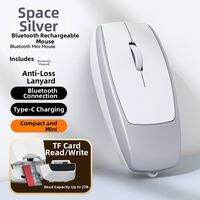
fmouse | Mini Silent Portable Office-Use Wireless Mouse
₱471.00
Buy on Lazada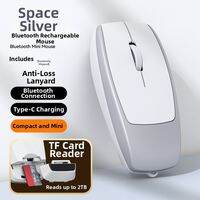
fmouse | Mini Bluetooth Mute Chargeable TF Card Mouse
₱501.00
Buy on Lazada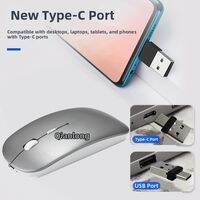
Silent Bluetooth Wireless Mouse for Apple MacBook pro Air M1 M2 M3 Compatible Notebook Computer Optical Resolution 1600dpi
₱575.00
Buy on Lazada
fmouse | Wireless Rechargeable Bluetooth Fashionable Transparent Small Mouse
₱1,360.00
Buy on Lazada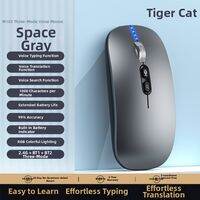
fmouse | Bluetooth AI Mouse with Voice Input Translation Charging Display
₱861.00
Buy on Lazada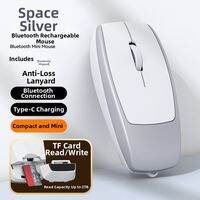
fmouse | Portable Quiet Bluetooth Mouse
₱475.00
Buy on Lazada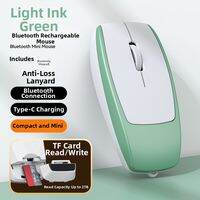
fmouse | Portable Quiet Bluetooth Mouse
₱475.00
Buy on LazadaAbout fmouse
FMOUSE (also styled as Fmouse, FMOUSE 虎猫, or simply FMouse) is a Chinese consumer electronics and computer peripherals brand specializing in computer mice, gaming peripherals, keyboards, Bluetooth accessories, and related electronic devices. Established by Shenzhen Junsida Electronic Technology Co., Ltd., the brand originates from the Shenzhen electronics manufacturing ecosystem.1 Unlike major global peripheral manufacturers that focus primarily on premium gaming hardware, FMOUSE has historically positioned itself around affordability, distinctive industrial design, broad functionality, and mass-market accessibility. Its product lineup ranges from budget-friendly office mice to RGB gaming mice and feature-rich wireless models.
Company overview
| Field | Information |
|---|---|
| Brand | FMOUSE |
| Chinese branding | FMOUSE / 虎猫 |
| Industry | Consumer electronics / Computer peripherals |
| Main products | Mice, keyboards, gaming peripherals, speakers, headsets, mouse pads, Bluetooth accessories |
| Founder / Parent company | Shenzhen Junsida Electronic Technology Co., Ltd. |
| Origin | Shenzhen, Guangdong, China |
| Brand established | 2013 |
| E-commerce expansion | 2014 |
| Current manufacturing presence | Dongguan, Guangdong, China |
| Primary markets | China and international markets |
| Official website | fmouse.com |
The parent company was established in 2008, while the FMOUSE brand itself was launched in 2013. This distinction is significant: 2008 refers to the founding of the manufacturing entity, whereas 2013 marks the creation of the FMOUSE consumer brand.2
History
2008: Company establishment
According to corporate profiles, Shenzhen Junsida Electronic Technology Co., Ltd. was established in 2008. The company initially developed capabilities in the manufacturing and development of computer peripherals. Its original Shenzhen facility reportedly comprised approximately 2,000 m² of factory space, over 100 employees, multiple automated production lines, mold-manufacturing capabilities, and dedicated spraying and screen-printing facilities.
2013: Brand creation
FMOUSE was founded in 2013 as the company’s dedicated computer peripherals brand. It was introduced as a new-generation IT brand focusing specifically on computer accessories.2
2014: E-commerce expansion
FMOUSE entered the e-commerce market in 2014, enabling the brand to move beyond traditional manufacturing and distribution channels to reach individual consumers more directly.3
2015: Gaming peripheral focus
By 2015, FMOUSE began placing greater emphasis on gaming peripherals. The company held product demonstration events at venues such as the Netfish Cyber Café in Beijing for consumers and media. During this period, the brand received the 2015 Golden Pocket Best Gaming Peripheral Award from PocketBus.4
2019: M103 series expansion
FMOUSE introduced expanded versions of its M103 mouse series, emphasizing varied color options, lighting configurations, multifunctionality, and customization. This approach aimed to provide consumers with broader choices while maintaining a competitive price-to-performance ratio.5
2022: Manufacturing relocation
In 2022, FMOUSE relocated its manufacturing operations to Dongguan, Guangdong, a major electronics manufacturing hub in China. The move was intended to streamline management and improve manufacturing efficiency.6
2020s: Product design diversification
Recent FMOUSE product releases have included transparent wireless mice, RGB mice, lightweight gaming mice, Bluetooth mice, three-mode wireless mice, and portable Bluetooth speakers. Notable models from this era include the Transparent Wireless Pure Series, the 501 Pro Gaming Mouse, and the Echo Valley S100 speaker.
Product categories
FMOUSE produces a range of peripherals beyond its core mouse category.
Computer mice
Mice remain the brand’s primary product category. The lineup includes wired mice, 2.4 GHz wireless mice, Bluetooth mice, dual-mode and tri-mode mice, ergonomic mice, gaming mice, RGB mice, lightweight mice, transparent/skeleton-style mice, and silent-click office mice. While some models target productivity users, others are marketed specifically for gaming. For example, the M235 Pro is marketed as a lightweight three-mode wireless gaming mouse featuring RGB lighting and a 1000-Hz polling rate. Conversely, the M303 targets productivity with Bluetooth/USB connectivity, multiple DPI settings, silent buttons, scroll functionality, side shortcut buttons, and lighting.
Keyboards
Although mice are the most prominent association with the brand, FMOUSE also manufactures computer keyboards, which are listed among its principal product categories.
Audio products
The company has expanded into audio peripherals, including headsets, speakers, and Bluetooth speakers. The Echo Valley S100 is one cited example of their audio offerings.
Bluetooth accessories
FMOUSE produces various Bluetooth-related accessories and mobile electronics. Corporate documentation lists Bluetooth peripherals and mobile power supplies among its product areas.
Design philosophy
FMOUSE products are characterized by an emphasis on visual design alongside basic functionality. Key design elements include:
- Transparent designs: Certain mice feature translucent or skeleton-like shells that expose internal components and lighting, serving as a recognizable visual signature for the brand.
- RGB lighting: RGB illumination is frequently incorporated across both gaming and lifestyle product lines.
- Unusual shapes: Rather than adhering strictly to conventional office mouse aesthetics, FMOUSE experiments with hollow/skeleton shells, aggressive gaming shapes, rounded ergonomic designs, colorful shells, transparent housings, and compact portable forms. This distinguishes the brand from traditional business-oriented peripheral manufacturers.
Market positioning
FMOUSE maintains a dual identity that spans office productivity, lifestyle, and gaming segments. It is not exclusively a gaming brand; rather, its catalog covers a spectrum from basic office use to gaming performance. Consequently, entry-level FMOUSE mice differ significantly from flagship gaming peripherals produced by brands like Logitech G, Razer, Zowie, or SteelSeries. However, newer products such as the M235 Pro demonstrate a deliberate shift toward gaming specifications, featuring lightweight construction, three-mode wireless connectivity, RGB lighting, 1000-Hz polling, rechargeable batteries, and gaming-oriented ergonomics.
Business philosophy
FMOUSE articulates its business philosophy through seven core concepts:
- Positioning is the core
- Product is the foundation
- Price is the lever
- Channel is the key
- Promotion is the means
- After-sales service is the guarantee
- Brand is the goal
This framework indicates that the company competes through a combination of product features, pricing, distribution, design, and manufacturing capability rather than solely through technological innovation.
Positioning summary
| Category | FMOUSE General Positioning |
|---|---|
| Price | Budget to mid-range |
| Office use | Strong |
| Casual use | Strong |
| Gaming | Moderate to strong (model-dependent) |
| Enthusiast/esports | Model-dependent |
| Industrial design | Often distinctive |
| Wireless products | Strong |
| RGB products | Common |
| Premium software ecosystem | Less prominent |
| Global brand recognition | Relatively low |
| Manufacturing capability | Established |
Wireless technology
Wireless connectivity is a recurring theme in FMOUSE’s modern portfolio. Depending on the model, mice may support 2.4 GHz wireless, Bluetooth, USB wired connections, or a combination thereof. Three-mode connectivity allows users to switch between multiple connection methods, making these products suitable for users who operate across desktop PCs, laptops, tablets, and multiple computers. Documentation confirms that M501/M-series products and newer models like the M235 Pro utilize Bluetooth and 2.4 GHz wireless functionality.
Certifications and manufacturing
FMOUSE states that its products meet international certification requirements, including FCC, CE, and RoHS standards. Independent certification documentation links Shenzhen Junsida Electronic Technology Co., Ltd. with FMOUSE-branded wireless mice. For instance, CE conformity documents identify Shenzhen Junsida Electronic Technology Co., Ltd. as the manufacturer for FMOUSE/虎猫 models including the M133, M233, M333, M503, and M303. This documentation confirms the existence of an identifiable manufacturing entity behind the brand.
The parent company’s original Shenzhen operation included approximately 2,000 m² of factory area, over 100 employees, more than 10 R&D and management personnel, three automated production lines, and facilities for mold manufacturing, spraying, and screen printing. The subsequent relocation to Dongguan in 2022 further integrated the brand into China’s electronics manufacturing infrastructure, supporting a wide variety of models and rapid product turnover.
International presence
FMOUSE exports to markets including Japan, South Korea, Southeast Asia, Europe, and the United States. The company’s international strategy encompasses manufacturing capability, product development, pricing, distribution, and after-sales support. Products are available through international online marketplaces, with current listings visible in the Philippines for gaming mice such as the M235 Pro.
Comparison with other brands
- Logitech: A significantly larger global technology company with a broader ecosystem, stronger software infrastructure, and higher brand recognition. FMOUSE is smaller and competes primarily on price and hardware design.
- Razer: Heavily associated with premium gaming hardware, esports, and the Synapse software ecosystem. FMOUSE offers gaming products but lacks an equivalent premium ecosystem or global positioning.
- SteelSeries: Emphasizes gaming performance and ecosystem integration. FMOUSE has a more heterogeneous catalog covering ordinary office mice alongside gaming products.
- Generic OEM brands: While some FMOUSE products resemble inexpensive marketplace peripherals due to shared manufacturing ecosystems, FMOUSE is distinguished by a documented corporate manufacturer, established brand history, product catalog, and certification trail.
Notable product models
- M103: An older family associated with multiple colors, lighting configurations, and customizable variants, highlighted in the company’s 2019 history.
- M303: A Bluetooth/2.4 GHz wireless mouse family featuring rechargeable batteries, multiple DPI settings, silent controls, and RGB lighting.
- M501: A wireless gaming-oriented model with Bluetooth/2.4 GHz connectivity and up to 4000 DPI.
- M235 Pro: A newer lightweight gaming mouse with three-mode wireless connectivity, RGB, 1000-Hz polling, and a rechargeable battery.
- X801: A distinctive hollow/luminous mouse available in both wired and wireless configurations.
Brand identity and naming
FMOUSE’s identity is defined by its Chinese manufacturing heritage (Shenzhen/Dongguan ecosystem), value orientation, design experimentation (transparent/RGB/unusual shells), wireless emphasis, broad audience appeal, and rapid product diversification. The company also uses the Chinese branding “虎猫” (Hǔmāo) in certification documentation, which translates literally to “tiger cat.” This aligns with the brand’s historical gaming identity, which has utilized the Tiger Cat concept.
Reputation and assessment
FMOUSE does not possess the same level of global reputation or enthusiast coverage as major brands like Logitech, Razer, Microsoft, SteelSeries, or Corsair. However, independent documentation—including manuals, FCC/CE records, and continuous product catalogs—confirms that FMOUSE products are not limited to one-off marketplace listings. Evaluation should be conducted on a model-by-model basis, as build quality, sensors, switches, firmware, and features vary substantially across the diverse catalog.
Strengths
- Price-to-feature ratio: Frequently incorporates wireless connectivity, rechargeable batteries, RGB lighting, and multiple DPI settings into affordable products.
- Design: More adventurous industrial design compared to many budget peripheral brands.
- Variety: Extensive selection of shapes, sizes, colors, and connectivity options.
- Manufacturing capability: Backed by an established electronics manufacturer rather than functioning solely as a reseller label.
- International distribution: Experience exporting to multiple major regions.
Limitations
- Limited global brand recognition: Significantly less recognizable worldwide than major peripheral giants.
- Software ecosystem: Lacks the developed software suites found in premium gaming brands.
- Model-to-model consistency: Build quality and specifications can vary substantially between different models.
- Independent testing: Fewer enthusiast-level measurements and long-term reviews available compared to major brands.
- Marketplace listings: Products may appear under numerous third-party sellers with inconsistent descriptions, necessitating verification of exact model specifications.
References
- https://fmouse.com/gyhm
- https://www.magazineluiza.com.br/mouse-bluetooth-sem-fio-para-macbook-air-pro-m1-m2-m3-fmouse/p/cc075eh476/in/rato/
- https://device.report/fmouse/b0bgmg7b24
- https://alexnld.com/brand/fmouse/
- https://device.report/fmouse
- https://www.manualslib.com/manual/4007788/Fmouse-M101.html