Shop on Lazada
Fujimi Mokei products
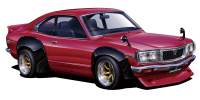
【100% original From Japan 】 Fujimi Models 1/24 Inch-Up Series No. 109 Mazda Savanna GT Late Model Racing Specification Plastic Model Kit ID109
₱3,242.00₱6,159.00

【100% original From Japan 】 Garage & Tool Series No. 21 1/20 Pit Crew B Set Plastic Model Kit
₱2,907.00₱5,523.00
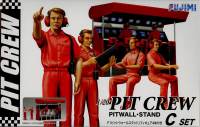
【100% original From Japan 】 Fujimi Models 1/20 Garage & Tool Series No. 25 Pit Crew C F1 Pit Wall Stand
₱2,900.00₱5,700.00

【100% original From Japan 】 Fujimi Model 1/24 Real Sports Car Series No.119 Porsche 911 Carrera RS74 Plastic Model RS119
₱2,692.00₱5,114.00
About Fujimi Mokei
Fujimi Mokei Co., Ltd. (フジミ模型株式会社, Fujimi Mokei Kabushiki-gaisha) is a Japanese plastic model manufacturer headquartered in Suruga-ku, Shizuoka City, Shizuoka Prefecture. The company is internationally recognised for its extensive catalogue of scale model kits, covering automobiles, aircraft, ships, military vehicles, motorcycles, buildings, and science fiction subjects.1 In Japanese, the word “mokei” (模型) translates to “model,” making the company name effectively synonymous with “Fujimi Models.”2
Company profile
| Category | Information |
|---|---|
| Japanese name | フジミ模型株式会社 |
| English name | Fujimi Mokei Co., Ltd. |
| Industry | Plastic models / scale models |
| Headquarters | Shizuoka City, Shizuoka Prefecture, Japan |
| Established as present company | April 1, 1961 |
| Origins | 1948 |
| Major products | Plastic model kits, accessories and finished models |
| Major subjects | Cars, motorcycles, aircraft, ships, military vehicles, trains, buildings, characters and science fiction |
| Major scales | 1/12, 1/20, 1/24, 1/32, 1/48, 1/72, 1/76, 1/700, 1/150 and others |
| Market | Japan and international |
| Headquarters address | 4-21-1 Toro, Suruga-ku, Shizuoka City, Shizuoka 422-8033, Japan |
Fujimi describes its core business as the manufacture and sale of plastic models for both domestic and international markets, with traditional product areas including automobiles, aircraft, tanks, ships, and famous Japanese castles.1
Origins and early history
The origins of Fujimi date back to 1948, when it was established in Shizuoka as Fujimi Mokei Kyozaisha.2 During this initial period, the company focused primarily on wooden ship models rather than the injection-moulded plastic kits that would later define its reputation. This places Fujimi within the early development of Japan’s post-war modelling industry.
1948–1960: Wooden models
In its formative years, Fujimi concentrated on traditional model-making techniques. Ship models were a particular focus due to the significance of naval subjects in the Japanese scale model market at the time. The eventual transition from wood to plastic marked a critical turning point in the company’s history.
1961: The plastic model company
Fujimi entered the plastic model business in 1961, adopting the name Fujimi Mokei Co., Ltd. The company lists April 1, 1961, as its official establishment date.1 Throughout the 1960s, Fujimi expanded rapidly into new categories, including aircraft, warships, tanks, armoured vehicles, historical buildings, and other military subjects.2 Early aircraft kits appeared in scales such as 1/70 and 1/50, while warships were produced in 1/550 scale and tanks in 1/44 scale.
Fujimi and the Shizuoka model industry
Fujimi is intrinsically linked to Shizuoka, which evolved into one of the world’s primary centres for plastic model manufacturing. Several renowned Japanese model companies have historically been based in or around the city, including Fujimi, Tamiya, Hasegawa, and Aoshima. This geographic concentration helped create a distinctive Japanese modelling industry and established Shizuoka’s international reputation among hobbyists. Consequently, Fujimi’s corporate history overlaps significantly with the broader development of Japan’s post-war hobby sector.
The 1970s: Expansion into major categories
The 1970s represented a pivotal decade for Fujimi. In 1970, the company began producing aircraft in 1/72 and 1/48 scales, helping to establish formats that remain standard in aircraft modelling today.2
Water Line Series
One of Fujimi’s most historically significant projects was the 1/700 Water Line Series. Beginning in 1971, Fujimi participated in this collaborative project alongside Tamiya, Hasegawa, and Aoshima.2 The concept involved producing Japanese and foreign naval vessels in a common 1/700 scale, enabling modellers to build fleets and dioramas with correctly proportioned ships from different manufacturers. The Water Line Series became one of the most recognisable traditions in Japanese naval modelling. Fujimi eventually departed from the collaboration and reorganised its naval products into its own Sea Way Model (SWM) line in the early 1990s.2
Military models
Fujimi has maintained a long-standing presence in military modelling. Its World Armour series launched in 1971, notably utilising 1/76 scale, which offered an alternative to the 1/35 scale dominant among serious armour modellers.2 The military range has encompassed Japanese and Allied tanks, armoured vehicles, self-propelled artillery, aircraft, naval vessels, and accessories.
Following Nitto’s bankruptcy in 1988, Fujimi acquired additional tooling, incorporating former Nitto 1/76 military models into the World Armour range.2 The company continues to offer military subjects today, including modern Japanese Self-Defense Force vehicles; current catalogues list items such as a 1/72 Type 99 155 mm self-propelled howitzer.1
Automobile models
Fujimi’s car kits are among its most recognisable products. The company gained prominence in automotive modelling during the 1970s, producing kits in scales such as 1/20 and 1/24, with the latter becoming particularly important.2 Subjects have included Japanese sports cars, supercars, luxury vehicles, classics, tuned cars, street cars, SUVs, trucks, racing cars, and wheels.
The current catalogue features numerous automotive sub-series, including Inch Up Series, Real Sports Car Series, Car NEXT, High-Society Car Series, Touge Series, Kaido Racer Series, Enthusiast Series, Truck Series, and Wheel Series. The official catalogue currently lists more than 2,300 products overall, demonstrating the breadth of Fujimi’s offerings.1
Car NEXT
Car NEXT represents a distinctive modern development for Fujimi. Designed around relatively modern tooling, the series aims to make assembly more approachable while retaining detailed appearances. The range includes contemporary Japanese vehicles such as the Toyota FJ Cruiser, Suzuki Jimny, and Honda S660. For example, the 2026 lineup includes 1/24 Car NEXT Honda S660 variants and a 1/24 Suzuki Jimny JB64,1 indicating continued development of new subjects beyond legacy tooling.
Aircraft
Aircraft remain a traditional specialty for Fujimi. The company has produced kits in several scales, most notably 1/72, which is one of the world’s most common aircraft model scales, and 1/48, which allows for greater surface and cockpit detail. Historically, the aircraft catalogue has covered Japanese, American, and other types, contributing to Fujimi’s reputation as a broad-spectrum manufacturer rather than one focused exclusively on a single category.
Naval models
Naval modelling is one of Fujimi’s oldest traditions, tracing back to its wooden ship model origins. Modern naval products include battleships, aircraft carriers, cruisers, destroyers, submarines, Imperial Japanese Navy vessels, and modern ships. The 1/700 scale remains particularly important. After leaving the Water Line collaboration, Fujimi developed the Sea Way Model (SWM) concept and subsequently created its own 1/700 naval tooling and product families.2 Current catalogues include the 1/700 IJN battleship Yamato and other Japanese naval subjects.1
Famous Japanese castles and architecture
Unlike many major plastic model manufacturers, Fujimi maintains a substantial presence in architectural models. A key category is Japanese castles (meijo), which allow modellers to reproduce famous historical structures. This category connects plastic modelling with Japanese architectural history rather than solely focusing on vehicles and military equipment. Fujimi specifically identifies famous castles as one of its major product areas.1
Anime, character, and science fiction models
Fujimi produces kits based on anime, manga, characters, tokusatsu, science fiction, and pop culture properties. The official catalogue separates categories for anime/characters and tokusatsu alongside conventional vehicle and military subjects.1 This diversification distinguishes Fujimi from companies that concentrate almost exclusively on traditional military scale models.
Chibi-maru
Chibi-maru is one of Fujimi’s most recognisable original concepts. Instead of reproducing vehicles at conventional proportions, these kits reinterpret subjects in a deliberately super-deformed aesthetic. The concept has been applied strongly to naval and military subjects; for example, Chibi-maru Fleet kits represent Japanese warships such as Ise and Hyūga.1 This approach makes traditionally serious military subjects more visually playful and accessible.
NEXT series
The “NEXT” designation appears in several modern Fujimi product families, reflecting a philosophy of using modern engineering to simplify assembly compared to traditional multi-part kits. Examples include Car NEXT, 1/12 NEXT motorcycle products, and other related lines. A current example is the 1/12 Honda CT125 Hunter Cub.1
Train models
Fujimi has expanded into railway modelling with its Train-NEXT series in 1/150 scale. Current examples include the Enoden 1000 series and Enoden 1100 series, both listed as 1/150-scale two-car sets in 2026 product announcements.1 This marks a further broadening of the company’s scope beyond traditional cars, ships, and aircraft.
Product categories today
Fujimi’s current official product database divides its offerings into numerous categories:1
Vehicles
- Cars
- Motorcycles
- Trucks
- Buses
- Construction/work vehicles
Transportation
- Aircraft
- Ships
- Trains
- Monorails
Military
- Tanks
- Armoured vehicles
- Japanese Self-Defense Force subjects
- Imperial Japanese Navy subjects
- Warships
Architecture
- Japanese castles
- Historical buildings
- Structures
Pop culture
- Anime
- Characters
- Tokusatsu
- Science fiction
Specialty lines
- Chibi-maru
- NEXT
- Detail-up parts
- Wheels
- Accessories
- Finished models
Scale philosophy
Fujimi does not adhere to a single proprietary scale but instead uses different scales depending on the subject matter.
| Scale | Typical Fujimi subjects |
|---|---|
| 1/12 | Motorcycles and some larger subjects |
| 1/20 | Cars / racing cars |
| 1/24 | Cars |
| 1/32 | Trucks and vehicles |
| 1/48 | Aircraft |
| 1/72 | Aircraft, military vehicles |
| 1/76 | Armour |
| 1/150 | Trains |
| 1/700 | Ships |
| Various | Castles, buildings and specialised subjects |
The 1/24 automotive and 1/700 naval markets are particularly associated with the Fujimi brand.
Engineering style
Fujimi’s reputation differs from manufacturers known for uniform engineering philosophies. Having accumulated a vast catalogue containing tooling from many generations, two Fujimi kits can offer radically different building experiences. Modern kits may feature highly detailed moulding, fine panel lines, precise fit, multi-material detailing via separate parts, pre-coloured components, or snap-fit engineering. Conversely, older kits may exhibit simpler moulding, less refined fit, fewer parts, raised panel lines, older decals, and more traditional assembly requirements. Therefore, the Fujimi brand name alone does not guarantee specific kit characteristics; the tooling date and specific series are significant factors.
Comparison with other manufacturers
Fujimi is frequently discussed alongside other major Japanese model manufacturers.
Fujimi vs. Tamiya
While Tamiya is renowned for consistently excellent engineering and fit, Fujimi’s advantage often lies in its breadth of subjects, particularly unusual Japanese vehicles, automotive subjects, ships, and architectural models.
Fujimi vs. Hasegawa
Hasegawa is especially famous for aircraft and military subjects. While Fujimi overlaps considerably with Hasegawa, it maintains a particularly strong presence in automotive and naval modelling.
Fujimi vs. Aoshima
Aoshima is perhaps Fujimi’s closest competitor regarding Japanese automotive, motorcycle, anime, and pop culture products. Both companies share strong connections to Japanese hobby culture and frequently produce subjects not covered by Western manufacturers.
The Water Line legacy
The Water Line project represents a significant moment in Japanese modelling history. Rather than producing unrelated 1/700 ships independently, Fujimi, Tamiya, Hasegawa, and Aoshima cooperated on a common-scale naval concept.2 This allowed modellers to construct mixed-manufacturer fleets with consistent scaling. Although Fujimi later departed from this arrangement, its participation helped establish its credentials in the 1/700 naval market.
International presence
Despite being a Japanese company, Fujimi products have been sold internationally for decades through various importers and distributors. Historical distribution in the United States included companies such as UPC, AHM, Bachmann Industries, and Testor.2 Different periods saw Fujimi kits sold under varying importer arrangements and packaging, which explains why collectors sometimes encounter vintage Fujimi kits carrying another company’s branding.
Relationship with collectors
Fujimi holds particular interest for collectors due to a catalogue comprising modern newly tooled kits, older reissues, discontinued items, tooling inherited from other companies, limited editions, special colour versions, and new decal combinations. This mixture provides considerable historical depth. An old Fujimi box does not necessarily indicate current production, and the same subject may have appeared in multiple versions over decades.
Current status in 2026
As of 2026, Fujimi remains an active manufacturer. Its official website continues to announce new products and maintain a comprehensive database. Recent and upcoming releases include the 1/24 Honda S660 Car NEXT, 1/150 Enoden 1000 and 1100 series, 1/12 Honda CT125, 1/700 IJN Yamato, 1/24 Toyota FJ Cruiser, 1/72 Type 99 self-propelled howitzer, various Chibi-maru products, Japanese naval subjects, and anime/character kits.1 The company continues to develop both modern subjects and new interpretations of established categories.
Distinctive characteristics
Fujimi’s identity is defined by five key characteristics:
- Subject variety: The catalogue spans a vast range of subjects beyond any single category.
- Japanese subject coverage: It is particularly valuable for modellers interested in Japanese cars, military equipment, ships, trains, castles, and pop culture.
- Historical catalogue: Production since the early post-war era has resulted in an unusually deep archive of older tooling.
- Experimental concepts: Series such as Chibi-maru and Car NEXT demonstrate experimentation with different approaches to scale modelling.
- Shizuoka heritage: Fujimi is a foundational company in the development of Japan’s Shizuoka-centred plastic model industry.
Name and logo
The Japanese name is フジミ模型株式会社 (Fujimi Mokei Kabushiki-gaisha). As “mokei” means model, the name equates to “Fujimi Models.” It should not be confused with Fujimi Incorporated, an unrelated Japanese company involved in abrasive materials and precision polishing products.
Place in plastic model history
Fujimi is best understood as one of the major historical Japanese plastic model manufacturers. Its significance stems from the combination of longevity, an enormous catalogue, extensive Japanese subject coverage, scale diversity, historical tooling, and continual new releases. From wooden ship models in the late 1940s, Fujimi transitioned to plastic in the 1960s, participated in the landmark 1/700 Water Line project in the 1970s, expanded deeply into automotive, military, and architectural modelling, and eventually developed modern lines such as Car NEXT, Train-NEXT, and Chibi-maru.21
Timeline
- 1948: Established in Shizuoka; initially associated with wooden ship models.2
- 1961: Begins plastic model production and becomes Fujimi Mokei Co., Ltd.1
- 1960s: Expands into aircraft, ships, tanks, and historical structures.2
- 1970: Expands aircraft production into 1/72 and 1/48 scales.2
- 1971: Participates in the 1/700 Water Line project with Tamiya, Hasegawa, and Aoshima.2
- 1971: Introduces the World Armour 1/76 military model line.2
- 1970s: Expands heavily into 1/20 and 1/24 automotive models.2
- 1988: Former Nitto 1/76 military tooling enters Fujimi’s World Armour range.2
- 1992: Ends Water Line participation and reorganises naval range under Sea Way Model.2
- 2000s–2010s: Expands further into character, specialty, and simplified/deformed product lines.
- 2020s: Continues developing modern automotive, motorcycle, railway, military, naval, and character products.
- 2026: Remains an active Shizuoka-based manufacturer with a catalogue exceeding 2,300 listed products and continuing monthly new-product announcements.1