Shop on Lazada
Furla products
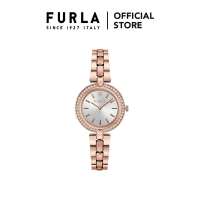
Furla Logo Links Heritage Rose Gold Crystal Watch
₱17,090.00
Buy on Lazada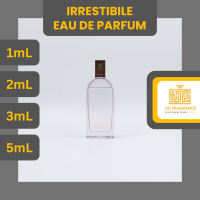
Furla Irresistibile edp (1ml 2ml 3ml or 5ml)
₱615.00
Buy on Lazada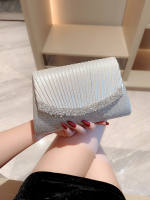
Women Leather Beads Wedding Bridal Evening Party Lady Clutch Purse Bag (with sling)
₱488.00₱999.00
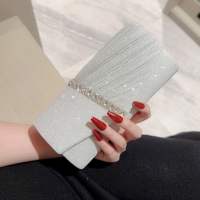
Wedding banquet bag hand-held bag shiny bag
₱359.00₱688.00
About Furla
Overview
Furla is an Italian fashion and leather goods company established in Bologna in 1927 by Aldo Furlanetto. Originally operating as a wholesale distributor of women’s fashion accessories, the company has evolved into an internationally recognised brand specialising in handbags, leather goods, shoes, and accessories.1 Today, Furla positions itself around Italian craftsmanship, contemporary design, colour, and what it terms a “Contemporary Italian Lifestyle.”2
| Item | Information |
|---|---|
| Brand name | Furla |
| Founded | 1927 |
| Founder | Aldo Furlanetto |
| Founded in | Bologna, Emilia-Romagna, Italy |
| Industry | Fashion / leather goods |
| Core products | Handbags, small leather goods, shoes, accessories |
| Target market | Primarily women, with men’s collections also available |
| Brand heritage | Italian craftsmanship and design |
| Positioning | Contemporary premium / accessible luxury |
| Original business | Wholesale distribution of women’s fashion accessories |
| First Furla store | Via Ugo Bassi, Bologna (1955) |
| International expansion | Began in Europe and the United States; entered Japan in 1990 |
| Major creative themes | Italian design, colour, functionality, craftsmanship |
| Art initiative | Furla per l’arte; Fondazione Furla |
| 100th anniversary | 2027 |
The historical milestones outlined above are documented by Furla itself.2
Origins and early history
Furla was founded in Bologna in 1927 when Aldo Furlanetto established the company. Its original business model differed significantly from its modern operations, focusing primarily on the wholesale distribution of women’s fashion products and accessories.1
Bologna remains integral to the brand’s identity. Rather than emerging from traditional Italian fashion capitals such as Milan or Florence, Furla originated in Emilia-Romagna, a region strongly associated with manufacturing, craftsmanship, and Italian design. This background explains the company’s historical emphasis on construction quality and practical design alongside fashion aesthetics.
A significant turning point occurred in 1955 with the opening of the first Furla store on Via Ugo Bassi in central Bologna.1 This location remains operational today, serving as a tangible link between the modern company and its origins. The transition from wholesale distribution to branded retail allowed Furla to establish direct consumer relationships and develop a distinct brand identity.
Family leadership and international expansion
During the 1970s and 1980s, Furla entered a transformative phase when Aldo Furlanetto’s children, Carlo, Paolo, and Giovanna, joined the company.3 This period marked the shift towards designing and producing proprietary branded handbags and accessories rather than distributing third-party fashion products. Concurrently, Furla began expanding beyond Italy, establishing sales networks in France and the United States.2
The 1980s and 1990s were characterised by further internationalisation. The brand expanded throughout Europe and North America and entered the Japanese market in 1990.1 Subsequently, Furla developed subsidiaries and operations in markets including Spain, the United Kingdom, Germany, Hong Kong, and mainland China. Japan proved particularly significant; the brand’s combination of Italian aesthetics, restrained design, and accessible positioning aligned well with markets valuing craftsmanship and understated sophistication. By this era, Furla had evolved from a domestic leather goods manufacturer into an international lifestyle brand with Italian roots.
Design philosophy and aesthetic
Furla’s aesthetic is defined by several recurring principles:
Italian identity
Italian design is central to the brand. Furla describes its DNA as Italian, emphasising the connection between beauty, craftsmanship, and contemporary design.1
Use of colour
Unlike luxury houses that prioritise neutral palettes, Furla has historically embraced bright and playful colours. The brand characterises this approach as “colourful creativity” and joyfulness.1
Functionality
Furla handbags are designed as usable everyday items rather than purely decorative objects. The design philosophy combines clean silhouettes, practicality, and refined details.
Contemporary interpretation
Rather than functioning as a heritage re-enactment brand, Furla aims to reinterpret traditional Italian craftsmanship through contemporary shapes, materials, and colours.
Feminine elegance
Historically strongest in women’s handbags and accessories, the brand’s aesthetic occupies a space between elegant, sophisticated, and playful, avoiding overly formal or avant-garde extremes.
Core products and craftsmanship
Handbags remain Furla’s most recognisable product category. The company identifies bags, purses, shoes, and small leather accessories as its principal categories.1 Furla handbags typically emphasise leather quality, clean construction, practical proportions, functional interiors, discreet branding, colour, and everyday usability. This supports a market positioning where products are fashionable without being excessively logo-driven.
Leather is fundamental to Furla’s heritage. Products are manufactured using traditional techniques involving experienced artisans, with attention to materials, assembly, finishing, piping, and stitching.2 Leather creations account for a substantial proportion of worldwide distribution, distinguishing Furla from brands that have shifted focus to apparel. Furla remains fundamentally a leather goods brand.1
Product categories
Although handbags are the best-known category, Furla offers a broader lifestyle proposition:
Bags
* Shoulder bags
* Crossbody bags
* Tote bags
* Top-handle bags
* Mini bags
* Backpacks
* Evening bags
Small leather goods
* Wallets
* Card holders
* Pouches
* Key cases
* Other leather accessories
Shoes
* Sneakers
* Loafers
* Sandals
* Pumps
* Boots and seasonal footwear
Other lifestyle categories
Through partnerships, Furla has extended into textiles, eyewear, and watches, moving beyond exclusive reliance on handbags.1
Market positioning
Furla is generally perceived as a premium or accessible luxury brand rather than an ultra-luxury maison. On the luxury spectrum ranging from mass market to ultra-luxury, Furla sits within the premium-to-accessible-luxury segment.
Conceptually, it competes with brands such as Coach, Michael Kors, Longchamp, Coccinelle, Tory Burch, and Kate Spade, while sitting below traditional high-luxury houses like Hermès, Chanel, Louis Vuitton, Dior, and Gucci. Furla’s value proposition focuses on Italian design, leather craftsmanship, recognisable style, and relatively attainable pricing rather than extreme exclusivity or status. This makes it attractive to consumers seeking a genuine fashion brand without the price points associated with top-tier luxury.
Furla represents a version of Italian luxury that is less ostentatious. Instead of relying on large logos, celebrity culture, exotic materials, or conspicuous status, the brand emphasises craftsmanship, design, colour, and practicality. The company uses descriptors such as joyful, colourful, contemporary, authentic, functional, and essential to characterise its products,1 positioning Italian luxury through everyday lifestyle rather than pure prestige.
Cultural initiatives and education
Art plays a significant role in Furla’s corporate identity. In 1999, the company created the “Furla per l’arte” award to support young Italian artists, an initiative that contributed to broader cultural activities.1 In 2008, Furla established the Fondazione Furla to extend this relationship with contemporary art,1 subsequently engaging in exhibitions and collaborations with artists and cultural institutions.
Additionally, Furla invests in preserving manufacturing knowledge through the Furla Academy. Presented as part of Progetto Italia, this initiative aims to transfer specialist craft skills and manufacturing expertise to younger artisans.1 This underscores that traditional craftsmanship is treated not merely as marketing but as a production heritage requiring active transmission.
Global presence and Italian identity
While unmistakably Italian in origin, Furla operates as an international business. Its official website serves regional markets across Europe, Asia-Pacific, North America, and South America, including Italy, France, Germany, the UK, Spain, Japan, China, Hong Kong, Singapore, South Korea, Australia, the United States, and Canada.1 This reach results from decades of expansion beginning in Europe and the United States, followed by growth in Japan and Asia.
Italian identity is a primary brand asset. Furla associates itself with Italian craftsmanship, design, taste, beauty, creativity, quality, and contemporary lifestyle. Heritage communications describe experienced artisans using traditional techniques to create modern products.1 Effectively, Furla sells Italian design internationally rather than simply selling domestically produced objects.
Timeline of key milestones
1927
Aldo Furlanetto establishes Furla in Bologna as a wholesale distributor of women’s fashion accessories.1
1955
The first Furla store opens on Via Ugo Bassi in Bologna; this store remains in operation.1
1970s–1980s
Founder’s children Carlo, Paolo, and Giovanna join the business. Furla launches its first branded handbag and accessory collection and begins international expansion.3
1990
Furla enters the Japanese market and expands its international network.1
1999
Launch of the Furla per l’arte contemporary art award.1
2008
Establishment of the Fondazione Furla.1
2010s
Continued strengthening of retail network, supply chain, product development, and digital distribution.1
2020s
Ongoing development of international retail and digital presence, expansion of lifestyle categories, and emphasis on Italian heritage and craftsmanship.2
2027
Furla is scheduled to celebrate its 100th anniversary, a milestone the company has already begun presenting as significant in its history.4
Brand characteristics and distinction
| Dimension | Furla’s identity |
|---|---|
| Country | Italy |
| City of origin | Bologna |
| Heritage | Nearly 100 years |
| Core expertise | Leather goods |
| Hero product | Handbags |
| Design | Contemporary, elegant, functional |
| Colour | Integral to brand identity |
| Craftsmanship | Central |
| Logo usage | Generally more restrained than major logo-heavy luxury houses |
| Market level | Premium / accessible luxury |
| Customer proposition | Italian style without ultra-luxury pricing |
| Brand personality | Sophisticated, colourful, optimistic |
| Cultural association | Italian lifestyle + contemporary art |
| Geographic reach | International |
Furla differs from traditional Italian luxury houses such as Gucci, Prada, or Bottega Veneta, which have developed extensive ecosystems encompassing runway collections, ready-to-wear, jewellery, and fragrance. Furla’s centre of gravity remains leather goods first and lifestyle brand second, with strength concentrated in handbags and accessories where craftsmanship, colour, and functional design are paramount. This focus contributes to a perception of greater approachability compared to many Italian luxury houses.
The brand personality can be summarised as Italian elegance without excessive seriousness. It combines traditional associations with quality and craftsmanship with a cheerful attitude toward fashion, emphasising joyfulness, colour, and contemporary lifestyle rather than distant prestige.1 Consequently, Furla is accurately understood as an accessible-luxury or premium leather goods brand rather than an ultra-luxury maison, positioned toward the accessible side of the luxury spectrum.1
Assessment
Furla is a long-established Italian fashion company whose history encompasses three broad phases: commercial origins as a family distributor (1927–1960s); transformation into a proprietary fashion brand under second-generation leadership (1970s–1990s); and evolution into a global lifestyle brand combining leather craftsmanship, digital commerce, international retail, and art initiatives (2000s–present).2
Throughout these phases, the brand has remained consistent in its core identity: an Italian leather goods brand built around craftsmanship, contemporary design, colour, and an approachable interpretation of Italian luxury. With 2027 marking its centenary, Furla possesses nearly a century of heritage while continuing to emphasise contemporary design over nostalgia.4
References
- Furla History
- Furla | Online store and official site – bags, wallets and accessories
- FURLAの歴史|フルラジャパン株式会社 採用サイト
- As Furla approaches its 100th anniversary in 2027, we invite you to join us on a journey through Furla history. A century of creativity, craftsmanship, and Italian spirit… told one fact at a… | FURLA