Shop on Lazada
Gateron products
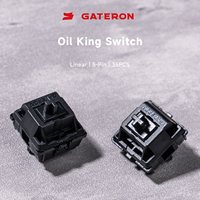
GATERON Oil King Lubed Keyboard Switches Plate Mounted Compatible for Mechanical Keyboard 5 Pin 55gf Pre-lubed Dark Black Linear Key Switches(35 Switches/Quantity)
₱1,339.28₱1,408.00
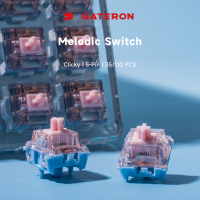
GATERON Melodic Keyboard Switches Clicky RGB LED 5 Pin Factory Pre-lubed 60gf Key Switches for MX Mechanical Keyboard
₱4,226.00₱4,283.00
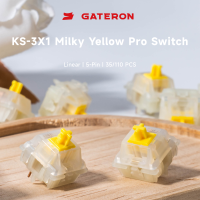
GATERON KS-3X1 Milky Yellow Pro Keyboard Switches Linear for MX Mechanical Keyboard
₱1,865.00₱1,924.00
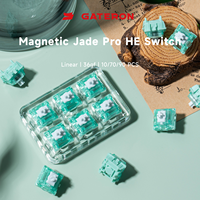
GATERON Magnetic Jade Pro Keyboard Switches Linear Factory Pre-lubed Freely Setting Pre-Travel for Gaming Keyboard Magnetic keyboard switches
₱4,090.47₱4,368.00
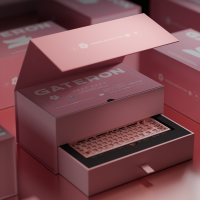
GATERON FORT 68 Sakura Collab Limited GT68 Ultra PCB Edition Set Magnetic Jade Sakura Switch Magnetic custom keyboard
₱16,129.00₱16,186.00
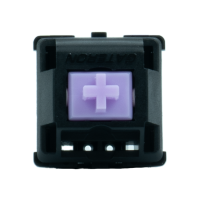
GATERON Oil king Switches Series Set 5 Pins mechanical switch Three Typing Feels Factory Pre-Lubrication Suitable for office and gaming
₱4,128.20₱4,398.00
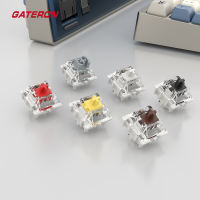
GATERON G Pro 3.0 Linear Tactile Clicky Switches RGB Pre-lubed 50gf 3-pin 5-pin for Gaming Mechanical Keyboard(35 Switches/Quantity)
₱694.00
Buy on Lazada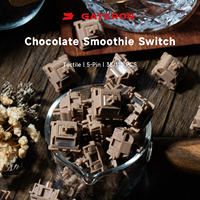
GATERON Chocolate Smoothie Tactile keyboard Switches Linear 55gf Full POM Material SMD Pre-lubed 5-Pins Key Switches MX Mechanical Keyboard
₱2,156.00₱2,215.00
About Gateron
Gateron (Chinese: 佳达隆; commonly stylised as GATERON) is a Chinese electronics and switch manufacturer best known internationally for its mechanical keyboard switches. The company develops and manufactures conventional mechanical switches, optical switches, Hall-effect/magnetic switches, low-profile switches, silent switches, micro-switches, and related components. It has become one of the most recognisable switch manufacturers in the mechanical-keyboard enthusiast market.1
Gateron’s reputation was originally built around smooth MX-style mechanical switches, particularly its inexpensive linear switches such as the Gateron Yellow and Milky Yellow. In the late 2010s and 2020s, however, the company expanded considerably into premium switches, magnetic/Hall-effect technology, low-profile designs, and complete keyboard components.
Quick facts
| Field | Information |
|---|---|
| Brand | GATERON |
| Chinese name | 佳达隆 |
| Company | Gateron Electronic Technology Co., Ltd. |
| Industry | Electronics, electromechanical components, keyboard hardware |
| Headquarters / major facility | Huizhou, Guangdong, China |
| Best known for | Mechanical keyboard switches |
| Switch technologies | Mechanical, optical, magnetic/Hall-effect |
| Other products | Micro-switches, waterproof switches, stabilisers, PCBs, keyboard components and DIY tools |
| Notable reputation | Smoothness, large product range, OEM manufacturing, enthusiast switches |
| Major market | Mechanical keyboards, gaming keyboards, custom keyboards |
| Current direction | Hall-effect/magnetic switches, low-profile switches, custom keyboard ecosystem |
Gateron’s official materials identify its operations in Huizhou’s Zhongkai High-tech Zone, Guangdong Province. The company states that it maintains in-house capabilities covering mould manufacturing, injection moulding, metal forming, automated assembly, and product inspection.1
Corporate identity
Gateron is fundamentally a switch manufacturer and technology company rather than solely a keyboard brand. Its products are used across several layers of the electronics industry, including mechanical, optical, and magnetic/Hall-effect keyboard switches; micro-switches; waterproof switches; automotive and electronic components; precision moulds; plastic and metal components; keyboard stabilisers; and keyboard PCBs with related DIY hardware.
While the keyboard-switch business is the segment most consumers encounter, Gateron describes its operations as covering both micro-switches and mechanical keyboard switches. Its current keyboard ecosystem has further expanded to include stabilisers, PCBs, tools, and complete keyboard-related products.1 This distinction positions Gateron closer to a component manufacturer and technology developer than a conventional consumer keyboard company.
Name and company history
There is a notable distinction regarding Gateron’s founding date. The company’s current Chinese website states that it was established in 2013 in Huizhou, Guangdong.2 However, other Gateron materials and older company descriptions refer to a longer manufacturing history, with some sources describing the business as having origins around 2000.3
The most accurate description is that Gateron’s present corporate and brand operation dates to the 2010s, while the company presents its manufacturing experience as extending back much further. Its current official corporate profile specifically cites 2013 as the establishment date, while newer promotional material emphasises more than 16 years of R&D and manufacturing experience.1
Early development and manufacturing
Before gaining prominence among keyboard enthusiasts, Gateron was involved in the broader electromechanical-switch industry. Its manufacturing expertise encompasses precision moulds, plastic injection moulding, metal forming, automated assembly, micro-switches, sensors, and electronic components.
This background proved significant because mechanical keyboard switches are sophisticated mass-produced components where minute differences in mould tolerances, plastic materials, springs, stems, contacts, and lubrication can substantially affect smoothness, spring noise, stem wobble, sound, key feel, durability, and manufacturing consistency. Gateron’s vertically integrated manufacturing approach allows it to control many of these processes internally, with facilities providing end-to-end production and 100% inspection throughout manufacturing.1
Entry into the mechanical-keyboard market
Gateron’s international reputation grew primarily through MX-style mechanical switches, which follow the basic design concept popularised by Cherry MX: a stem moves vertically inside a housing, interacting with a spring and electrical contact mechanism. The three traditional categories are:
Linear
A smooth, uninterrupted keypress. Typical examples include Gateron Red, Gateron Yellow, Gateron Black, G Pro Yellow, and Oil King. Linear switches are particularly popular for gaming and among users who prefer smooth typing.
Tactile
A noticeable bump occurs during the keypress. Examples include Gateron Brown, Baby Kangaroo, Baby Raccoon, and various other Gateron tactile designs.
Clicky
A tactile switch with an intentional clicking mechanism and sound. Examples include Gateron Blue, Gateron Green, and newer clicky designs such as Melodic.
Gateron describes its conventional keyboard switches as primarily linear, tactile, and clicky.1
Reputation for smoothness
Gateron’s primary historical advantage was smoothness at relatively affordable prices. For years, the enthusiast community associated Gateron with smoother stock switches than many competing mass-market MX-style options, leading to the familiar reputation that “Gateron = smooth.” The company has long marketed smoothness as a defining characteristic.3
This reputation was particularly significant because early custom-keyboard enthusiasts frequently modified switches through lubrication, spring swapping, stem swapping, housing swapping, and “frankenswitching.” Gateron switches became common raw materials for these experiments due to their accessibility and consistent baseline performance.
Notable product families
Gateron Yellow
Among Gateron’s products, Gateron Yellow is culturally significant within the hobby. The original Yellow family gained popularity for occupying an attractive middle ground with relatively light actuation, smooth linear feel, low price, good sound, easy availability, and a large enthusiast following. Over time, “Gateron Yellow” evolved from a single switch into a family of generations and variants, including KS-3 Yellow, KS-3X1 / Milky Yellow, G Pro Yellow, G Pro Yellow 2.0, G Pro Yellow 3.0, and Milky Yellow Pro. Differences between variants involve housing material, lubrication, LED compatibility, moulding, spring characteristics, and internal construction.3 The Yellow series consequently became one of the archetypal budget-to-midrange linear switch families in the enthusiast community.
Milky housing
Another major element of Gateron’s identity is its Milky housing, which uses a translucent, whitish material rather than the completely transparent housing found on many RGB-oriented switches. The Gateron Milky Yellow became especially famous for its combination of low price, smooth linear action, characteristic deeper sound, attractive appearance, custom-keyboard compatibility, and excellent modding potential. Gateron’s current ecosystem still includes Full Milky and Milky Pro families.3
G Pro series
The G Pro family represented a modernised generation of Gateron’s mainstream switches, emphasising improved manufacturing consistency, factory lubrication, improved LED compatibility, updated housings, improved moulds, and better out-of-box performance compared to older models. The series progressed through multiple generations, including G Pro 2.0 and G Pro 3.0, reflecting a market shift towards switches that performed well immediately without requiring manual modification.
Premium switches
Gateron eventually expanded beyond inexpensive OEM-style switches into enthusiast-oriented premium products:
- Ink series: Recognisable for distinctive translucent “ink” housings, popular for smooth linear movement, premium construction, and distinctive sound. Current catalogue includes Ink V2 and Box Ink.3
- Oil King: A premium linear switch known for its opaque black appearance and high-end construction.
- North Pole: Uses transparent housings, positioned for enthusiasts seeking aesthetics, smoothness, and RGB compatibility.
- Baby Kangaroo: A notable tactile design known for a pronounced tactile experience.
These products illustrate Gateron’s evolution from an inexpensive supplier into a company spanning budget, enthusiast, and premium segments.
Optical switches
Gateron also manufactures optical switches, which use light-based detection instead of traditional metal electrical contacts. Advantages include reduced contact-related wear, rapid signal detection, and different implementation possibilities for gaming keyboards. The catalogue includes optical products such as the KS-22 Optical family.3 Optical switches use fundamentally different sensing principles from Gateron’s later magnetic switches.
Magnetic and Hall-effect switches
Gateron’s most technically significant development is its work on magnetic/Hall-effect keyboard switches. The company began developing magnetic switches in 2014, achieved mass production by 2018, and launched the KS-20 magnetic-switch family commercially in 2019.1 This was unusually early in the modern Hall-effect keyboard revolution.
Unlike conventional mechanical switches that detect keypresses through physical electrical contacts, Hall-effect keyboards detect changes in a magnetic field: Keypress → magnet moves → Hall sensor detects magnetic-field change → controller calculates key position. This enables capabilities difficult or impossible with ordinary mechanical switches.
Industry partnerships
Gateron’s magnetic-switch technology was used in the development of the first-generation SteelSeries Apex Pro ecosystem in 2019.1 SteelSeries described the Apex Pro’s OmniPoint technology as using magnetic sensors to allow user-configurable actuation sensitivity, demonstrating that magnetic switches could become mainstream gaming technology.
In 2020, Wooting adopted Gateron magnetic switches for its Wooting Two Lekker Edition, explicitly describing Gateron as an experienced, high-quality manufacturer and confirming the Hall-effect/magnetic design. This partnership helped establish Gateron as a key supplier in the emerging analog/Hall-effect keyboard market.
Hall-effect capabilities
Hall-effect systems provide information about how far a key has moved, enabling adjustable actuation, rapid trigger based on movement rather than fixed reset points, analog input reporting different movement levels, and gaming-oriented behaviour valuable for competitive FPS titles requiring rapid activation and release.
Magnetic Jade
Introduced around 2023, the Magnetic Jade family uses a dual-rail structure and proprietary magnetic-switch technologies, with patents filed relating to magnetic keyboard-switch structures.1 The modern magnetic lineup includes Magnetic Jade, Magnetic Jade Pro, Magnetic Jade Silent, Magnetic Jade Dragon, Magnetic Jade Attraction, KS-20, and various low-profile magnetic switches. This family represents Gateron’s transition from “mechanical switch manufacturer” to Hall-effect keyboard technology company.
Low-profile switches
Low-profile mechanical and magnetic switches represent another major growth area, reducing switch height to enable thinner keyboards. Gateron currently produces low-profile families including KS-27, KS-33, KS-33 2.0, and low-profile magnetic switches.3 These are relevant to thin mechanical keyboards, portable keyboards, gaming laptops, compact keyboards, and modern minimalist designs.
Current product categories
As of 2026, Gateron’s ecosystem extends well beyond classic Red/Yellow/Brown switches:1
- Mechanical switches: Linear, Tactile, Clicky, Silent
- Magnetic / Hall-effect switches: Magnetic Jade, KS-20, Jade variants, gaming-oriented HE switches, low-profile magnetic switches
- Optical switches: KS-22 and related products
- Low-profile switches: KS-27, KS-33, newer low-profile generations
- Premium switches: Ink, Oil King, North Pole, Baby Kangaroo, CJ, Cap, Jupiter, Luciola, others
- Keyboard components: Stabilisers, PCBs, Hot-swap components, DIY tools, switch testers
Manufacturing philosophy
A defining characteristic of Gateron is vertical integration. Rather than sourcing finished parts from unrelated suppliers, the company maintains capabilities spanning mould making, plastic injection, metal forming, automated assembly, and inspection. This control is critical because extremely small manufacturing differences affect the final typing experience.
Gateron states it possesses independent R&D, in-house mould making, complete production capabilities, quality-management systems, and 100% inspection throughout production. It holds certifications including ISO 9001, UL, and IATF 16949.1
OEM and ODM operations
A significant portion of Gateron’s business is B2B manufacturing. Beyond selling switches under its own name, it works with keyboard brands, gaming companies, consumer-electronics companies, industrial customers, and automotive-related customers. Consequently, keyboards may contain Gateron switches even without prominent Gateron branding.
The manufacturing business operates at multiple levels: Gateron-branded products, customised/OEM switches, and industrial components. This dual approach enables large-scale production while simultaneously serving the enthusiast market.
Comparison with competitors
Gateron vs. Cherry
Cherry established the modern MX-style standard and historically dominated the market. While many early Gateron switches followed MX architecture, modern products include substantial proprietary development, especially in magnetic/Hall-effect technology, low-profile switches, and specialised designs.
| Gateron | Cherry | |
|---|---|---|
| Origin | China | Germany |
| Famous for | Smooth switches + huge variety | MX switch standard |
| Custom market | Extremely strong | Historically dominant |
| Product variety | Very large | Large |
| Magnetic switches | Major focus | Also developing Hall-effect products |
| Budget switches | Very extensive | Less central historically |
| Premium enthusiast switches | Extensive | Growing |
| OEM manufacturing | Major | Major |
Gateron vs. Kailh
Both are Chinese manufacturers with extensive electromechanical experience. Both have moved beyond traditional MX switches into optical, low-profile, gaming, magnetic/Hall-effect, and customised OEM products. In enthusiast circles, Gateron is traditionally associated with smoothness, while Kailh is known for experimentation and unusual architectures, though this distinction is increasingly blurred.
Relationship with the custom-keyboard community
Gateron has had significant influence on the custom mechanical-keyboard hobby. Its switches have been used in enthusiast-built keyboards, hot-swappable keyboards, gaming keyboards, prebuilt custom keyboards, switch modding, reviews, and “frankenswitch” experiments. The availability of inexpensive switches enabled experimentation without prohibitive cost, making Gateron a kind of “building material” for the community.
Naming conventions
Gateron’s naming system can be confusing, with terms including KS-3, KS-3X1, KS-8, KS-9, KS-20, KS-22, KS-27, KS-33, G Pro, G Pro 2.0, G Pro 3.0, Ink, Box Ink, Oil King, North Pole, Jupiter, Baby Kangaroo, and Magnetic Jade. The KS number is generally a product/platform designation rather than a ranking; for example, KS-20 refers to a magnetic-switch platform and KS-33 to a low-profile platform.
Technical variables
Switch characteristics are determined by multiple engineering variables beyond colour:
- Housing: Nylon, polycarbonate, POM, proprietary materials, transparent, translucent, opaque, or “Ink” style
- Stem: Determines much of the movement and feel
- Spring: Determines force curve
- Lubrication: Factory lubrication affects smoothness and sound
- Contact system: Traditional electrical contacts vs. magnet + Hall sensor
- Mounting: PCB-mounted, plate-mounted, LED configuration compatibility
Consequently, two switches labelled “Red” can feel dramatically different.
Evolution of reputation
Gateron’s reputation has evolved through distinct phases:
- Early Gateron: Affordable + smooth MX-style switches
- Enthusiast Gateron: Customisation + premium switches (Ink, Milky, Oil King, North Pole)
- Modern Gateron: Engineering + Hall effect + ecosystem (magnetic switches, low-profile designs, PCBs, broader hardware)
Strategic direction in 2026
Gateron no longer competes primarily for the “best cheap mechanical switch” market. Recent releases emphasise Hall-effect switches, magnetic gaming keyboards, low-profile switches, silent switches, advanced structures, custom PCBs, keyboard components, collaborations, and complete ecosystems. At COMPUTEX 2025, Gateron presented magnetic switches, GT60-series PCBs, and keyboard collaborations as part of its move toward the customised-keyboard market.1 The 2026 catalogue includes Magnetic Jade variants, G Pro 3.0, Jupiter, Oil King, North Pole, silent switches, low-profile products, and keyboard PCBs.1
Timeline of milestones
- 2000s: Earlier manufacturing history associated with electronic switches, sensors, and precision components
- 2013: Present Gateron corporate operation established in Huizhou2
- 2014: Development of magnetic switches begins1
- 2010s: Increasing recognition for MX-style mechanical keyboard switches
- Late 2010s: Gateron Yellow and Milky families gain enthusiast popularity
- 2018: Successful mass production of magnetic-switch technology1
- 2019: Magnetic switches associated with SteelSeries Apex Pro generation1
- 2020: Magnetic switches adopted for Wooting Two Lekker Edition
- 2020s: Expansion into premium enthusiast switches, Ink, Oil King, North Pole, silent switches, and sophisticated G Pro generations
- 2023: Promotion of newer magnetic technology and dual-rail designs; Magnetic Jade becomes major product family1
- 2025: Presentation of broader magnetic/custom-keyboard ecosystem at COMPUTEX1
- 2026: Continued expansion of magnetic, low-profile, silent, and conventional mechanical switches alongside PCBs, stabilisers, and DIY products1
Major product families
| Family | Technology | General position |
|---|---|---|
| KS-3 / Milky | Mechanical | Classic/budget |
| G Pro | Mechanical | Mainstream |
| G Pro 2.0/3.0 | Mechanical | Modern mainstream |
| Ink | Mechanical | Premium enthusiast |
| Oil King | Mechanical | Premium linear |
| North Pole | Mechanical | Premium/RGB enthusiast |
| Baby Kangaroo | Mechanical tactile | Premium enthusiast |
| Silent | Mechanical | Quiet typing |
| KS-22 | Optical | Optical keyboards |
| KS-27 | Low-profile mechanical | Thin keyboards |
| KS-33 | Low-profile mechanical | Thin/custom keyboards |
| KS-20 | Magnetic | Hall-effect keyboards |
| Magnetic Jade | Magnetic | Premium Hall-effect |
| Jade variants | Magnetic | Gaming/enthusiast HE |
| GT60 | Keyboard PCB ecosystem | Hall-effect/custom keyboards |
Strengths
- Manufacturing scale: Substantial industrial infrastructure rather than boutique design
- Broad catalogue: Extensive range of mechanical, optical, magnetic, low-profile, and silent switches
- Enthusiast reputation: Established names in custom-keyboard community (Yellow, Milky, Ink, Oil King)
- Smoothness: Smooth linear switches remain a defining characteristic
- Magnetic technology: Early entry and continued investment in Hall-effect market
- OEM relationships: Switches featured in products from major keyboard and gaming companies
- Vertical integration: In-house manufacturing of moulds, plastics, metal parts, and assembly provides production control1
Weaknesses and criticisms
The enormous product catalogue can create naming confusion; consumers may assume all “Yellow” switches are identical despite generational construction differences. Variations exist between factory batches, generations, factory lubrication, housing materials, springs, stems, and tolerances. As with all mass-produced switches, enthusiast opinions on smoothness, wobble, sound, and spring ping vary. The sheer number of products can also make the lineup difficult for newcomers to navigate.
Industry significance
Gateron helped accelerate the transition of mechanical keyboards from niche enthusiast products to broader consumer categories through three stages:
- Making smooth switches affordable: Gateron Yellow demonstrated quality mechanical switches need not be expensive
- Making enthusiast switches mainstream: Products like Ink, Oil King, and North Pole brought enthusiast designs to larger markets
- Moving the industry toward Hall effect: Early magnetic-switch development and partnerships established Hall-effect switches as serious alternatives1