Shop on Lazada
GE products
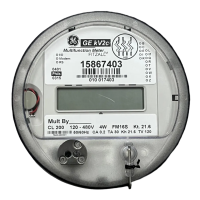
GE or Aclara 3 Phase KWH Electric Meter 4 Wire 7 jaws 120V to 480VAC KV2C FM16S
₱32,700.00₱35,000.00
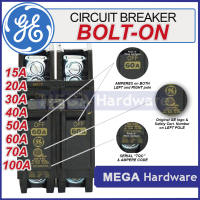
GE CIRCUIT BREAKER (PLUG IN or BOLT ON) 15A 20A 30A 40A 50A 60A 70A 100A 2 POLE ORIGINAL
₱2,940.00
Buy on Lazada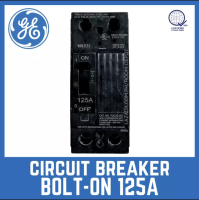
G.E 100AT TO 225AT 2POLE / 3POLE TQD
₱9,000.00
Buy on Lazada
GE High Grade T5 LED Tube Light Home Office Warehouse Retail lighting White Yellow LED Ceiling Lights
₱299.00₱454.00
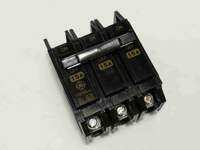
Bolt On TQC GE Circuit Breaker
₱2,549.00
Buy on Lazada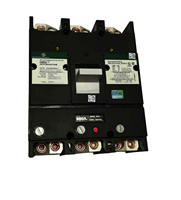
THJK GE Circuit Breaker 200A - 600A
₱32,500.00
Buy on Lazada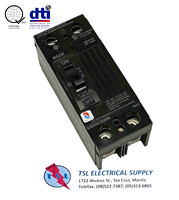
TQD 2 POLE GE Circuit Breaker
₱10,200.00
Buy on Lazada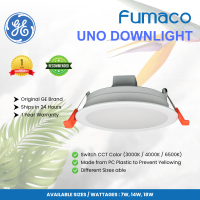
GE Round Panel light Downlight 6500K/Daylight and 4000k/Cool white Circle Ceiling LED Down light 9w 15w 24w LED Pinlight 5 7 9 inch Pin light
₱899.00
Buy on LazadaAbout GE
General Electric, widely known as GE, stands as one of the most historically significant industrial brands globally. Established in the United States in 1892, GE evolved from early electrical industry roots into a vast multinational conglomerate with interests spanning electric power, lighting, aviation, healthcare, appliances, transportation, finance, media, and industrial technology. 1
It is essential to note that GE is no longer the diversified conglomerate familiar to most of the 20th and early 21st centuries. Following a multi-year restructuring process, the company separated its healthcare and energy divisions. GE HealthCare became an independent entity in 2023, followed by GE Vernova in 2024. The remaining corporate entity is now GE Aerospace, which retains the GE name and the NYSE ticker symbol GE. 2
Basic information
| Field | Information |
|---|---|
| Full name | General Electric Company |
| Common name | GE |
| Founded | 1892 |
| Founding location | United States |
| Founders / principal origins | Thomas Edison, Elihu Thomson and associated companies |
| Original industries | Electricity, lighting, electrical equipment |
| Modern GE | GE Aerospace |
| Stock exchange | New York Stock Exchange |
| Ticker | GE |
| Current principal industry | Aerospace |
| Historic industries | Energy, healthcare, appliances, finance, transportation, media, lighting, industrial technology |
| Famous logo | GE Monogram |
| Major transformation | 2023–2024 separation into three independent companies |
The company describes its history as encompassing more than 130 years of industrial innovation. 3
Origins of GE
The history of GE is rooted in the development of the electrical industry during the late 19th century. Two primary entities were involved in its formation:
- Edison General Electric Company, associated with Thomas Edison
- Thomson-Houston Electric Company, associated with inventor Elihu Thomson
In 1892, these two firms merged to establish the General Electric Company. This consolidation was orchestrated with the involvement of financier J. P. Morgan, and Thomson-Houston executive Charles A. Coffin was appointed as GE’s first president. 4
Consequently, the company did not originate solely as “Edison’s company.” Rather, the modern GE emerged from the combination of two major electrical-technology businesses.
Significance of the merger
During this era, electricity was emerging as a critical global technology. GE played a central role in developing and commercializing technologies including:
- Electric lighting
- Generators
- Motors
- Electrical distribution equipment
- Power-generation equipment
- Industrial electrical systems
This foundation enabled GE to eventually expand far beyond its initial focus on light bulbs.
Thomas Edison and GE
Thomas Edison remains the figure most closely associated with the origins of GE. He developed commercially vital electrical technologies and founded businesses that ultimately became part of the corporation. His work helped establish the industrial ecosystem from which the company emerged. 5
However, Edison did not remain the dominant figure within the organization for long. As the company evolved into a larger industrial entity, it drew upon the engineering and commercial capabilities of both the Edison and Thomson-Houston traditions. This combination defined a key characteristic of the corporation:
GE became less about one inventor and more about turning scientific and engineering advances into large-scale industrial businesses.
Early business: Electricity and lighting
In its earliest decades, GE functioned fundamentally as an electrical engineering company. Its activities centred on technologies for generating, transmitting, and utilising electricity.
Lighting was particularly significant, as GE became one of the world’s most renowned manufacturers of electric lamps and lighting technology. The iconic GE Monogram also originated during this period, eventually becoming one of the most recognisable corporate marks globally. The design’s roots trace back to the company’s founding era in Schenectady, New York, in 1892. 6
Expansion into an industrial conglomerate
Throughout the 20th century, GE expanded significantly beyond lighting into numerous technologically demanding sectors.
Aviation
GE became a major producer of aircraft engines and aviation systems. These aerospace activities grew to such importance that they now form the foundation of today’s GE Aerospace.
Power generation
The company established itself as a leading supplier of:
- Gas turbines
- Steam turbines
- Generators
- Nuclear-power technology
- Electrical-grid equipment
- Industrial power systems
This division ultimately served as the basis for GE Vernova.
Healthcare
GE developed substantial businesses in medical technology, including:
- CT scanners
- Ultrasound systems
- Imaging equipment
- Patient-monitoring systems
- Diagnostic technologies
This healthcare division eventually became GE HealthCare. Historical records note that GE HealthCare’s heritage includes the development of medical imaging technologies such as the GE 7800 CT system. 7
Appliances
For decades, the GE name was synonymous with household appliances, including refrigerators, washing machines, dryers, ovens, and dishwashers. This made GE unusual among industrial firms; its brand was present in both heavy industrial power plants and ordinary households.
Transportation
GE also became a significant manufacturer of railway locomotives and other transportation-related industrial equipment.
Financial services
At its peak, the company was deeply involved in finance through GE Capital, which operated as a massive financial-services arm. This division was a primary driver in transforming GE from a traditional industrial manufacturer into a highly diversified conglomerate.
Corporate model and management
GE’s traditional corporate model relied on using advanced technology, engineering, management, and finance to build businesses across multiple major industrial markets. This approach made GE more than a manufacturer; it functioned as a hybrid technology, engineering, manufacturing, financial, and management organisation.
For much of the 20th century, GE was regarded as a premier example of the American multinational conglomerate. Its influence extended beyond products into corporate management theory. The company became renowned for its leadership development programmes and management culture, particularly during the tenure of Jack Welch, who served as CEO from 1981 to 2001.
The Jack Welch era
Jack Welch assumed the roles of chairman and CEO in 1981. His leadership marked one of the most famous periods in the company’s history. Welch drove GE toward aggressive performance targets, restructuring, acquisitions, divestitures, globalization, financial services expansion, and shareholder returns.
During this period, GE grew into an enormous multinational conglomerate involved in diverse businesses ranging from aircraft engines and power turbines to appliances and financial services. The management philosophy employed during this era became highly influential throughout American corporate culture.
Restructuring and divestiture
The conglomerate model eventually became difficult to sustain. In the 2000s and 2010s, GE faced significant challenges related to GE Capital, the global financial crisis, declining performance in certain industrial units, debt obligations, changing energy markets, and investor pressure.
In response, the company began selling or separating major businesses, including GE Appliances, various GE Capital units, GE Lighting, transportation businesses, oil-and-gas activities, and other industrial assets. This signalled a fundamental shift from the diversified conglomerate model of previous decades toward a focused industrial company structure.
The three-company transformation
The most significant event in modern GE history was the decision to divide the corporation into three independent publicly traded entities. In 2021, GE announced plans to separate its aviation, healthcare, and energy businesses. 8
GE HealthCare
Focused on medical technology and healthcare, this entity became an independent publicly traded company in January 2023. 13
GE Vernova
Focused on energy technology—including power generation, electrification, wind, and electrical-grid technologies—this company became independent on April 2, 2024, trading on the NYSE under the ticker GEV. 9
GE Aerospace
Focused on aircraft engines, propulsion, aerospace systems, commercial aviation services, and military propulsion, this entity became the remaining GE company and retained the GE ticker. The transformation was completed in 2024. 10
GE today: GE Aerospace
For current research purposes, it is critical to distinguish that GE today is essentially GE Aerospace, rather than the historical conglomerate. GE Aerospace is a global company specialising in aircraft propulsion, systems, and services, with a substantial installed base of commercial and military engines. 11
Commercial aviation
GE Aerospace develops and supports engines used on commercial aircraft operated by airlines worldwide.
Military aviation
The company also develops propulsion technologies for military aircraft.
Engine services
Because aerospace engines require decades of maintenance, inspection, repair, and overhaul, a significant portion of GE Aerospace’s business model involves long-term engine services. This creates recurring relationships with airlines and aircraft operators.
Aircraft engines
One of GE’s most significant technological achievements has been its role in developing modern jet engines. The aerospace business has produced engines for numerous generations of aircraft. Notable GE-family engines include:
- CF6
- CFM56
- GE90
- GEnx
- GE9X
- Various military propulsion systems
The GE90 is particularly noted for its size and use on the Boeing 777. The GE9X, developed for the Boeing 777X family, represents a newer generation of high-bypass turbofan technology. GE Aerospace reports an installed base of more than 44,000 commercial and more than 26,000 military aircraft engines. 12
GE Vernova: Energy legacy
Although no longer part of GE, GE Vernova is integral to the brand’s history. It inherited the majority of the former energy business, with a portfolio covering gas power, wind power, grid technologies, electrification, power-conversion technologies, and energy software. GE Vernova states that its technologies help generate approximately 25% of the world’s electricity. 14
GE HealthCare
GE HealthCare is now an independent company with heritage rooted in GE’s long involvement in medical technology. Its focus areas include medical imaging, ultrasound, patient care, pharmaceutical diagnostics, and digital healthcare technologies.
The GE logo
The GE Monogram is among the most recognisable corporate logos ever created, consisting of stylized letters G and E enclosed in a circle. While modified stylistically over decades, it retains its basic character dating back to the founding era. Notably, all three successor companies retained connections to this visual identity despite becoming independent corporations.
Usage of the name
GE stands for General Electric. While the original corporate name was General Electric Company, current usage depends on context:
- References to aircraft engines generally denote GE Aerospace.
- References to wind turbines or power-grid technology generally denote GE Vernova.
- References to CT scanners generally denote GE HealthCare.
Thus, the historical brand association is broader than the modern corporate entity.
Importance in industrial history
GE holds historical significance for several reasons:
- Electrical revolution: Helped transform electricity into a mass industrial system.
- Aviation: Became a major global aircraft-engine manufacturer.
- Healthcare: Commercialised critical medical-imaging technologies.
- Energy: Was deeply involved in power generation and infrastructure for over a century.
- Corporate management: Served as an influential model for conglomerate management, especially under Jack Welch.
- American industrial identity: Stood alongside IBM, Ford Motor Company, and Honeywell as an icon of technological power.
Historical timeline
- 1892: Edison General Electric and Thomson-Houston Electric merge to create GE. 15
- 1890s–1920s: Expansion of electrical, lighting, power, and engineering activities.
- 20th century: Development of major businesses in electricity, aviation, appliances, healthcare, and transportation.
- 1981–2001: Jack Welch leads aggressive restructuring and global expansion.
- 2000s: GE Capital becomes a major financial-services business; operations continue as a diversified conglomerate.
- 2008–2009: Global financial crisis exposes risks associated with GE Capital.
- 2010s: Major restructuring begins; numerous businesses are sold or separated.
- 2021: Plans announced to create independent aviation, healthcare, and energy companies. 16
- January 2023: GE HealthCare becomes an independent public company. 17
- April 2, 2024: GE Vernova becomes independent; remaining business becomes GE Aerospace, retaining the GE ticker.
- Today: Operates as GE Aerospace, focused on aviation propulsion, systems, and services. 18
Comparison of entities
| Name | Status today | Main industry | Stock ticker |
|---|---|---|---|
| GE / GE Aerospace | Independent | Aerospace | GE |
| GE Vernova | Independent | Energy & electrification | GEV |
| GE HealthCare | Independent | Healthcare technology | GEHC |
The original GE corporation now continues primarily as GE Aerospace. 19
Brand perception
From a branding perspective, GE is unusual because the name is older and broader than the current corporate owner. For generations, consumers encountered the brand through light bulbs, appliances, and electronics, while industrial customers knew it through turbines, locomotives, and aircraft engines. This created broad associations with engineering, reliability, and innovation. Today, the brand’s centre of gravity has shifted decisively toward aviation and aerospace technology.
Official resources
- GE — History of General Electric
- GE — About Us
- GE Aerospace
- GE Vernova
- GE HealthCare
References
- About: GE Today, GE History | General Electric
- 1,093 Light Bulb Moments: The Many Inventions From The Wizard of Menlo Park | GE News
- GE History | General Electric
- GE Spinoff FAQs: Customers, Investors, Employees | General Electric
- A Shared Vision: GE and Alstom Continue Their Common History With Latest Acquisition | GE News
- “The Initials of a Friend”: A History Of GE’s Iconic Monogram Logo | GE News
- GE Spin-off Resources | General Electric
- GE Vernova completes spin-off and begins trading on the New York Stock Exchange | GE Vernova News
- Investor Relations Frequently Asked Questions | GE Vernova
- GE Aerospace Launches as Independent, Investment-Grade Public Company Following Completion of GE Vernova Spin-Off | GE News
- GE Board of Directors Approves Spin-Off of GE Vernova; GE Vernova and GE Aerospace to Launch April 2, 2024 | GE News
- GE Aerospace launches as independent, public company following spin-off of GE Vernova | GE Aerospace News
- GE Vernova Completes Spin-off | GE Vernova News
- A shared vision: GE and Alstom continue a common vision | GE News
- FEATURE/GE Follows Lead of Thomas Edison and Shines a Light On Innovation; Practical Incandescent, Electric Light Bulb Celebrates 125th Anniversary | GE News
- GE Vernova History
- GE Board of Directors Approves Spin-Off of GE Vernova; GE Vernova and GE Aerospace to Launch April 2, 2024 | GE News
- A Step Into The Future: GE Turns 130, But Its Engineers Aren’t Looking Back | GE News
- Go with Current: GE’s New Energy Business Changes the Power Game | GE News