Shop on Lazada
Glossier products
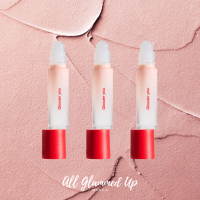
Glossier You Perfume
₱2,500.00₱2,750.00
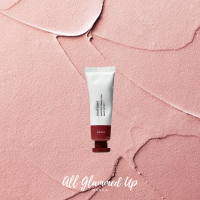
Glossier Cloud Paint
₱1,720.00₱1,750.00
Glossier You Solid Perfume
₱2,850.00
Buy on Lazada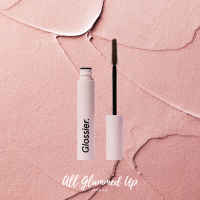
Glossier Lash Slick
₱1,970.00₱2,000.00
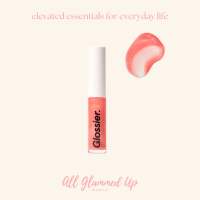
Glossier Lip Gloss Pink
₱1,650.00
Buy on Lazada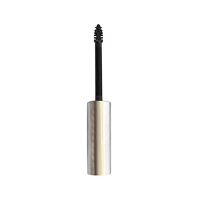
Glossier Boy Brow Eyebrow Gel 3.12 g / 0.11 oz (Brown)Eyelash Curlers
₱1,053.26₱1,855.00
About Glossier
Glossier, Inc. is an American beauty and personal-care company established by Emily Weiss in 2014. Emerging from Into The Gloss, a beauty website Weiss launched in 2010, it became one of the most influential digitally native beauty brands of the 2010s. Glossier is recognised for its minimalist aesthetic, focus on skincare, community-led product development, direct-to-consumer origins, distinctive pink packaging, and a philosophy centred on enhancing rather than concealing individual appearance.1
The company’s portfolio encompasses skincare, makeup, body care, fragrance, and merchandise. While originally built as an online-first business, Glossier has since expanded into physical retail and wholesale distribution. Current authorised retail partners include Sephora, Mecca, Space NK, and Amazon through an authorised reseller.
Quick facts
| Category | Information |
|---|---|
| Company | Glossier, Inc. |
| Founded | 2014 |
| Founder | Emily Weiss |
| Origin | New York City, United States |
| Parent/ownership | Privately held |
| Industry | Beauty / cosmetics / personal care |
| Products | Skincare, makeup, body care, fragrance, merchandise |
| Original business model | Digital-first / direct-to-consumer |
| Predecessor | Into The Gloss, founded 2010 |
| Brand philosophy | “Skin First. Makeup Second.” |
| Major milestone | Reached a reported $1.2 billion valuation in 2019 |
| Current retail model | Glossier.com, physical stores and selected retail partners |
History
Origins: Into The Gloss
Glossier’s origins lie in Into The Gloss (ITG), a beauty editorial website founded by Emily Weiss in 2010. Unlike conventional beauty magazines, ITG focused heavily on interviews and personal beauty routines. Its signature The Top Shelf feature explored the products people actually used, offering readers a behind-the-scenes look at real beauty habits.
This approach cultivated a highly engaged community of beauty consumers whose opinions influenced which products were discussed and purchased. Glossier describes ITG as a website and community dedicated to sharing information about products and the people who use them.
Weiss eventually recognised that this editorial platform could serve as the foundation for a new type of beauty company—one where products were developed through conversations with consumers rather than simply marketed to them.
Launch of Glossier
Glossier officially launched on October 6, 2014, initially offering only four products focused on skincare:
- Milky Jelly-style cleansing/skincare concepts
- Priming Moisturizer
- Perfecting Skin Tint
- Balm Dotcom
The deliberately limited assortment was strategic. Rather than competing with established conglomerates through vast product ranges, Glossier positioned itself around a carefully edited collection of everyday essentials.
Weiss described the initial concept as beauty products designed to enhance individuality rather than conceal it.1
The company’s early approach was unconventional for the industry: build the audience first, then create products with that audience.
Business model
A key innovation of Glossier was its integration of media, community, e-commerce, and product development.
Traditional beauty companies typically followed a linear path:
Product → advertising → consumer
Glossier sought to create a different feedback loop:
Community → conversation → product idea → product → community feedback → repeat
This model was enabled by Into The Gloss, Instagram, and other social platforms, allowing Glossier to observe customer discussions, preferences, and actual product usage.
This approach made customers feel less like passive audiences and more like active participants in the brand.
WIRED described Glossier as a digital-first beauty company built around customer dialogue and community engagement.2
Brand philosophy
Glossier’s most recognisable philosophy is:
“Skin First. Makeup Second.”
This principle posits that skincare should form the foundation of a beauty routine, while makeup should enhance rather than completely transform a person’s appearance. Glossier currently frames its mission around making beauty accessible and uncomplicated, emphasising individuality, freedom of expression, and enjoyment.1
This philosophy distinguished Glossier from traditional beauty advertising, which historically featured highly perfected models, heavy makeup, and aspirational glamour.
Instead, Glossier popularised a more casual aesthetic characterised by:
- Natural-looking skin
- Dewy finishes
- Understated makeup
- Effortless-looking routines
- Everyday beauty
- Individuality
- Approachable branding
Crucially, Glossier did not merely sell “no-makeup makeup”; it turned effortlessness itself into a brand aesthetic.
Visual identity
Glossier’s visual identity became nearly as recognisable as its products.
Millennial pink
The brand became strongly associated with a distinctive pale pink colour used across:
- Product packaging
- Shopping bags
- Stores
- Shipping materials
- Advertising
- Social-media imagery
This pink-and-white aesthetic became one of the defining visual languages of the beauty industry in the late 2010s.
Minimalism
Glossier generally favoured:
- Clean typography
- Simple packaging
- Uncluttered photography
- Soft colours
- Conversational copy
- Close-up product imagery
These elements gave the company an appearance closer to a fashion or lifestyle brand than a traditional cosmetics manufacturer.
The pink pouch
The reusable pink bubble-style pouch became another iconic element of the Glossier experience. Packaging thus served not just a functional purpose but also acted as part of the product’s social identity.
Major products
Over time, Glossier expanded significantly beyond its original four-product lineup.
Boy Brow
Boy Brow became one of Glossier’s signature items. It is an eyebrow grooming product designed to reflect the brand’s preference for fuller, brushed-up, and natural-looking brows.
Its success helped establish Glossier as a makeup company despite its original emphasis on skincare.
Cloud Paint
Cloud Paint is a cream or liquid blush formulated to create a soft, diffused flush.
It became closely associated with Glossier’s broader aesthetic of sheer, buildable colour rather than heavy coverage.
Glossier You
Glossier You is the company’s best-known fragrance. Rather than being positioned as a conventional perfume, it was marketed around the concept of enhancing the wearer’s own scent and personality.
This product marked a significant step in Glossier’s expansion from cosmetics into fragrance.
Lash Slick
Lash Slick is Glossier’s mascara, designed to produce defined and lengthened lashes without the heavier effect associated with some traditional mascaras.
Balm Dotcom
Balm Dotcom became an iconic product and a prime example of Glossier’s ability to turn a simple beauty category into a recognisable lifestyle item.
Retail strategy
Glossier initially operated primarily through glossier.com, serving as a prominent example of the direct-to-consumer beauty model.
As the company grew, it began experimenting with physical retail. Its stores were designed less like conventional department-store counters and more like brand experiences, where customers could test products, interact with staff, and engage with Glossier’s visual identity in person.
Distribution subsequently expanded beyond proprietary stores. Today, products are available via the website and selected authorised retailers, including Sephora, Mecca, and Space NK.
This represents a significant evolution:
2014: Internet-first beauty startup
↓
2018–2019: Major physical retail expansion
↓
2020s: Omnichannel brand combining DTC, stores, and wholesale
Growth and investment
Glossier experienced exceptionally rapid growth during the second half of the 2010s.
The company attracted venture capital investment, including early backing from Forerunner Ventures, and subsequently raised increasingly large funding rounds.
In 2019, Glossier raised approximately $100 million in Series D financing and reached a reported valuation of roughly $1.2 billion, achieving “unicorn” status in the beauty industry.3
This valuation reflected investor confidence that Glossier could evolve into a broader consumer lifestyle and beauty platform beyond mere cosmetics sales.
Cultural impact
Glossier’s significance extends beyond individual products. During the 2010s, the company became synonymous with a specific cultural aesthetic:
Glossier girl → natural skin → dewy makeup → pink packaging → Instagram → effortless beauty
The brand was particularly influential among younger consumers discovering beauty products through:
- Beauty blogs
- YouTube
- Online communities
- Influencers
- Peer recommendations
Rather than relying exclusively on celebrities and traditional advertising, Glossier integrated ordinary customers and online communities into its marketing system.
This helped drive a broader industry shift toward community-led brands and social-first marketing.
Emily Weiss
Emily Weiss was the central figure behind Glossier’s creation. Before founding the company, she worked in the fashion industry and created Into The Gloss. Her background exposed her to both traditional beauty sectors and emerging digital media.
Her key insight was that while consumers were already discussing beauty online, traditional companies were not necessarily listening. Glossier was built to centre that conversation.
Weiss served as CEO during the company’s formative years. In May 2022, she stepped down to assume an executive-chair role, with Kyle Leahy appointed as CEO.3
Challenges and criticism
Rapid growth brought significant challenges. As Glossier expanded, it faced scrutiny regarding:
- Workplace culture
- Diversity and representation
- Management practices
- Organisational scaling
- Profitability
- Retail expansion
- Maintaining startup culture at scale
In 2020, former employees publicly criticised the company over its treatment of Black employees and broader workplace culture issues. This controversy prompted internal reflection and contributed to wider industry discussions about whether progressive, community-focused brand images accurately reflect internal realities.
Glossier subsequently undertook organisational changes and restructuring.
These events highlight a tension in the company’s history: while the external brand identity was built on community and inclusivity, internal operations faced criticism regarding the consistent application of those ideals.
Inclusivity
Inclusivity has been central to Glossier’s public positioning. The company challenged traditional notions of beauty as transformation toward a standardised ideal, instead emphasising individual features and everyday consumers.
However, like many modern beauty brands, Glossier has faced scrutiny over gaps between brand messaging and practical representation, particularly concerning race and workplace diversity.
Consequently, Glossier’s history illustrates both the power and limitations of community-centred branding.
Sustainability and cruelty-free status
Glossier states that its products are Leaping Bunny certified cruelty-free, participating in an independent certification system verifying compliance with cruelty-free standards.4
The company also notes that while many products are vegan, not every Glossier product is necessarily vegan. Consumers are advised to verify individual product information.4
Significance in the beauty industry
Glossier is significant for reshaping how beauty companies approach brand building. Its influence can be summarised through several key concepts:
1. Community before mass marketing
Glossier demonstrated that a beauty company could cultivate an audience and community before becoming a major product manufacturer.
2. Content as a business asset
Into The Gloss provided editorial authority, consumer insight, and an existing audience, functioning as more than just advertising.
3. Social media as brand infrastructure
Instagram was treated not merely as an ad channel but as integral to brand identity, customer relationships, and product development.
4. DTC beauty
Glossier became one of the most prominent examples of a digitally native, direct-to-consumer beauty company.
5. Lifestyle branding
The company sold a recognisable approach to beauty alongside cosmetics.
6. “Natural” beauty as a commercial category
Glossier helped make dewy skin, brushed brows, sheer colour, and minimalist routines commercially desirable at scale.
Comparison with traditional beauty brands
| Traditional beauty model | Glossier model |
|---|---|
| Product-led | Community-led |
| Large product ranges | Curated assortment |
| Celebrity advertising | Customers/community |
| Department stores | DTC first |
| Heavy transformation | Enhancement |
| Glamour | Effortlessness |
| Corporate branding | Conversational branding |
| Advertising → customer | Conversation → product → customer |
| Makeup-centered | Skincare-first |
This distinction establishes Glossier as an influential case study in modern consumer-brand strategy.
Current positioning
Today, Glossier operates as a comprehensive beauty company covering skincare, makeup, body care, and fragrance, utilising a mix of online sales, physical retail, and selected wholesale partners.1
The core philosophy remains consistent: beauty should be accessible, uncomplicated, expressive, and centred on the individual rather than artificial perfection.1
Legacy
Glossier’s primary legacy lies in demonstrating that a beauty company could be built around an internet community and a distinct cultural identity.
The company emerged at the intersection of several major trends:
beauty blogging + social media + direct-to-consumer commerce + millennial consumer culture + community marketing + minimalist aesthetics.
This combination established Glossier as one of the defining beauty brands of the 2010s.
Its history serves as a case study in digital branding, consumer psychology, social commerce, influencer culture, and modern retail.
Summary
Glossier is a New York-founded beauty company created by Emily Weiss in 2014 from the community surrounding Into The Gloss, famous for turning minimalist, skincare-first beauty and community-driven digital branding into a globally recognizable consumer brand.1