Shop on Lazada
Hansgrohe products
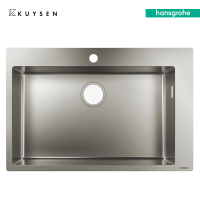
Hansgrohe built in sink 660 43302.809 by Kuysen
₱34,391.50₱52,910.00
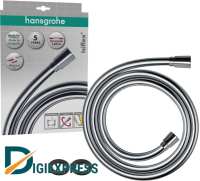
HANSGROHE Metaflex Shower Hose Chrome 1.6m
₱3,572.74₱4,895.00
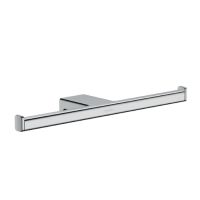
Hansgrohe AddStoris Double roll holder Chrome by Kuysen
₱2,632.50₱4,050.00
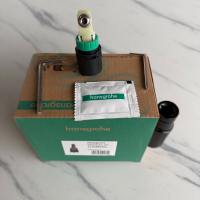
Genuine Hansgrohe M1 Ceramic Cartridge 97685000 – Hot & Cold Mixing Valve Core for Faucet Replacement
₱2,290.00₱3,290.00
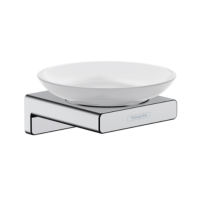
Hansgrohe AddStoris Soap dish Chrome by Kuysen
₱2,986.75₱4,595.00
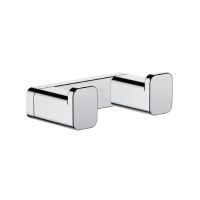
Hansgrohe Addstoris Double hook Chrome by Kuysen
₱1,719.25₱2,645.00
About Hansgrohe
hansgrohe is a German premium brand specialising in bathroom and kitchen water products, particularly faucets, showers, shower systems, and related bathroom solutions. It is one of the two principal brands of the Hansgrohe Group, alongside the luxury-design brand AXOR. The company traces its origins to 1901, when Hans Grohe founded a small metalworking business in Schiltach in Germany’s Black Forest.2
Today, Hansgrohe is internationally associated with German engineering, innovative shower technology, contemporary design, durability, and water-saving technology. In 2026, the company celebrates its 125th anniversary.2
Brand and corporate structure
A key distinction exists between hansgrohe as a consumer brand and the Hansgrohe Group as the corporate entity.
hansgrohe brand
hansgrohe serves as the Group’s premium bathroom-and-kitchen brand. Its portfolio includes bathroom and kitchen faucets, hand showers, showerheads, shower systems, thermostats, shower controls, bathroom accessories, furniture, sanitary ceramics, and kitchen sinks. The brand’s philosophy centres on combining design, comfort, technology, and responsible water use.2
Hansgrohe Group
The Hansgrohe Group is the corporate organisation behind both the hansgrohe and AXOR brands. Its two-brand strategy positions hansgrohe as a premium, contemporary provider of everyday bathroom and kitchen products, while AXOR targets the luxury segment with highly design-oriented offerings. AXOR was established as a designer brand in 1993 and has collaborated with designers including Philippe Starck, Antonio Citterio, Jean-Marie Massaud, and Barber Osgerby.1
Historically, Hansgrohe functioned as a company name; today, it operates as both a corporate group and a primary premium consumer brand.1
History and origins
Founding in the Black Forest
The founder, Hans Grohe (1871–1955), was born in Luckenwalde near Berlin before moving to Schiltach in the Black Forest. He established a small metalworking business there on 15 June 1901.2 Initially, the company manufactured various metal products such as brass pans, watch components, stovepipe rosettes, metal-spun goods, and tin showers. A pivotal strategic decision was made to specialise increasingly in products for the sanitary industry. At the beginning of the 20th century, private bathrooms were still considered a luxury in Germany, but Hans Grohe recognised that the shower could become an essential component of the modern bathroom.2
Shower technology innovations
Hansgrohe’s identity is closely linked to the history of the modern shower. Rather than merely manufacturing plumbing components, the company developed technologies intended to alter how users interact with water.
- 1928: Hansgrohe developed its hand shower for serial production, providing a convenient alternative to traditional fixed overhead showers and giving users greater control over water direction.2
- 1953: At the age of 82, Hans Grohe invented the height-adjustable wallbar for hand showers. This innovation allowed users to position the shower at different heights and subsequently became a standard feature in bathrooms globally.2
These developments underpin the company’s self-description as a pioneer in “shower culture.”2
Corporate development and branding
Following Hans Grohe’s death in 1955, his descendants continued to play significant roles in the business. His youngest son, Klaus Grohe, joined the company in 1968 and became central to its transformation from a German sanitary manufacturer into an internationally recognised premium brand.2 Under his leadership, the company emphasised international expansion, product design, brand building, environmental responsibility, water conservation, and technological innovation.
In 1977, the company introduced the hansgrohe brand name with distinctive lowercase styling. This marked the beginning of its transformation into a consumer-facing premium brand, connecting engineering, functionality, industrial design, and brand identity.2
Product philosophy and technology
Hansgrohe products aim to combine multiple characteristics rather than compete solely on price. The brand emphasises visual appearance, treating faucets and showers as visible architectural elements. Ergonomics are also prioritised through easy-to-operate handles, adjustable components, thermostatic controls, push-button mechanisms, pull-out kitchen faucets, and intuitive water-selection systems.2
Water experience and resource efficiency
The company invests heavily in spray patterns and water sensations, ranging from concentrated jets to finer droplets. Simultaneously, it focuses on resource efficiency through proprietary technologies designed to reduce consumption without compromising user experience:2
- EcoSmart: Reduces water consumption.
- AirPower: Mixes air with water to create larger, softer droplets.
- CoolStart: Limits hot water flow during normal faucet operations to reduce energy waste.
- Select technology: Introduced in 2011, this allows users to control water functions via a push-button mechanism rather than traditional rotary controls.2
The Selecta hand shower, introduced in 1968 with adjustable spray types, sold more than 30 million units and remains one of the company’s most commercially significant innovations.2
Design and sustainability
Industrial design
Hansgrohe operates at the intersection of sanitary engineering and industrial design. According to the Hansgrohe Group, its brands and products have received more than 800 design awards since 1974.2 Design encompasses form, ergonomics, user interface, installation, water flow, materials, finish, and long-term visual appeal. Consequently, Hansgrohe products are frequently specified by architects, interior designers, hotels, and property developers.2
Sustainability initiatives
Sustainability is integral to the Hansgrohe identity. Klaus Grohe advocated for environmental protection and resource efficiency within the sanitary industry decades ago.2 In 1995, Hansgrohe became the first company in the sanitary industry to be certified under the EU EcoAudit Regulation.2
Current sustainability efforts operate at three levels:
* Product: Reducing consumption via EcoSmart and CoolStart.
* Manufacturing: Improving resource efficiency and developing recycling processes, including a new process for electroplated plastics introduced in 2023.2
* Corporate: Integrating environmental responsibility into business strategy through the ECO 2030 initiative, which aims for all water-bearing products to utilise water-saving technologies by 2030.2
Manufacturing and global presence
Although Hansgrohe is a global brand, Germany remains central to its operations. The Group’s headquarters are located in Schiltach, Baden-Württemberg.2 As of 2026, the Hansgrohe Group operates eight wholly owned production sites: four in Germany, and one each in France, Serbia, the United States, and China.2 While not every product is manufactured in Germany, “Made in Germany” and German engineering remain core to the brand image.
Globally, the Group reports having 35 subsidiaries, 22 sales offices, distribution in more than 145 countries, and approximately 5,600 employees, with around 60% based in Germany.2 Products are installed in private residences, luxury homes, hotels, resorts, spas, cruise ships, commercial developments, public projects, and major architectural landmarks.2
Presence in Southeast Asia
Hansgrohe maintains a significant presence in Singapore and Southeast Asia. Hansgrohe Pte Ltd was established in Singapore as a subsidiary in 1995, subsequently developing distribution and representation across multiple Asian markets.3 This operation covers or supports Singapore, Malaysia, Indonesia, Thailand, Vietnam, Philippines, Cambodia, Laos, Brunei, Hong Kong, South Korea, and Taiwan.3
In Singapore, the company operates The Water Studio by Hansgrohe on Mohamed Sultan Road, serving as a design, training, and showroom facility for both the hansgrohe and AXOR brands.3 Within the region, Hansgrohe is positioned as a premium bathroom design brand rather than merely a plumbing-equipment supplier.
Market position and brand identity
Hansgrohe competes in the premium-to-luxury bathroom and kitchen fittings market. Its competitive advantages include German heritage, a strong record of invention, extensive investment in industrial design, over a century of operating history, a broad product ecosystem, and a focus on sustainability.2 The brand personality is characterised as German, premium, innovative, design-conscious, professional, sustainable, and timeless rather than trend-driven.2
The company’s influence extends beyond hardware sales; it has helped shape expectations of the modern bathroom by transforming the shower from a simple plumbing fixture into a designed experience involving ergonomics, technology, and personal comfort.2
Distinction from GROHE
Despite similar names, Hansgrohe and GROHE are distinct companies and brands. Both originated in the German sanitary industry with roots involving the Grohe family, but they are no longer related corporately. Hansgrohe is an independent corporate group known for showers and premium bathroom/kitchen products, whereas GROHE is part of the LIXIL corporation.2
Corporate governance and financials
Hansgrohe began as a family business and retained strong family influence throughout much of its history. Today, it operates as a modern corporate group. The founding family retains representation in the supervisory structure, while day-to-day operations are managed by professional leadership, currently under CEO Hans Jürgen Kalmbach.2
For the fiscal year 2024, the Hansgrohe Group reported revenue of approximately €1.387 billion. The group employs around 5,600 people worldwide and maintains more than 23,000 active intellectual property rights as of 2026.2 Innovation management and research and development involve approximately 200 employees, with innovation centres located in Germany’s Black Forest and Shanghai.2
Recent developments
Hansgrohe now positions itself around the concept of the complete bathroom experience, integrating water technology, design, digital controls, sustainability, architecture, and lifestyle. In 2025, the company launched the Raindance Alive shower range, incorporating spray technologies such as RainAir and PowderRain.2 Digital services connecting bathroom planning, product selection, and professional installation continue to expand.2
Key milestones
| Year | Milestone |
|---|---|
| 1901 | Hans Grohe establishes his metalworking business in Schiltach |
| 1928 | Hansgrohe develops hand shower for serial production |
| 1953 | Height-adjustable wallbar introduced |
| 1968 | Klaus Grohe joins the company; Selecta shower developed |
| 1977 | hansgrohe brand name introduced |
| 1992 | Major roof-integrated solar installation at Offenburg site |
| 1993 | AXOR designer brand established |
| 1995 | Hansgrohe receives EU EcoAudit certification |
| 2011 | Select push-button technology introduced |
| 2023 | New recycling process for electroplated plastics introduced |
| 2025 | Raindance Alive launched |
| 2026 | Hansgrohe celebrates 125 years |