Shop on Lazada
Hape products
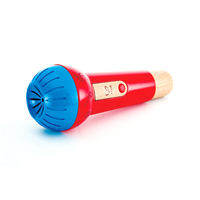
Hape | Educational Microphone Toy for Children
₱938.87₱1,116.52
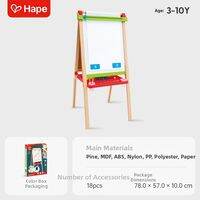
Hape | Adjustable Double-sided Drawing Board Writing Board
₱7,959.85₱10,101.88
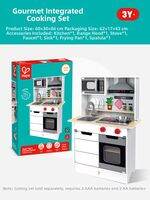
Hape | Sound and Light Imitation Kitchen Toy for Children
₱5,232.33₱7,171.06
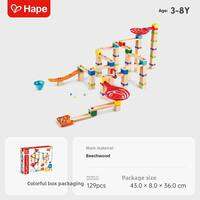
Hape | Track Marble Building Blocks Dinosaur Adventure Educational Toy
₱6,264.55₱7,853.12
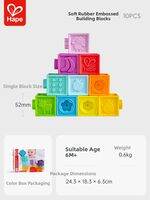
Hape | Soft Carved Building Blocks Educational Intellectual Toys for Babies 6-12 Months
₱1,227.02₱2,557.67
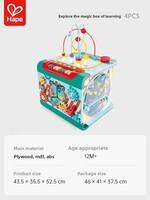
Hape | Exploration Learning Magic Puzzle Box Educational Intellectual Toy
₱15,601.33₱18,701.15
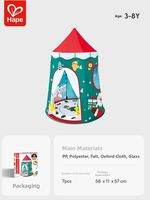
Hape | Childrens Play Tent and Secret Base Small House
₱4,130.13₱6,411.71
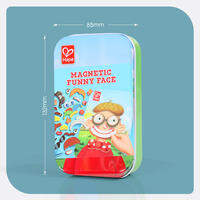
Hape | Portable Brain-Boosting Board Game Metal Box
₱344.16₱703.47
About Hape
Hape is a German-founded, internationally operating toy company and educational toy brand best known for its wooden toys, early learning products, pretend-play sets, puzzles, construction toys, and other items designed around play-based learning and sustainable materials. The wider Hape group traces its origins to 1986, when German entrepreneur Peter Handstein established a business serving kindergartens. The Hape-branded consumer toy line subsequently developed into a global brand.1
As of 2026, Hape states that its products are sold in more than 100 countries and regions, the group operates over 40 subsidiaries, and its products have received more than 300 international toy awards.15
Quick facts
| Category | Information |
|---|---|
| Brand | Hape |
| Industry | Toys, children’s products, educational toys |
| Founded | 1986 (origin of the Hape group) |
| Founder | Peter Handstein |
| Country of origin | Germany |
| Headquarters / corporate presence | Hape International AG, Mücke, Germany |
| Core philosophy | “Love Play, Learn” |
| Main focus | Educational, developmental, and sustainable toys |
| Primary age range | Infants through early childhood, extending to older children |
| Major materials | Wood, bamboo, plant-based plastics, bioplastics, renewable/recycled materials |
| Global reach | 100+ countries and regions |
| Group companies | 40+ subsidiaries and affiliates |
| Awards | 300+ international toy awards |
| Founder/Chairman | Peter Handstein |
| Official website | global.hape.com |
The current corporate imprint identifies Hape International AG at Alsfelder Straße 41, 35325 Mücke, Germany, with Peter Handstein serving as chairman of the supervisory board.2
History
Origins: 1986
Hape’s history begins with Peter Handstein, who grew up in rural Germany and developed an interest in both nature and children’s education. Before founding Hape, he worked as a salesman for an educational toy company supplying German kindergartens. This role brought him into contact with numerous teachers and schools, providing practical insight into how children learn through play.3
In 1986, Handstein founded Hape Kindergarten Supply in Germany alongside his sister Sabine and their friend Renate Gies. The original business focused primarily on supplying educational materials and toys to kindergartens.3
It is important to note that 1986 is the founding date generally used for Hape’s corporate history, while the consumer toy brand itself developed later. For instance, Hape’s Chinese corporate history identifies 2002 as the year the Hape-branded toy business was formally established.3
International expansion
During the 1990s, Hape expanded beyond its original German kindergarten supply business. In 1995, the company established operations in Ningbo, China, creating a manufacturing base that became central to its subsequent development.3
This international expansion eventually led to subsidiaries, manufacturing operations, and distribution activities across Europe, North America, and Asia. Hape currently lists operations or offices in countries including Germany, Switzerland, Italy, France, the United Kingdom, Spain, the Netherlands, China, Hong Kong, and North America.1
The Hape name
The name Hape is associated with founder Peter Handstein. According to the company’s Chinese corporate history, the name was formed from the initials of Handstein Peter and was also intended to evoke the concept of being “happy.”3 This aligns with the company’s broader philosophy that toys should not merely entertain but should make play an enjoyable pathway to discovery and learning.
Peter Handstein
Peter Handstein is the founder and long-standing leader of Hape. His philosophy has significantly influenced the company’s identity; rather than treating toys solely as consumer products, Hape developed around the idea that play is a vital part of child development. The company describes this philosophy as “Love Play, Learn,” explaining that children acquire essential life skills through enjoyable play, with parents and children learning and interacting together.1
Handstein’s background in kindergarten education helps explain why Hape products typically combine play value with explicit developmental objectives.
Product portfolio
Hape maintains a broad product portfolio spanning several key categories:
Infant and baby toys
These products are designed around sensory exploration, grasping, movement, sound, and early motor development. Examples include rattles, musical toys, and activity products.
Pretend-play toys
One of Hape’s most recognizable categories, pretend-play toys include play kitchens, food sets, cooking accessories, dollhouses, role-play furniture, shops, and other imaginative environments. These toys allow children to reproduce familiar adult activities while developing communication, imagination, and social skills.
Puzzles and games
Hape produces traditional and educational puzzles covering subjects such as animals, geography, science, human anatomy, letters, numbers, and patterns. For example, the Underground World Puzzle combines conventional puzzle play with an introduction to Earth’s geological layers.2
Construction toys
Construction and building form a major part of the portfolio. The group also distributes PolyM, a German-made flexible construction system featuring pieces with rounded edges that can be recombined into various structures, vehicles, and animals.1
Art and creativity
Offerings in this category include easels, drawing products, craft toys, magnetic boards, creative activity sets, and painting accessories. These products aim to encourage children to create rather than simply consume predetermined forms of play.
Outdoor toys
Hape has expanded into outdoor discovery and physical activity. Its Nature Fun range includes products intended to encourage outdoor exploration, nature investigation, and the development of problem-solving and critical-thinking skills.2
Science and discovery
Certain Hape products introduce children to biology, geology, nature, observation, astronomy, engineering, and mechanics. This reinforces Hape’s positioning as an educational toy company rather than solely a wooden toy manufacturer.
Educational philosophy
Hape’s central tenet is that children learn naturally through play. The company’s design philosophy identifies six qualities considered important for child development:
- Creativity
- Confidence
- Strength
- Curiosity
- Kindness
- Integrity
Hape states that its products are developed through research, observation of children’s play, and collaboration with child psychologists and educators, aiming for each toy to provide at least one identifiable learning benefit.2
This results in a characteristic design approach: Play → exploration → experimentation → problem solving → learning. Rather than making every product resemble a traditional classroom aid, Hape generally integrates the educational component within an enjoyable play experience. For example, a magnetic alphabet set functions simultaneously as a toy and as an introduction to letter recognition, vocabulary, and early reading.2
Sustainability
Sustainability is a defining feature of Hape’s brand identity. Historically, the company has emphasized wood and bamboo over conventional petroleum-based plastics. Hape states it uses or has experimented with materials including bamboo, FSC-certified wood, Green PE (plant-based plastic), bioplastics, rice-husk materials, cork, natural rubber, and Fasal (a wood-based material). The company also highlights recycled cardboard packaging, water-based colours, and other environmentally oriented manufacturing practices.1
Bamboo
Bamboo has played a significant role in Hape’s history. After expanding into China, Peter Handstein noted the abundance of bamboo around Ningbo. Hape subsequently developed bamboo toys and states it worked with UNESCO in connection with its early bamboo toy development.3
The company maintains access to bamboo-growing areas associated with its Ningbo operations and has utilised these resources to develop renewable-material toys.4 This helped establish a core aspect of Hape’s modern identity: educational toys combined with natural materials and environmentally conscious manufacturing.
Manufacturing
Although Hape has German roots and retains substantial German corporate and design heritage, it does not manufacture all its toys in Germany. Its manufacturing network is international.
China, particularly Ningbo, became a major manufacturing and development centre after Hape established operations there in 1995. The broader manufacturing network has since expanded across Europe and Asia.1 However, specific products are manufactured in Germany; for example, current PolyM construction products are described as Made in Germany.2
Consequently, Hape is best described as a German-founded global toy company with international design, manufacturing, and distribution capabilities.
Quality and safety
Safety is integral to Hape’s positioning. The company states that its products are tested against international toy safety requirements, listing standards and certifications including:
- ASTM F963 (United States)
- EN 71 (European toy safety)
- AS/NZS ISO 8124 (Australia/New Zealand)
- GB 6675 (China)
Hape also lists management and supply-chain certifications such as ISO 9001, ISO 14001, and FSC in its corporate materials.1 Individual products carry age recommendations and warnings where applicable.2
Global operations
Hape has grown substantially beyond its original German kindergarten supply roots. According to current company information, the group comprises over 40 subsidiaries, operates across multiple continents, sells products in more than 100 countries and regions, and has received over 300 international toy awards.15
The company describes itself as a global toy designer, manufacturer, and distributor rather than a traditional German wooden toy maker. This global structure extends to its design organisation, with studios located worldwide and international collaboration on product development.2
Associated brands
Hape serves as the centre of a broader portfolio of children’s brands. The group has been associated with:
- Hape
- Käthe Kruse
- PolyM
- Senger Naturwelt
- George Luck
- Korko
The portfolio has evolved over time through acquisitions and new business development.1
Käthe Kruse
Käthe Kruse is a historic German doll company dating back to the early 20th century. Its heritage provides the wider Hape group with a presence in the traditional premium doll segment.
PolyM
PolyM differs significantly from Hape’s wooden products. Its soft, flexible construction pieces are designed to be repeatedly connected and recombined, encouraging open-ended construction.2
Corporate social responsibility
Hape positions social responsibility alongside sustainability and education. Its “We Care We Share” initiative supports children’s education, healthcare, poverty alleviation, and community projects. The company reports having contributed millions of dollars to charitable initiatives and supported the construction or operation of schools.1
This aligns with Peter Handstein’s philosophy that a children’s company should contribute to child development beyond the sale of toys.
Awards and reputation
Hape has received extensive recognition from the toy industry, stating that its products have won more than 300 international toy awards.1 Its reputation is particularly associated with wooden toys, eco-conscious materials, educational value, contemporary design, durability, open-ended play, and premium positioning.
The company occupies a distinct space between traditional wooden toy companies and modern educational toy brands.
Design identity
Typical Hape products exhibit several recognisable characteristics:
- Simple but colourful design: Products generally use bright, child-friendly colours without excessive complexity.
- Wood as a visual signature: Despite using diverse materials, wood remains strongly associated with the brand.
- Open-ended play: Many toys offer multiple uses rather than a single correct solution.
- Educational purpose: Toys are typically linked to developmental objectives such as fine motor skills, language, creativity, problem solving, or social interaction.
- Real-world imitation: Kitchens, workshops, vehicles, scientific instruments, and household objects allow children to imitate adult activities.
- Sustainability: Materials and manufacturing are treated as intrinsic to the product’s identity.1
Competitive positioning
Hape’s competitive identity lies at the intersection of four elements:
- German heritage: Origins in Germany and the founder’s experience with German kindergarten education.
- Educational development: Products designed around developmental skills rather than entertainment alone.
- Sustainability: Renewable and environmentally conscious materials as a major component of the brand story.
- Global production and distribution: A combination of German heritage with an international manufacturing, design, and distribution network.
This combination differentiates Hape from purely traditional wooden toy manufacturers.
Comparison with traditional toy approaches
| Traditional toy approach | Hape approach |
|---|---|
| Entertainment first | Play + learning |
| Plastic-heavy | Strong emphasis on wood and renewable materials |
| Fixed play pattern | Often open-ended play |
| Character/licensing driven | Design and developmental-value driven |
| Short-term novelty | Durability and repeated play |
| Toy as product | Toy as developmental tool |
While not every Hape toy is educational in a formal sense, nor does the brand avoid plastic or licensed products entirely, educational play and responsible materials remain central to its positioning.
Hape in 2026
The year 2026 marks approximately 40 years since Hape’s founding in 1986. The company has used this anniversary to highlight four decades of sustainable play and continued development of educational toys.5
Hape today describes itself as an international educational toy business. Its current catalogue ranges from newborn sensory toys to construction sets, puzzles, pretend-play products, outdoor exploration equipment, science-oriented toys, and products for older children.2 The brand promise remains: “Love Play, Learn.”2
Timeline
| Year | Event |
|---|---|
| 1986 | Peter Handstein establishes Hape’s predecessor in Germany, initially serving kindergartens.3 |
| 1990s | Hape begins significant international expansion. |
| 1995 | Hape establishes operations in Ningbo, China.3 |
| 2002 | Hape’s consumer toy brand is established, according to Chinese corporate history.3 |
| 2005 | Hape develops a major bamboo toy line following exploration of bamboo as a renewable material.3 |
| 2010s | Expansion of international design, manufacturing, and distribution networks; development of broader educational toy portfolio and related brands. |
| 2020s | Greater emphasis on bioplastics, bamboo, Fasal, rice-husk materials, cork, and other sustainable materials.1 |
| 2024 | Group announces further manufacturing portfolio expansion through acquisitions including Deko Rame.3 |
| 2026 | Hape celebrates its 40th anniversary, reporting 40+ subsidiaries, 100+ markets, and 300+ international toy awards.51 |
Overall assessment
Hape is a German-founded global educational toy company whose identity is built around sustainable materials, developmental play, and international design. Its evolution from a specialised German kindergarten supply business to a multinational toy group with proprietary manufacturing infrastructure and multiple brands is notable.
The brand’s strongest differentiators are its combination of German educational heritage, wooden toy craftsmanship, sustainability, modern design, and developmental learning. Today, Hape sits in the premium educational toy segment alongside other internationally recognised children’s brands, with its association with eco-conscious materials and wooden toys remaining a defining characteristic.