Shop on Lazada
Harman Kardon products
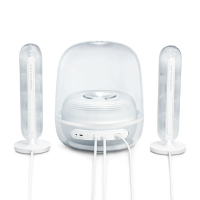
Harman Kardon Soundsticks 5 2.1 Channel Bluetooth Speaker with HDMI
₱20,999.00
Buy on Lazada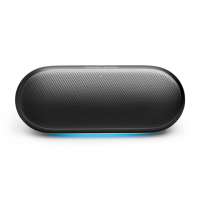
Harman Kardon Luna 2 Wireless bluetooth speaker
₱10,999.00
Buy on Lazada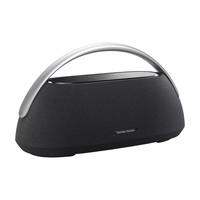
Harman Kardon | Go+Play3 Portable Bluetooth Speaker 160W Outdoor Sound System with Touch Control Compact Design Battery Powered for Camping Travel
₱37,043.27
Buy on Lazada
Harman Kardon Fly BT Bluetooth in-ear headphones
₱6,699.00
Buy on Lazada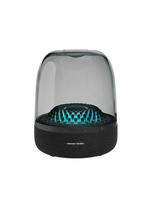
Harman Kardon | Harman Kardon Aura Studio 4th Gen Bluetooth Speaker Desktop Computer Surround Sound Bass Cannon Acrylic Shell Home Use
₱36,143.66
Buy on Lazada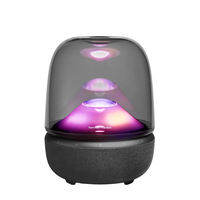
Harman Kardon | Bluetooth Sound and Light Ambiance Lamp
₱38,697.18
Buy on Lazada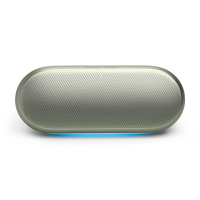
Harman Kardon Luna 2 Wireless Bluetooth speaker
₱10,999.00
Buy on Lazada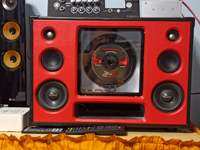
4rth order bandpass Bluetooth speaker thailand build 8 inches Rockford subwoofer 300 watts dua voice coil Ht21 2G amplifier with zk-pre mic for karaoke mode 120w+120w+260watts 24v 30A smps Add P4800 for 24v 8s battery pack 15ah 26.8v output
₱17,500.00
Buy on LazadaAbout Harman Kardon
Harman Kardon (stylized as Harman Kardon or historically Harman/Kardon) is a premium audio brand of American origin, widely recognised for integrating high-fidelity sound with distinctive industrial design and accessible technology. Established in 1953 by Sidney Harman and Bernard Kardon, the company played a pivotal role in shaping modern home audio. Today, Harman Kardon operates under HARMAN International, a wholly owned subsidiary of Samsung Electronics. 1
The brand is synonymous with home speakers, amplifiers, receivers, soundbars, headphones, wireless speakers, and automotive audio systems. In recent decades, it has gained equal recognition for its visual aesthetics as for its acoustic engineering. Products such as SoundSticks, Aura, Onyx Studio, and Citation have transcended their function as mere equipment to become recognisable design objects in their own right.
Basic information
| Category | Information |
|---|---|
| Brand | Harman Kardon |
| Founded | 1953 |
| Founders | Sidney Harman, Bernard Kardon |
| Origin | United States |
| Industry | Consumer electronics / audio |
| Specialty | Premium audio equipment |
| Parent company | HARMAN International |
| Ultimate parent | Samsung Electronics |
| Major products | Speakers, amplifiers, receivers, soundbars, headphones, wireless audio |
| Other major field | Automotive audio |
| Brand positioning | Premium / design-oriented audio |
| Known for | High-fidelity engineering + elegant industrial design |
Corporate records from HARMAN confirm that Sidney Harman and Bernard Kardon founded the company in 1953. 5
Founders: Sidney Harman and Bernard Kardon
The origins of Harman Kardon lie in the partnership between Sidney Harman and Bernard Kardon. Born in Montreal in 1918 and raised in New York, Sidney Harman studied physics at the City College of New York. In 1939, he joined the engineering department of the David Bogen Company, a manufacturer of public-address equipment, where he worked alongside chief engineer Bernard Kardon. The two eventually formed a business partnership. 2
In 1953, they left their previous employer and invested approximately US$5,000 each to launch their own venture. Their objective extended beyond technical sophistication; they sought to make high-quality audio more accessible and appealing to everyday consumers. 3 This philosophy became a defining characteristic of the brand:
Good engineering + ease of use + elegant design.
The integrated receiver concept
A foundational innovation of Harman Kardon was the integration of multiple audio components into a single unit. Previously, home listeners required separate tuners, preamplifiers, power amplifiers, and speakers. By combining these functions into one receiver, Harman Kardon significantly simplified high-fidelity listening.
The Festival D1000, launched in the mid-1950s, was the brand’s first major product. HARMAN describes it as the world’s first compact AM/FM Hi-Fi receiver. Its blend of advanced technology and stylish aesthetics helped establish the company’s ethos of making sophisticated audio approachable. 4 Rather than competing solely on specifications, Harman Kardon redefined the appearance and usability of home audio systems.
Early technological milestones
The early history of Harman Kardon is marked by several significant achievements in audio engineering.
1953 — Foundation
Sidney Harman and Bernard Kardon establish Harman Kardon. 5
1950s — Festival series
The Festival D1000 popularised the integrated Hi-Fi receiver. In 1958, the company introduced the Festival TA230, described by HARMAN as the world’s first stereo receiver. 6
1959 — Citation II
Harman Kardon released the Citation II, characterised as the world’s first ultra-wide-bandwidth tube amplifier. 7 The Citation line became highly regarded among audio enthusiasts and cemented the brand’s reputation for serious high-fidelity engineering.
1970 — CAD5
The CAD5 was introduced, which HARMAN identifies as the world’s first Hi-Fi cassette recorder featuring Dolby noise reduction. 8
1980 — Citation XX
The company launched the Citation XX, described as the world’s first high-current-capability amplifier. 9
Transition to lifestyle audio
Over time, Harman Kardon expanded its focus beyond traditional amplifiers and receivers. The company began developing products designed not only for acoustic performance but also as integral elements of home interiors. This shift became particularly evident in products released from the 1990s onwards.
SoundSticks: A design icon
Among Harman Kardon’s most celebrated products is the SoundSticks. Launched in 1999, this system departed radically from conventional speaker design. Instead of concealing components within opaque wooden or plastic cabinets, Harman Kardon made the internal architecture part of the visual appeal. The result was a transparent, sculptural system resembling contemporary art.
SoundSticks received numerous design awards and were subsequently inducted into the permanent collection of the Museum of Modern Art (MoMA) in New York. This marked a turning point for the brand, shifting perceptions from a purely audiophile electronics manufacturer to a creator of aesthetically significant technology.
Design philosophy
Design remains one of the most distinctive aspects of the Harman Kardon identity. The modern design language typically emphasises:
- Minimalist forms
- Soft curves
- Premium materials including fabric and metal
- Transparent elements
- Ambient lighting
- Restrained branding
- Seamless integration into interior spaces
The company’s current philosophy explicitly links form, function, light, style, and sound, describing its products as objects intended to complement living environments. 17 This approach differentiates Harman Kardon from competitors prioritising ruggedness, portability, or purely technical specifications.
While HARMAN’s brands share technologies and markets, their general positioning can be summarised as follows:
- JBL: Energetic, lifestyle-oriented, portable
- Harman Kardon: Sophisticated, home-oriented, design-conscious
- AKG: Headphones, microphones, and professional audio heritage
Key product families
Citation
The Citation name traces back to the brand’s classic high-end amplification. The modern Citation family combines premium sound, wireless connectivity, smart-home functionality, multi-room audio, and contemporary design. Current models include smart speakers, soundbars, subwoofers, and surround components, incorporating technologies such as high-resolution displays and Chromecast. 6
SoundSticks
As perhaps the brand’s most recognisable design icon, SoundSticks established the notion that consumer electronics could serve as both functional technology and contemporary art. 7 The latest generation, SoundSticks 5, continues this legacy with a 2.1-channel system featuring Bluetooth, HDMI, and integrated lighting.
Aura
The Aura series prioritises atmosphere and aesthetics. Its spherical design and internal lighting give the speaker the appearance of a decorative object. The current Aura Studio 5 is positioned as a Bluetooth home speaker with integrated ambient lighting. 17
Onyx Studio
Onyx Studio is one of the brand’s most prominent wireless speaker families, combining large-format portable design, Bluetooth connectivity, stereo sound, and distinctive circular styling. The current Onyx Studio 9 is marketed as a portable stereo Bluetooth home speaker. 10
Go + Play
The Go + Play series bridges the gap between home and portable audio. Characterised by a built-in handle and substantial enclosure, the current Go + Play 3 offers up to eight hours of playtime as a portable Bluetooth speaker. 10
Soundbars and home theatre
Harman Kardon competes in the home cinema market with soundbars and surround systems featuring Dolby Atmos, DTS:X, MultiBeam, wireless surrounds, and spatial audio. The Enchant 1100, for example, is an all-in-one soundbar supporting Dolby Atmos, DTS:X, MultiBeam, and PureVoice. 11
Smart speakers
Harman Kardon entered the smart speaker category in 2017 with the Allure, its first smart sound system incorporating Amazon Alexa. 12 This launch represented another stage in the brand’s evolution:
- 1950s: Hi-Fi receivers
- 1960s–1980s: High-performance amplification
- 1990s: Digital audio and distinctive design
- 2000s: Lifestyle and computer-connected audio
- 2010s: Smart speakers and multi-room audio
- 2020s: Immersive wireless audio, lighting, and smart home entertainment
Automotive audio
Automotive audio constitutes a significant, though less visible, aspect of Harman Kardon’s business. The brand partners with automobile manufacturers to develop factory-installed sound systems specifically tuned for vehicle environments. 13
Engineering for cars differs substantially from home audio due to cabin dimensions, road noise, glass reflections, seat positions, and power constraints. Consequently, Harman Kardon automotive systems are bespoke solutions engineered for specific vehicles rather than adapted home speakers.
Corporate structure
It is important to note that Harman Kardon is currently a brand within a larger corporate structure rather than an independent corporation:
Samsung Electronics
↓
HARMAN International
↓
Harman Kardon
HARMAN owns a diverse portfolio of audio and technology brands, including JBL, AKG, Harman Kardon, Mark Levinson, Revel, Lexicon, Crown, and Soundcraft. 14 Samsung acquired HARMAN in 2017, placing Harman Kardon within the Samsung group while allowing it to retain its distinct brand identity. 15
Origin of the name
Unlike many modern marketing terms, the name Harman Kardon derives directly from its founders:
- Harman: Sidney Harman
- Kardon: Bernard Kardon
Brand identity
Harman Kardon’s identity encompasses several core concepts:
- High-fidelity heritage: Decades of experience in amplifiers, receivers, and audio engineering dating back to the golden age of American Hi-Fi. 16
- Industrial design: Treating audio equipment as design objects rather than mere appliances.
- Home lifestyle: Products designed to integrate seamlessly with living spaces.
- Light and sound: Increasing integration of audio with ambient lighting and visual atmosphere. 17
- Automotive: Extensive presence in premium vehicle audio.
- Premium positioning: Positioned above mass-market basic audio, spanning various price tiers.
Market differentiation
Harman Kardon distinguishes itself through the intersection of three elements: audio engineering, industrial design, and lifestyle experience. While many companies excel in one area, Harman Kardon has historically sought to combine all three. Current descriptions emphasise the interplay of sound, light, and design, while historical materials highlight performance, usability, and elegance. 17 This holistic approach allows products to appeal to consumers who value aesthetics alongside acoustic performance.
Historical timeline
| Year | Event |
|---|---|
| 1953 | Sidney Harman and Bernard Kardon establish Harman Kardon |
| 1950s | Festival series helps popularize integrated Hi-Fi receivers |
| 1958 | Festival TA230 stereo receiver introduced |
| 1959 | Citation II introduced |
| 1970 | CAD5 Hi-Fi cassette recorder introduced |
| 1980 | Citation XX introduced |
| 1999 | SoundSticks launched |
| 1999 | SoundSticks becomes associated with MoMA’s design collection |
| 2000s | Digital media, home theater and computer-connected products expand |
| 2009 | GLA-55 demonstrates increasingly design-focused product philosophy |
| 2017 | Allure smart speaker with Amazon Alexa introduced |
| 2017 | Samsung acquires HARMAN |
| 2018 | Modern Citation platform introduced |
| 2020s | Expansion of wireless speakers, soundbars, immersive audio and lighting |
| 2026 | Brand continues to emphasize sound + design + ambient experience |
Dates and milestones are based primarily on historical materials from Harman Kardon and HARMAN. 15
Iconic products
Significant products in the brand’s history include:
- Festival D1000: Early integrated Hi-Fi receiver and foundational product.
- Festival TA230: Landmark early stereo receiver.
- Citation II: Iconic tube amplifier symbolising audiophile heritage.
- Citation XX: High-current amplifier demonstrating technical ambition.
- SoundSticks: The brand’s most famous design object.
- GLA-55: Sculptural speaker exemplifying design philosophy.
- Aura: Fusion of audio, lighting, and interior design.
- Onyx Studio: Major modern wireless speaker family.
- Go + Play: Portable premium speaker line.
- Citation: Modern smart and home audio ecosystem.
- Enchant: Contemporary soundbar and home theatre platform.
Audiophile status
Historically, Harman Kardon was firmly rooted in high-fidelity audio, with early Citation products, receivers, and amplifiers designed for serious listening. Today, however, the brand serves a broader audience valuing convenience, Bluetooth streaming, smart-home integration, aesthetics, and portability. It is now best described as a premium consumer audio and lifestyle brand with strong Hi-Fi heritage, rather than exclusively an audiophile marque.
Comparison with JBL
Although both brands belong to HARMAN, they maintain distinct identities:
| Feature | Harman Kardon | JBL |
|---|---|---|
| Main image | Sophisticated / elegant | Energetic / youthful |
| Design | Minimalist / premium | Bold / functional |
| Heritage | Hi-Fi / home audio | Professional & consumer loudspeakers |
| Home audio | Very important | Important |
| Portable audio | Important | Extremely important |
| Professional audio | Less central to brand identity | Major strength |
| Automotive | Major | Major |
| Typical aesthetic | Refined | Rugged / bold |
| Brand personality | “Beautiful sound” | Powerful, energetic sound |
Despite technological and corporate overlap, the brands are deliberately differentiated.
Position in the audio industry
Harman Kardon’s historical significance lies not necessarily in inventing every major audio technology, but in how it combined technologies into consumer products. The company helped transform high-fidelity equipment from complex electronic components into systems that were technically sophisticated, easy to use, and aesthetically attractive. This philosophy connects the Festival receivers of the 1950s to today’s connected home audio products.
Current status
As of 2026, Harman Kardon continues to focus on premium home and personal audio, offering wireless speakers, portable speakers, soundbars, and connected audio products. The Vietnamese site currently lists models including Aura Studio 5, Onyx Studio 9, Enchant 1100, Go + Play 3, and SoundSticks 5. 7
The brand’s direction has moved beyond the traditional definition of a speaker towards creating an atmosphere through the combination of sound, light, materials, interior design, and connectivity. Official 2026 materials describe this as creating “moments that flow beautifully,” emphasising the interplay of sensory elements.
Summary
Harman Kardon is a premium American-origin audio brand founded in 1953 that pioneered consumer Hi-Fi receivers and amplification before becoming renowned for combining high-quality sound with distinctive industrial design. Now operating under HARMAN International (owned by Samsung), it focuses on premium home, wireless, and automotive audio. Its evolution from 1950s Hi-Fi engineering to immersive sound, lighting, and lifestyle design reflects a consistent commitment to uniting “beautiful sound” with “beautiful objects.”
References
- About Us
- Official Harman Kardon US store
- A world of beautiful sound
- H/K Diaries – The History of Sound
- Harman Kardon celebrates 70 years of beautiful sound | HARMAN
- CITATION SERIES
- Harman Kardon
- Official Harman Kardon US store
- Harman Kardon celebra 70 anos de excelência em áudio | HARMAN Brasil
- About Us
- Official Harman Kardon US store
- About Us
- H/K Diaries – The Legacy
- About Us
- H/K Diaries – The Milestones
- Official Harman Kardon US store
- About – Harman Kardon