Shop on Lazada
Hasegawa products
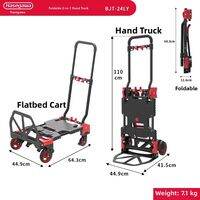
Hasegawa | Foldable Lightweight Handcart
₱8,210.16
Buy on Lazada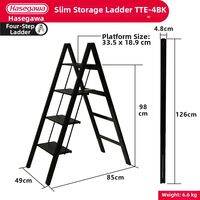
Hasegawa | Multifunctional Folding Aluminum Stepladder
₱11,655.05
Buy on Lazada![JAPAN ORIGINAL HASEGAWA Antibacterial FBB Household cutting board anti-mold resin chopping board [made in JAPAN]](https://filebroker-cdn.lazada.com.my/kf/S7dd9ebe15131472883d742d501ceb30bw.png_200x200q80.jpg)
JAPAN ORIGINAL HASEGAWA Antibacterial FBB Household cutting board anti-mold resin chopping board [made in JAPAN]
₱7,983.91₱9,776.62
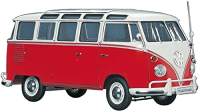
【100% original From Japan 】 Hasegawa HC10 1/24 Volkswagen Type 2 Microbus 23 Window Plastic Model
₱2,371.00₱4,504.00
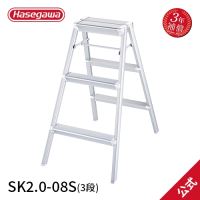
3 STEP LADDER SILVER HASEGAWA BRAND
₱1,799.00
Buy on Lazada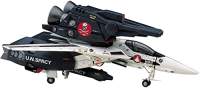
【100% original From Japan 】 Hasegawa Super Dimension Fortress Macross Do You Remember Love VF-1 Super/Strike Valkyrie 1/72 Scale Plastic Model 17
₱2,805.00₱4,845.00
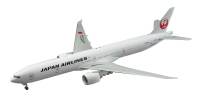
【100% original From Japan 】 Hasegawa 1/200 Japan Airlines B777-300ER Plastic Model 19
₱2,587.97₱5,116.00
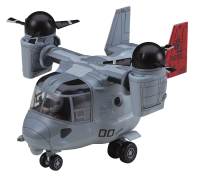
【100% original From Japan 】 Hasegawa Egg Plane US Marine Corps MV-22 Osprey Non-Scale Plastic Model TH25
₱2,000.80₱3,955.00
About Hasegawa
Hasegawa Corporation (株式会社ハセガワ, Kabushiki-gaisha Hasegawa) is a Japanese manufacturer specialising in scale plastic model kits, railway models, modelling tools, and related hobby products. The company is internationally recognised for its highly detailed aircraft, ship, automobile, military vehicle, motorcycle, and science-fiction models. Founded in 1941 and headquartered in Yaizu, Shizuoka Prefecture, Japan, Hasegawa is one of the country’s longest-established plastic model manufacturers.1
Note: “Hasegawa” is a common Japanese surname and is used by several unrelated companies. This article refers specifically to Hasegawa Corporation, the Japanese plastic-model manufacturer.
Overview
| Field | Information |
|---|---|
| Japanese name | 株式会社ハセガワ |
| Romanisation | Kabushiki-gaisha Hasegawa |
| English name | Hasegawa Corporation |
| Industry | Hobby / scale modelling |
| Founded | 1941 |
| Headquarters | Yaizu, Shizuoka, Japan |
| Main products | Plastic model kits, railway models, modelling tools and accessories |
| Major subjects | Aircraft, ships, cars, motorcycles, AFVs, characters, machinery |
| Major scales | 1:72, 1:48, 1:32, 1:144, 1:200, 1:350, 1:450, 1:700, 1:24, 1:12 |
| Notable series | Aircraft, Water Line Series, Macross, Maschinen Krieger, Creator Works, Eggplane |
| Related brand | MODEMO railway models |
Hasegawa describes itself as a plastic-model manufacturer established in 1941. Its current business operations encompass the planning, manufacture, and sale of plastic models, railway models, and dedicated tools, alongside the importation and distribution of overseas plastic models.1
History
Origins
Hasegawa traces its origins to 1941, making it significantly older than many contemporary Japanese model kit companies. Throughout its history, the firm has developed expertise in reproducing real-world objects in miniature form. Its catalogue eventually expanded from conventional subjects such as aircraft and ships to include automobiles, motorcycles, military vehicles, fictional machines, and character figures.
The company emphasises three critical stages in its manufacturing philosophy:
- Research and documentation
- Accurate engineering and design
- Precision mould production
Hasegawa gathers information from actual objects and historical documentation, sometimes noting details as minute as the location of individual screws. Designers utilise these references, drawings, and other documents to reproduce the subject, making selective adjustments to ensure the miniature retains the visual impression of the original object.1
Development as a scale-model manufacturer
Hasegawa became particularly associated with aircraft modelling, which remains one of its strongest specialities. Rather than focusing exclusively on beginner-oriented kits, the company built a reputation for scale fidelity, surface detail, and subject accuracy. This approach helped establish Hasegawa as a prominent name among serious scale modellers.
Its current catalogue includes aircraft in several scales, including 1:72, 1:48, 1:32, 1:144, and 1:200. The company also produces museum-style models and aircraft detail and accessory products.1
The Water Line Series
One of Hasegawa’s most historically significant product families is the 1:700 Water Line Series. This series focuses on naval ships represented at a uniform scale, allowing modellers to construct fleets and display vessels together. Hasegawa’s current catalogue continues to feature numerous Imperial Japanese Navy vessels and modern Japan Maritime Self-Defense Force ships in this scale.1
Subjects in this range include:
- Japanese battleships
- Cruisers
- Destroyers
- Aircraft carriers
- Modern Japanese naval vessels
The Water Line concept proved influential because the 1:700 scale offers a practical compromise between physical size and the ability to reproduce considerable detail.
Product categories
Hasegawa’s present catalogue extends considerably beyond aircraft.
Aircraft
Aircraft remain arguably Hasegawa’s signature category. Available scales include 1:72, 1:48, 1:32, 1:144, and 1:200. The catalogue covers both military and civilian aviation subjects.1
Ships
Hasegawa produces naval models in 1:350, 1:450, and 1:700 scales. The 1:700 range includes both historical Japanese warships and modern vessels.1
Cars
The company maintains an extensive 1:24 automobile range and produces other automotive scales. Current catalogue examples include Japanese classics such as the Toyota Sprinter Trueno AE92, Nissan Skyline, Nissan Laurel, and Toyota Soarer.1 This selection makes Hasegawa particularly relevant to collectors of Japanese domestic-market vehicles.
Motorcycles
Hasegawa produces 1:12 motorcycle kits, including historically significant Japanese motorcycles. The current catalogue features models such as the Kawasaki GPZ900R A1 (1984).1
Military vehicles and AFVs
The company manufactures armoured fighting vehicles and other military subjects. Its catalogue also covers construction and agricultural machinery.1
Character models
Hasegawa is not restricted to realistic scale models. Its character-model portfolio includes properties and concepts such as:
- Macross
- Maschinen Krieger
- Eggplane
- Creator Works
- Science World
The company’s catalogue specifically identifies Macross and Maschinen Krieger among its character-model offerings.1
Design philosophy
A defining characteristic of Hasegawa is its emphasis on research-driven accuracy. The company describes its modelling process as involving four key phases.
Research and examination
Hasegawa gathers photographs, drawings, historical information, and other references. For real vehicles, the objective is to understand not only the overall shape but also small-scale details.1
CAD and design work
Information is translated into a miniature representation. Hasegawa states that its designers do not simply reduce an object mathematically; they make deliberate adjustments so that the finished model preserves the characteristic appearance of the original.1
Mould manufacturing
Precision mould machining is central to the brand’s manufacturing philosophy. Hasegawa specifically highlights crisp surfaces, sharp lines, and fine engraved details.1
Fit
The company identifies part fit and clean mating surfaces as important considerations in its kit engineering.1
Market position
Hasegawa occupies a distinct position in the Japanese model-kit market. It is frequently associated with historical accuracy, engineering precision, and specialist subjects rather than solely optimising for ease of assembly. This is particularly apparent in its aircraft catalogue, where the company has built much of its identity around accurately representing real aircraft and their historical variants.
Simultaneously, Hasegawa explores unusual subjects. Its portfolio ranges from mainstream aircraft and cars to highly specialised machinery, fictional vehicles, and niche Japanese subjects.
Comparison with Tamiya
Hasegawa is often discussed alongside Tamiya, another major Japanese model manufacturer. While the two companies overlap in areas such as aircraft, ships, cars, military subjects, and motorcycles, their product identities differ.
Hasegawa is generally associated with:
- Aircraft expertise
- Japanese subjects
- Historical accuracy
- Extensive 1:72 aircraft selection
- 1:700 naval modelling
- Unusual or niche subjects
- Detailed scale modelling
Tamiya is generally associated with:
- Exceptionally refined kit engineering
- Broad beginner-to-advanced accessibility
- Military models
- Cars and motorcycles
- Radio-controlled models
- Tools and hobby products
This distinction is not absolute, as both companies produce simple and complex kits, but it explains why experienced modellers often regard Hasegawa as an important alternative to Tamiya.
Major scales
Hasegawa maintains a broad scale ecosystem. The official catalogue confirms the following major aircraft, ship, automotive, and motorcycle scales:1
| Scale | Common Hasegawa subjects |
|---|---|
| 1:72 | Aircraft, military subjects |
| 1:48 | Aircraft |
| 1:32 | Aircraft, selected vehicles |
| 1:144 | Aircraft |
| 1:200 | Aircraft |
| 1:350 | Ships |
| 1:450 | Ships |
| 1:700 | Ships |
| 1:24 | Cars |
| 1:20 | Cars/vehicles |
| 1:12 | Motorcycles and figures |
MODEMO
Hasegawa’s activities extend beyond conventional plastic scale models. The company operates MODEMO, a railway-model brand covering N and HO gauge railway models. MODEMO appears within Hasegawa’s product catalogue alongside its plastic-model products, giving the company a presence in the railway-model market as well as traditional static scale modelling.1
Tools and accessories
Hasegawa sells products intended to support model construction. Its catalogue includes detail-up parts, decals, modelling materials, tools, brushes, accessories, and specialised modelling products. The company groups its tools and materials under its Try Tool / Try Rule offerings. Its website also provides guides for beginners covering subjects such as nippers and decal application.1
International presence
Although Hasegawa is a Japanese company, its products are distributed internationally. The company maintains distributors covering regions including North America, South America, Europe, Oceania, East Asia, and the Middle East. Its official distributor listing includes companies serving the United States, Canada, Australia, the United Kingdom, Germany, France, Italy, Spain, Taiwan, Korea, and China, among others.1 Consequently, Hasegawa kits are widely available in scale-model shops and online hobby markets globally.
Recent developments
Hasegawa remains an active manufacturer. Its current website lists new products for 2026, including automobiles, motorcycles, and aircraft, whilst continuing established categories such as ships, character models, and accessories.1
Recent examples include:
- Toyota Sprinter Trueno AE92 GT
- Kawasaki GPZ900R A1 (1984)
- Nissan Skyline 2000 Turbo
- Nissan Laurel HT 2000SGX
- Toyota Soarer Z20
- Boeing 737-8
This illustrates Hasegawa’s continuing focus on both historical subjects and modern or newly licensed subjects.1
Reputation among modellers
Hasegawa is respected among builders who value scale accuracy and subject selection. Its reputation is particularly strong in the following areas:
- Aircraft modelling: Hasegawa possesses an exceptionally deep aircraft catalogue, particularly in 1:72 and 1:48 scales.
- Japanese subjects: The company offers extensive coverage of Japanese aircraft, automobiles, motorcycles, and naval vessels.
- Niche subjects: Hasegawa frequently produces models that may not appeal to mass-market manufacturers but are highly desirable to specialist collectors.
- Surface detail: Its manufacturing philosophy places considerable emphasis on sharp panel lines, accurate shapes, and fine details.1
- Historical modelling: The company’s research-oriented approach appeals to builders interested in accurately representing specific real-world vehicles and historical configurations.
Common criticisms
Hasegawa’s strengths can entail trade-offs. Depending on the specific kit and its age, modellers may encounter older tooling, relatively simple interiors on some subjects, raised or recessed detailing depending on the kit generation, complicated assembly on certain highly detailed models, limited engineering conveniences compared with newer competitors, or older decals on long-running tooling.
These characteristics vary enormously from kit to kit; therefore, the label “Hasegawa kit” alone is insufficient to predict the building experience. A recently tooled 2026 automobile kit and a decades-old aircraft tooling can possess vastly different engineering qualities.
Relationship with other Japanese model manufacturers
Hasegawa belongs to a group of companies that helped establish Japan as a major centre of scale modelling. Important names in the broader Japanese hobby industry include Tamiya, Fujimi, Aoshima, Bandai, Platz, Fine Molds, and Hasegawa. Hasegawa’s particular historical niche has been traditional scale modelling, especially aircraft and military subjects, although its catalogue has expanded considerably beyond those areas.
Vintage kit collecting
Hasegawa has maintained a large catalogue over many decades. Consequently, some older kits have become interesting to collectors for reasons beyond their original retail value. A discontinued kit may represent an unusual aircraft variant, an old Japanese car, a historically important military subject, an early version of a particular tooling, an unusual decal sheet, or a subject never reissued by another company. This contributes to a substantial vintage-kit collecting culture alongside the active model-building community.
Significance in the hobby
Hasegawa is regarded as one of the classic Japanese scale-model manufacturers. Its identity is built around transforming real machines and historically documented subjects into precise miniature representations. The company summarises its philosophy as researching the real subject, accurately designing the miniature, and producing moulds capable of reproducing sharp details and clean-fitting parts.1 This philosophy explains the brand’s enduring relevance: its catalogue aims to represent machines at scale for hobbyists, collectors, and enthusiasts rather than merely producing toys.
Official resources
- Hasegawa Japan Official Site
- Hasegawa Company Information
- Hasegawa Global Site
- Hasegawa Product Catalogue