Shop on Lazada
HERO products
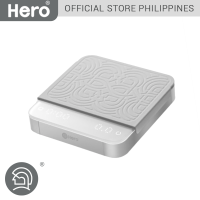
Hero Coach Smart Coffee Scale | LED Display | Electronic Cofee Digital Scale w/ Timer | USB-C Charging Port | 2kg Capacity High Precision Accuracy | 5 Main Functions | 3-Pour Over | Flow Rate Curve | Special Tamper Function
₱2,650.00
Buy on Lazada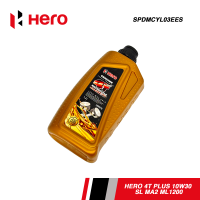
HERO 4T PLUS 10W30 SL MA2 ML 1200
₱334.18
Buy on Lazada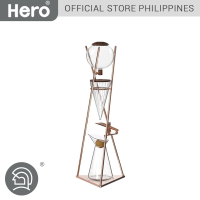
Hero Cold Brew Drip Tower Deluxe | Drip Coffee | Cold Brew Coffee | Iced Coffee | Tea | Tea Leaves | Coffee Beans | Coffee Maker
₱15,500.00
Buy on Lazada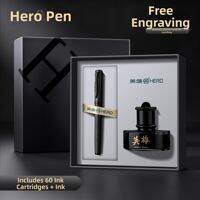
HERO | Adult Business Professional Calligraphy Fine Nib Fountain Pen
₱1,563.29
Buy on Lazada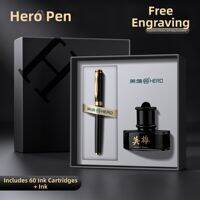
HERO | Calligraphy Practicing Gift Engraved Luxury Bent Nib Fountain Pen
₱1,552.31
Buy on Lazada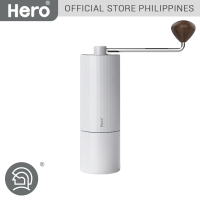
Hero S01 Coffee Bean Hand Grinder | Stainless Steel Conical Burr | 25g Bean Capacity | Chestnut Brown Black Silver
₱2,500.00
Buy on Lazada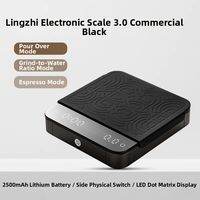
Hero | Intelligent Timer Rechargeable Digital Coffee Scale
₱4,389.12₱4,610.72
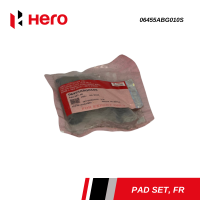
HERO XOOM 110 BRAKE PAD
₱534.00
Buy on LazadaAbout HERO
Note: The name “HERO” is associated with several unrelated companies globally. This article refers specifically to Hero, the Indian industrial conglomerate linked to the Munjal family, encompassing Hero Cycles and Hero MotoCorp. This entity is distinct from the Swiss food manufacturer Hero Group, which was founded in 1886.2
Overview
Hero is a prominent Indian industrial and consumer brand with origins tracing back to the Munjal family’s bicycle-component business in the 1940s and the subsequent establishment of Hero Cycles in 1956. Over the decades, the Hero name has expanded beyond bicycles to include motorcycles, scooters, electric vehicles, financial services, manufacturing, real estate, and diversified investments.1
The primary businesses operating under the Hero name today include:
- Hero Cycles: Manufacturer of bicycles and electric bicycles.
- Hero MotoCorp: Manufacturer of motorcycles and scooters.
- Hero Enterprise: An investment and diversification platform associated with the Munjal family.
Basic Information
| Field | Information |
|---|---|
| Brand | Hero |
| Country of origin | India |
| Origin | Punjab, India |
| Founding family | Munjal family |
| Major early founder | Om Prakash Munjal |
| Hero bicycle business | 1956 |
| Hero motorcycle business | 1984 |
| Major industries | Bicycles, motorcycles, scooters, electric mobility, finance, manufacturing, investments |
| Major companies | Hero Cycles, Hero MotoCorp, Hero Enterprise |
| Historic association | Hero Honda |
| Major markets | India and international markets |
| Brand positioning | Mass-market mobility, reliability, accessibility, and technology-oriented mobility |
The Hero name dates to 1956, when the Munjal family transitioned from components to producing complete bicycles. Corporate history describes the name as representing the ambition and determination of the founding brothers.3
Origins and the Munjal Family
The history of Hero predates the brand itself. The Munjal family was active in the bicycle-parts trade during the 1940s. Following the Partition of India, the family relocated to Ludhiana, Punjab, where they rebuilt their operations and eventually moved into complete bicycle manufacturing.4
A pivotal figure in this transition was Om Prakash Munjal (O.P. Munjal), who established Hero Cycles in 1956 to manufacture bicycles on a larger scale. The founding philosophy focused on making affordable personal transportation accessible to ordinary citizens. In a market where bicycles represented economic opportunity and independence, Hero participated directly in the development of mass personal mobility. The company’s original vision emphasized enabling individuals to travel, work, and explore more freely.5
Hero Cycles
Foundation and Scale
Hero Cycles serves as the foundation of the modern Hero brand. From its inception in 1956, the company scaled rapidly. By 1986, it entered the Guinness Book of World Records for producing 18,500 bicycles in a single day. Production milestones continued, crossing 130 million units in 2012 and reaching 150 million bicycles from its Ludhiana plant alone by 2020.6 This manufacturing scale established Hero as a household name in India, synonymous with affordable transportation, durability, and value.
Major Developments
- 2015: Entry into the premium segment via the acquisition of Firefox Bikes.
- 2016: International expansion through acquisitions in the UK and Sri Lanka.
- 2018: Entry into electric mobility with Hero Lectro.
- 2021: Delivery of “Made in India” HNF e-bikes to Europe.
The company now positions itself as a global cycling brand covering conventional bicycles, premium cycling, and electric mobility.7
The Motorcycle Revolution: Hero Honda
A significant transformation occurred in 1984 when Hero partnered with Japanese manufacturer Honda Motor Co. to form Hero Honda Motors Ltd. The first manufacturing plant was established at Dharuhera, Haryana.8
This joint venture combined Hero’s local market knowledge, distribution network, and manufacturing ecosystem with Honda’s engineering, technology, and international expertise. The partnership produced motorcycles renowned for fuel efficiency, reliability, low running costs, and affordability. The advertising slogan “Fill it – Shut it – Forget it” became iconic during this era, emphasizing fuel economy.9
Market Dominance Strategy
Hero’s success stemmed from treating motorcycles as mass transportation rather than lifestyle products. For many consumers, these vehicles served as tools for commuting, family transport, and business. Consequently, product development focused on practical ownership economics.
The historical formula for dominance can be summarized as: Affordable price + excellent fuel economy + reliability + extensive service network + easy parts availability.
This approach was particularly effective in smaller cities and rural areas, establishing a brand reputation built on trust and dependability rather than just performance.
Separation from Honda
After decades of partnership, the two companies separated. In 2011, Hero Honda Motors Ltd. was renamed Hero MotoCorp Ltd. to reflect its new status as an independent manufacturer.10
This transition required Hero to develop its own technology, R&D capabilities, product platforms, international strategy, and brand identity. The company subsequently invested heavily in internal engineering and technological infrastructure to support its independent operations.
Hero MotoCorp
Hero MotoCorp is currently the most significant entity associated with the Hero name in the global motorcycle industry. Headquartered in New Delhi, India, it manufactures motorcycles and scooters for international markets. The company reports serving more than 125 million customers across 53+ countries through over 11,000 customer touchpoints.11
Product Portfolio
- Commuter motorcycles: Splendor, HF series, Passion
- Premium/performance motorcycles: Xtreme, Karizma, Hunk
- Adventure motorcycles: XPulse
- Scooters: Xoom and other market-specific models
- Electric mobility: VIDA electric scooters
Strategically, Hero MotoCorp is transitioning from being perceived primarily as a low-cost commuter manufacturer to a broader global mobility company.
Global Expansion and R&D
While historically associated with India, Hero MotoCorp now operates across Asia, Africa, Europe, and Latin America. Manufacturing operations are located in India, Colombia, and Bangladesh, alongside various international partnerships.12
To support global product development, the company’s R&D structure includes:
- Centre for Innovation and Technology (CIT) in India
- Tech Centre Germany (TCG)
These facilities reflect an ambition to design motorcycles for international customers rather than solely for the domestic market.13
Premiumization and Strategic Partnerships
Historically known for affordable commuter bikes, Hero has actively sought to change consumer perception by targeting enthusiasts, younger riders, and premium buyers. The XPulse family has been instrumental in establishing a stronger identity in adventure and recreational motorcycling.
The company has also expanded into larger-displacement motorcycles and formed international collaborations, including partnerships with Harley-Davidson and Zero Motorcycles.14 These alliances allow Hero to compete in higher-value segments and gain expertise in premium and electric categories distinct from its traditional commuter base.16
Electric Mobility
Electric vehicles represent a major strategic shift for the group. VIDA, powered by Hero serves as the dedicated electric-mobility business.15 This initiative marks a departure from the traditional model based on petrol engines, affordability, and high volume, moving toward a future requiring expertise in software, batteries, connected technology, and charging infrastructure.
Hero MotoSports
Hero utilizes motorsport to reshape its global brand image. Hero MotoSports Team Rally competes in international rally racing, including the Dakar Rally. This engagement communicates attributes such as performance, engineering durability, and technological capability, distinguishing the brand from its utilitarian commuter heritage. Corporate communications identify Hero MotoSports as India’s primary representative in global rally racing.17
Broader Business Ecosystem
It is important to distinguish Hero MotoCorp from the wider Hero business ecosystem. The Munjal family’s interests have diversified significantly. Hero Enterprise, chaired by Sunil Kant Munjal, describes itself as the evolution of Hero Corporate Service with interests in insurance distribution, steel, real estate, corporate training, technology, e-commerce, financial services, and investments.18
Strictly speaking, Hero is not a single company but a family of businesses sharing a common heritage and brand association.
Brand Identity
Traditional Identity
The core brand proposition has historically centered on mobility for ordinary people, characterized by:
- Practicality: Products designed for daily use.
- Affordability: Addressing price-sensitive markets.
- Reliability: A key brand asset.
- Accessibility: Designed for mass-market ownership.
- Indian Heritage: Deeply connected to India’s economic development.
Emerging Identity
The brand is currently evolving to incorporate technology, performance, adventure, premium design, electrification, sustainability, and internationalization. The strategic goal is to transition from “India’s practical mobility brand” to “a global mobility technology brand.”
Major Milestones
| Year | Milestone |
|---|---|
| 1940s | Munjal family develops bicycle-component business |
| 1956 | Hero Cycles established |
| 1984 | Hero and Honda establish Hero Honda |
| 1986 | Hero Cycles achieves Guinness World Record production milestone |
| 2001 | Hero Honda becomes world’s largest two-wheeler manufacturer by unit volume |
| 2011 | Hero Honda becomes Hero MotoCorp following separation from Honda |
| 2015 | Hero Cycles acquires Firefox Bikes |
| 2016 | Hero Cycles expands internationally |
| 2018 | Hero enters electric bicycle mobility through Hero Lectro |
| 2020s | Hero accelerates premium, international, and electric mobility strategy |
| 2022 onward | Hero deepens relationships with Yamaha, Harley-Davidson, and other partners |
| 2024 | Hero MotoSports achieves major international rally success; global portfolio expands |
| 2026 | Hero MotoCorp reports footprint spanning 50+ countries and 125M+ customers |
Early history is documented by corporate archives, while current scale and international data are derived from Hero MotoCorp’s corporate materials.19
Key People
- Om Prakash Munjal: Foundational figure behind Hero Cycles and its industrial expansion.20
- Brijmohan Lall Munjal (B.M. Munjal): Central to the business’s development and expansion into motorcycles.
- Dr. Pawan Munjal: Prominent leader associated with Hero MotoCorp; currently identified as Executive Chairman.21
- Sunil Kant Munjal: Leads Hero Enterprise and the family’s diversification beyond traditional mobility.22
Strengths and Challenges
Strengths
- Brand Recognition: Decades of consumer familiarity in India.
- Manufacturing Scale: Ability to produce high volumes of affordable vehicles.
- Distribution: Extensive dealer and service ecosystem.
- Customer Trust: Reputation for dependable ownership in the mass market.
- Cost Engineering: Expertise in designing for emerging-market economics.
- Installed Base: Over 125 million customers provide a massive existing ecosystem.23
Challenges
- Premiumization: Convincing consumers that Hero can be exciting and technologically sophisticated, not just economical.
- Electric Transition: Adapting to new capabilities in batteries, software, and charging infrastructure.
- Competition: Facing rivals such as Honda, Bajaj, TVS, Yamaha, Suzuki, Royal Enfield, and EV specialists.
- International Recognition: Overcoming lower global familiarity compared to Japanese and European brands.
- Brand Fragmentation: Multiple entities using the Hero name can create confusion regarding corporate structure.
Significance in India
Hero’s historical significance lies in democratizing personal mobility. Its product evolution—from bicycles to motorcycles, scooters, premium bikes, and EVs—mirrors India’s economic development stages. Each category addressed specific mobility needs, linking the brand’s history closely with the nation’s transformation.
Comparison with Honda
| Feature | Hero | Honda |
|---|---|---|
| Origin | India | Japan |
| Historical strength | Mass-market mobility | Engineering + global automotive scale |
| Famous Indian partnership | Honda | Hero |
| Major Indian motorcycle identity | Hero MotoCorp | Honda Motorcycle & Scooter India |
| Traditional positioning | Value, reliability, mass mobility | Broad range, engineering, global technology |
| Current direction | Global mobility + premium + EV | Global automotive/mobility ecosystem |
Formerly partners in Hero Honda, the two entities are now independent competitors.
Current Position
As of 2026, Hero MotoCorp is balancing its traditional motorcycle business with a new global mobility strategy. It aims to simultaneously serve as India’s mass-market leader, a global manufacturer, a premium competitor, an adventure-bike brand, an EV company, and a motorsports entity. The company currently describes itself as the world’s largest manufacturer of motorcycles and scooters.24
References
- Hero Corporate Service Private Limited – Our Heritage
- Hero Corporate Service Private Limited – Overview
- Hero Group
- Hero Group: Profile
- Hero Cycles Story | Hero Cycles
- About Us – India’s Largest Manufacturer of Bicycles| Hero Cycles
- Hero MotoCorp
- Hero MotoCorp: The Best Two-Wheeler Company In Britain
- Press Release
- Hero Corporate Service Private Limited – About Us
- Board and Leadership
- Brief History – Hero Electric Co., Ltd. (JAPAN) | Professional-Grade Automotive Terminals
- About Us: Vision, Values, and Innovation | Hero MotoCorp
- The history of the Hero products – Hero Electric Co., Ltd. (JAPAN) | Professional-Grade Automotive Terminals
- The history of the Hero products – ヒーロー電機株式会社|1968年創立・自動車補修用電装部品専門メーカー
- Message from the President | HERO ELECTRIC Global
- ASLI HERO
- Hero MotoCorp: The Best Two-Wheeler Company In Germany
- Hero MotoCorp: The Best Two-Wheeler Company In France
- Hero MotoCorp: The Best Two-Wheeler Company In Spain
- Hero MotoCorp: The Best Two-Wheeler Company In Myanmar
- Hero MotoCorp: The Best Two-Wheeler Company In Italy
- Ride Your Story with Hero Motorcycles
- Hero MotoCorp: The Best Two-Wheeler Company In Myanmar