Shop on Lazada
Hifiman products

HIFIMAN Edition XS Headphones 2022 Stealth Magnets Design
₱16,625.00₱17,500.00

HIFIMAN Sundara V2 Headphones 2022
₱14,600.00
Buy on Lazada
HIFIMAN Sundara Closed-back 2022
₱9,500.00
Buy on Lazada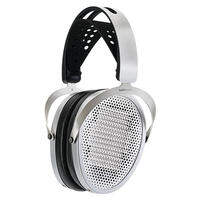
Hifiman | High Fidelity Over-ear Planar Magnetic Headphones
₱40,416.95₱68,364.45
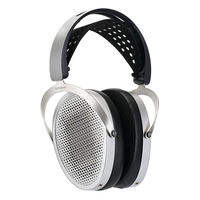
Hifiman | Flat Diaphragm Wired Over-ear Headphones
₱31,696.00
Buy on Lazada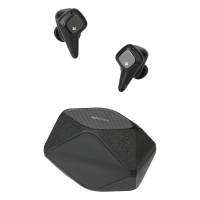
Free Shipping HIFIMAN Svanar Wireless 2 Bluetooth Earphones R2R DAC Hymalaya Mini ANC Earbuds HiFi Balanced Headset for Phone
₱24,000.00₱30,084.00
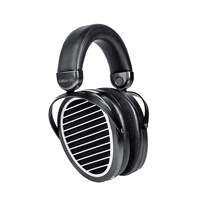
HIFIMAN Edition XS Full-Size Over-Ear Open-Back Planar Magnetic Hi-Fi Headphones with Stealth Magnets Design Adjustable Headband Detachable Cable for Audiophiles Home Studio
₱11,990.00₱18,950.78

Free Shipping Hifiman Arya Andanda Sundara He400sev2 Original Earphone Sponge Ear Cotton Earphone Cover
₱3,104.00₱3,862.00
About Hifiman
Hifiman (stylized as HIFIMAN, formerly often written HiFiMAN) is a Chinese-American audiophile audio company best known for high-end headphones, particularly planar-magnetic models, as well as in-ear monitors, headphone amplifiers, digital audio players, and wireless audio products. The company was founded by Dr. Fang Bian, an audiophile and nanotechnology researcher, and grew from a small online audio business into one of the most recognizable names in modern high-end personal audio 1.
Its reputation is closely associated with making planar-magnetic technology more accessible, ranging from relatively affordable models such as the HE-400 family to extremely expensive flagship headphones such as the SUSVARA 2.
Basic information
| Category | Information |
|---|---|
| Brand | Hifiman |
| Industry | Consumer electronics / high-end audio |
| Founder | Dr. Fang Bian |
| Origins | New York City, United States |
| Early company name | Head-Direct |
| Hifiman brand | Began being used in 2007 |
| Major base | Tianjin, China |
| Main products | Headphones, IEMs, DACs/amplifiers, DAPs, wireless audio |
| Specialty | Planar-magnetic headphones |
| Market position | Audiophile / high-end personal audio |
There is a distinction between the founding of Head-Direct and the emergence of the Hifiman brand. Fang Bian started Head-Direct in New York in late 2005; the Hifiman name began being used around 2007, which is why different sources sometimes describe 2005 or 2007 as the company’s founding date 3.
Founder
The central figure behind Hifiman is Dr. Fang Bian. Bian developed an interest in audio at a young age and was particularly fascinated by portable music players such as the Sony Walkman and Discman. According to accounts of his early life, he collected damaged and discontinued players, repaired them, and sold them online. His interest eventually evolved into the idea of combining the portability of personal audio with genuinely high-fidelity sound 2.
Bian subsequently studied chemistry and nanotechnology in the United States, eventually pursuing a PhD in nanotechnology chemistry at the CUNY Graduate Center. His scientific background later became particularly relevant to Hifiman’s work on extremely thin headphone diaphragms 2. He remains Hifiman’s founder and CEO, and product documentation continues to identify him as Dr. Fang Bian, Founder and CEO 2.
The Head-Direct era
The company’s history technically begins before the Hifiman brand. In late 2005, Bian established Head-Direct in New York City. It initially functioned as an online retailer and distributor for portable audio and headphones, becoming involved with the Head-Fi community 3. Initially, the business was not primarily a manufacturer; it sold products from other companies, including earphones from brands such as Yuin and VSonics. Eventually, Bian began developing Hifiman’s own products, starting with the RE-2 earbud 2.
This progression is significant because Hifiman was not originally conceived as a planar headphone company. Its evolution followed a path from portable-audio enthusiast to online retailer, then to IEM manufacturer, portable hi-fi player manufacturer, planar-headphone manufacturer, and finally high-end headphone specialist.
Origin of the name
The name Hifiman is derived from the concept of a “Hi-Fi Walkman,” or a high-fidelity portable music player. Bian’s teenage fascination with portable music players inspired the idea that a device could combine the convenience of a Walkman with significantly higher sound quality 2. Head-Direct and Hifiman were closely related during the company’s early years, explaining why older reviews and products sometimes appear under different names. By around 2008, the company had transitioned its branding toward Hifiman 2.
Portable hi-fi breakthrough
Before achieving fame for headphones, Hifiman established its reputation through portable digital audio players. A landmark product was the HM-801, introduced around 2009. While most portable music players at the time prioritized convenience and battery life, Hifiman attempted to create a portable player aimed directly at audiophiles. The HM-801 helped establish the company’s reputation for pursuing uncompromising portable sound and is described in company histories as a defining element of its early identity 2.
The early player lineup included models such as:
- HM-601
- HM-602
- HM-650
- HM-700
- HM-802
- HM-901
Consequently, Hifiman has a longer history in portable hi-fi than those familiar only with its modern headphones might expect 2.
Planar-magnetic headphones
Hifiman experimented with electrostatic headphone technology early on, including the Jade project, but found electrostatic headphones difficult to manufacture reliably and sensitive to environmental conditions. Bian and his team subsequently shifted their focus to planar-magnetic technology 2. This decision fundamentally shaped the company.
Hifiman’s first major planar-magnetic headphone was the HE-5, introduced around 2009 2. The HE-5 represented the company’s central technological direction: making planar-magnetic headphones sound excellent while progressively making them lighter, more efficient, and more practical.
Technology overview
Traditional headphones generally use a dynamic driver where a voice coil moves a diaphragm inside a magnetic field. A planar-magnetic driver operates differently, using an extremely thin diaphragm containing conductive traces positioned between magnets. When an electrical audio signal passes through the traces, the interaction between the current and the magnetic field produces force across the entire diaphragm surface, causing it to move and produce sound. This technology combines characteristics of dynamic and electrostatic designs but remains a distinct driver architecture 2.
Development philosophy
When Hifiman entered the market, planar headphones were typically heavy, difficult to drive, physically large, expensive, and dependent on powerful amplifiers. Hifiman deliberately addressed these issues with a development philosophy focused on reducing weight, power requirements, and physical bulk while improving sound quality, efficiency, and comfort. The company’s retrospective describes this as overcoming traditional challenges to produce models capable of being driven by relatively ordinary portable devices 2. This accessibility is considered Hifiman’s primary contribution to mainstream audiophile headphones.
Notable headphone models
HE series
The HE series forms the backbone of Hifiman’s headphone lineup:
- HE-5: One of the earliest planar models and foundational to the company’s direction, originally featuring a wooden housing 2.
- HE-6: Legendary among enthusiasts for exceptional sound quality but notoriously demanding amplification, representing the philosophy of “give me enough power and I will give you exceptional sound.”
- HE-400: Significant for bringing planar-magnetic technology to a more accessible price range, demonstrating that planar headphones did not have to be ultra-expensive specialist products.
- HE-500: A highly regarded model that helped establish Hifiman’s reputation among serious enthusiasts.
- HE-560: Represented an effort to improve the traditional planar formula through lower weight, greater comfort, improved cosmetics, and better usability 2.
HE1000 and flagships
Introduced in the mid-2010s, the HE1000 marked Hifiman’s entry into the ultra-high-end market. Leveraging Bian’s nanotechnology background, it featured a diaphragm approximately 0.001 mm thick 2. The HE1000 also received a CES Innovation Award, providing recognition outside the traditional audiophile community and signaling Hifiman’s arrival as a serious high-end manufacturer 2.
Over time, Hifiman developed several high-end families including the Arya, ANANDA, Edition X/XS, SUSVARA, HE-R10, and AUDIVINA. The lineup is generally segmented from entry/midrange (HE400/se) to enthusiast (SUNDARA), high-end (Edition XS/ANANDA/Arya), and flagship (HE1000 series/SUSVARA) 2.
SUSVARA
At the top of the range is the SUSVARA, representing the company’s most ambitious application of planar-magnetic technology with low-mass diaphragms and sophisticated magnet structures. It is known for being demanding of amplification and serves as a specialist audiophile product rather than a consumer-oriented device. Hifiman describes its development as part of a decade-long evolution of planar technology 2.
Other product categories
Although headphones are now the primary association, Hifiman has historically produced several other categories:
- In-ear monitors: Produced under the RE series, including models like the RE-400, RE-600, and RE2000 2.
- Portable digital audio players: The HM series helped establish the concept of portable players designed for serious audiophile listening rather than mass-market convenience 2.
- Headphone amplifiers: Dedicated amplifiers such as the EF-6 were designed to drive demanding headphones 4.
- Wireless audio: Expansion into Bluetooth headphones and true-wireless earphones increased notably from 2019 onward 2.
Key technologies
Several technologies are strongly associated with Hifiman:
- Planar-magnetic drivers: Central to the company’s modern identity.
- Nanometer-scale diaphragms: Focus on reducing diaphragm mass to potentially improve transient response, leveraging Bian’s nanotechnology background 2.
- Window Shade technology: A magnet arrangement designed to reduce acoustic obstruction, allowing more sound to pass through while maintaining magnetic control.
- Stealth Magnets: Designs intended to reduce the effect of magnets on sound waves passing through the driver, reflecting an engineering goal of making the magnet/diaphragm system acoustically less intrusive.
Sound philosophy
Hifiman headphones are often associated with high resolution, large soundstage, strong instrument separation, detailed treble, fast transient response, and microdetail retrieval. However, “Hifiman sound” is not a single fixed tuning; different generations can have dramatically different tonal balances. A more accurate description is that the company tends to prioritize technical performance, resolution, spatial presentation, and planar-driver capabilities over a specific house curve 2.
Market position and community
Hifiman helped transform planar-magnetic headphones from a niche technology into a dominant force in the modern audiophile market. Rather than limiting planar technology to expensive specialist products, the company created products across a broad price range, contributing to what it describes as a “planar renaissance” 2.
The company is frequently compared to Audeze, another major planar-magnetic manufacturer. While both specialize in planar technology, Hifiman is generally distinguished by its emphasis on resolution, soundstage, and lightweight development across a very broad product range, whereas Audeze is often associated with powerful presentation and studio heritage 2.
Hifiman’s early development was closely connected to the Head-Fi community. Bian participated in meets during the formative years, creating a feedback loop between prototypes and enthusiasts that proved valuable for a young company entering an established market 3. Today, Hifiman is considered a major specialist headphone company alongside brands like Sennheiser, Focal, Dan Clark Audio, and Stax 2.
Manufacturing and origins
Hifiman began in New York, but manufacturing operations were established in China as the business grew. By 2009, facilities were operational in China, and Bian subsequently moved operations to Tianjin 4. Bian eventually returned to Tianjin to run the company, making Hifiman an example of a modern audio company with American origins and Chinese manufacturing and R&D operations 4.
While often described as a Chinese audiophile brand due to its Tianjin base, this requires nuance. A more precise description is an internationally oriented high-end audio company founded in New York by a Chinese-born engineer, with major operations in China 3.
Criticisms
Hifiman has historically received criticism regarding build quality on certain generations, plastic construction, headband durability, connector issues, quality-control variation, and inconsistent customer service experiences. These complaints do not apply universally, as construction has changed significantly across generations. A recurring philosophical tension exists in Hifiman products: sophisticated driver technology paired with relatively inexpensive physical construction. This combination allows for impressive acoustic performance at competitive prices, but leads to frequent discussions regarding sound quality per dollar versus build quality 2.
Despite criticisms, Hifiman’s ability to offer planar technology at various price points—from hundreds to thousands of dollars—is attributed to manufacturing scale, simplified construction on some models, and extensive reuse of driver technology. This accessibility has been a key factor in its market influence 2.
Timeline
- 2005: Head-Direct established by Fang Bian in New York 3.
- 2007: Hifiman brand begins to emerge with proprietary portable-audio and headphone technology 2.
- 2008: Company transitions toward Hifiman identity 2.
- 2009: Chinese manufacturing facilities established; HM-801 and HE-5 released 2.
- 2010–2012: Expansion of planar lineup including HE-6, HE-500, and HE-400 4.
- 2014: HE-560 released, emphasizing lighter and more comfortable design 2.
- 2015: HE1000 enters ultra-high-end market and wins CES Innovation Award 2.
- 2016–2018: High-end range expands with Edition X, SUSVARA, Arya, and ANANDA 2.
- 2019 onward: Increased expansion into wireless audio alongside continued planar development 2.
- 2020s: Continued development of successive generations including Edition XS, HE1000SE, HE-R10, and updated variants 2.
Product families
- Full-size headphones: HE Series (HE-5, HE-6, HE-400, HE-500, HE-560), SUNDARA, ANANDA, Arya, Edition Series (X, XS), HE1000 Series, SUSVARA.
- IEMs: RE Series.
- Portable Audio: HM Series.
- Amplification: EF Series and others.
- Wireless Audio: Bluetooth headphones and TWS earphones.
The exact lineup changes frequently due to revisions, special editions, and regional variants 2.
Corporate philosophy
Hifiman’s stated philosophy revolves around recreating the experience of hearing live music. Bian has repeatedly described his motivation as reproducing music realistically rather than producing technically impressive gadgets 2. Consequently, Hifiman is an engineering-oriented audiophile brand focused on driver technology, acoustics, and musical reproduction rather than lifestyle branding or mass-market features 5.