Shop on Lazada
HINO products
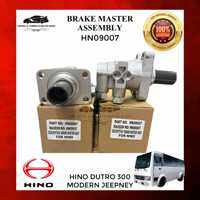
BRAKE MASTER ASSEMBLY HINO DUTRO 300 HINO 300 MODERN JEEPNEY ( HN09007 ) “ HINO GENUINE PARTS “
₱2,999.00
Buy on Lazada
Hino Dutro 2004 Headlight Headlamp Head Light Head Lamp Driver Side Left Side
₱3,590.00
Buy on Lazada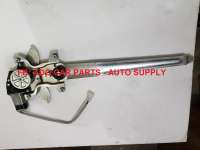
HINO RANGER 15T POWER DRIVER SIDE (LEFT SIDE) WINDOW MECHANISM REGULATOR
₱7,080.00₱13,440.00
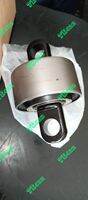
Torque rod bushing for Hino 700 series Hino Genuine Parts original japan
₱1,700.00
Buy on Lazada
Hino Dutro 2004 Headlight Headlamp Head Light Head Lamp Passenger Side Right Side
₱3,590.00
Buy on Lazada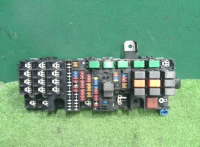
Hino Ranger 700 Series Fuse Box/Engine Fuse/Relay/Wiring Fuse/EZ Auto
₱2,751.00₱5,444.00
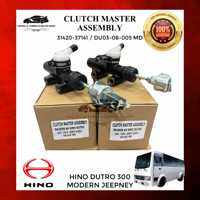
CLUTCH MASTER ASSEMBLY HINO 300 DUTRO 300 MODERN JEEPNEY (31420-37141 / DU03-08-005MD) 5/8 “ HINO GENUINE PARTS “
₱999.00
Buy on Lazada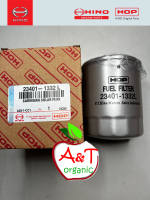
23401-1332L Genuine Fuel Filter Primary for HINO Dutro 300 / HIno 500 Euro 3 W04D/T HOP Indonesia
₱500.00
Buy on LazadaAbout HINO
HINO is a Japanese commercial vehicle brand best known for its trucks, buses, diesel engines, and transportation-related solutions. The brand belongs to Hino Motors, Ltd. (日野自動車株式会社), a manufacturer headquartered in Hino, Tokyo. With a history dating back to 1910, HINO has specialized in commercial vehicles for much of its modern existence.1
As of 2026, HINO has entered a significant new phase. Hino Motors became part of ARCHION Corporation, a holding company formed through the integration of HINO and Mitsubishi Fuso Truck and Bus Corporation. Within the ARCHION Group, HINO continues to operate as a distinct brand.2
Quick facts
| Category | Information |
|---|---|
| Brand | HINO |
| Japanese name | 日野自動車 (Hino Jidōsha) |
| Company | Hino Motors, Ltd. |
| Industry | Commercial vehicles / automotive |
| Founded | August 1, 1910 |
| Established as Hino Heavy Industries | May 1, 1942 |
| Headquarters | Hino, Tokyo, Japan |
| Main products | Trucks, buses, engines, parts, and transportation solutions |
| Global reach | Approximately 90 countries and regions |
| Employees | 32,339 consolidated (as of March 31, 2026) |
| FY2026 net sales | ¥1.565 trillion |
| Current group | ARCHION Group |
| Major partner/group brand | Mitsubishi Fuso |
| Historical Toyota relationship | Former Toyota subsidiary; joined ARCHION structure in 2026 |
| Official website | Hino Motors |
The employee and financial figures listed above represent HINO’s consolidated data for the fiscal year ended March 31, 2026.3
Brand identity and business focus
HINO is primarily a commercial vehicle manufacturer rather than a passenger car company. Its product lineup is designed to transport people and goods, ranging from light-duty delivery trucks to heavy-duty prime movers, buses, and specialized commercial vehicles. Beyond complete vehicles, HINO develops engines, components, connected technologies, and services aimed at maintaining fleet efficiency.4
This focus distinguishes HINO from Japanese automakers such as Toyota, Honda, or Nissan, which are strongly associated with passenger cars. HINO’s core market remains the professional transportation industry. Typical customers include logistics firms, freight operators, construction and mining companies, bus operators, waste management firms, and small-to-medium enterprises.
Consequently, the brand’s philosophy emphasizes reliability, durability, fuel efficiency, uptime, safety, and after-sales support. Its corporate approach is often described as providing “Total Support” to customers, extending beyond the mere sale of a truck or bus.5
History and origins
Early development (1910–1942)
The modern HINO organization traces its roots to Tokyo Gas Industry Co., Ltd., established in 1910. Renamed Tokyo Gas and Electric Industry Co., Ltd. in 1913, the company successfully developed a prototype of a domestically produced truck, the TGE-A, in 1917.6 This achievement was significant as Japan’s automobile industry was still in its infancy. In 1937, several automotive operations were consolidated to form Tokyo Automobile Industry Co., Ltd.7
In 1942, the Hino plant of Diesel Motor Industry Co., Ltd. became independent as Hino Heavy Industries, Inc., marking the beginning of the modern company.8 The present entity, Hino Motors, Ltd., was formally established on May 1, 1942.9
Key early milestones include:
- 1910: Establishment of predecessor Tokyo Gas Industry.
- 1917: Successful prototype of the TGE-A truck.
- 1930: Entry into bus manufacturing.
- 1937: Reorganization into Tokyo Automobile Industry.10
Post-war era and Toyota relationship
After World War II, HINO concentrated on trucks and buses. A notable post-war product was the Blue Ribbon center-underfloor-engine bus, released in 1953, which became a staple in the Japanese market.11 Although HINO briefly produced the Renault 4CV under license in the 1950s, commercial vehicles remained its primary specialty.
A defining relationship began in the 1960s when Toyota Motor Corporation became HINO’s controlling shareholder. For decades, HINO operated as a commercial vehicle subsidiary within the Toyota Group.12 However, this structure changed significantly in 2026.
Integration into ARCHION (2026)
HINO and Mitsubishi Fuso agreed to integrate their businesses with Toyota Motor Corporation and Daimler Truck AG participating as strategic partners. The resulting holding company, ARCHION Corporation, commenced operations on April 1, 2026, owning both HINO and Mitsubishi Fuso. Toyota and Daimler Truck each plan to hold a 25% stake in ARCHION.13 Concurrently, HINO’s shares were delisted on April 1, 2026.14
Under this new structure, HINO and FUSO remain distinct commercial vehicle brands while sharing a broader corporate framework intended to create efficiencies in R&D, procurement, production, and logistics.15
Products and technology
Trucks
Trucks are HINO’s most recognizable products, categorized by duty cycle:
- Light-duty trucks: Designed for urban deliveries and local logistics. Key models include the Hino Dutro family (also known as the Hino 300 Series).
- Medium-duty trucks: Used for regional freight, distribution, and municipal applications. The Hino Ranger is the brand’s most prominent medium-duty platform globally.
- Heavy-duty trucks: Built for long-distance freight, mining, and heavy construction. The Hino Profia serves as the principal heavy-duty line.
Buses
HINO has a long history in bus manufacturing, producing city buses, route buses, coaches, and tourist buses. Notable model names include Blue Ribbon, Selega, and Poncho. As part of its transition toward lower-emission transport, HINO has also developed electric buses such as the Hino Blue Ribbon Z EV.16
Engines and powertrains
HINO is historically renowned for its diesel engines, which are engineered for durability, torque, fuel economy, and long operating life under heavy loads. The company supplies engines and powertrain components in addition to complete vehicles.17
Electrification and autonomous driving
While traditionally associated with diesel, HINO has invested in alternative powertrains since releasing what it describes as the world’s first commercially available hybrid urban transit bus in 1991.18 Recent developments include the Dutro Z EV battery-electric truck and the Profia Z FCV fuel-cell electric truck.19
HINO pursues a multiple-pathway approach involving battery-electric, fuel-cell, and hybrid technologies depending on specific application requirements.20 In autonomous driving, HINO states it became the first company in Japan to commercialize Level 4-equivalent autonomous driving in limited areas, aiming to address driver shortages and improve logistics efficiency.21
Corporate philosophy and services
Total Support
HINO emphasizes vehicle uptime through its “Total Support” philosophy. Recognizing that a non-operational truck generates no revenue, the company provides comprehensive services including maintenance, genuine parts, telematics, financing, and driver support to maximize customer operating time.22
Hino Connect
Modern HINO vehicles increasingly incorporate connected technologies. Services like Hino Connect provide fleet managers with data on vehicle location, utilization, fuel consumption, and maintenance needs, shifting the business model from hardware sales toward transportation solutions.23
Motorsport
HINO has used motorsport to demonstrate vehicle durability, entering the Dakar Rally for the first time in 1990.24 Competing against larger vehicles in extreme conditions serves as a validation of the brand’s engineering philosophy rather than solely a marketing exercise.
Global presence
HINO vehicles are sold in approximately 90 countries and regions, including major markets in Southeast Asia, South Asia, Australia, North America, Latin America, Europe, the Middle East, and Africa.25 The company maintains local manufacturing and assembly operations in various countries to adapt products to regional transportation requirements.
Operations in Indonesia
Indonesia represents one of HINO’s most significant overseas markets. The brand’s presence there began in 1967 when 150 Hino BT-51 buses were sent as government assistance, leading to involvement in major infrastructure projects.26
Manufacturing formally began with the establishment of PT Hino Indonesia Manufacturing (HIM) in 1982. By 1985, HINO began producing engines and trucks locally.27 Today, PT Hino Motors Manufacturing Indonesia (HMMI) operates a facility in Purwakarta, West Java, serving both domestic and ASEAN markets.28 As of March 2025, HMMI employed approximately 1,606 people.29
Indonesian operations were reorganized in 2003 into two entities: PT Hino Motors Sales Indonesia (HMSI) for sales and distribution, and PT Hino Motors Manufacturing Indonesia (HMMI) for production.30 Since 2011, Indonesia has also served as an export base, shipping over 13,000 complete-built-up units to 15 countries.31
Brand identity
HINO’s visual identity has traditionally centered on a distinctive red “H” logo. In March 2026, the company announced its first corporate logo revision in 32 years, effective April 1, 2026. The updated design simplifies the visual treatment for digital use while retaining the original symbolism of a rising sun, progress, and safe transportation. HINO Red remains the primary brand color. Vehicle emblems themselves were not changed during this transition.32
Challenges and controversies
HINO faced significant challenges following the disclosure of engine-certification misconduct in 2022 involving improper data for certain engines. The company released investigation reports, submitted recurrence-prevention plans to Japanese authorities, and established “Three Reforms” to address governance issues.33 In 2025, HINO reached a settlement with U.S. authorities regarding legacy certification issues.34
These events prompted current management to place substantial emphasis on compliance, transparency, quality, and rebuilding stakeholder trust.35
Major milestones
| Year | Event |
|---|---|
| 1910 | Tokyo Gas Industry, predecessor of HINO, founded |
| 1917 | First Japanese-made TGE truck prototype |
| 1930 | Predecessor enters bus manufacturing |
| 1942 | Hino Heavy Industries established |
| 1953 | Blue Ribbon bus introduced |
| 1962 | Broader overseas expansion begins |
| 1967 | First HINO buses arrive in Indonesia |
| 1971 | “Red Engine” introduced |
| 1980 | New Ranger medium-duty truck generation |
| 1981 | Super Dolphin Profia heavy-duty series launched |
| 1982 | PT Hino Indonesia Manufacturing established |
| 1985 | First HINO engine and locally produced trucks in Indonesia |
| 1990 | Entry into Dakar Rally |
| 1991 | Commercial hybrid urban bus introduced |
| 1994 | Previous corporate logo introduced |
| 2003 | Indonesian operations divided into HMSI and HMMI |
| 2011 | Indonesia becomes key export base |
| 2020 | Hino Connect launched in Indonesia |
| 2022 | Dutro Z EV announced; engine-certification misconduct disclosed |
| 2023 | HINO–Mitsubishi Fuso integration MOU signed |
| 2025 | Definitive integration agreement signed |
| 2026 | ARCHION established; HINO joins ARCHION Group |
| 2026 | New corporate logo introduced |
Sources: Hino’s official corporate history and Hino Indonesia’s official history.36
References
- About Hino Motors | CORPORATE | HINO MOTORS
- Corporate Information | About Hino Motors | HINO MOTORS
- April 1, 2026
- HINO MOTORS
- History of Hino | About Hino Motors | HINO MOTORS
- HINO SUSTAINABILITY
- 10IntroductionMessageFeatureBusiness strategy
- Hino Indonesia | Pakarnya Truk dan Bus
- Hino Indonesia | Pakarnya Truk dan Bus
- Hino Indonesia | Pakarnya Truk dan Bus
- Hino Indonesia | Pakarnya Truk dan Bus
- Hino to revise its corporate logo for the first time in 32 years -To evolve our expression of a changing Hino with an unchanging concept- | News | HINO MOTORS
- 20251009e_1
- Timely Disclosure Information | IR | HINO MOTORS
- Message from the President | About Hino Motors | HINO MOTORS
- ARCHION Joins CJPT to Strengthen Initiatives in the CASE Domain | News | HINO MOTORS
- Annual Report
- sec.gov
- Board of Directors | About Hino Motors | HINO MOTORS
- Regarding the Japan Fair Trade Commission’s Review Results on the Business Integration between Hino Motors and Mitsubishi Fuso | News | HINO MOTORS
- Results of Today’s Extraordinary General Shareholders Meeting | News | HINO MOTORS
- sec.gov
- Annual Report
- sec.gov
- sec.gov
- sec.gov
- Hino Indonesia Marks 500,000 Unit Production Achievement | News | HINO MOTORS
- Hino Indonesia | Pakarnya Truk dan Bus
- Hino Indonesia | Pakarnya Truk dan Bus
- Subscription of New Shares of Hino Motors, Ltd. for Capital Increase | Toyota Motor Corporation Official Global Website
- Sustainability Report | Sustainability | HINO MOTORS
- IR | CORPORATE | HINO MOTORS
- News 2026 | CORPORATE | HINO MOTORS
- HINO MOTORS
- Business Strategy, Plan etc.. | IR | HINO MOTORS
- The Hino Group | About Hino Motors | HINO MOTORS