Shop on Lazada
Hitachi products
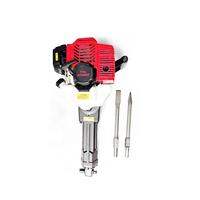
Gasoline Jackhammer/ petrol jackhammer heavy duty brand new
₱14,500.00
Buy on Lazada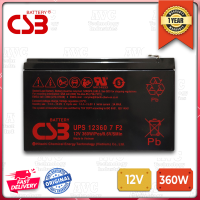
CSB Battery UPS 12360 7 F2 12V 360W
₱1,525.00
Buy on Lazada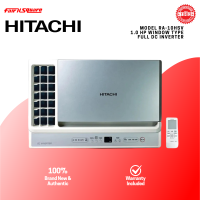
Hitachi 1HP Window Type Full DC Inverter Airconditioner (RA-10HSV)
₱28,000.00₱31,500.00
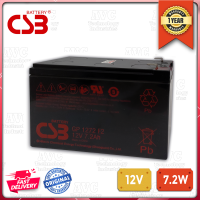
CSB Battery GP-1272 F2 12V 7.2Ah
₱1,613.00
Buy on Lazada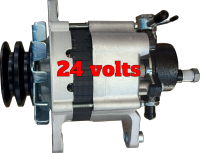
Nissan terrano /patrol/pathfinder (original japan) TD27 TD42 4.2L AND BD25 diesel 1988-1997 LR170-407 12V 75amp alternator with pump
₱6,300.00₱13,000.00
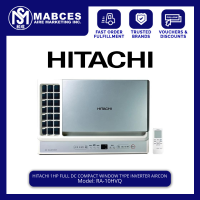
Hitachi RA-10HVQ 1HP Full DC Inverter Compact Window Type Aircon
₱32,100.00₱34,500.00
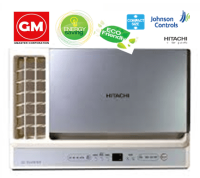
HITACHI 1.0HP RA-10HVQC FULL DC (COMPACT) INVERTER WINDOW TYPE AIRCON/ WIRELESS REMOTE CONTROL / EER(CSPF) 4.02 / FREE BRACKET
₱31,000.00₱34,500.00

Hitachi/Hikoki 7″ Cutting Disc ~ ODV POWERTOOLS
₱159.00₱300.00
About Hitachi
Hitachi, Ltd. (Japanese: 株式会社日立製作所, Kabushiki-gaisha Hitachi Seisakusho), commonly known as Hitachi, is a major Japanese technology and industrial conglomerate headquartered in Chiyoda, Tokyo, Japan. Founded in 1910 by electrical engineer Namihei Odaira, the company began as a manufacturer of industrial electrical equipment and has since evolved into a global group with significant operations in digital technology, energy infrastructure, transportation, industrial systems, healthcare, and social infrastructure.1
While many consumers associate the Hitachi name with household appliances such as televisions, refrigerators, air conditioners, and washing machines, the modern Hitachi Group operates primarily as a business-to-business technology and infrastructure provider. Its stated corporate philosophy centres on integrating digital technology with the physical world to address complex societal and industrial challenges.2
Quick facts
| Item | Information |
|---|---|
| Full name | Hitachi, Ltd. |
| Japanese name | 株式会社日立製作所 |
| Romanization | Kabushiki-gaisha Hitachi Seisakusho |
| Type | Public company |
| Founded | 1910 |
| Legally established | February 1, 1920 |
| Founder | Namihei Odaira |
| Headquarters | Chiyoda-ku, Tokyo, Japan |
| President & CEO | Toshiaki Tokunaga |
| Employees, Hitachi Ltd. | 25,934 (March 2026) |
| Employees, consolidated Group | 287,901 (March 2026) |
| Group companies | 607 consolidated subsidiaries (March 2026) |
| FY2025 consolidated revenue | ¥10.587 trillion |
| Main fields today | Digital, energy, mobility, industry, healthcare, measurement & analytical systems, building systems |
The figures above are derived from Hitachi’s corporate profile for the fiscal year ended March 31, 2026.3
Corporate overview
Hitachi is best understood as a large-scale technology conglomerate and industrial group rather than solely an electronics manufacturer. Its historical foundations lie in electrical engineering and heavy industry. Over more than a century, the company has developed a vast array of equipment ranging from electric motors, transformers, and locomotives to elevators, power-generation systems, computers, and industrial machinery.4
In the 21st century, Hitachi has repositioned its business model around the convergence of information technology (IT), operational technology (OT), and physical products or infrastructure. This approach entails providing not only physical machinery but also the accompanying software, data systems, control mechanisms, artificial intelligence, maintenance services, and digital solutions. Key sectors of involvement include:
- Power grids and energy management
- High-speed and urban railway systems
- Railway signalling and traffic management
- Industrial automation and manufacturing technologies
- Digital transformation and cloud data systems
- AI and IoT applications
- Healthcare equipment and diagnostic systems
- Analytical and scientific instruments
- Elevators, escalators, and building management systems
Hitachi describes this strategic direction as fostering progress at the intersection where digital technology meets the physical world.5
Founding and early history
Namihei Odaira
Hitachi was founded by Namihei Odaira, an electrical engineer dedicated to advancing Japan’s domestic industrial and electrical capabilities. The company’s origins trace back to 1910, when Odaira established an electrical machinery repair and manufacturing operation associated with the Hitachi mine in Ibaraki Prefecture. Among the enterprise’s earliest significant achievements was the completion of a 5-horsepower induction motor.6
From its inception, the company emphasised the development of indigenous Japanese engineering expertise over reliance on imported technology. This commitment to engineering excellence, manufacturing quality, research, and technological self-reliance became a defining element of Hitachi’s corporate identity.7
Establishment of Hitachi, Ltd.
Although the company recognises 1910 as its founding year, Hitachi was legally incorporated as Hitachi, Ltd. on February 1, 1920.8
Early technological development
Hitachi expanded rapidly beyond its initial focus on electric motors, achieving several notable milestones in its early decades.
1910s
During its first decade, the company developed and manufactured electric motors, transformers, electrical measuring instruments, large water turbines, and fans.
1920s
Hitachi entered the railway sector and, in 1924, produced Japan’s first large-scale domestically manufactured electric locomotive. The company also commenced exports in 1926 with electric fans.9
1930s
The product portfolio broadened significantly to include transformers, elevators, refrigerators, water infrastructure, electrical control systems, diesel engines, and escalators. Hitachi began elevator production in 1932 and delivered its first passenger elevator the following year. Its first escalator was delivered in 1936.10 This diversification demonstrates that Hitachi maintained an extensive product range well before the modern era of multinational conglomerates.
Post-World War II expansion
Following World War II, Hitachi played a pivotal role in Japan’s reconstruction and industrialisation. The company developed critical technologies across electric power, heavy machinery, transportation, telecommunications, consumer appliances, electronics, computers, industrial automation, and scientific instruments.
Significant investment in research and development yielded milestones including electron microscopes, transistor-based electronics, computers, nuclear technology, power-generation equipment, and advanced industrial machinery.11 By the latter half of the 20th century, Hitachi had established itself as one of Japan’s premier diversified technology companies.
Consumer electronics era
For general consumers, particularly outside Japan, Hitachi became widely recognised as a consumer electronics and appliance brand. Historically, its consumer product lineup included televisions, refrigerators, washing machines, air conditioners, vacuum cleaners, microwave ovens, audio equipment, camcorders, computers, hard-disk drives, and projectors.
While this legacy contributes to the enduring perception of Hitachi as a Japanese electronics manufacturer, it no longer accurately reflects the company’s primary business focus. The group has progressively divested from many consumer-facing categories to concentrate on enterprise technology, infrastructure, energy, transportation, industrial systems, and digital services.
Transformation in the 2000s
The 2000s marked a critical period of restructuring for Hitachi. Facing intense competition in consumer electronics and rapid shifts in the global technology landscape, the company realigned its portfolio. Management concentrated resources on areas where the combination of engineering, infrastructure, software, and data analytics offered distinct competitive advantages.
This transformation shifted the strategic emphasis towards digital technology, infrastructure, industrial systems, energy, transportation, and enterprise services. Consequently, Hitachi transitioned from being perceived primarily as an electronics manufacturer to operating as a comprehensive digital-industrial company.
Current business structure
As of 2026, Hitachi positions itself as a global leader in digital innovation and sustainable solutions. Its business portfolio is organised into seven primary sectors:12
- Digital
- Energy
- Mobility
- Industry
- Measurement & Analytical Systems
- Healthcare
- Building Systems
Digital
The Digital sector is central to Hitachi’s modern strategy. The company provides technologies and services encompassing cloud computing, data platforms, artificial intelligence, generative AI, industrial IoT, digital engineering, enterprise software, control systems, cybersecurity, and IT/OT integration. A core tenet of this strategy is the fusion of IT with OT and physical infrastructure, which is particularly valuable in sectors requiring software interaction with real-world assets such as factories, power grids, and transport networks.13
Lumada
Lumada serves as Hitachi’s proprietary digital solutions platform. It leverages data, AI, IoT, and industrial expertise to resolve business and infrastructure challenges. Rather than supplying standalone hardware, Lumada enables comprehensive solutions that collect operational data, apply AI analytics, predict equipment failures, optimise efficiency, reduce energy consumption, and support digital transformation. Investor materials identify Lumada as a fundamental component of Hitachi’s transition to a digital-industrial business model.14
Energy
Hitachi’s Energy sector focuses on electrification and the energy transition. Activities span electricity transmission, power grids, grid automation and integration, energy management, renewable energy integration, nuclear power, hydrogen technologies, and digital energy systems. The company is heavily involved in the infrastructure required to transmit, control, distribute, digitise, and optimise electricity, rather than solely focusing on generation.15
Mobility
With a history in railway technology dating to the 1920s, mobility remains one of Hitachi’s most internationally visible businesses. Current activities include high-speed trains, metro and commuter trains, railway signalling, traffic management, train control systems, digital railway systems, and maintenance services. This sector exemplifies Hitachi’s strategy of integrating physical rolling stock with signalling, software, data, and operational systems.16
Industry
Hitachi supports manufacturers through factory automation, industrial IoT, manufacturing optimisation, AI analytics, supply-chain optimisation, and connected factory technologies. The objective is to transform traditional manufacturing facilities into data-driven, connected industrial environments.17
Healthcare
The Healthcare sector encompasses medical imaging, diagnostic systems, healthcare information technology, analytical equipment, and related digital systems. These offerings draw upon Hitachi’s broader expertise in electronics, sensors, precision engineering, and data processing.
Measurement & Analytical Systems
This technically specialised area involves sophisticated scientific and industrial instruments used to analyse materials, chemicals, and biological samples. The business builds upon Hitachi’s long-standing heritage in precision engineering and scientific instrumentation.18
Building Systems
Hitachi operates in building infrastructure through elevators, escalators, building-management systems, vertical transportation, and smart-building technologies. This division has deep historical roots, with elevator production commencing in 1932 and the first passenger elevator delivered in 1933.
Global presence
Hitachi operates as a truly global entity with a significant international footprint. As of March 31, 2026, the Group reported 287,901 consolidated employees and 607 consolidated subsidiaries worldwide. Consolidated revenue for FY2025 stood at ¥10.5868 trillion.19 Business operations span Japan, North America, Europe, Asia, and other regions.
Corporate philosophy and brand identity
Hitachi’s founding mission was to “contribute to society through the development of superior, original technology and products.” This philosophy remains central to the corporate identity, though it has evolved to address contemporary challenges. Modern messaging emphasises sustainability, digital transformation, social infrastructure, the energy transition, mobility, innovation, partnerships, and the application of data and AI.20
Historically, the Hitachi brand symbolised Japanese engineering, quality, reliability, and social contribution. While preserving these associations, the company has repositioned the brand from a traditional manufacturer of reliable electrical goods to a technology integrator solving complex social and industrial problems through digital and physical infrastructure.21
Distinction from consumer appliances
It is important to distinguish between the Hitachi Group’s current strategic focus and the consumer products bearing the Hitachi name. Although branded appliances remain visible in the market, they do not reflect the economic weight of the group’s core businesses, which are now predominantly industrial and technological in nature.21
Competitive distinctiveness
Hitachi’s primary differentiator is the breadth of its capabilities. Unlike firms specialising solely in software, transport, or power equipment, Hitachi integrates physical infrastructure, engineering, operational expertise, software, data, and AI. For instance, a single railway project may encompass rolling stock, signalling, traffic management, maintenance systems, and data analytics. Similarly, energy projects combine physical grid equipment with automation, monitoring, and analytics. This integrated approach defines Hitachi’s current market positioning.22
Major historical milestones
| Year | Milestone |
|---|---|
| 1910 | Hitachi founded by Namihei Odaira |
| 1910 | First 5-hp induction motor completed |
| 1911 | Transformer production and development |
| 1920 | Hitachi, Ltd. legally established |
| 1924 | Japan’s first large-scale domestically manufactured electric locomotive |
| 1926 | First Hitachi product exported: electric fans |
| 1932 | Elevator and electric refrigerator production begins |
| 1933 | First passenger elevator supplied |
| 1936 | First Hitachi escalator delivered |
| 1950s | Expansion into advanced electrical, scientific, and industrial technologies |
| 1959 | Development of transistor-based electronic computers |
| 1960s–1980s | Major expansion in electronics, computers, energy, and industrial technology |
| 1990s | Significant global presence in electronics and computing |
| 2000s | Large-scale restructuring and portfolio transformation |
| 2010s | Increased emphasis on infrastructure and digital solutions |
| 2020s | Strategic focus on digital, energy, mobility, and sustainable infrastructure |
| 2026 | Group reports ¥10.59 trillion FY2025 revenue and 287,901 consolidated employees |
Historical milestones are based primarily on Hitachi’s official corporate history.23
Evolution summary
Hitachi’s development can be visualised as a progression through distinct eras:
- 1910s: Electrical machinery
- 1930s–1950s: Heavy industry and infrastructure
- 1960s–1990s: Electronics, computers, appliances, and industrial technology
- 2000s: Global technology conglomerate
- 2010s: Major portfolio restructuring
- 2020s: Digital, AI, energy, rail, and industrial infrastructure
- Today: Digital technology connected to the physical world
Although Hitachi remains famous as a Japanese electronics brand, its modern identity is that of an industrial technology, infrastructure, and digital transformation company. The evolution from electric motors and heavy machinery to AI-enabled infrastructure constitutes the central narrative of the group’s history.24
References
- Corporate Profile : Hitachi Global
- History (1910-1960) : Hitachi Global
- About Us : Hitachi Global
- Products & Solutions : Hitachi Global
- Group Companies : Hitachi Global
- Outline of Hitachi 2016
- SUSTAINABLE TRANSFORMATION
- About the Hitachi Group
- Hitachi at a glance : Investor Relations : Hitachi Global
- Products & Solutions: Hitachi Global
- Investor Relations : Hitachi Global
- Investor Relations : Hitachi Global
- Investor Relations : Hitachi Global
- Hitachi High-Tech at a Glance ! Company Figures. : Hitachi High-Tech Corporation
- About Us | Hitachi Digital Services
- From founding to creation, our mission continues : Hitachi
- Products & Solutions
- Home : Hitachi Global
- Home : Hitachi Global
- Home : Hitachi Global
- History : Hitachi Global
- Integrated Report : Investor Relations : Hitachi Global
- About Social Infrastructure Information Systems Division: Social Infrastructure Information Systems: Hitachi
- Business Report : Investor Relations : Hitachi Global